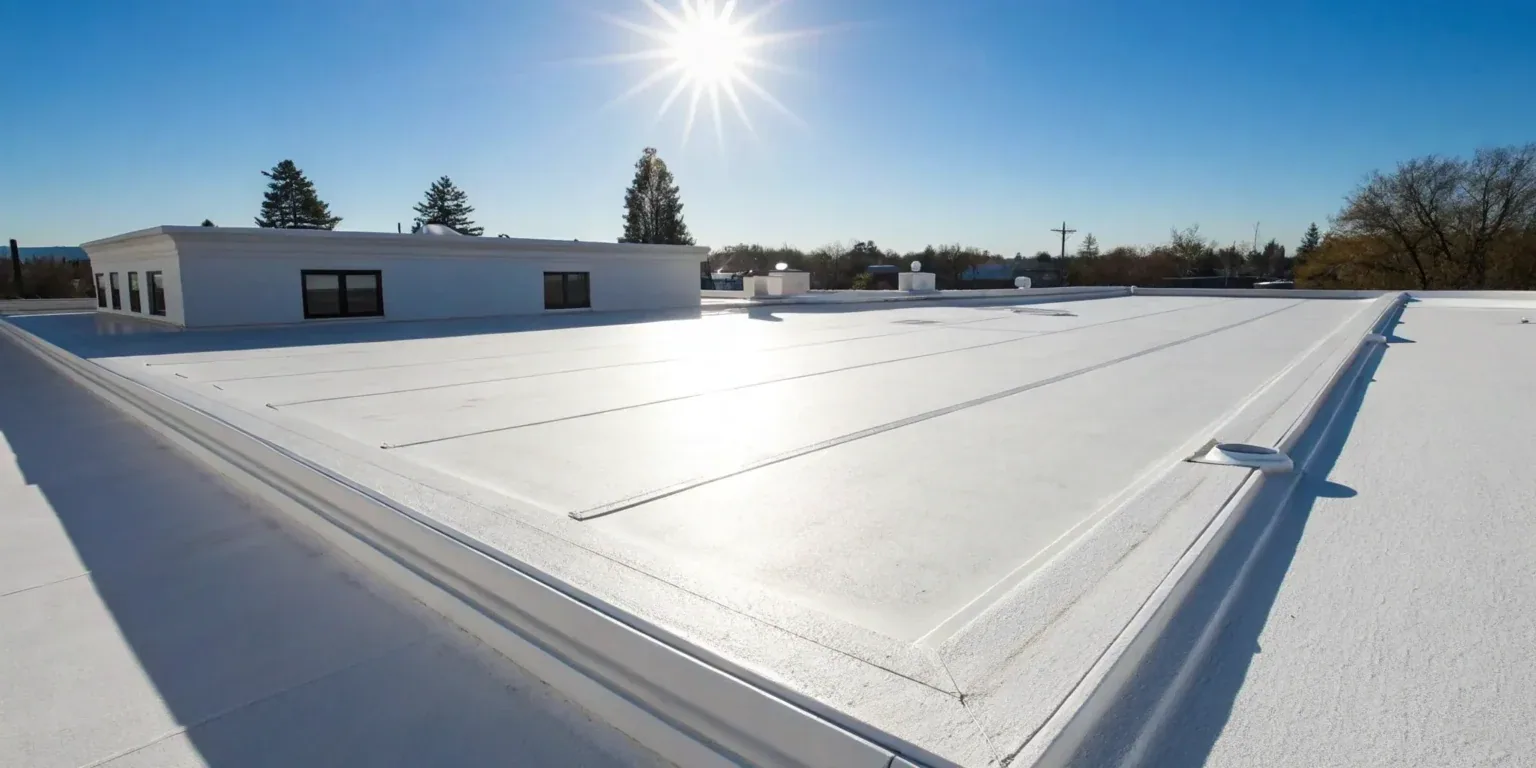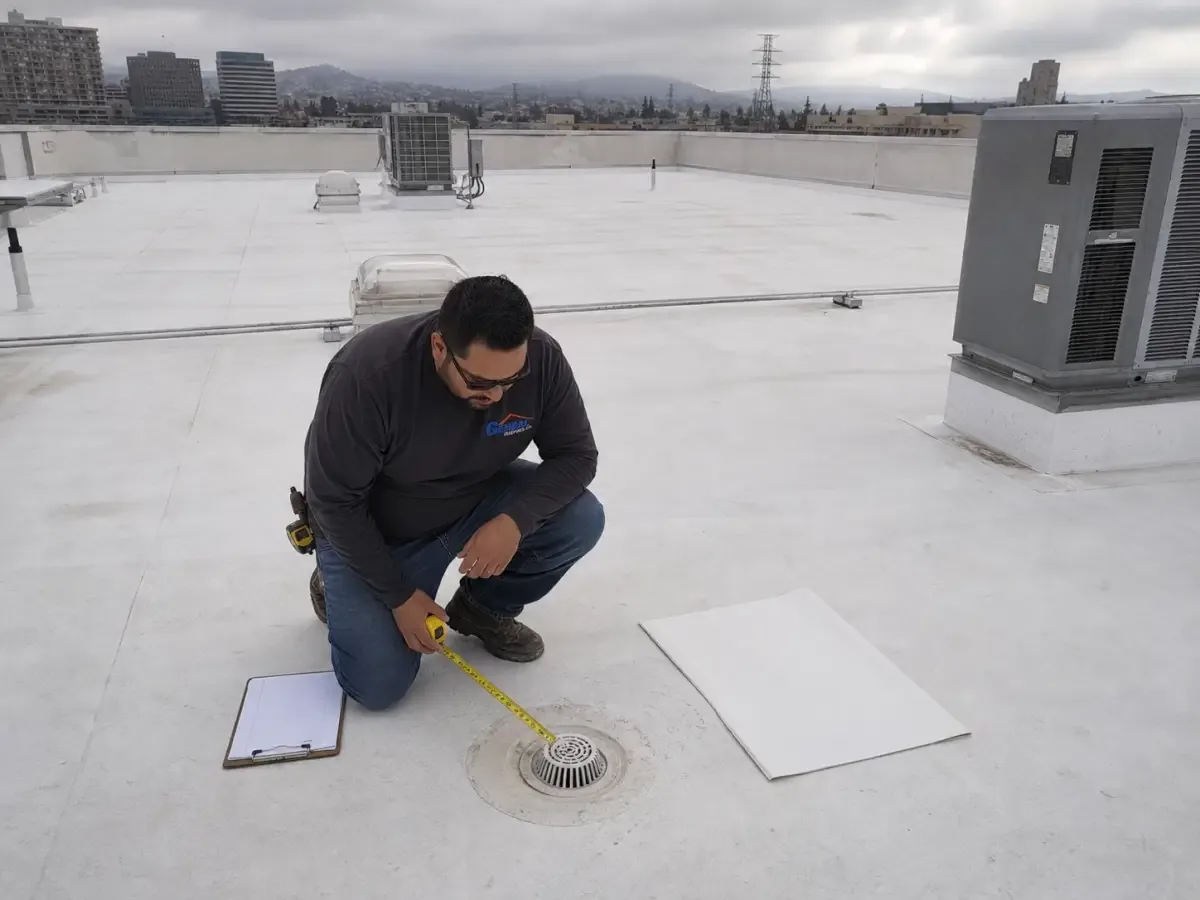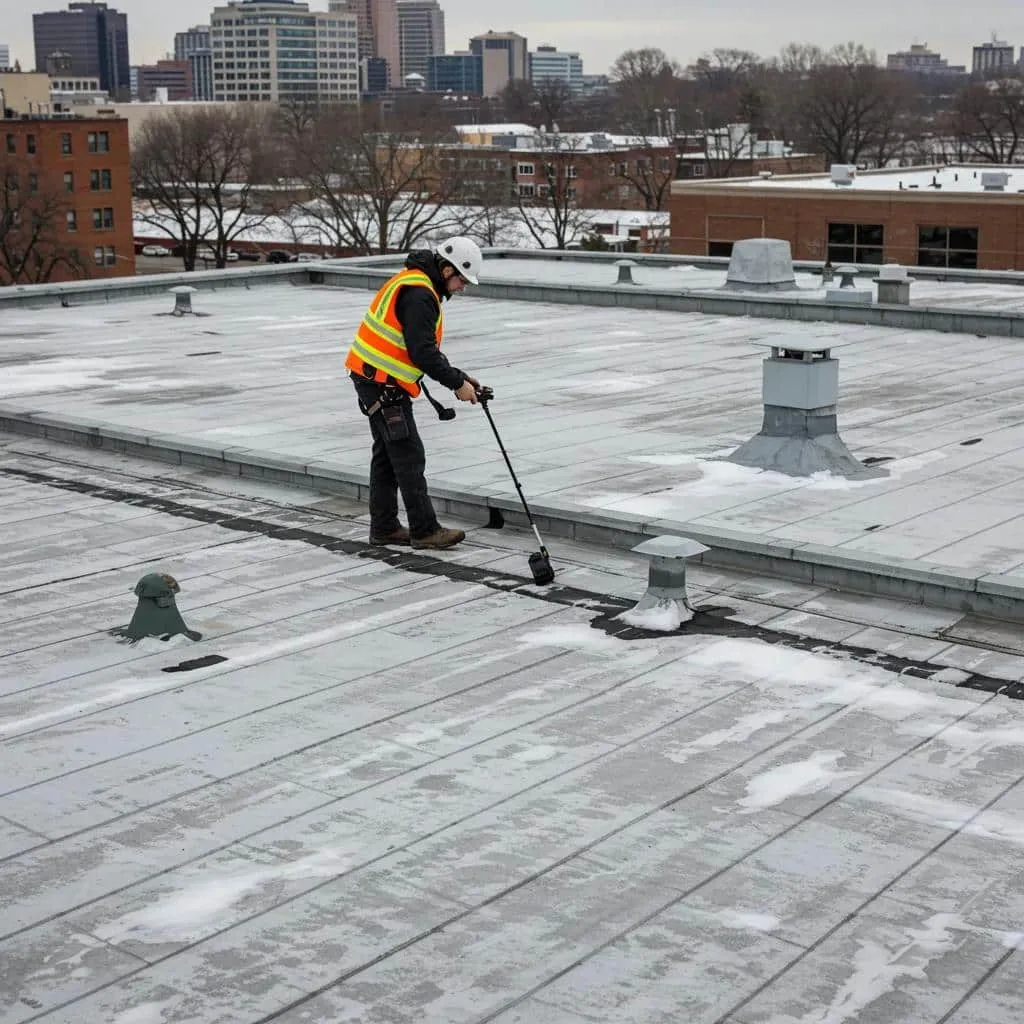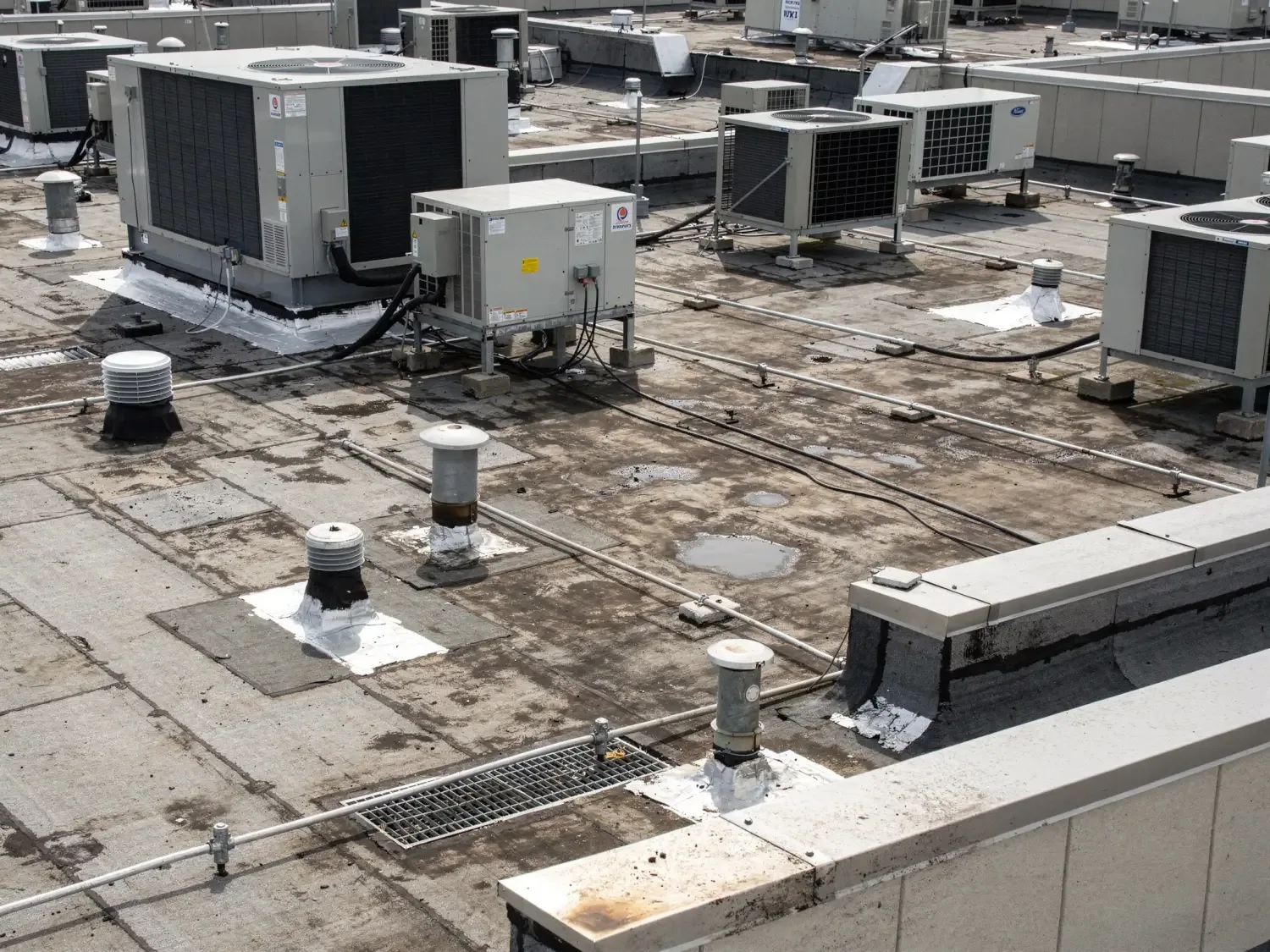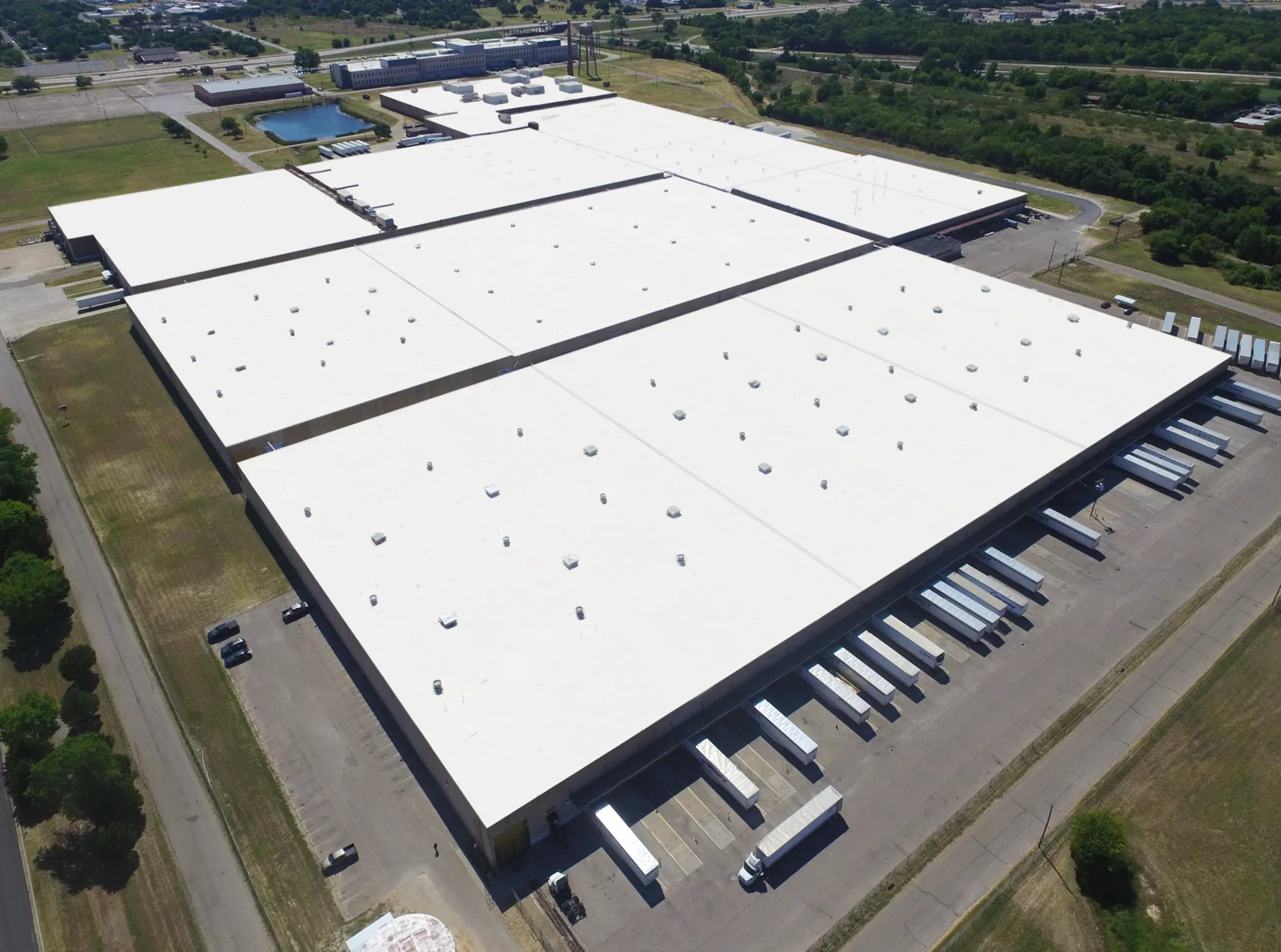
A roof plan with several curbs and wall turns can make detail work the part that needs the closest review. Duro-Last is known for custom-fabricated PVC roofing systems, but the roof still needs to be measured, inspected and matched to a complete assembly. Before discussing a product, we check the surface, drain route, penetrations and metal transitions, then compare those findings with plans and repair records.

For a Renton property, the first useful question is what the building needs: a defined repair, a replacement or a more detailed assessment. We note the visible conditions and any areas that need testing, then identify the product and project documents behind a proposed Duro-Last scope. A factory-prepared component can support planning, but it does not remove the need to confirm field dimensions, attachment and details.
System options: confirm what is being proposed
Duro-Last offers custom-fabricated PVC roof systems and additional product options that include PVC+KEE and TPO membranes. A proposal should state the specific product and describe the full build-up, including substrate, insulation, attachment, perimeter treatment and accessories. The plan should address each curb, pipe, scupper, drain and transition rather than assuming the field membrane covers every roof detail.
Custom fabrication makes accurate measurement and coordination important. Compare the roof plan with actual dimensions and equipment locations before ordering materials. Identify seams or details that will be completed in the field, plus any areas whose dimensions or access could change the scope. The installation plan should match the project documents and current product requirements; the contractor should explain how the fabricated sections fit the roof that was inspected.
Versico and SOPREMA are the other membrane choices, and a PVC roofing review raises general assembly questions without assuming one manufacturer's product is right for every building.
Field review: measure the details that shape the job
Start with the reported water location and follow the route toward nearby outlets. Check field seams, flashing, equipment curbs, pipe boots, edges and any previous patches. A roof plan can orient the walk, while photographs and area labels give the property team a record to revisit. We record which sections were checked so follow-up can use the same reference points. If a dimension or detail differs from the plan, note it before the scope assumes that a prefabricated section will fit.
A prefabricated section arrives sized to the measurements it was ordered from, so a curb that has moved a few inches since the drawing was made can leave a gap that field sealant will not hold. We recheck the dimensions that matter, the curbs, the parapet heights and the drain locations, close to the order date.
We also look at what lies below the visible surface when evidence points to moisture or substrate trouble. A soft spot, recurring leak or repair line can require testing, but the inspection should say what is known and what is still uncertain. Record inaccessible areas and clarify whether the proposed Duro-Last assembly depends on a condition that has not been verified.
A commercial roof inspection can document those observations. A condition report can group photos, repair items and follow-up questions so the next review begins with a usable record instead of memory.
Repair or replacement: choose from observed conditions
A localized puncture, seam or flashing concern may allow a repair when the adjacent assembly is suitable. Define the location and method, and note the repair boundary. If the roof has repeated patching or the leak source remains uncertain, expand the inspection before treating one visible symptom as the whole problem. Keep access limits and concealed conditions clear in the written note.
For replacement, compare removal and disposal, substrate preparation, insulation, attachment, fabricated sections, field details and edge work. The replacement scope should identify the Duro-Last product and explain how the measured roof areas relate to the proposed materials. If an overlay is being considered, a recover review should identify existing layers, moisture findings, edge height and project requirements before material is ordered.
Hold contractor bids to the same roof area and details. Compare preparation, temporary dry-in, equipment coordination, drainage work, allowances and exclusions. If one bid assumes the roof plan is exact and another includes field verification, record that difference. The goal is a scope the property team can understand before crews arrive.
Renton context: keep site conditions specific
Sea-Tac's 1991-2020 normals record a modest regional snowfall signal. That figure is not a design value for a Renton roof and does not replace project-specific code or structural review. We check the drainage and roof details that are present, then leave load questions to the applicable project documents and qualified design review when needed.
If a portfolio includes a building in Fairwood or the Cedar River area, we verify its address, use, access and roof assembly directly, since a planning area does not confirm a facility's roof type or what can be installed.
For a multi-property owner, keep each building's roof plan, measured details and repair record separate. capital planning can then compare priorities without carrying one site's dimensions or assumptions into another project's order.
Proposal review: document the fit and closeout
A Duro-Last proposal should name the specific product, the assembly layers and the details included in the price, and say how measurements were established and whether rooftop equipment, curbs, drains, edges and transitions appear in the scope. The proposal should identify the substrate assumptions, insulation and attachment, field work, preparation and any conditions that could change quantities.
The job plan deserves as much care as the material list: access, staging, work hours, temporary protection, weather response, disposal and how the building contact will be updated. If tear-off reveals wet insulation or a different deck condition, the bid should say how it is documented and approved. Allowances, exclusions, testing and unit-price work should be readable before the contractor mobilizes.
Warranty eligibility depends on the specified system, installation, documentation and applicable current terms. A product name alone does not confirm coverage. Confirm required inspections and closeout responsibilities, then keep product records, photos, test results and final roof areas with the building's file.
To start a Renton review, share the property address, roof plan if available, leak location, repair history and access window. We can check the field conditions and measurements before comparing a Duro-Last proposal with another repair or replacement path.
A clear record protects the next decision too: it shows what the crew completed, what was deferred and where the next roof walk should begin.
Commercial Roofing Questions
What is different about a Duro-Last commercial roof system?
Duro-Last is known for custom-fabricated PVC roofing systems, with other options that include PVC+KEE and TPO. The proposal should still identify the exact product, full assembly, field details and dimensions for the property.
Does custom fabrication eliminate the need to check roof details?
No. Measurements, equipment locations, transitions, field seams and attachment still need confirmation. Compare the plan with site conditions and document any difference before materials are ordered or installation begins.
Can a Duro-Last roof be repaired instead of replaced?
Yes, when the defect and the surrounding assembly support it. The water route and nearby seams or flashing get inspected, and the method, limits and unresolved conditions are written down.
What belongs in a Duro-Last roofing proposal?
The exact product, measured areas, assembly, substrate assumptions, attachment, edge and penetration work, preparation, field details, protection, exclusions and closeout documents belong in it. Those elements show how the system fits the building.
What should I prepare for a Duro-Last review in Renton?
Share the property address, roof plans, leak locations, repair history, access requirements and any product paperwork. Field measurements and a roof walk can confirm details before a scope is finalized.