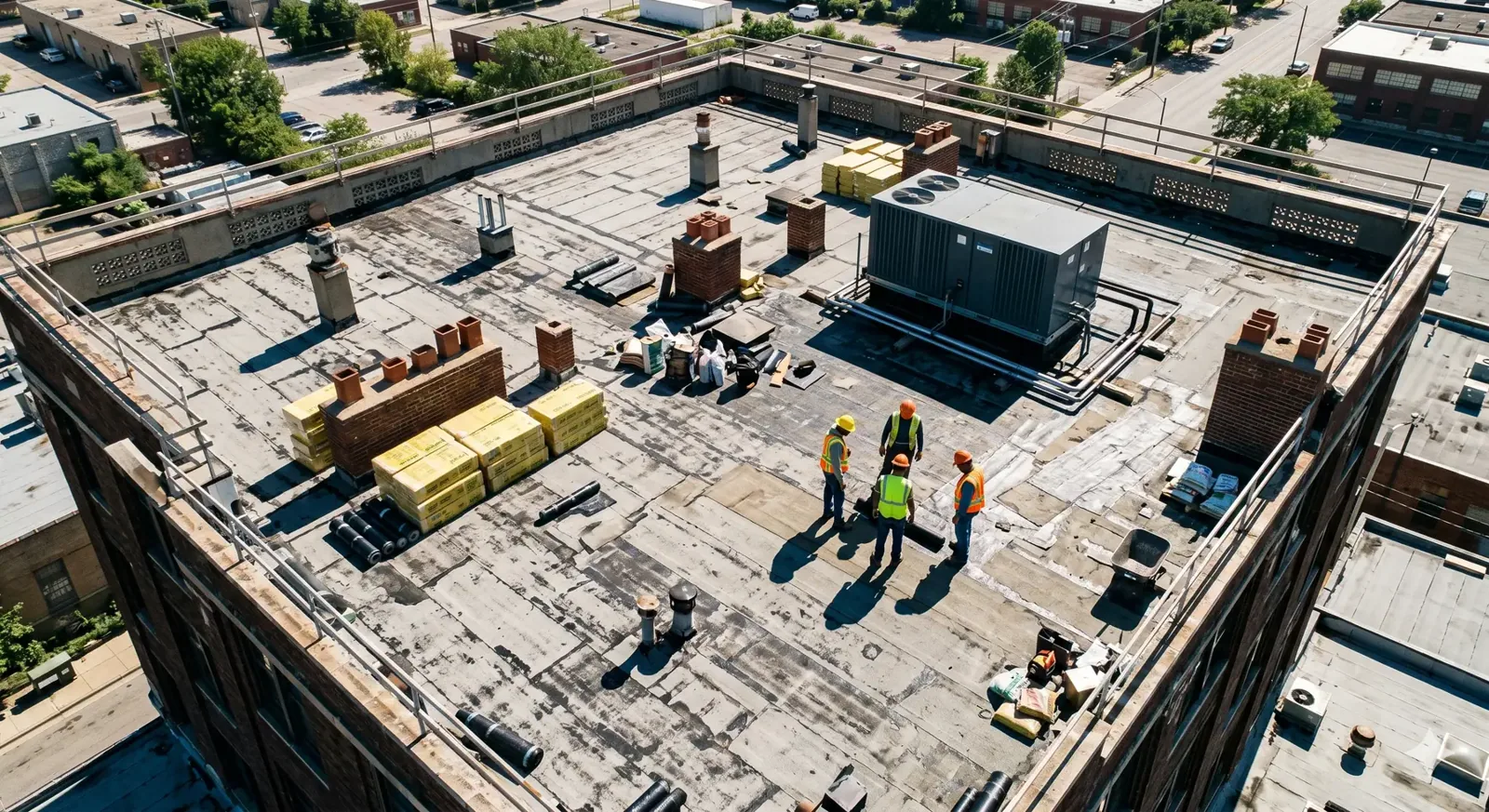
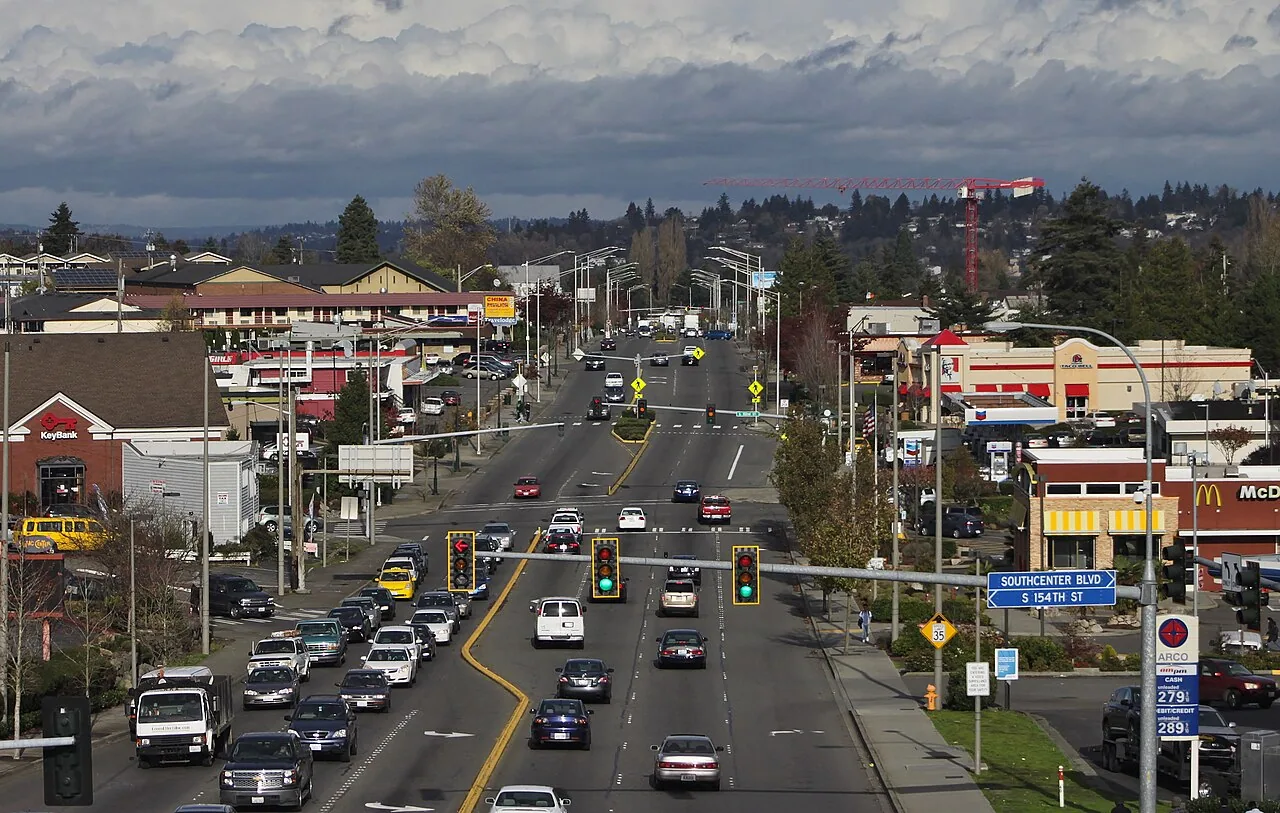
Stains on a Southcenter store or office ceiling rarely sit under the opening, because water that slips past a membrane lap or a pipe boot runs along the deck until it finds a gap, which is why the roof walk begins at the low route to the nearest outlet and not at the stain. Tukwila's plan for Southcenter describes a regional commercial center that mixes stores, offices, lodging, warehouses and light industry, so a single afternoon can take us across a store roof with a dozen curbs and a warehouse roof with a long drain run. The notes mark what soaked through, what stayed dry and where the repair edge falls.
I-5 and I-405 are the major regional access routes around the district, which matters on delivery days and for lift placement, so the access window is set with the property contact before anyone carries a ladder up. A commercial roof inspection leaves the owner a roof record of photographs by area, the water path in plain words and the next decision, whether that is one failed flashing detail or a larger area of trapped moisture.
Wet-season check: follow the water
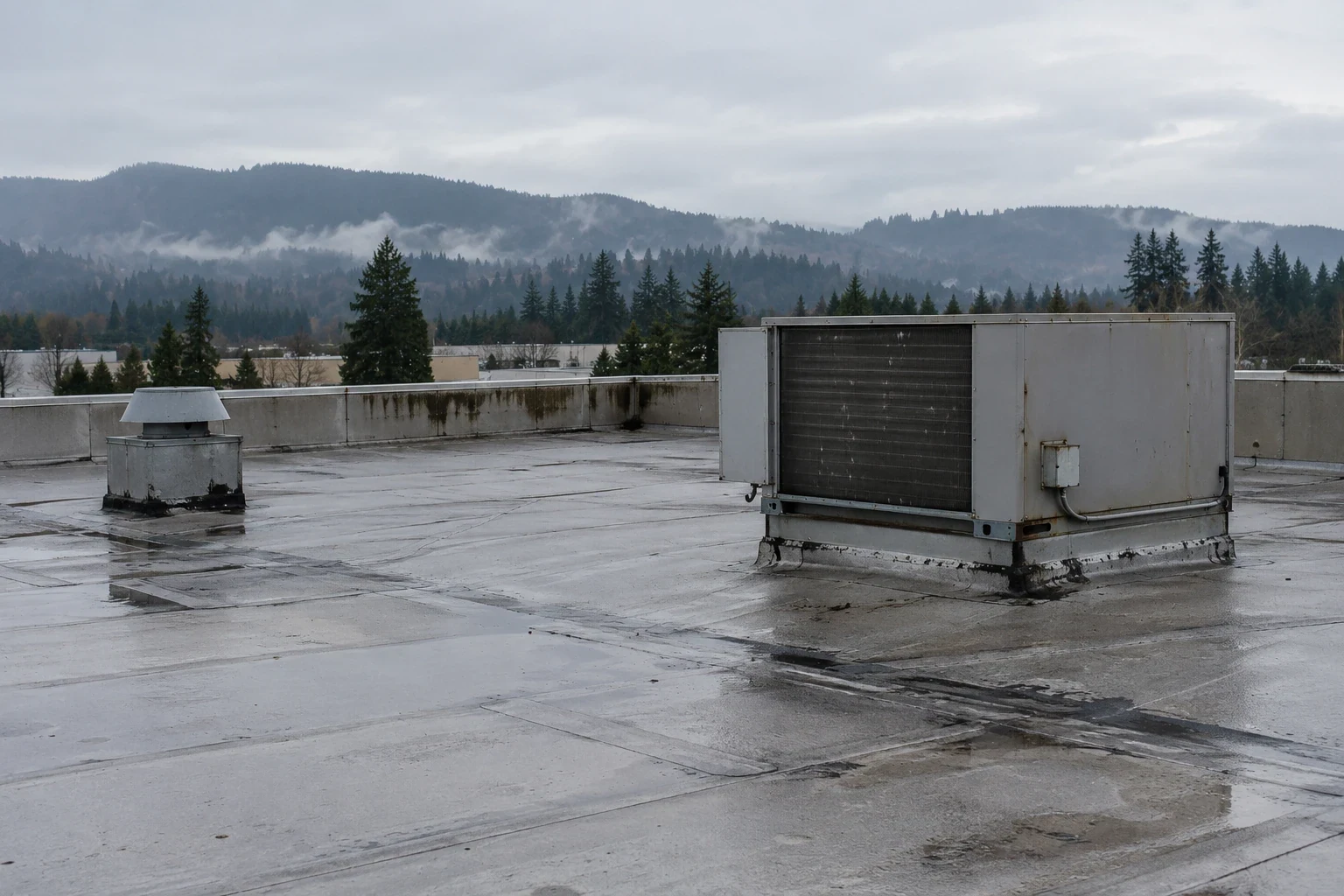
Rain that reaches a low point faster than an outlet can clear it may leave a shallow pond after the surrounding field looks dry. Sea-Tac's November and December totals dwarf July's, so drainage checks are best timed ahead of that swing. We inspect the route toward each outlet, look for debris or a raised seam, and note where water appears to stop moving.
The surface mark matters less than the path that produced it. We check whether the drain bowl is secure, whether a scupper throat is open and whether nearby laps or patches interrupt the flow. If water is entering at a curb, the stain may show up well away from that curb. A drain and scupper repair is appropriate when the outlet or its connection is the problem; a membrane repair is a different scope. Photos and a roof sketch help keep those lines separate.
Building use: match the walk to the roof
Southcenter's district plan identifies a mix of retail, office, lodging, warehouse and light-industrial uses. That mix is useful context for the area, not a claim that every property has any one of those uses. On a roof tied to retail or lodging, we plan around entrances, deliveries and occupied hours. For a warehouse or light-industrial building, we also ask how rooftop equipment and loading schedules affect access.
Tukwila reports more than 40,000 jobs citywide, with roughly a third in retail and a third in manufacturing, which is why a repair plan here needs a workable access window. We confirm the owner's contact, safety requirements and any production or customer-facing restrictions before setting a roof walk. For a documented warehouse property, we note equipment clearances and service paths without assuming the roof system beneath them.
Roof detail: separate a seam from a field failure
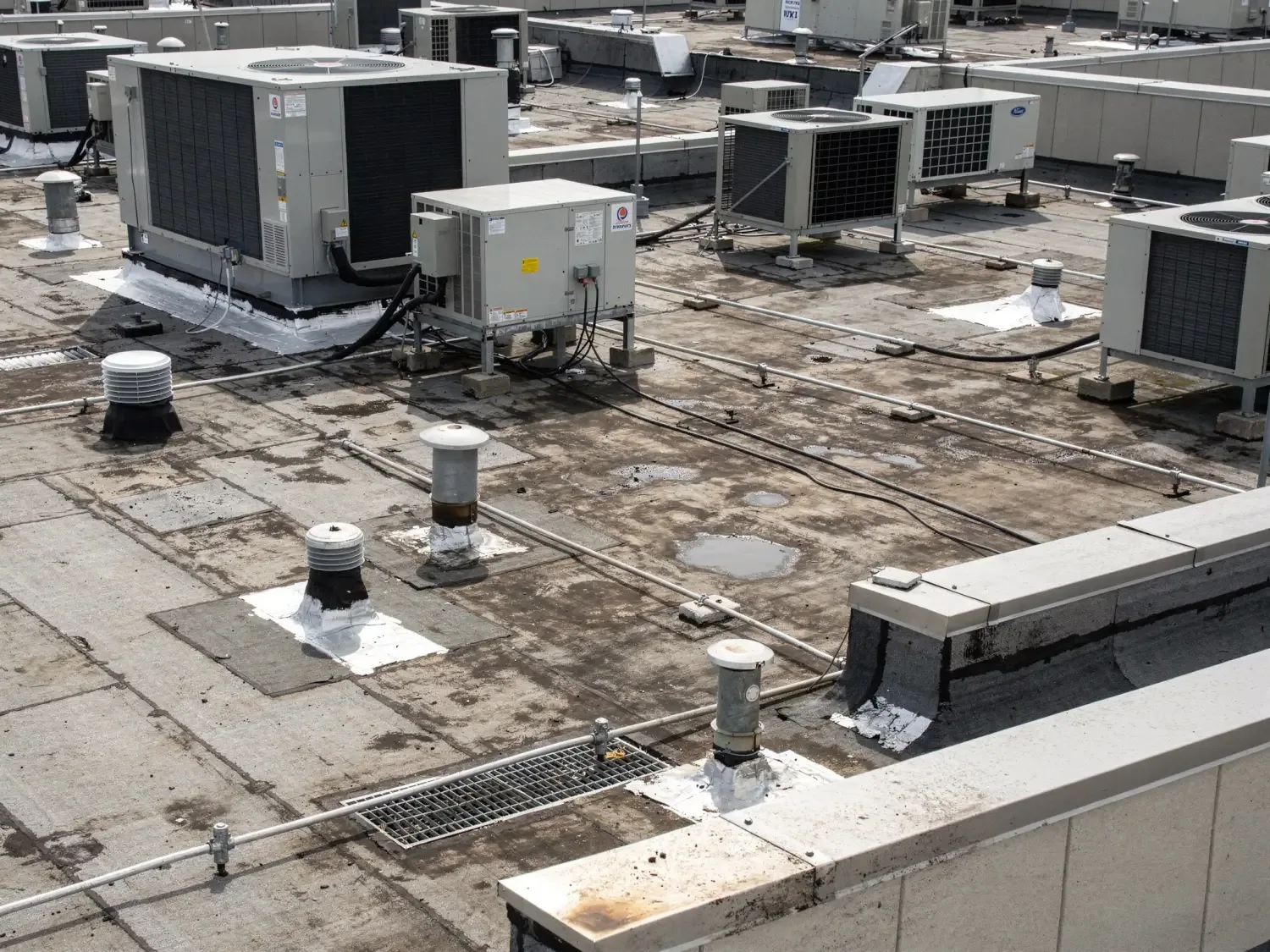
A lifted membrane lap, split sealant bead or open metal corner can admit water even when the broad roof field remains sound. We check whether the edge is clean and bonded, whether the substrate moves underfoot and whether water has traveled beneath the visible opening. At pipe boots and equipment curbs, the inspection follows each side of the flashing to its termination. A surface patch that bridges dirt, wet insulation or a loose edge may hide the opening without restoring a dependable bond.
Material compatibility sets the repair choice. A TPO roof system needs a compatible patch and prepared weld area; an older coating or a different membrane calls for a separate check. We identify the system where records and visible details allow, test adhesion when the condition is uncertain, and mark any area that needs a moisture investigation. The report distinguishes confirmed damage from a question that requires a test, so the owner can approve the narrow repair or compare it with replacement on a fair scope.
Repair line: choose the smallest sound scope
When one penetration or short lap has failed and the material around it is dry and secure, a localized repair may address the water entry. If several details are failing, seams are opening across a larger zone or wet insulation extends beyond the visible leak, the price should show that wider boundary. We photograph the limits, describe the repair method and state what remains outside the scope. That gives a property manager something more useful than a lump sum that leaves the cause unclear.
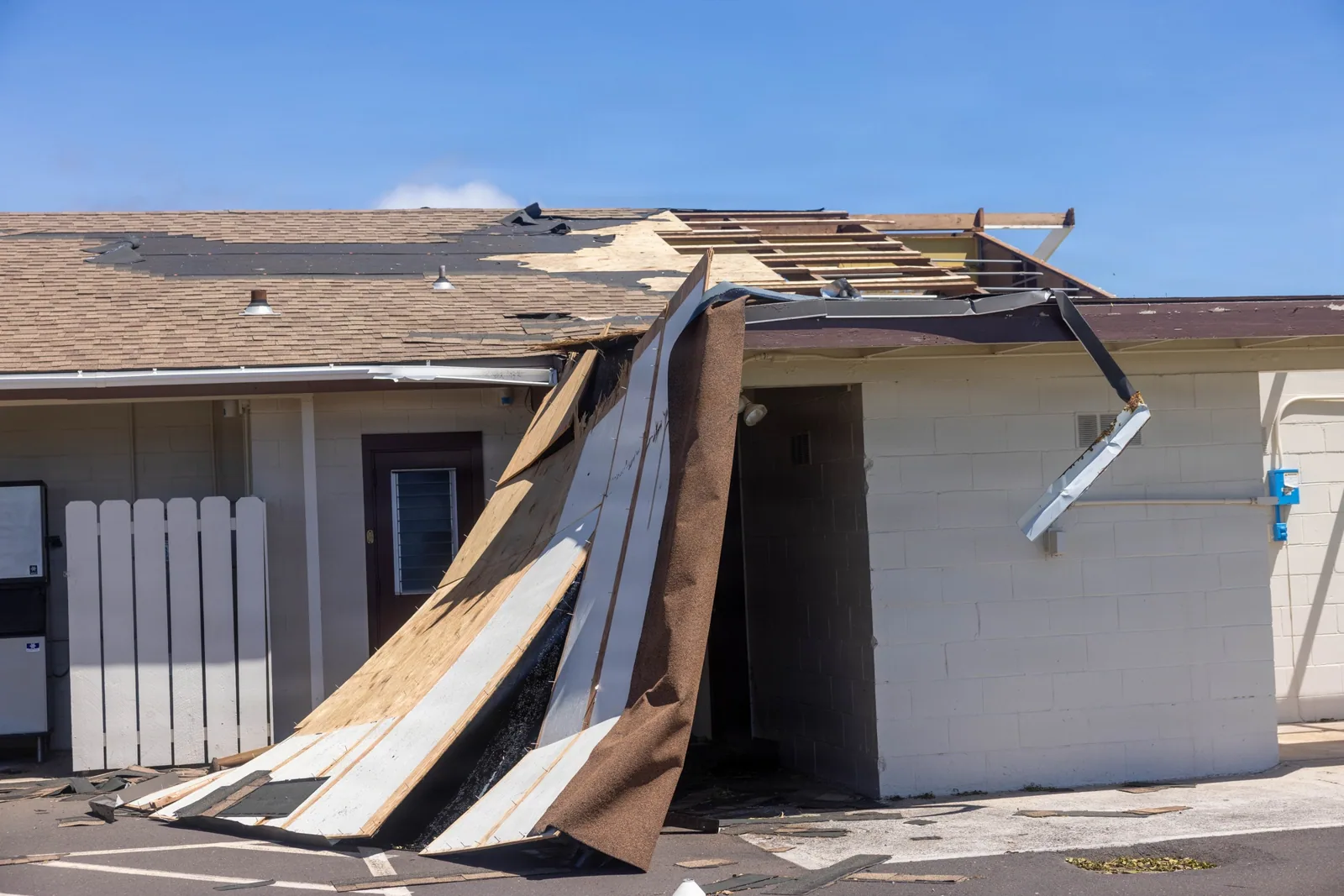
A coating or recover is not a shortcut around a wet substrate. We check attachment, surface preparation, drainage and compatibility before comparing those options with tear-off and replacement. If an approved moisture test changes the area to be removed, the estimate should show how that adjustment affects labor, disposal and schedule. The replacement option can be priced beside a repair when the roof record supports both choices. For storm openings or impact damage, a separate storm-damage scope keeps temporary protection and permanent repair distinct.
Access window: plan around people and equipment
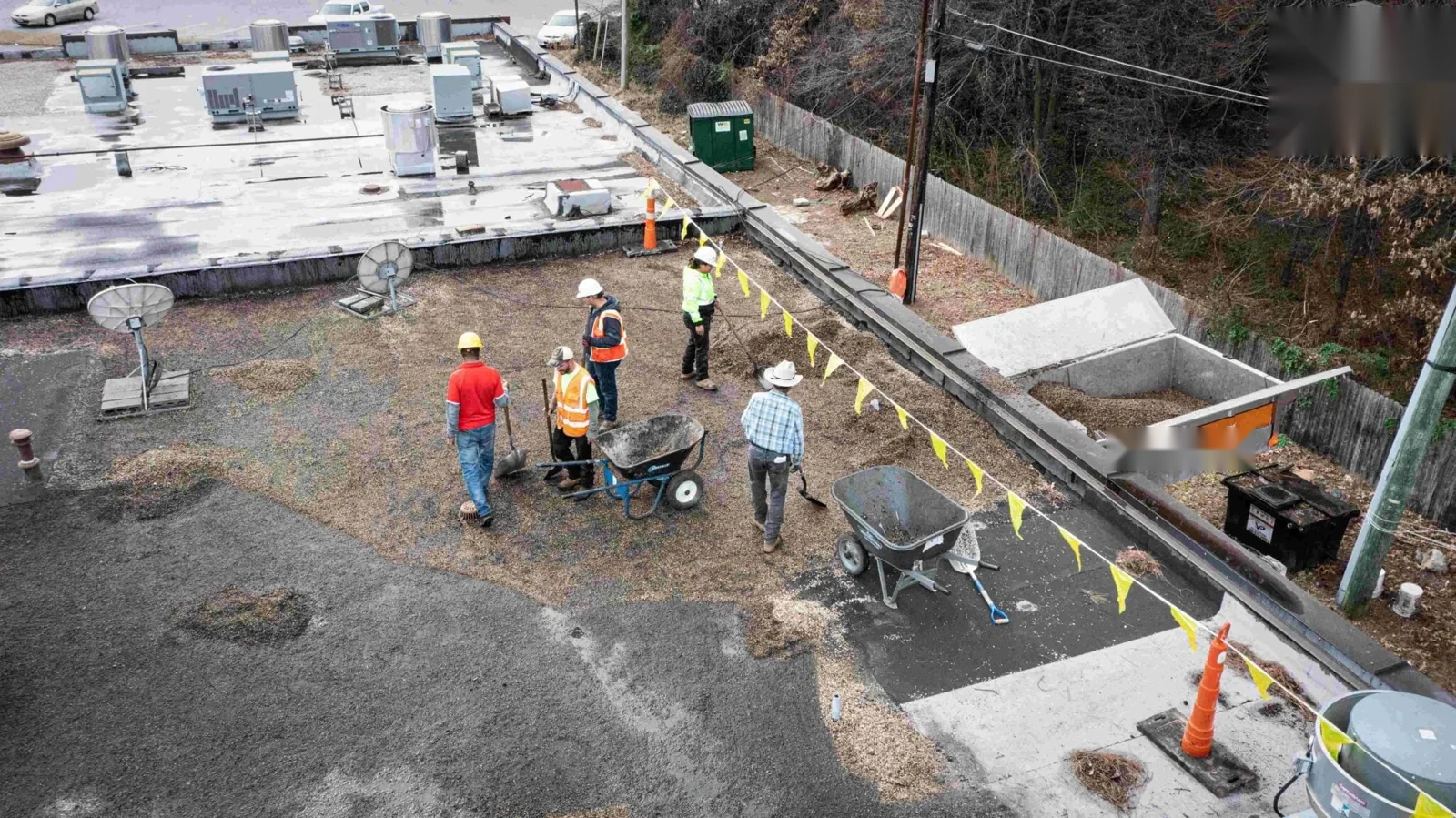
Access affects timing as much as the repair itself. Before the walk, we confirm the approved roof entry, ladder or hatch conditions, escort rules and any areas that need to remain open to staff or customers. If a building operates through the day, a short coordinated window can let us inspect the leak area without interrupting more of the property than necessary.
Weather can change whether a seam is ready for repair. Wet surfaces, low temperatures or a forecasted rain window may affect cleaning, bonding and cure time, so the schedule should identify those constraints instead of promising a fixed finish before the roof is checked. If water is entering now, temporary protection may be priced first, followed by a permanent repair after the substrate and detail can be prepared. Our occupied-building roofing approach keeps phasing, access and communication in view when work overlaps normal operations.
Roof record: leave a decision trail
A useful service record ties each photo to a roof location and next action. We note the opening, nearby seams, drain route, suspected moisture boundary and any test that could change scope. The owner can compare those observations with prior repair notes, warranty documents and maintenance records. If a record names a membrane or installation date, we verify the visible assembly before choosing materials.
The roof decision comes from the property in front of us, with the repair boundary and any remaining uncertainty written down. An owner with another building in the Sunset Boulevard corridor or Kennydale gets a separate walk from that property's own details.
Commercial Roofing Questions
Can a ceiling stain in a Southcenter building identify the roof opening?
Usually it identifies where water became visible, not where it entered. We trace the route above the stain, inspect the nearest curb, lap and drain details, and record any path that could carry water sideways. If the source stays uncertain, we explain whether a targeted test would change the repair scope before pricing more roof area.
When is a local repair enough instead of a larger replacement?
A repair is supportable when the surrounding membrane is bonded, the substrate is dry and the failure has a defined edge. We widen the scope when moisture, loose attachment or repeated detail failures extend beyond that point.
How do you keep a roof walk from interfering with deliveries or customers?
We set the access window with the property contact, identify restricted areas and plan the inspection route around active entrances and equipment service paths.
Does the area tell you what roof a Southcenter building has?
No. The district mixes retail, office, lodging, warehouse and light-industrial uses, and the assembly belongs to the individual building. We verify the membrane, metal details and roof records on site before selecting a compatible repair or discussing replacement.
What can delay a membrane repair after the inspection?
A wet substrate, uncertain repair boundary, incompatible patch material or weather that prevents a sound bond can change the sequence. We note those conditions, explain any test needed and separate temporary water control from permanent work so the schedule reflects what the roof can accept.