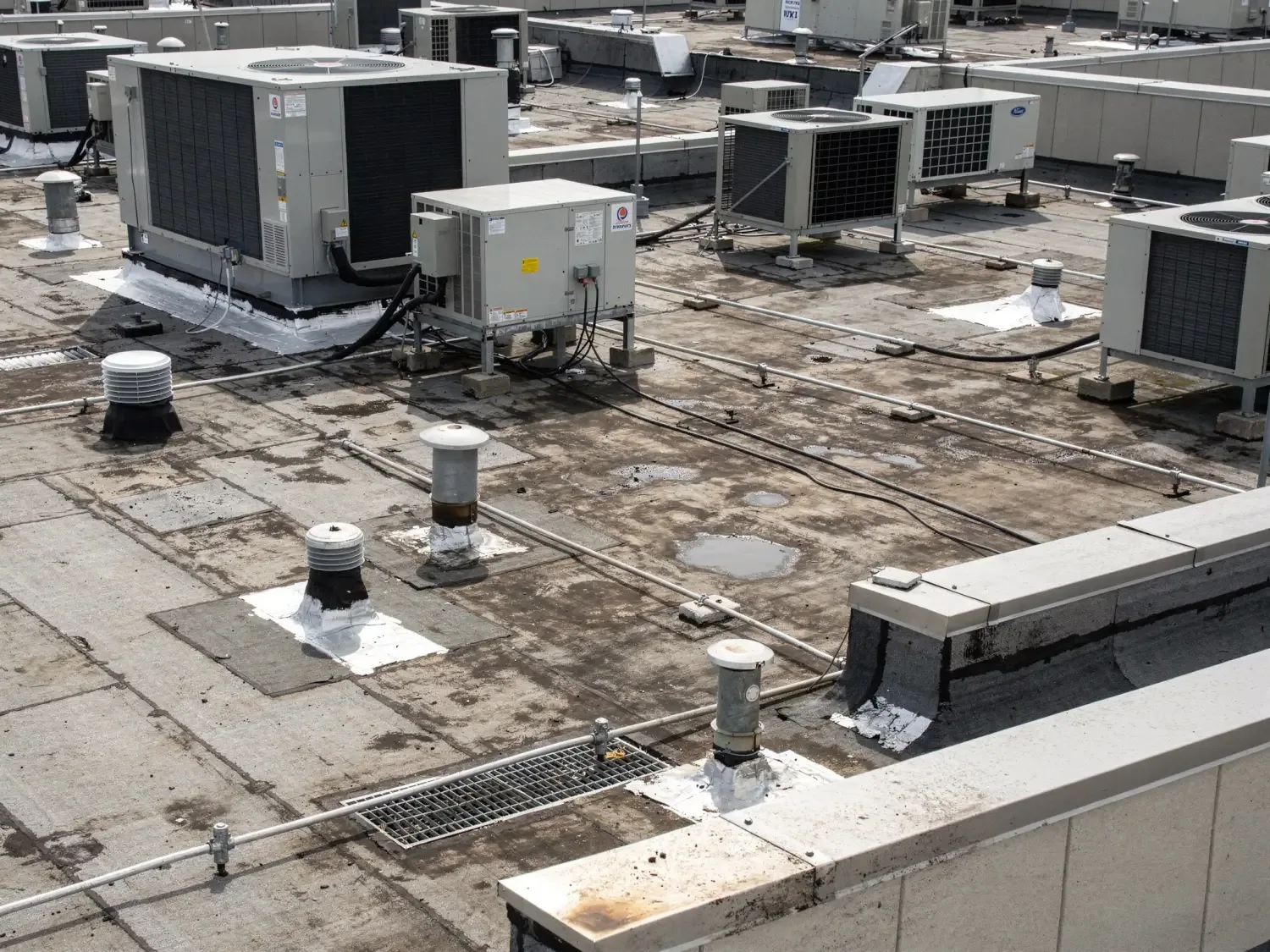

A drip near a corridor light can be a longer walk on the roof than it looks from below. In Renton, we map the reported area to the nearest drain, curb and membrane transition, then agree on an access window that keeps patient and staff routes clear. Sea-Tac normals show November and December precipitation well above July, a regional wet-season signal that makes drainage and temporary protection worth checking before a repair opens the roof.

Healthcare work can involve clinics, offices, support buildings and larger occupied properties, each with its own access rules and service schedule. Renton reports healthcare as a major local employment sector, where Valley Medical Center and several regional health systems are among the institutions. We check the actual assembly, water path and operating limits before recommending repair, testing or replacement.
Occupied route: protect the work below
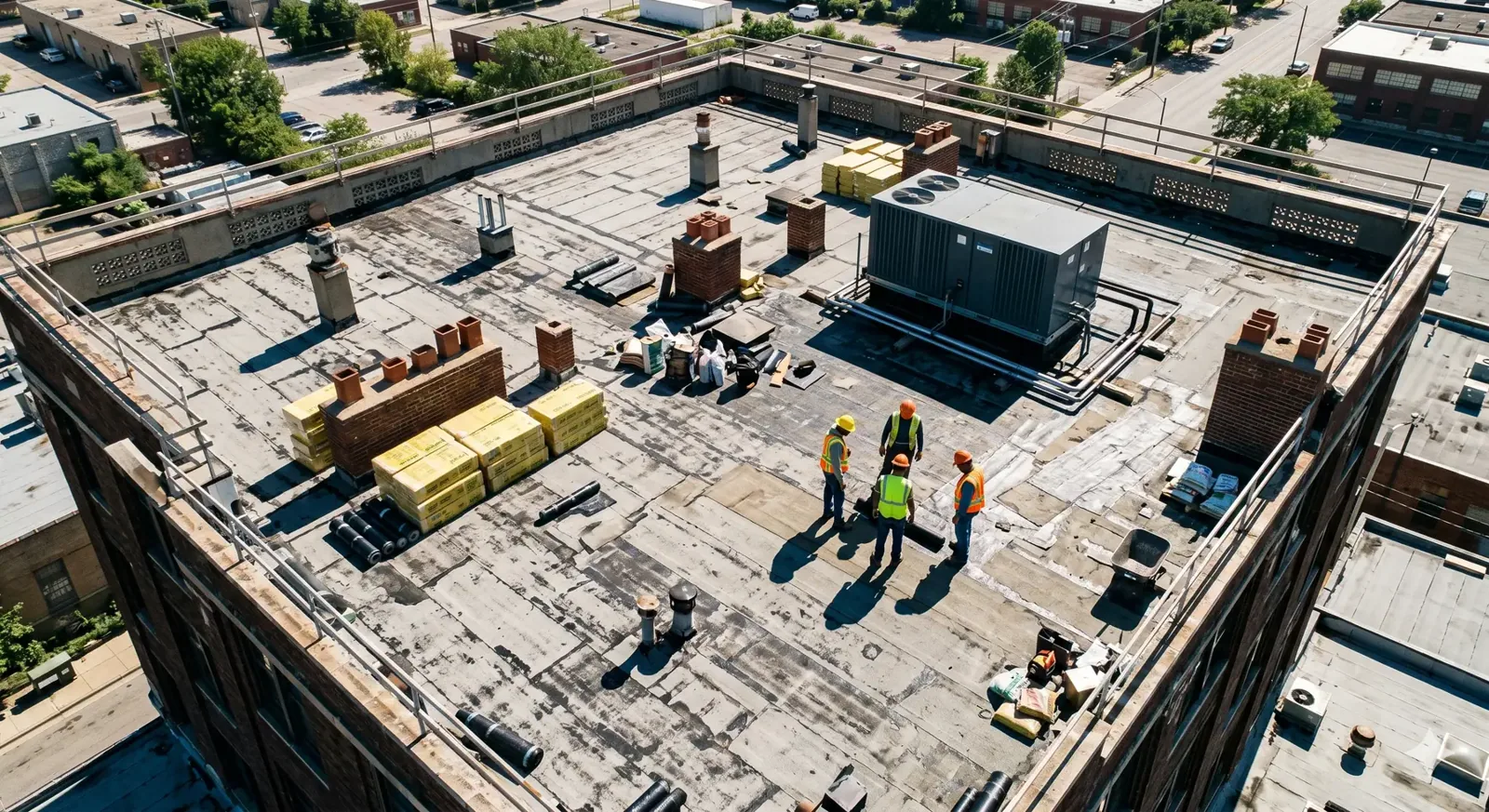
Roof access may cross a secure entrance, a service lane or an area used by staff between shifts. Before the roof walk, we identify who can authorize entry, which routes must stay available and whether rooftop equipment needs a separate trade. That information shapes material staging, lift placement and the order of work. A phased occupied-building reroof can set boundaries that staff can recognize and the site contact can communicate.
A clinic or office building in Renton Urban Center raises the same access questions as any other occupied building. We keep the recommendation tied to the building observed, recording access limits and what work can proceed without entering restricted areas.
Where a leak affects a patient-facing room or critical support area, first define the affected ceiling zone and whether water is active. We can place temporary protection, trace the roof route and identify the repair line, then coordinate any ceiling or mechanical work with the responsible facility team. A roof emergency response can address active water control while a broader assembly review follows.
Drainage check: map the wet-season route
Water that reaches an interior room may have traveled beneath a membrane before it appeared. We compare the room location with roof slope, seams, curbs, pipe boots and outlets, then note where the route changes direction. A commercial roof inspection records accessible details and the limits of the visit. A drain or flashing problem may need a localized repair, while a wider moisture pattern can call for testing before the boundary is set.
Roof drains above corridors and mechanical rooms carry more consequence than those above storage, so we rank outlets by what sits below them and clear the highest-consequence outlets first.
Sea-Tac's November and December normals are notably wetter than July. For a healthcare property, that regional pattern makes clear drains and a protected end-of-day work line practical items before the wet season. We inspect actual outlet bowls, strainers, scuppers and nearby seams, then record whether water remains after debris is cleared.
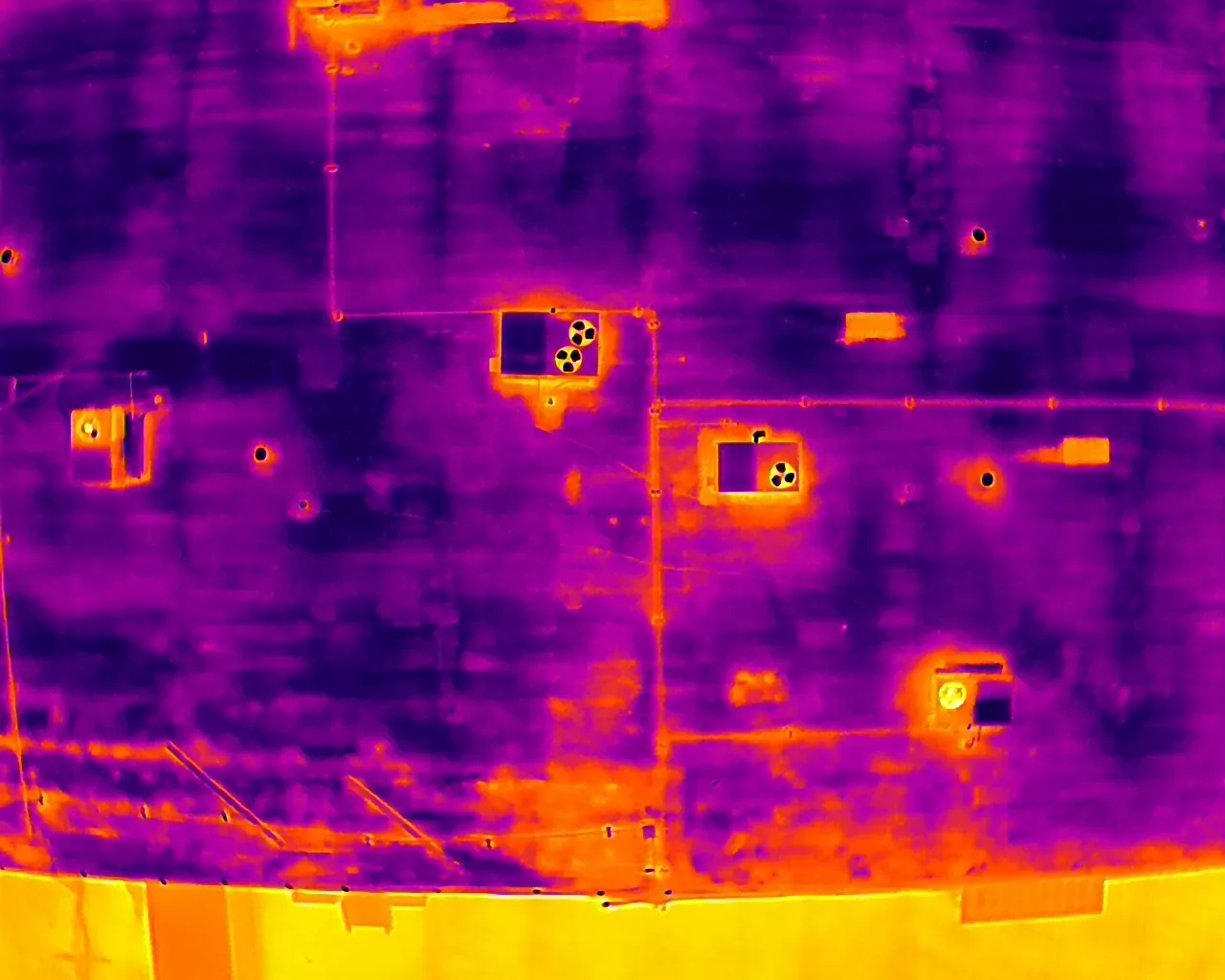
If an insulation concern extends beyond the visible leak, an infrared moisture survey can help map areas for closer inspection. We explain where the survey will be performed and what test opening may be needed to confirm an assembly. The system and the roof plan guide the route, so the healthcare team can review the proposed access with facilities staff before testing starts. If the survey suggests a test cut, we identify its location, the protection needed inside and how the opening will be closed before work begins. A facilities lead can then coordinate room access, infection-control requirements and any mechanical trade that shares the area. We keep that coordination tied to the specific roof zone, so the work request has a clear purpose and a defined return-to-service point.
Assembly review: keep repair and replacement distinct
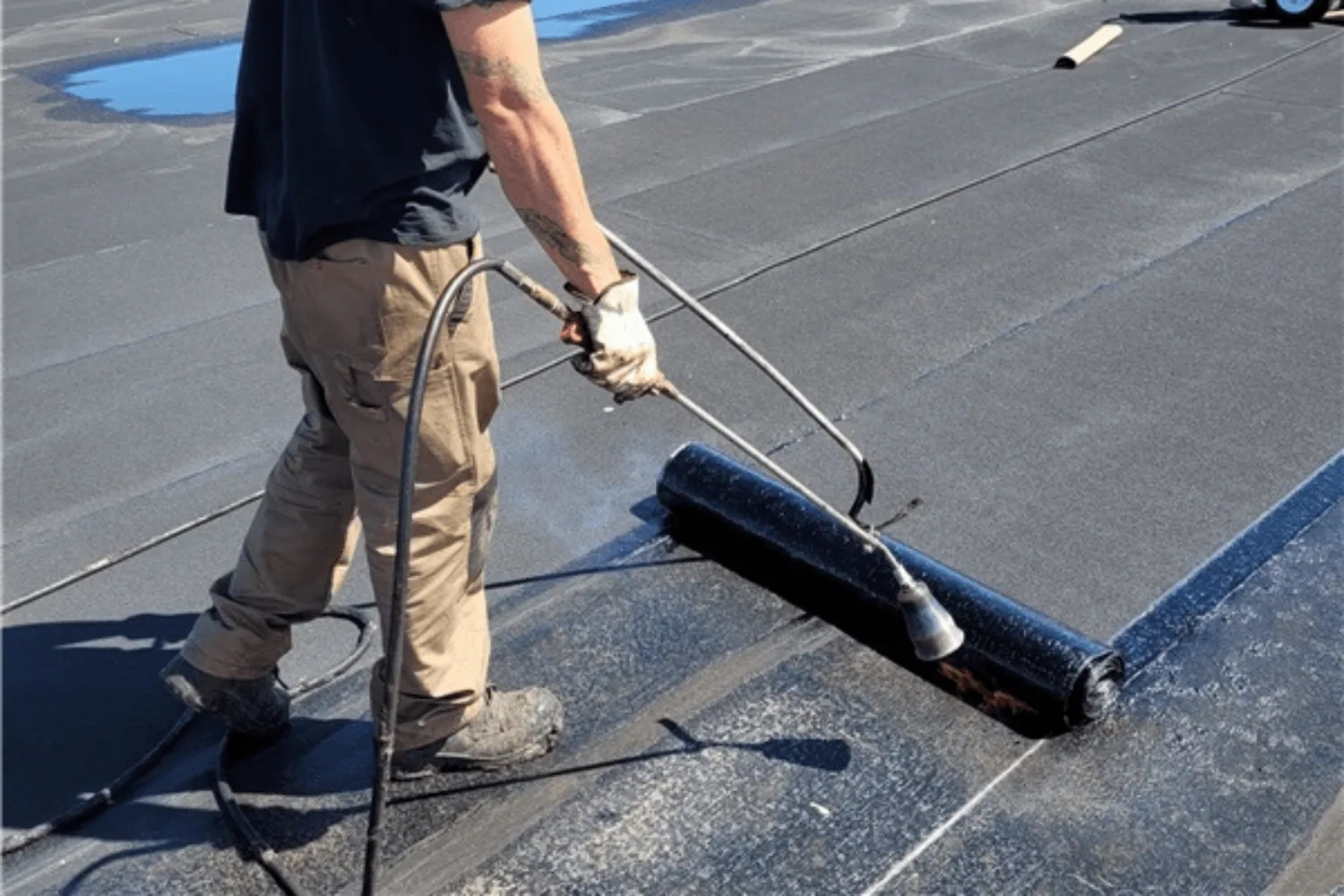
A small puncture or loose penetration flashing can be repaired when the surrounding membrane and insulation are serviceable. If moisture, seam separation or surface wear appears in several zones, a larger comparison may be appropriate. Our repair scope identifies the affected detail and tie-in. A replacement comparison states removal, substrate repairs, insulation and new flashing work so the facility team can see what changes in the assembly.
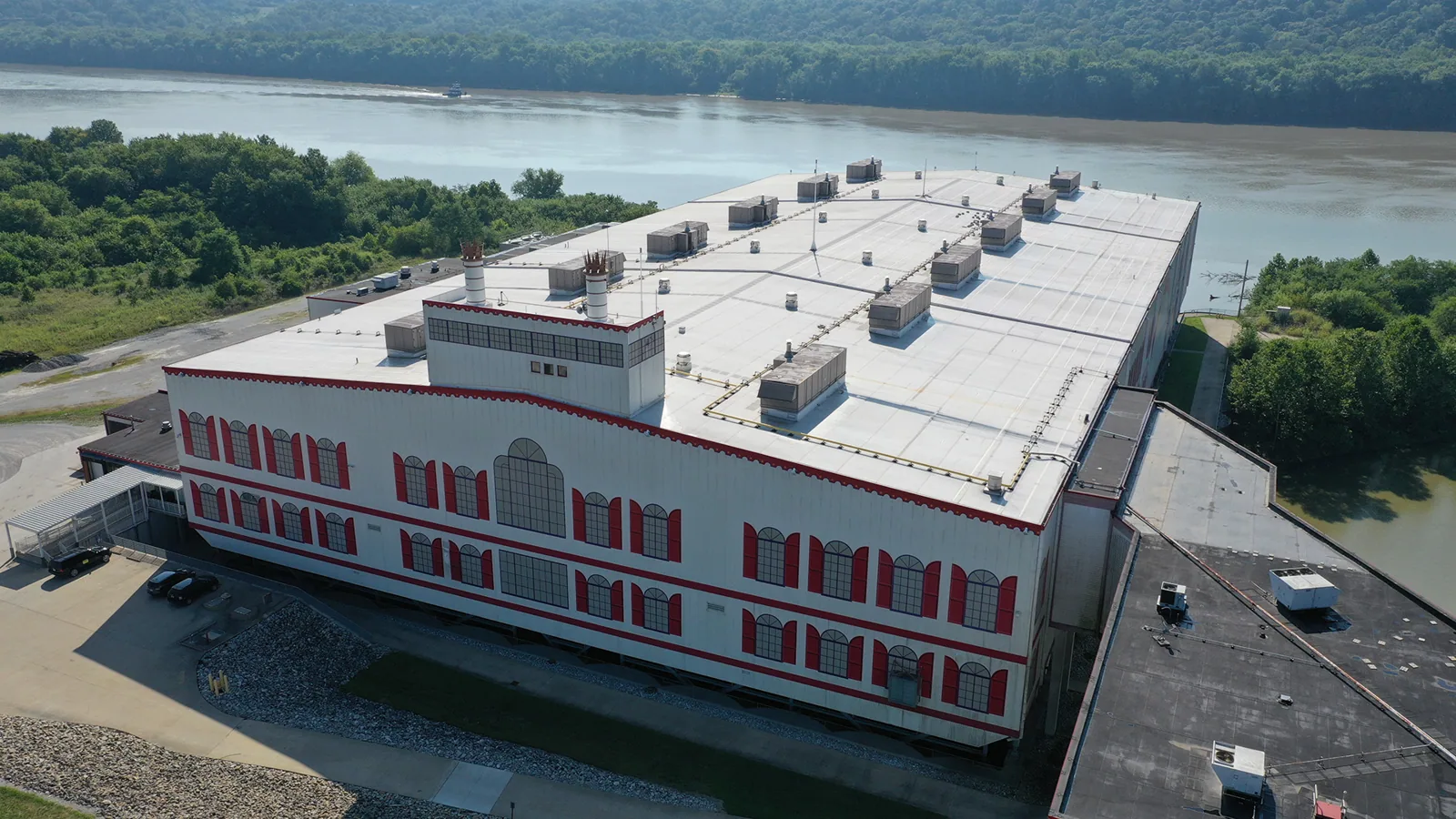
On a roof with multiple mechanical units, curbs and service lines, clearances affect both the inspection and repair sequence. We mark which equipment stays live, what needs a qualified trade and where temporary protection must not interfere with drainage. If a recover is being considered, we review existing layers, moisture and perimeter height before describing it as an option. A TPO assembly is one possible system, but its suitability depends on the roof and project requirements.
The city describes the Renton Valley Subarea as an industrial and warehousing district with longstanding logistics and light-manufacturing uses, so a healthcare portfolio that spans Renton can include buildings whose neighbors are dock operations. Roof access, service continuity and the condition found on each building determine the work plan.
Closeout record: connect photos to decisions
A photo without a roof location can be hard to use during the next water call. We mark repaired areas, nearby drains, seams and penetrations on a roof sketch, then note sections not reached and any follow-up test. For a multi-building system, keep the address, affected department and work date beside each image, rather than combining photographs from separate roofs. That small record detail helps a later facilities review distinguish a repeat leak from a new report and gives contractors a clear place to begin. The record helps facilities staff connect a repair to a room report and communicate the boundary to other trades. A roof condition report can keep these observations with maintenance recommendations and photographs.
When a building is part of a wider system, each address still needs its own access notes and roof history. A restoration coordination plan may help when documentation has to connect roof observations with a covered loss review, while a construction partner may coordinate adjoining trades during capital work. The roofing scope remains specific about what was inspected, repaired and left for follow-up.
Send the Renton address, roof plan, reported water location, site access rules and available work windows. We will outline the first roof-walk route, note any trade coordination and explain what decision the observed condition can support.
Commercial Roofing Questions
How do you keep roof work from interrupting patient and staff access?
We map the affected roof zone, material route and any lift or closure with the facilities contact. The scope identifies the work boundary and access window, with separate trade coordination called out before the roof is opened.
What should happen when a ceiling leak is active?
Protect the room, report the water location and identify whether the leak is continuing. We trace the likely route on the roof, make a defined temporary or permanent repair where conditions allow, and record what still needs follow-up.
When is moisture testing useful for a healthcare roof?
Testing helps when its result could change the repair boundary or assembly decision. We identify the area to survey or open, review access with facilities staff and explain what the finding can clarify before proceeding.
Can reroofing be phased while a medical building stays open?
Phasing can divide removal, installation and temporary protection into areas that fit confirmed access windows. The sequence should account for entrances, equipment, patient-facing zones and weather exposure at each day's closeout.
Which records should facilities keep after a roof repair?
Keep the roof sketch, photos, repair location, materials, access notes and any item left for follow-up together. That gives the next facilities team a usable starting point when a room reports water again.