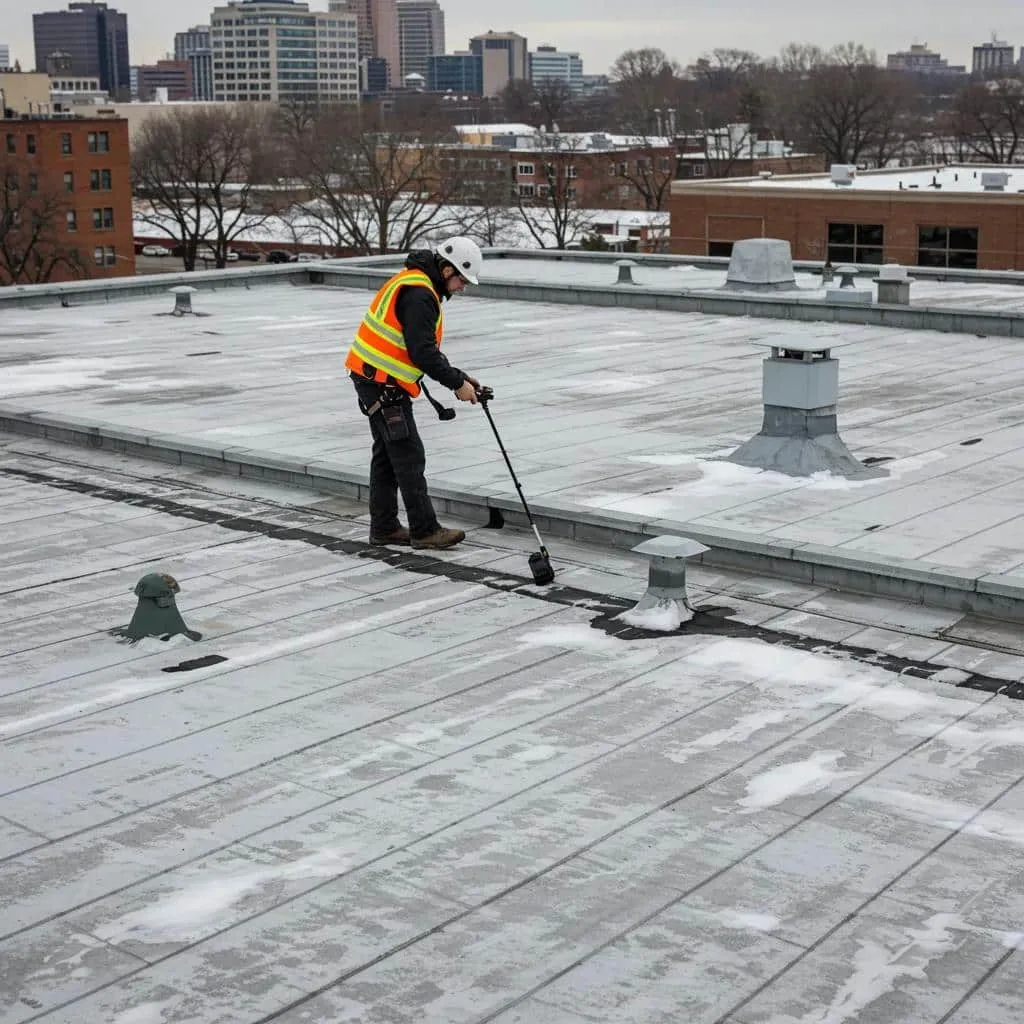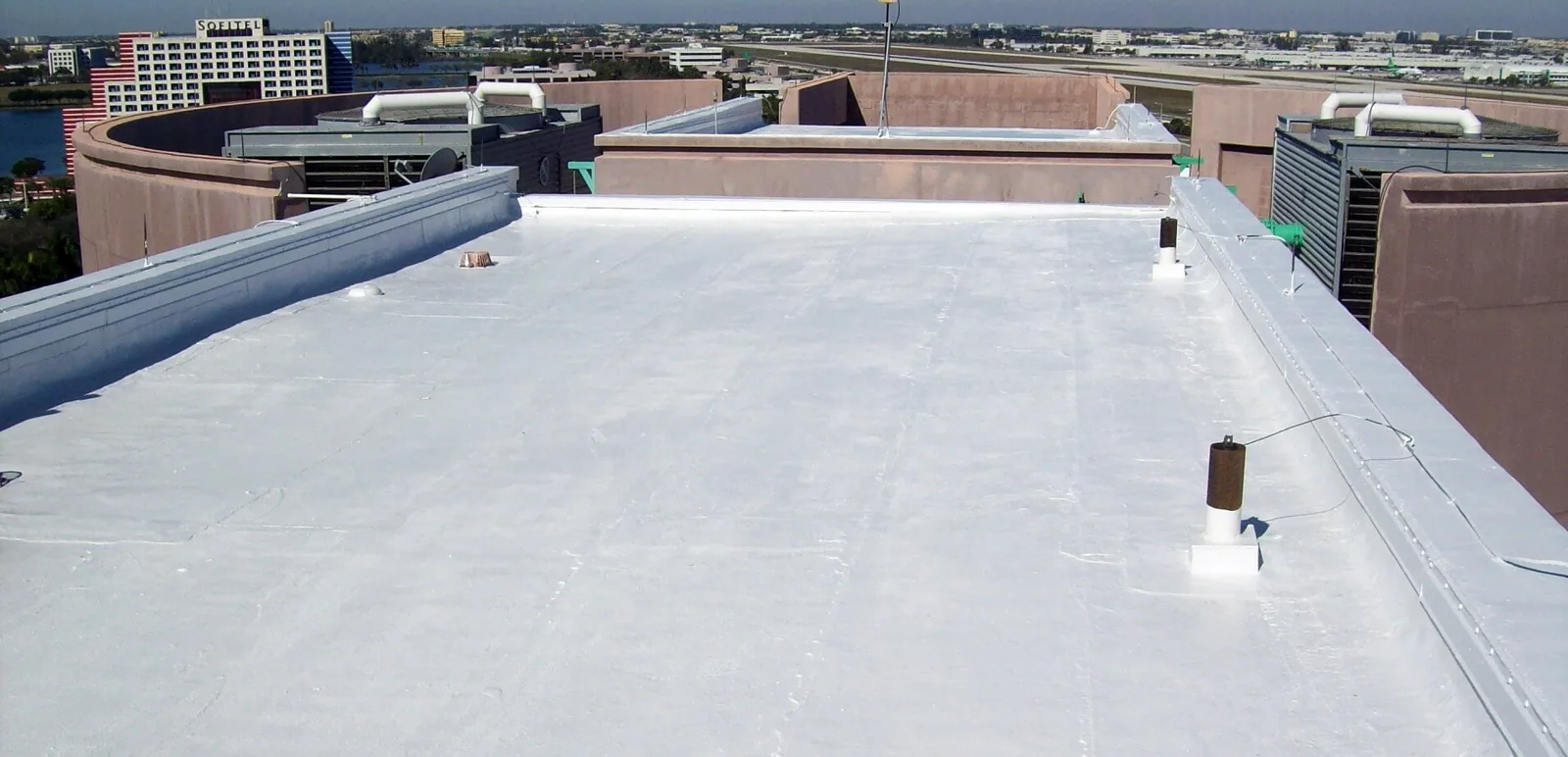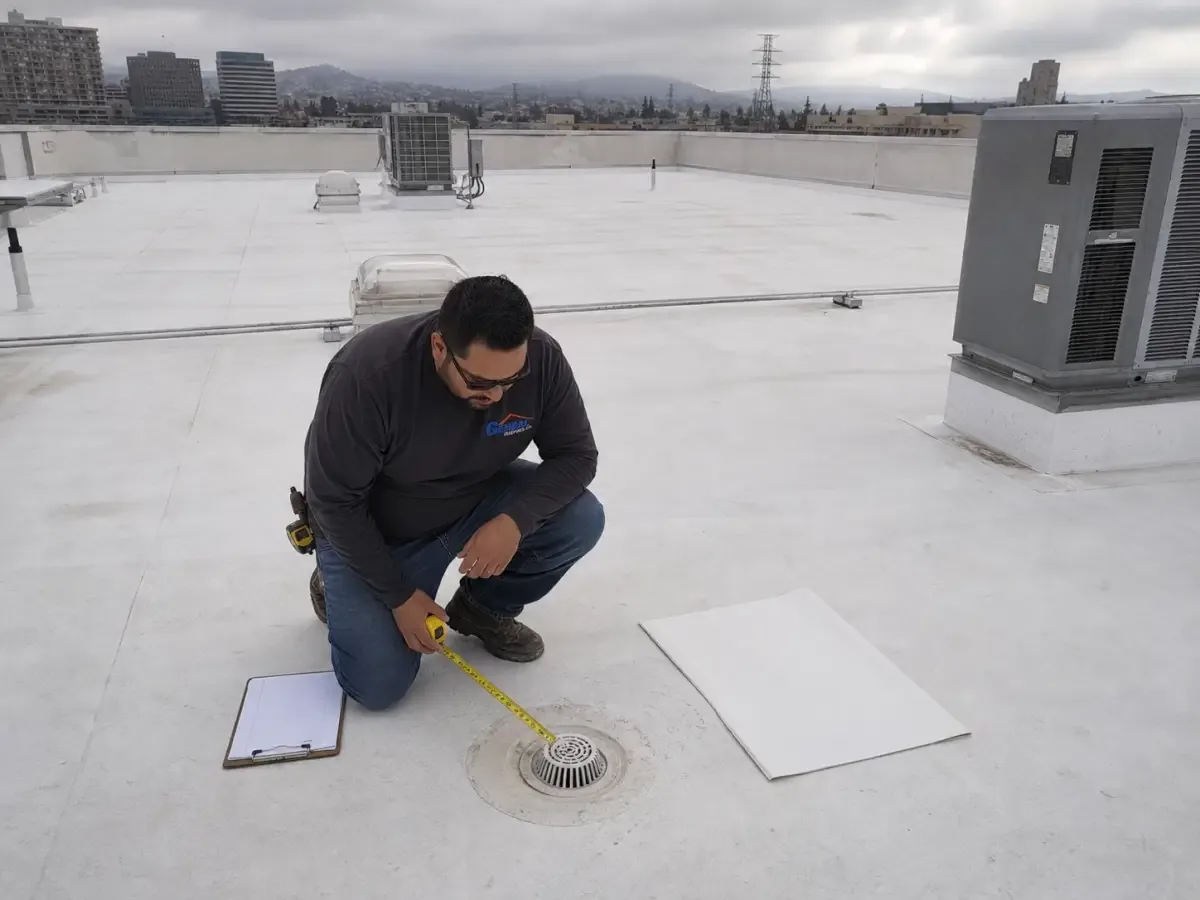
A dark mark beside a rooftop exhaust can point to a leak, surface residue, or a detail that needs closer inspection. On a PVC roof, we trace the water path from that area to the next outlet and check the welded lap, flashing and nearby sheet before recommending a repair. Renton's late-fall rain pattern makes drainage worth reviewing ahead of the wet season.
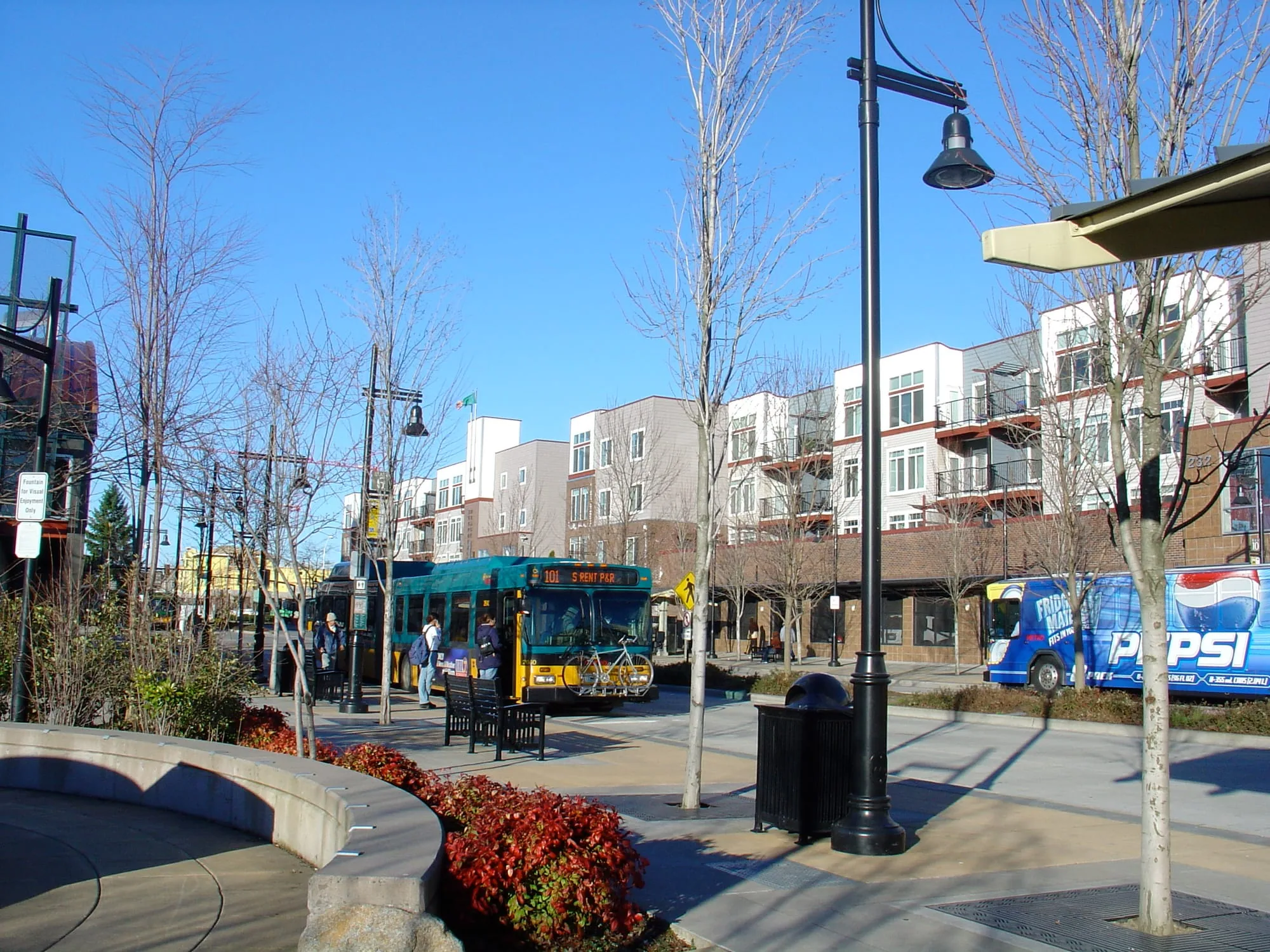
Exhaust staining is worth asking about on any PVC roof, whether it sits over an office in Downtown Renton or a manufacturing building in the Renton Valley Subarea, where the city sees mostly industrial and warehouse use. We inspect the PVC surface, its attachment and transitions, then plan around the building's equipment and operating window.
Exposure: identify what reaches the membrane
PVC is a thermoplastic single-ply membrane with heat-welded seams. Its formulation can suit roofs where grease, oils or other substances may reach the surface, but exposure still needs to be identified rather than guessed from the building label. We ask about exhaust paths, maintenance work, spills and any process changes, then inspect whether the membrane has softened, stained, cracked or lost integrity around that area.
At a property near the Renton Valley, manufacturing and logistics uses are part of the district's history, so equipment routes and process exhaust may matter during an assessment. The roof inspection records what is present, while a condition report can tie photographs and follow-up items to the roof plan.
If a localized exposure is still active, replacing the affected sheet without addressing the source can leave the new material facing the same condition. We coordinate with the property contact and, when needed, the responsible mechanical or process trade to understand the route. The repair scope then separates membrane work from any source-control task, so ownership can decide what must happen first.
Welds: test the lap and its surroundings
A sound PVC seam has a continuous fused bond. We inspect for an open edge, a fishmouth, contamination, wrinkles or a patch with a weak perimeter, then test the joint where the condition warrants it. A probe can find a separation, but it cannot explain why it opened. Movement, poor preparation, water at the seam or a later cut may each call for a different repair boundary.
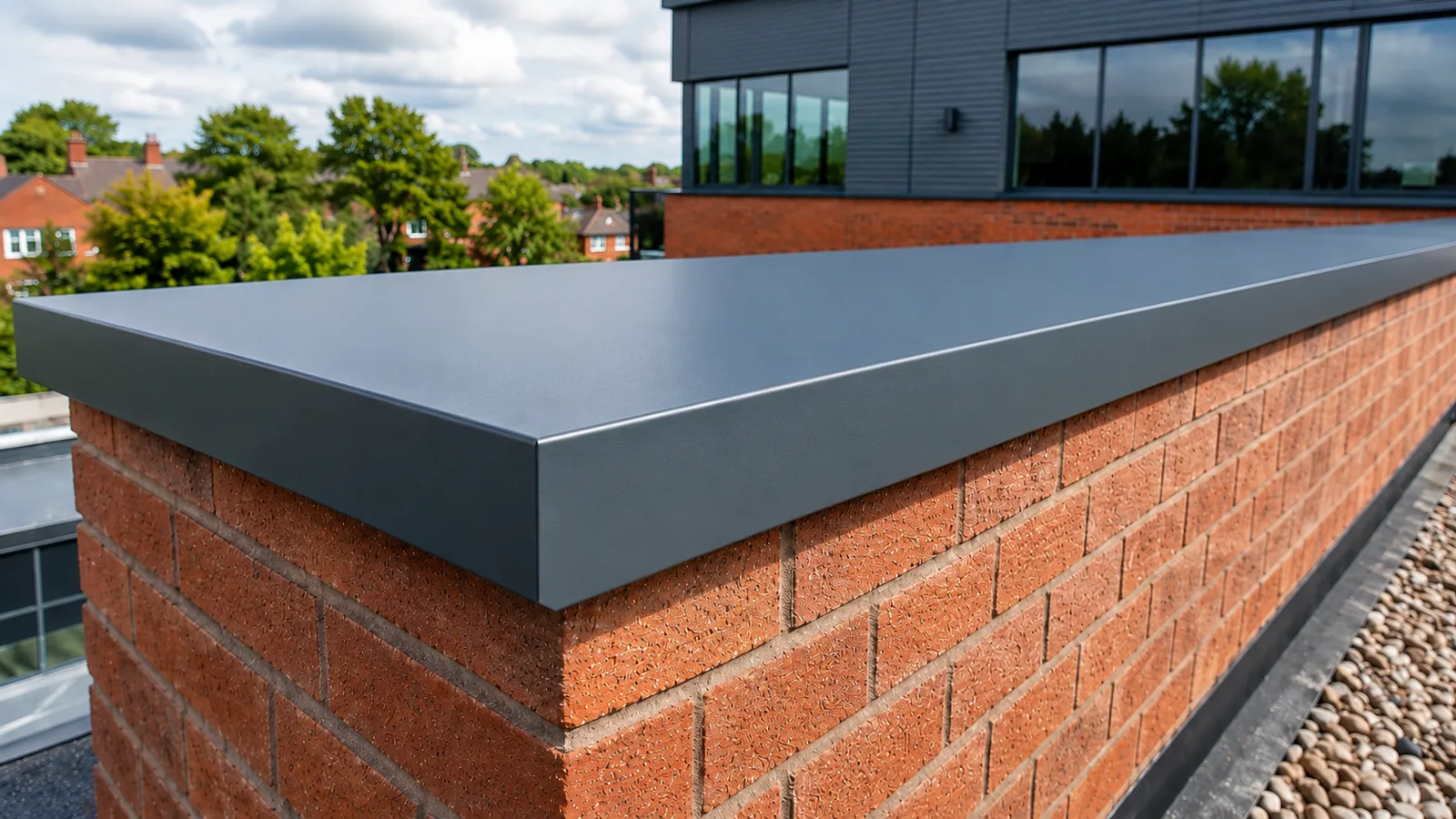
Repairs begin with compatible material and a clean, dry surface. We remove failed material as needed, prepare the surrounding sheet and weld the patch so the new bond reaches sound membrane. Corners and changes in plane deserve their own attention because a flat patch can leave a vulnerable turn untreated. The perimeter and coping work can be coordinated with the membrane repair when the edge transition is part of the leak path.
Prior repairs should be checked rather than assumed sound because they look newer. We inspect patch edges and adjacent laps, mark any section that needs more preparation, and avoid burying a questionable joint under another layer. If a test opening is needed to understand moisture or attachment, we explain the location and get approval before making it.
Drain route: follow water before choosing scope
PVC seams can be intact while a low spot keeps water against a penetration or flashing turn. We map the roof slope, drain bowls, scuppers and overflow path, then compare that route with the reported interior condition. The Sea-Tac normals show far more precipitation in November and December than July, which makes the route worth checking before the seasonal shift. The building's own drainage condition still has to be observed on site.
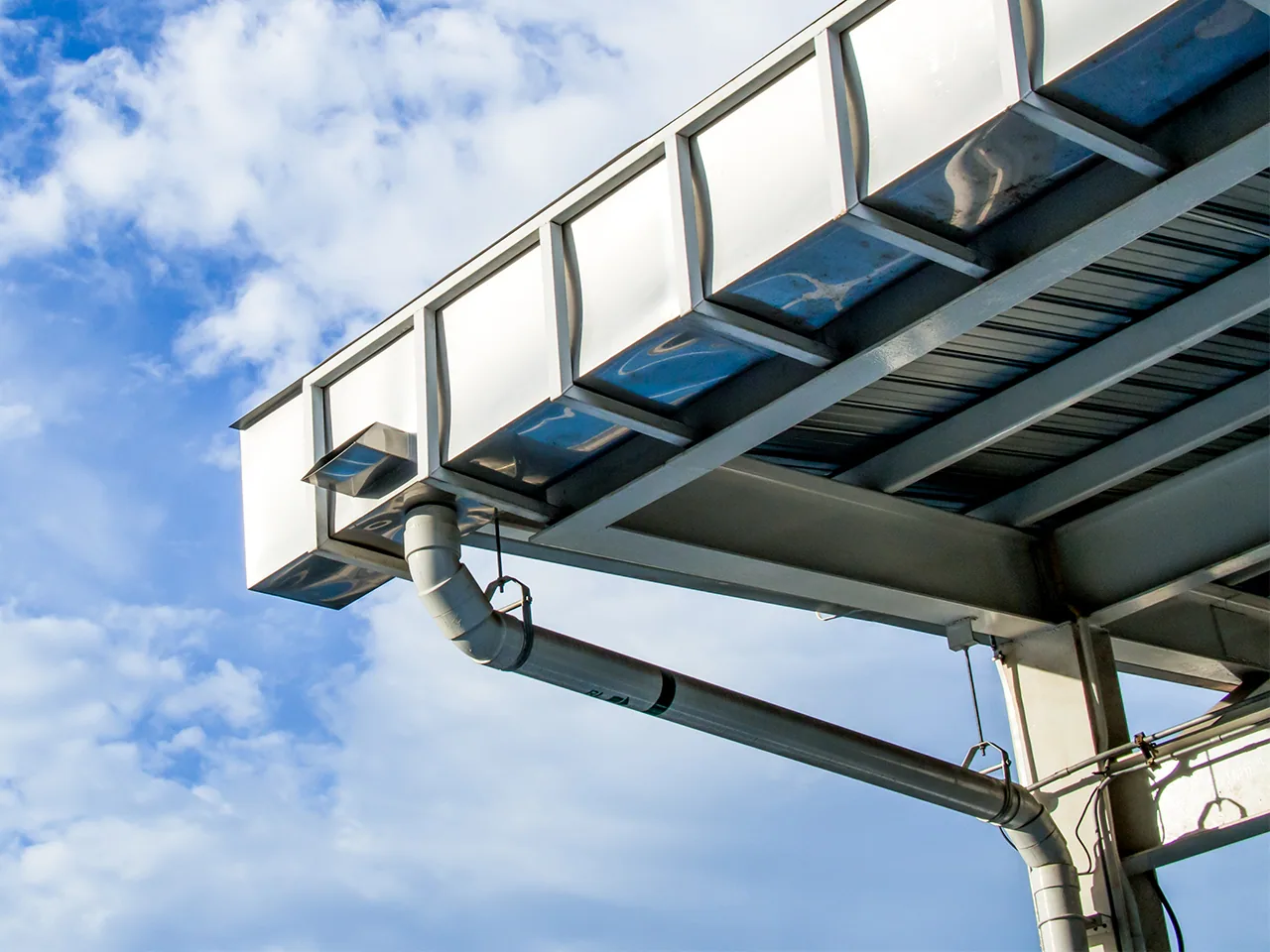
A drain and scupper check can isolate a blocked outlet or damaged connection from a membrane failure. We note where debris gathered, whether the drain ring is secure, and if the surrounding sheet is pulling away. If the low area reflects a slope or structure issue, a PVC patch alone will not remove the ponding. That distinction belongs in the repair line and any larger assembly comparison.
On an occupied building in Downtown Renton, an inspection may need to fit around tenant access, mechanical service or a limited roof entry point. In the Renton Valley, the contact may need a window around receiving or other active use. We confirm the safe route and the areas that must remain available before staging tools, then identify any section we could not reach.
Assembly: decide between repair, recover and replacement
The visible PVC sheet is only one part of the roof. We review records, visible edges and test information to understand insulation, cover board, attachment and deck concerns. Soft areas or recurring water can justify targeted testing, but a thermal contrast alone does not confirm wet insulation. If opening the roof would change the recommendation, we explain what the test would answer and ask the owner before proceeding.
Where the membrane remains attached and the underlying layers are suitable, isolated seams or flashings may be repaired. Broad deterioration, trapped moisture or repeated failures can point toward replacement. A recover review can compare a new assembly when the existing roof and edge heights allow it; a replacement scope addresses removal and the conditions below the sheet. We list the assumptions that could change either option.
Material choice also depends on transitions to adjacent systems, rooftop equipment, walkway requirements and maintenance access. For a wider system comparison, a TPO membrane or an EPDM assembly may be considered alongside PVC, while the decision should stay tied to the building's use and exposure. We describe the seam, flashing, drainage and edge details that each option must resolve, not only the field sheet.
Work window: protect the open edge
Heat welding requires a dry prepared surface and a workable application window. Before repairs begin, we agree on access, staging, protected areas and the point where the day's work will close. Where occupants or equipment remain active below, we coordinate the roof route and any limits on noise, odor or access. If rain interrupts an open detail, temporary protection and a clear return point keep the exposed area from being left without a defined closeout.
At project close, the roof record should identify repaired welds, new flashing, drains checked and any area that remains outside the scope. A later maintenance visit can revisit those details and note changes before the next wet season. For an assessment in Renton, send the roof plan, leak location, repair history and access window. The first roof walk will show where a test would make the next decision clearer.
Commercial Roofing Questions
When is PVC a useful membrane choice?
Exposure, roof geometry, drainage, attachment and transitions guide the choice. We inspect the conditions that matter at the property and compare PVC with other assemblies rather than selecting it from a building type alone.
How can a manager tell whether a PVC seam has opened?
A lifted edge, split, wrinkle or recurring leak near a lap can justify a closer check. We inspect the weld and adjacent sheet, then determine whether the separation is local or connected to a larger movement or drainage issue.
Can PVC handle grease near rooftop equipment?
The source and route of the exposure matter. We identify what reaches the roof and check the membrane around exhaust or service areas, then coordinate source control if the condition could continue after a sheet repair.
Does standing water mean the PVC needs replacement?
Not by itself. We inspect the outlet, low area, membrane and underlying assembly, then explain whether cleaning, detail repair, drainage correction or a larger roof decision fits what we found.
What records help compare a repair with replacement?
Roof plans, repair history, leak locations and prior test results help us trace what has changed. We verify key details in the field and identify any testing that could alter the scope before pricing the options.