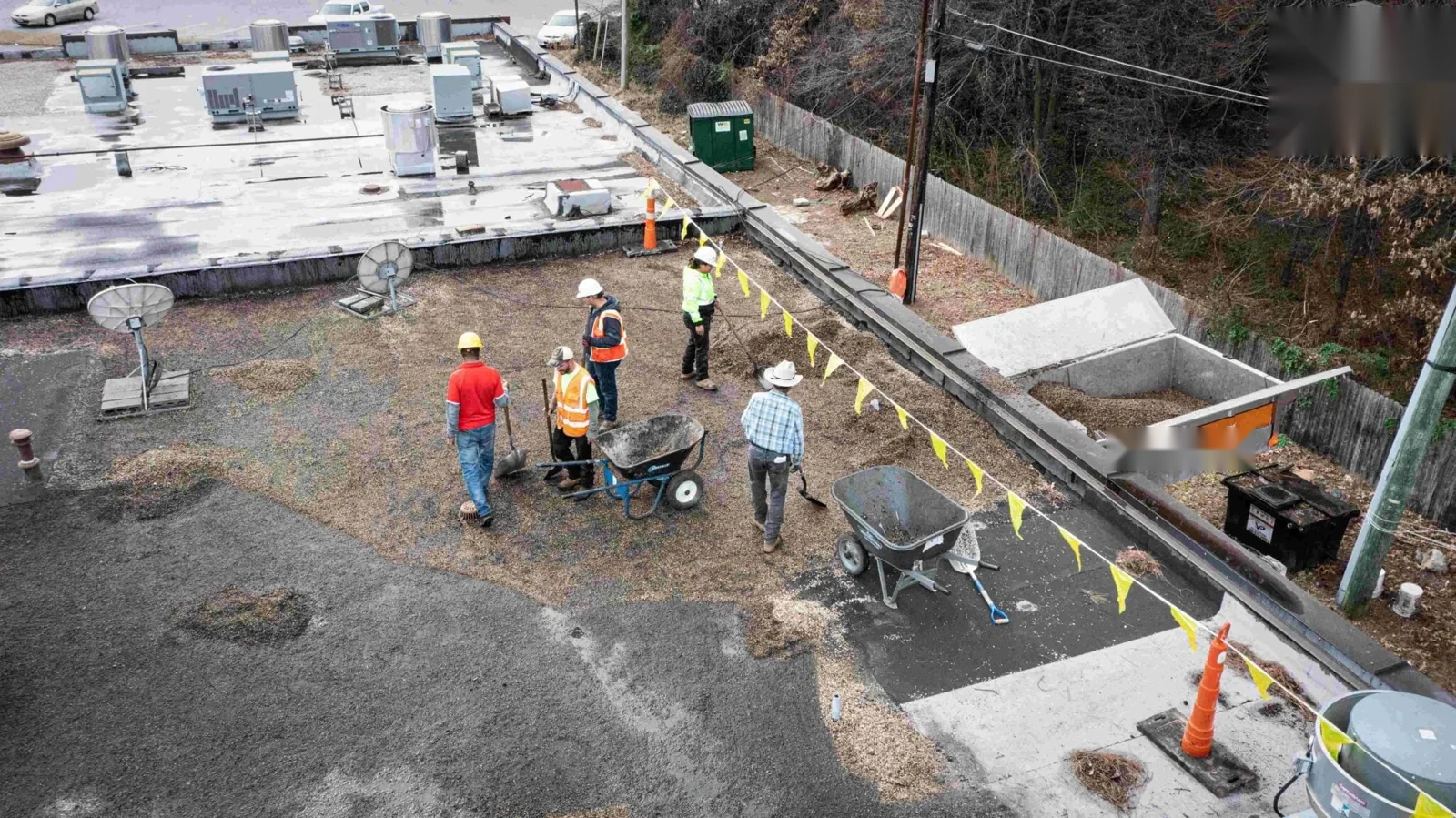
A TPO lap that has lifted at one corner can let water travel well beyond the place it appears indoors. In Renton, we begin by following that seam and the low route to an outlet, then check what changed around curbs, pipes, edge metal and previous repairs. At Sea-Tac, the stretch from November through December is far wetter than July, which makes a wet-season check useful. Those figures do not describe a particular roof, so the roof walk has to settle its actual condition.
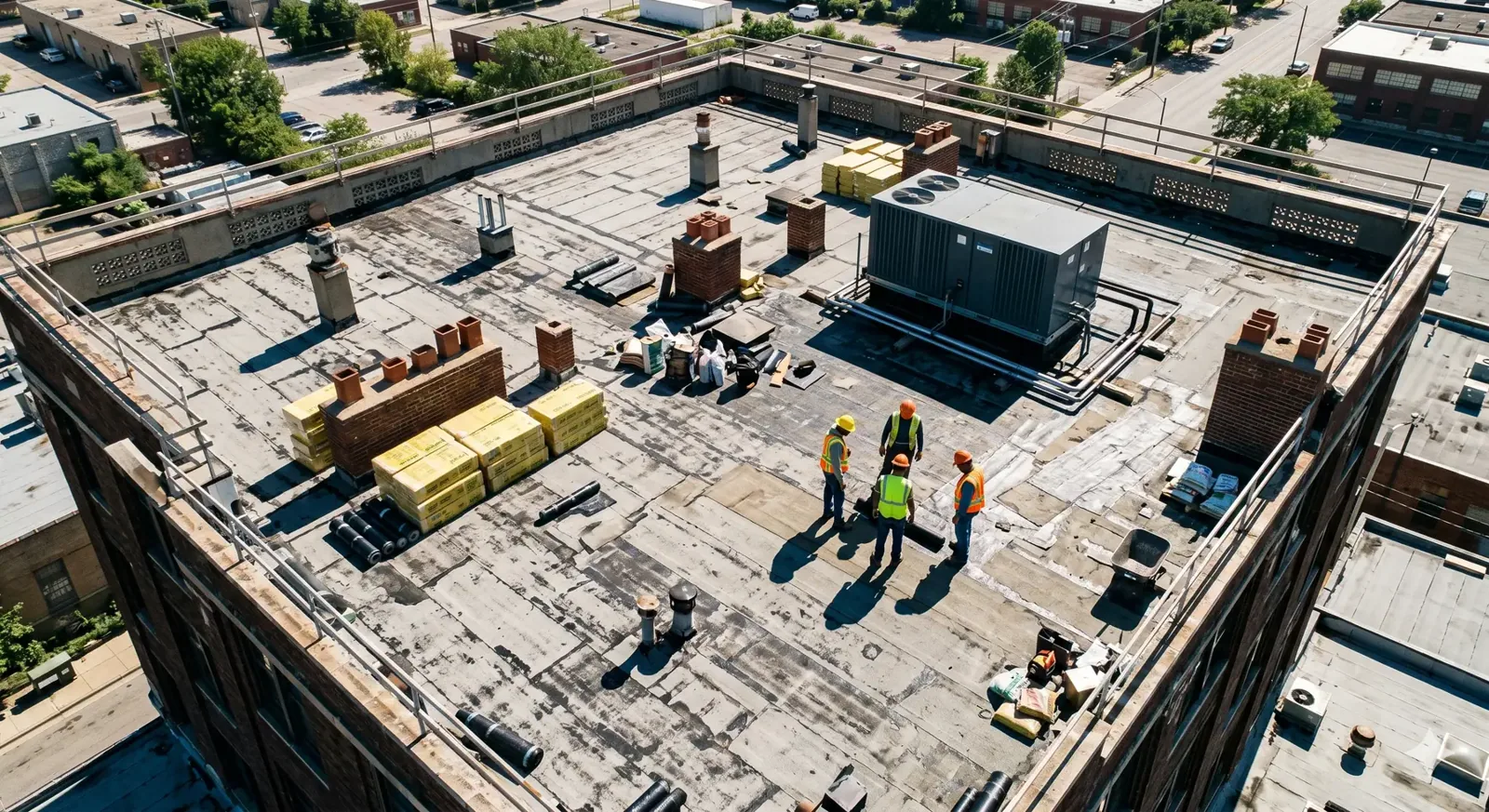
A TPO roof over a warehouse in the Renton Valley Subarea, the city's industrial and warehouse district, tends to be reached across dock areas and equipment, while one over a Downtown Renton office is reached through tenant space and a single hatch. Either way we identify the assembly, inspect its welds and drainage, and tie the next step to the building's records and operating window.
Seam welds: check the joint before the field
A TPO roof depends on fused laps, not adhesive alone. We look for edges that have opened, fishmouths, wrinkles, contamination, or a repair that no longer meets the surrounding sheet. A probe can help locate a weak weld, but the finding matters in context: the nearby surface, attachment, flashing and water route all affect whether the repair stays local or needs a longer section.
Sunlight, movement and rooftop traffic can stress different parts of the same roof. Around equipment, a service path may cross a seam repeatedly; at a parapet, the membrane turns into a termination that can fail in a different way. We record those points separately instead of treating every mark as one defect. A commercial roof inspection can map the field and details, while a claim documentation review can organize photos when storm damage is part of the question.
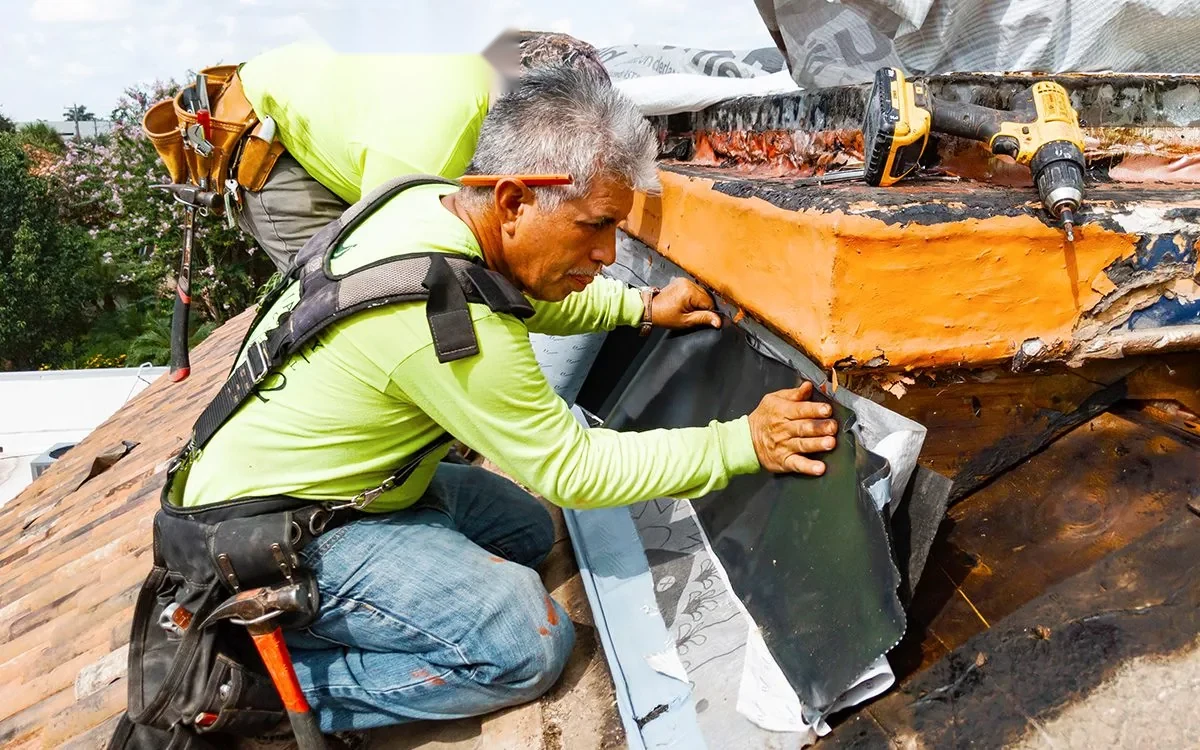
Weld quality also depends on clean, dry material and the right heat and travel speed during installation. A repair should expose sound material, prepare the area, and fuse the patch or replacement strip with a compatible procedure. If water or dirt remains at the joint, covering it can leave the same path open. We note the limits of the test and identify any condition that should be checked again after the area is prepared.
Water path: connect the lap to the outlet
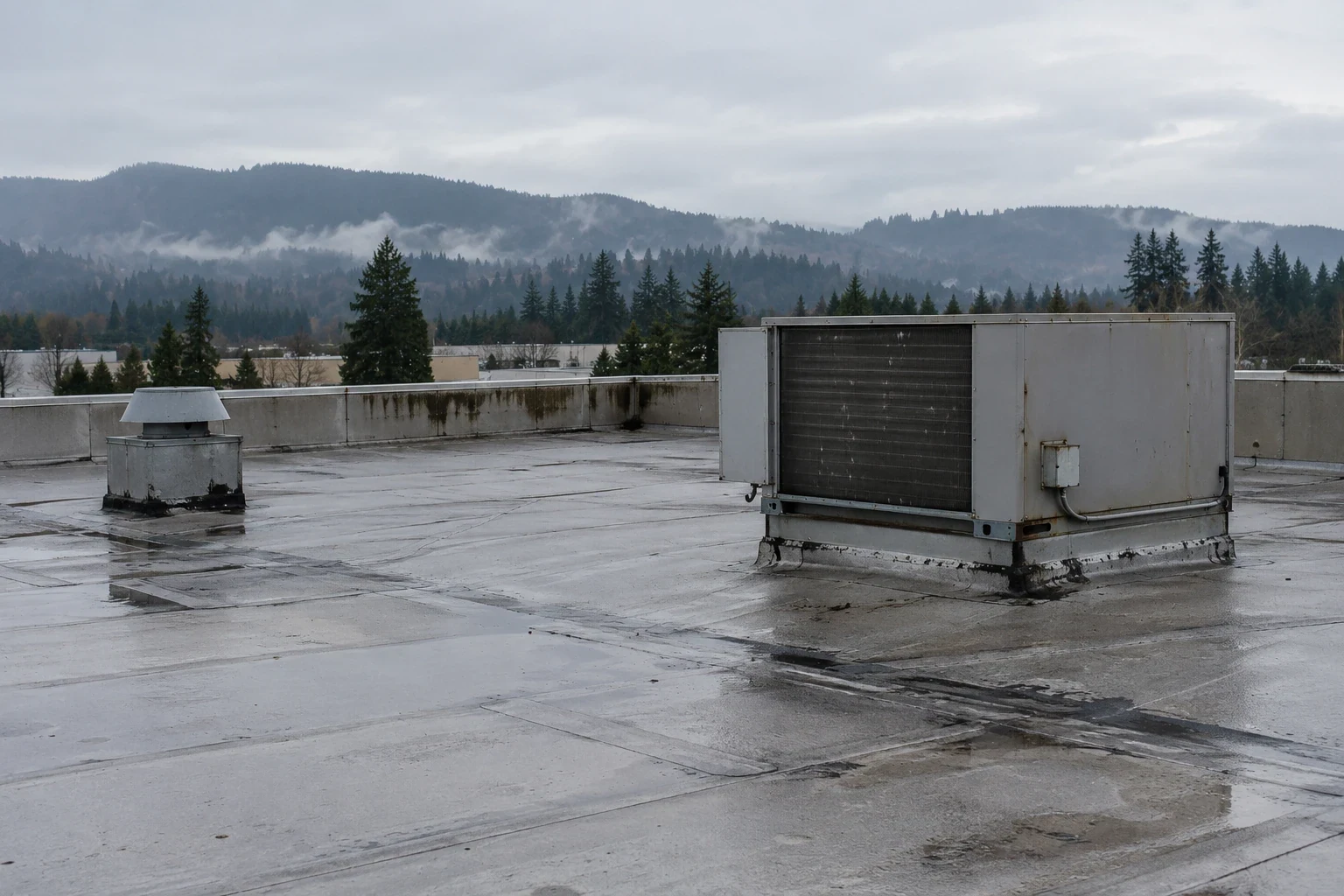
A seam can be intact while water still gathers at a low point, and a clear drain bowl does not correct a depression in the roof. We trace the slope across the field, inspect drain rings and scuppers, and compare the route with the reported leak. That sequence helps separate a membrane opening from a drainage or flashing problem. If a roof has several low areas, the inspection record should show which routes were reached and which need a closer look.
Renton's late-fall precipitation pattern gives owners a reason to review outlets before the wet season. A drain and scupper assessment can document blocked or damaged details, and a roof in the Renton Valley Subarea adds dock traffic and receiving hours to the plan for reaching them.
Where standing water reaches a seam, note its depth, extent and duration alongside the membrane condition. A patch may close a seam, but it will not change slope. The repair plan can identify a separate correction if the assembly and structure allow it, or make clear that the drainage limitation remains. That distinction helps the owner decide whether a localized repair is enough or whether a broader assembly review is needed.
Assembly check: identify what the membrane covers
TPO is the visible sheet, but insulation, cover board, attachment and deck condition also affect a roof decision. We review available roof records and visible edges, then check for soft areas, displaced boards, trapped moisture or signs that the membrane has lost attachment. A thermal pattern can help choose a test location; it does not by itself confirm wet insulation. If an opening would change the recommendation, we explain why and get approval before testing.
At a warehouse in the Renton Valley, equipment clearance and receiving access can shape where inspection tools go and how a repair crew reaches the work. Downtown Renton properties may require a different access window around occupied offices or services. For either setting, we identify the roof area, the route in, and what must stay available below. A warehouse roof review addresses loading and access concerns, while the assembly decision remains specific to the building being inspected.
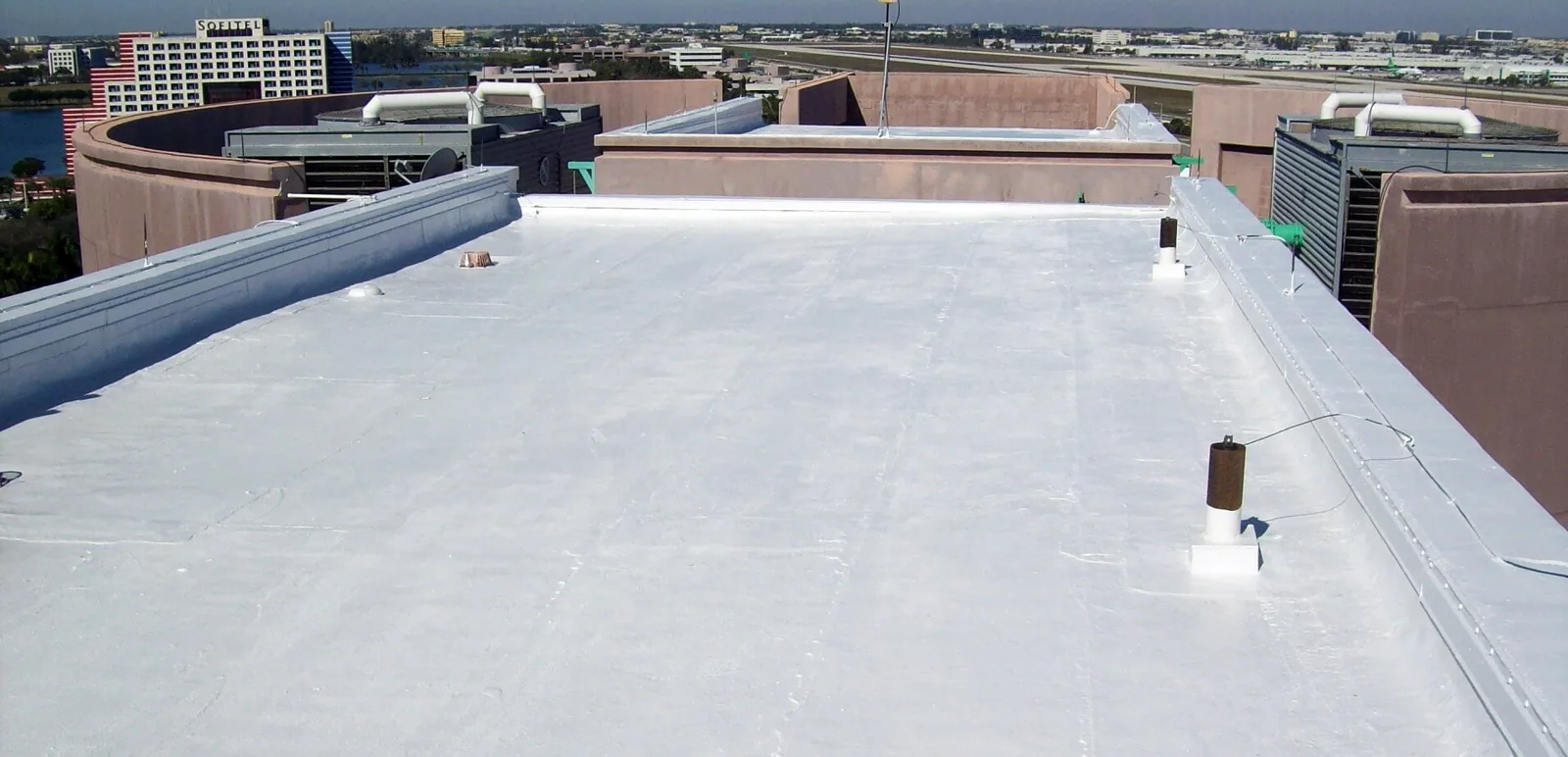
When insulation is dry and the membrane remains serviceable, a focused repair may be worth comparing with a recover. Broad moisture, loose attachment or repeated seam failure can change that comparison. The recover assessment should account for existing layers, drainage, edge height and applicable project requirements before another assembly is considered. We describe what the records show and what still needs field confirmation.
Perimeter details: close the change in direction
At a parapet or roof edge, the field sheet has to connect to a secure termination and metal detail. We inspect corners, coping, counterflashing and transitions where water can get behind the membrane. A loose edge, open corner weld or failed sealant bead may need its own repair sequence. We also check whether later equipment work or an added curb left a cut that was never integrated with the surrounding sheet.
Repairing the perimeter means restoring the detail, not simply spreading sealant over a moving joint. We identify the materials, attachment and condition of the substrate, then set a repair line that reaches sound surfaces. For larger projects, the PVC membrane option and EPDM assembly can be compared with TPO where the building needs a different system, but each needs compatible details and a clear transition plan.
Repair line: choose a workable next step
A TPO roof with a few separated defects may be a candidate for targeted repair, while widespread weld failure or moisture can call for a broader comparison. We note how far each condition extends, whether the surrounding sheet is sound, and whether insulation or attachment questions need testing. The scope can then separate immediate leak control from longer-term replacement planning without treating one visible seam as the condition of the entire assembly.
For an assessment in Renton, send the address, roof plan, leak locations, past repairs and any access restrictions. We can trace the water path, inspect the membrane laps and explain what a roof walk can settle. If the decision depends on a moisture test or an opening, we identify that step before it is included. The owner receives a repair line and options tied to the conditions we could actually observe.
Commercial Roofing Questions
What makes a TPO seam repair hold?
The repair starts with clean, dry material and a weld that reaches sound sheet on both sides. We check the prepared surface and finished joint, then record the limits of the repair so a later roof walk can distinguish that work from an older seam.
Can TPO go over the roof that is already there?
Existing layers, moisture, attachment and edge height determine whether a recover is worth evaluating. We review records and field conditions, then explain what needs testing before another assembly can be considered.
Why is water showing far from the damaged lap?
Water can travel beneath a membrane or along insulation before it reaches an interior opening. We compare the stain with seams, penetrations and the drain route, then identify a focused test if the path is not clear.
Does the Renton wet season change TPO repair timing?
The Sea-Tac regional normals show heavier precipitation in November and December than in midsummer, so owners may want drainage and leak checks before that seasonal shift. The application still depends on the roof surface and the selected repair procedure.
What should a manager send before the first roof walk?
A roof plan, repair history, leak locations and access rules help us set the inspection route. Include equipment restrictions or areas that must remain available, especially where warehouse or office activity affects the access window.