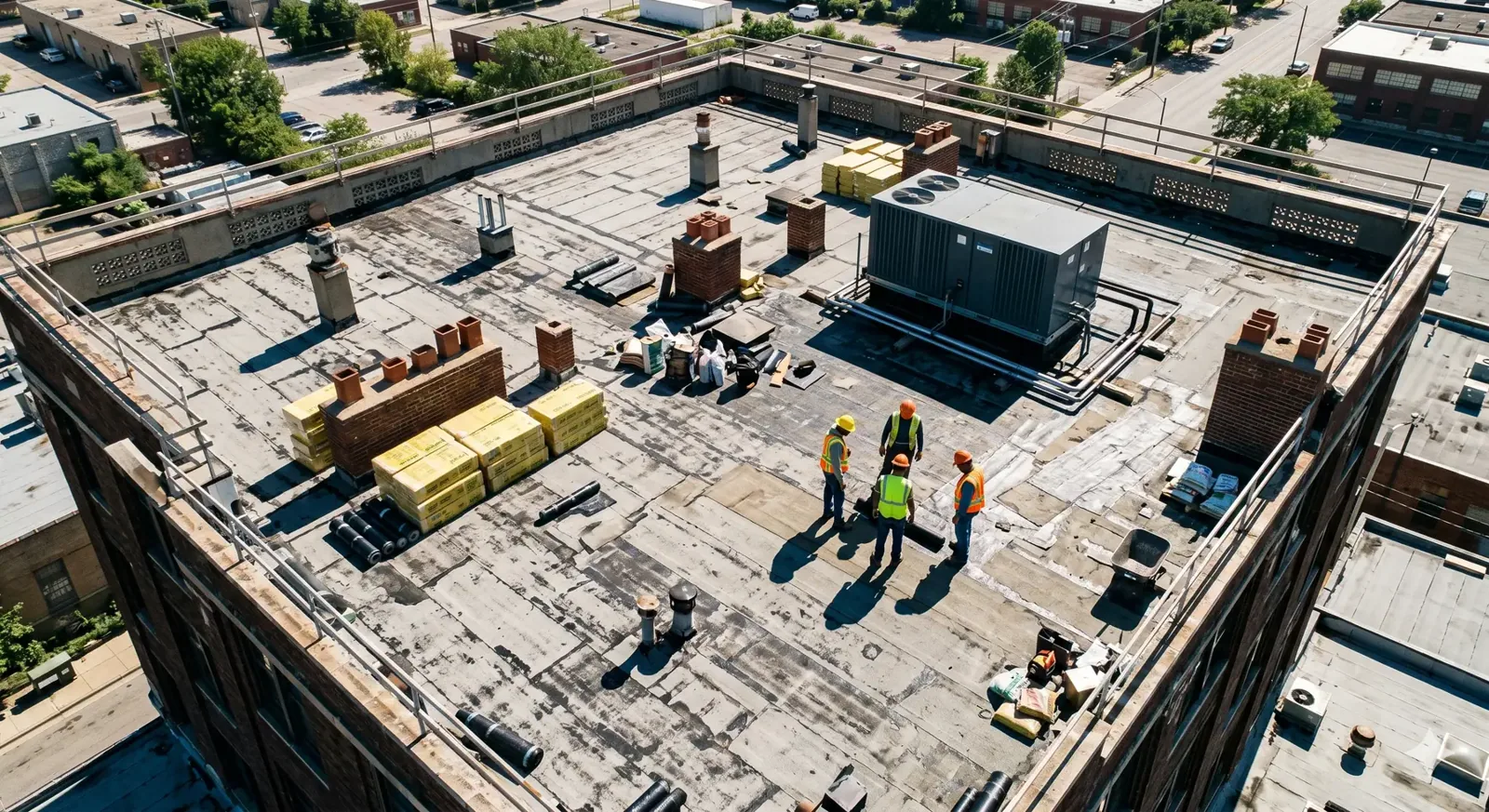

A loose corner at a roof curb may admit water only when wind pushes rain across the membrane, so the mark below should lead to a close check of the flashing and nearby seam. Renton, WA has a pronounced wet-season contrast in the Sea-Tac normals: November and December average more precipitation than July. That regional pattern gives a reason to check outlets and transitions ahead of sustained rain, while the roof in Renton Highlands determines the actual repair. We trace the water path, check the insulation around it and mark the limit of any sound material.

Highlands is one of Renton's named Community Planning Areas. The city map distinguishes commercial arterial, commercial neighborhood, center-village, multifamily and employment uses, with classification remaining specific to each parcel. That mix is a reason to ask how the property runs before setting a work window, not to assume what sits below a roof. A commercial roof inspection can tie visible conditions to the owner's building, access and maintenance records.
Access window: fit the visit to the building
Roof access may involve a hatch, ladder, locked stair, tenant suite or equipment room. We confirm the route with the property contact before carrying tools up, then note areas that need escort, fall protection or a separate key. That short conversation can also establish whether a leak is affecting work space, storage or mechanical equipment below. A useful roof walk respects those boundaries and leaves each surface in the condition it was found.
Professional services, healthcare, advanced manufacturing and logistics are significant Renton industries, and they bring different operating hours and roof equipment, so a specific property's needs are confirmed onsite. For occupied buildings, reroofing around active operations depends on where materials can stage and which areas must stay open. If the work is limited to one penetration or seam, a targeted repair can be scoped without treating an access question as a reason to replace the full assembly.
Drain route: follow runoff past the low points
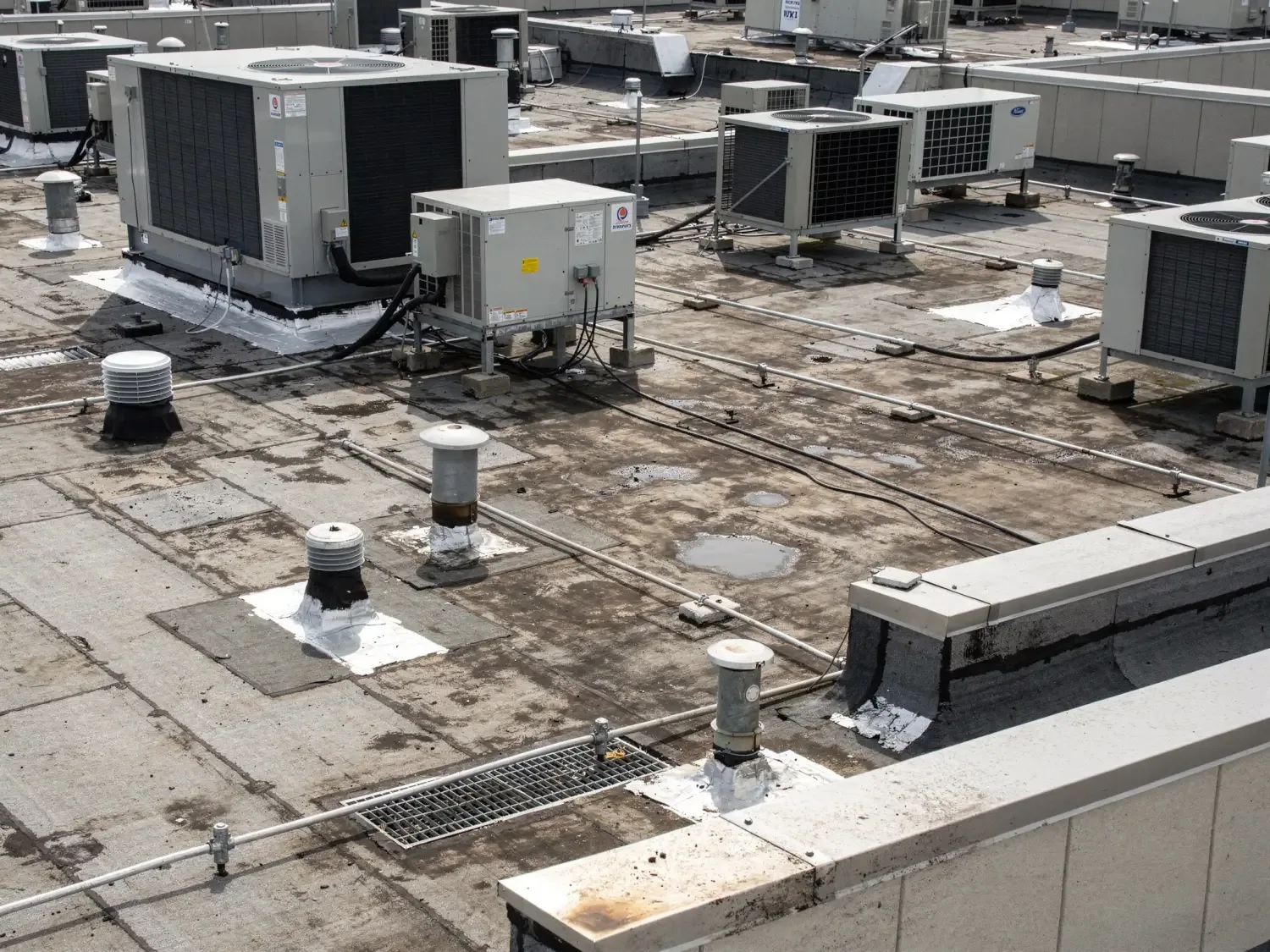
Debris at an outlet, a sag in a gutter or a blocked overflow can hold water against laps and flashing. We follow the roof's slope to the drain, check the bowl and connection, and look for overflow marks on walls or fascia. A low area may need correction, but standing water alone does not show whether insulation beneath it is wet. A moisture survey or approved test opening can answer that question before a coating or recover is considered.
On a sloped lot, water sheds across the ground as well as off the roof, so a downspout discharge that lands upslope of a wall can feed dampness that looks like a leak. We follow the water on the ground as well as on the roof.
Sea-Tac normals show November and December precipitation averaging 6.31 and 5.72 inches, compared with 0.60 inches in July. These station figures describe a regional pattern, not a Renton Highlands roof reading. Ahead of wetter months, we inspect outlets and record the route water should take. A drain and scupper assessment can address a restricted outlet before repair scope is set.
Roof details: inspect the interruptions
Most low-slope roofs have places where the field membrane turns, stops or connects to another material. Curbs, pipes, skylights, walls and metal edges each create a transition worth checking. We look for loose flashing, open corners, displaced cover strips and patch edges that have begun to lift. If one detail is sound but the field around it is weathered, the scope keeps those conditions separate.
When the assembly is exposed, we check whether the membrane is attached as intended and whether the substrate can accept the proposed repair. An incompatible patch can create another problem at a seam. EPDM system work has its own seam and flashing details. We identify the roof already in place before discussing materials or a change in assembly.
Repair or replacement: define the limit
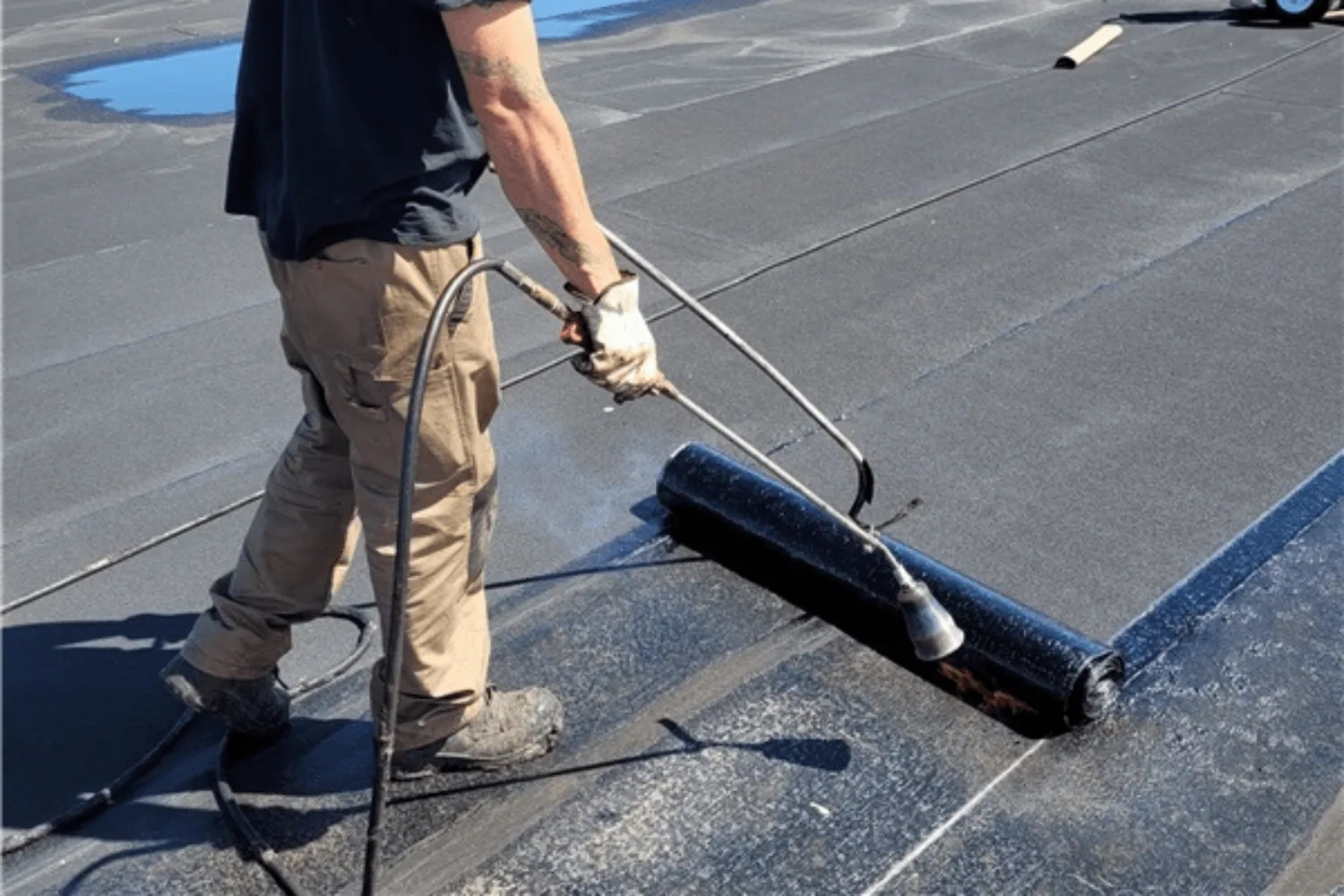
A contained split, failed boot or loose edge can often be priced as a discrete repair when the surrounding area is dry and firmly attached. We prepare the surface, restore the connection and photograph the completed detail. If moisture continues beneath the membrane or nearby patches have failed, the affected area may need testing before a recommendation is made. The owner should see what is confirmed and what remains concealed.
Several kinds of land use share Highlands, so we compare the roof field, transitions, drainage and prior repairs. A recover may be an option if existing layers, moisture, fastening and applicable requirements permit it; replacement may be needed when they do not. Replacement work should state removal depth, insulation, edge metal and temporary protection.
Roof record: keep observations usable
Photographs help most when they identify a roof area, seam or outlet. We note the route to the repair, material visible at an opening, work completed and any condition outside scope. If a moisture test is proposed, the record names its location and the question the result should answer. Approval comes before the assembly is opened.
Some Renton owners oversee several addresses and need comparable observations without assuming the roofs match. A roof walk in the Sunset Boulevard Corridor or East Plateau remains separate from a Renton Highlands record. For each property, we capture the assembly, access limits, repair status and next check. A roof condition report preserves that information for a manager who was not present.
Commercial Roofing Questions
What should I send before scheduling a Highlands roof visit?
The property address, leak location, roof plan if available and access instructions help us prepare for the right entry point. Photos from inside and outside can show where the water appears and whether a prior repair is nearby. We confirm who can authorize roof access, where equipment is located and whether any occupied area needs special coordination before setting the visit window.
Can a repair be limited to one roof section?
A localized scope is reasonable when the failure has a clear boundary and nearby material remains suitable. We inspect the adjoining seam, flashing and insulation signs before marking that limit. If moisture extends beyond the visible opening, a test or wider repair may be needed. The work note should show the repaired area and any separate condition that remains for later review.
Does a wet season mean the roof needs replacement?
No single weather pattern makes that decision. Sea-Tac's long-term normals show a wetter late fall and early winter than midsummer, which supports checking drainage and leak details before that period. We still judge a Highlands roof by its actual membrane, attachment, insulation, deck and repair history. A sound assembly with one failed detail may need a repair, while broader concealed moisture can lead to a different scope.
How can work continue while tenants use the building?
We map roof entry, staging and the area that can be opened safely, then coordinate noisy work and material moves with the property contact. Each shift needs a secure stopping point and a protected tie-in. Sensitive rooms, equipment and access restrictions can change the sequence, so those details belong in the scope before work begins rather than being handled as a surprise onsite.
What changes the cost of a commercial roof repair?
The repair area, membrane type, access, metal transitions, insulation condition and preparation all affect the work. Hidden deck or moisture conditions can also change what is needed after an approved opening. We separate confirmed repairs from allowances and explain the condition that could trigger more work. That lets a property manager compare a repair with restoration or replacement on the same information.