Where a flat roof meets a parapet wall, the corner is the first place a wet season shows its hand. A bead of sealant gone hard, a coping joint that has opened a sixteenth of an inch, or a membrane that has pulled back from the wall will let rain follow the masonry or framing down into a ceiling. Downtown Renton, WA, is a district where that kind of transition matters, because any commercial building with a flat roof and a raised wall has the same weak line wherever it stands, and a downtown address leaves little room to stage a repair.

The city's mapping shows a Downtown Business District overlay and Center Downtown zoning here. We read each building from the surface: the membrane, the edge metal, the drains and the equipment. A commercial roof repair starts only after that walk has marked where the damage begins and ends.
Parapet and wall: where the membrane turns up
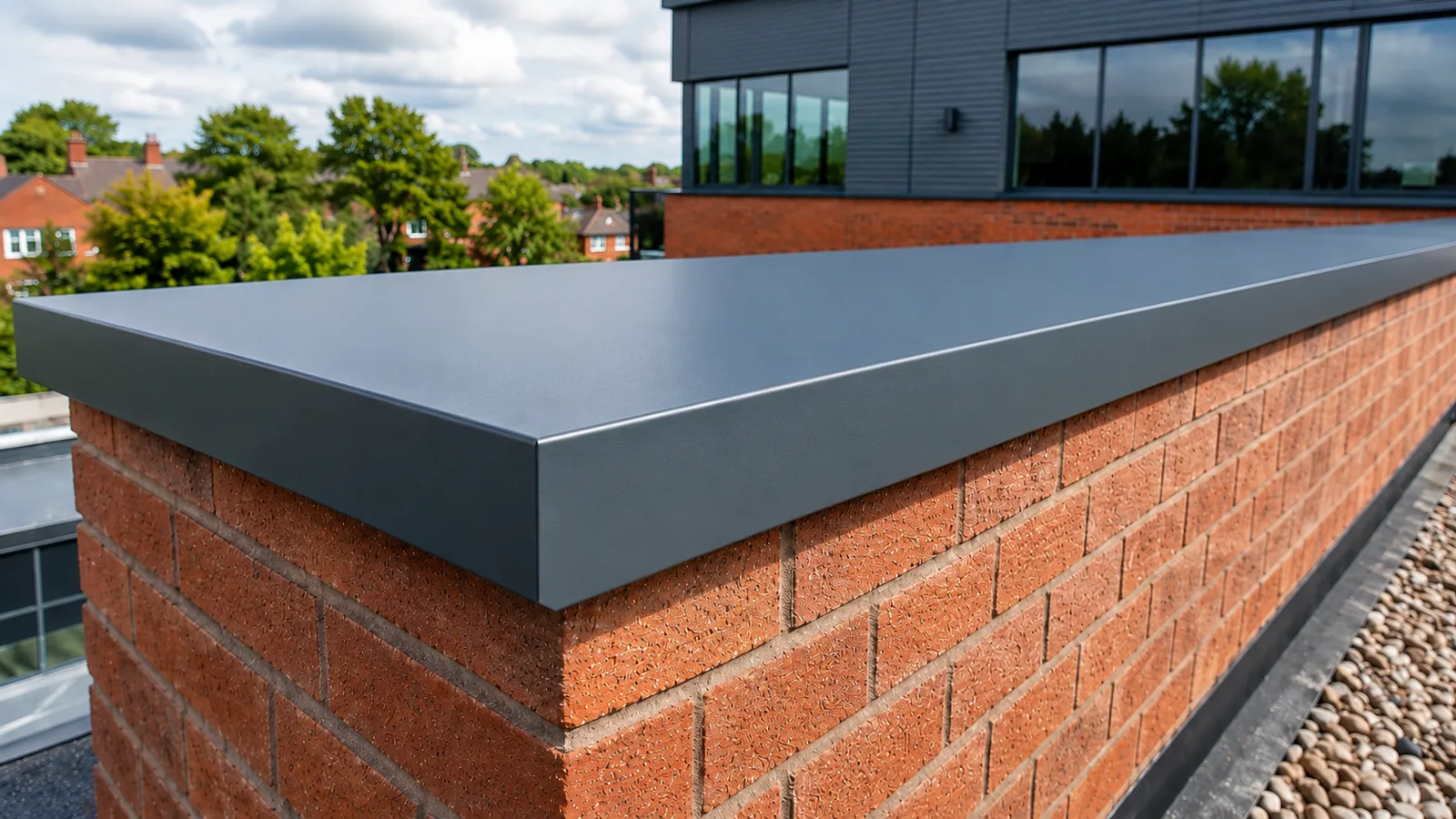
A parapet is a long run of vertical surface, and every foot of it is a place for flashing to fail. We check the membrane turn-up for shrinkage, the termination bar or edge strip for loose fasteners, and the coping above it for open joints or low spots that hold water. Wind and rain also work on the face of the wall, so a crack in a stucco or masonry surface can send water behind the flashing even when the membrane itself is whole.
Where a roof has been repaired in stages, the wall flashing can be a different material from the field. We look for the transitions between those materials and for any place where a repair was laid over a loose edge. Where the wall turn-up needs more than sealant, edge metal and coping work can reset the cap, replace failed joints and give the membrane a clean termination to bond to.
Whatever the wall is made of, brick, stucco, concrete or metal panel, the roof flashing must lap onto it in a way that sheds water. We check how the counterflashing is set into the wall, whether the mortar joint or reglet above it is sound, and whether the wall face above has cracks that can feed water behind the flashing. A cap that looks perfect from the street can sit on a wall that is letting water in from the side. If the wall needs mason or sealant work, the roof scope names the trade and the height of the repair so the two crews do not leave a gap between them.
Change of use: when the roof decision overlaps a larger project
A downtown roof decision often overlaps a larger project: a change of use, new tenants or a utility upgrade that crosses the roof. The city's 2024 comprehensive plan, amended in December 2025, guides land use, economic development, transportation, utilities and capital facilities, so an owner who expects change can ask early whether the roof will carry new loads or openings.
That question lets us choose between a limited repair and a replacement that makes room for what comes next, instead of repairing now and tearing it up in a year. We ask whether the owner expects a change in how the building is used and whether equipment will be added, then write the answer into the scope.
Tenant hours: deliveries, parking and entrances
A downtown tenant with deliveries to receive may have only a narrow window when the roof can be reached. We ask about deliveries, parking and tenant hours before we set a start time.
We plan the visit around those windows. A crew that arrives at a loading dock during a delivery rush costs the tenant time, so we agree on a staging spot, a hoist or ladder route and a quiet start. For buildings that serve customers on the ground floor, we keep material away from the sidewalk and protect entrances. Our occupied building reroofing work is arranged around exactly that kind of daily activity.
Drain route: clear the outlet before the wet months
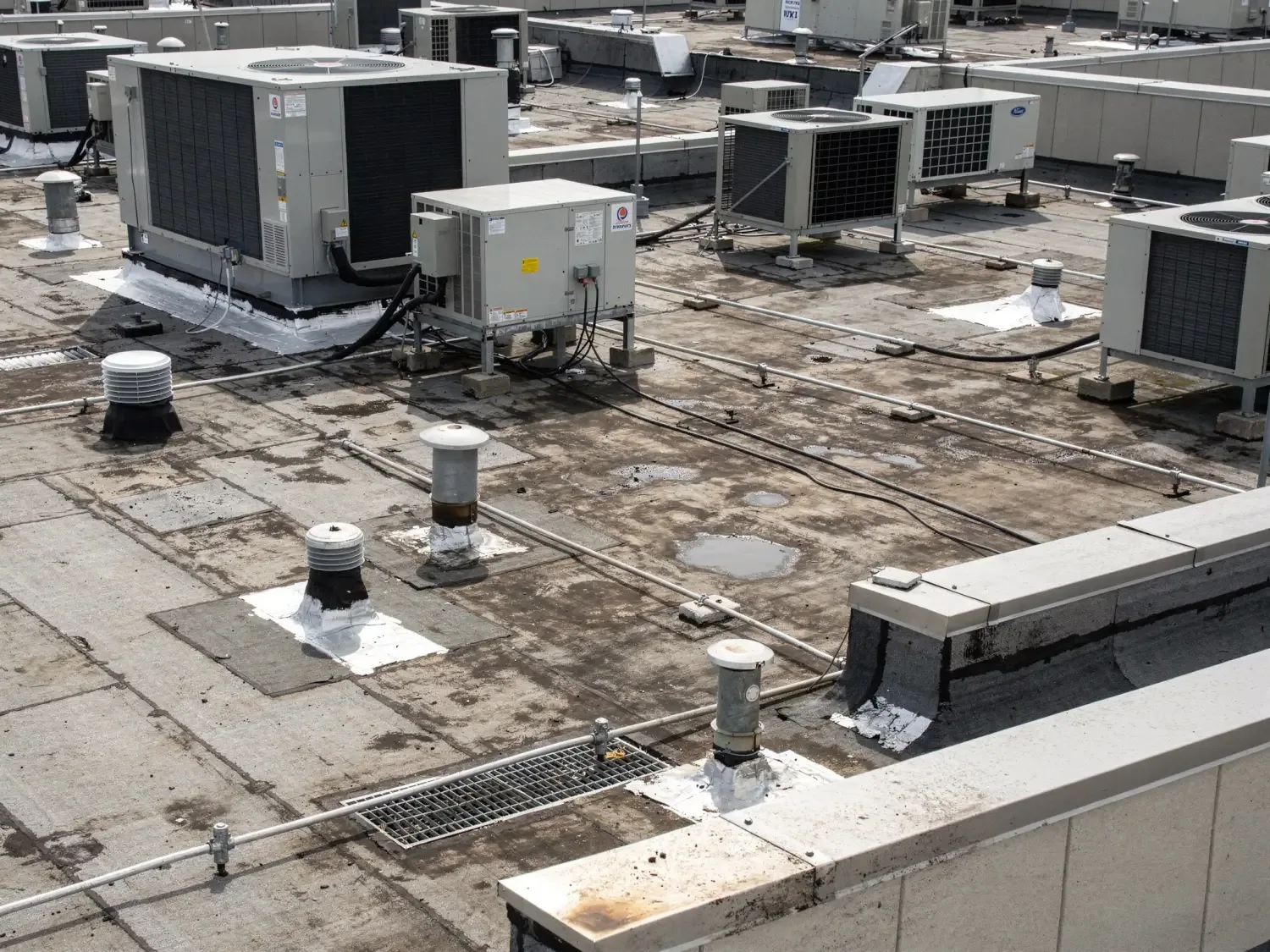
On a flat downtown roof, one blocked drain can turn a quiet afternoon into a ceiling leak. Leaves, grit and loose granules wash toward the outlet and settle in the bowl, and a clogged strainer holds water against the nearest seam. We clear the bowl, check the pipe connection beneath it, and look for ponding marks that show where water has stood long enough to leave a ring.
Late fall is far wetter than midsummer at the Sea-Tac station, with November near 6.3 inches of rain and July under an inch in the 1991 to 2020 record. No downtown building was measured, but the swing is a good reason to schedule drain and scupper service in early autumn. When the slope to the drain has flattened, we look at tapered insulation or a new sump so water leaves the roof without help, and we record the depth and extent of every low spot so the owner can see what a re-slope would address.
Scope and record: show the owner what was done
At the end of a repair or replacement, we leave the property team with photographs of the prepared surface and finished detail, a list of materials used, and a marked plan of the roof showing where the work stopped. If a test opening was approved to check insulation or deck, the record shows where it was cut and how it was closed.
That record helps the next person. A manager comparing downtown buildings can see which roofs need maintenance and which are approaching a larger decision, and preventive roof maintenance can be scheduled against the findings. An owner with another address nearby, in the Renton Urban Center or along the Cedar River, gets the same record format, though each roof earns its own walk and its own written scope.
Commercial Roofing Questions
Why do parapet corners tend to leak first on flat roofs?
Corners collect movement from two walls, wind-driven rain and any earlier patches. Sealant dries out, coping joints open and the membrane pulls away from the wall. We inspect the termination, the cap and the wall surface together, because a leak at a corner can start in any one of them.
Do I need a permit to repair a downtown flat roof?
A small repair may not need one, while replacement, new equipment or structural changes often do. The 2021 Washington State Building Code, effective March 15, 2024, is the baseline, and Renton amendments need confirming. We check the permit path with the city before pricing a larger scope.
What if the tenant cannot lose access to the loading area?
Then the staging moves. We agree on a spot away from the dock, lift materials by a route the tenant approves and schedule noisy work outside delivery peaks. If the roof must be worked in phases to keep the dock open, the proposal shows each phase and what it costs.
Can a roof be repaired just before the rainy months?
Yes, and early autumn is often the right time to do it. Drains are cleared, seams are resealed and loose flashing is fixed before November and December rainfall arrives. Larger replacements fit the drier summer months, though crews can dry in each day when the work must run later.
How do you know if a leak is the membrane or the wall?
We follow the water. A hose test on the wall face, a close look at the coping and a check of the flashing turn-up separate a membrane failure from a wall leak. If moisture is trapped, an infrared survey can show wet insulation without tearing into the roof.