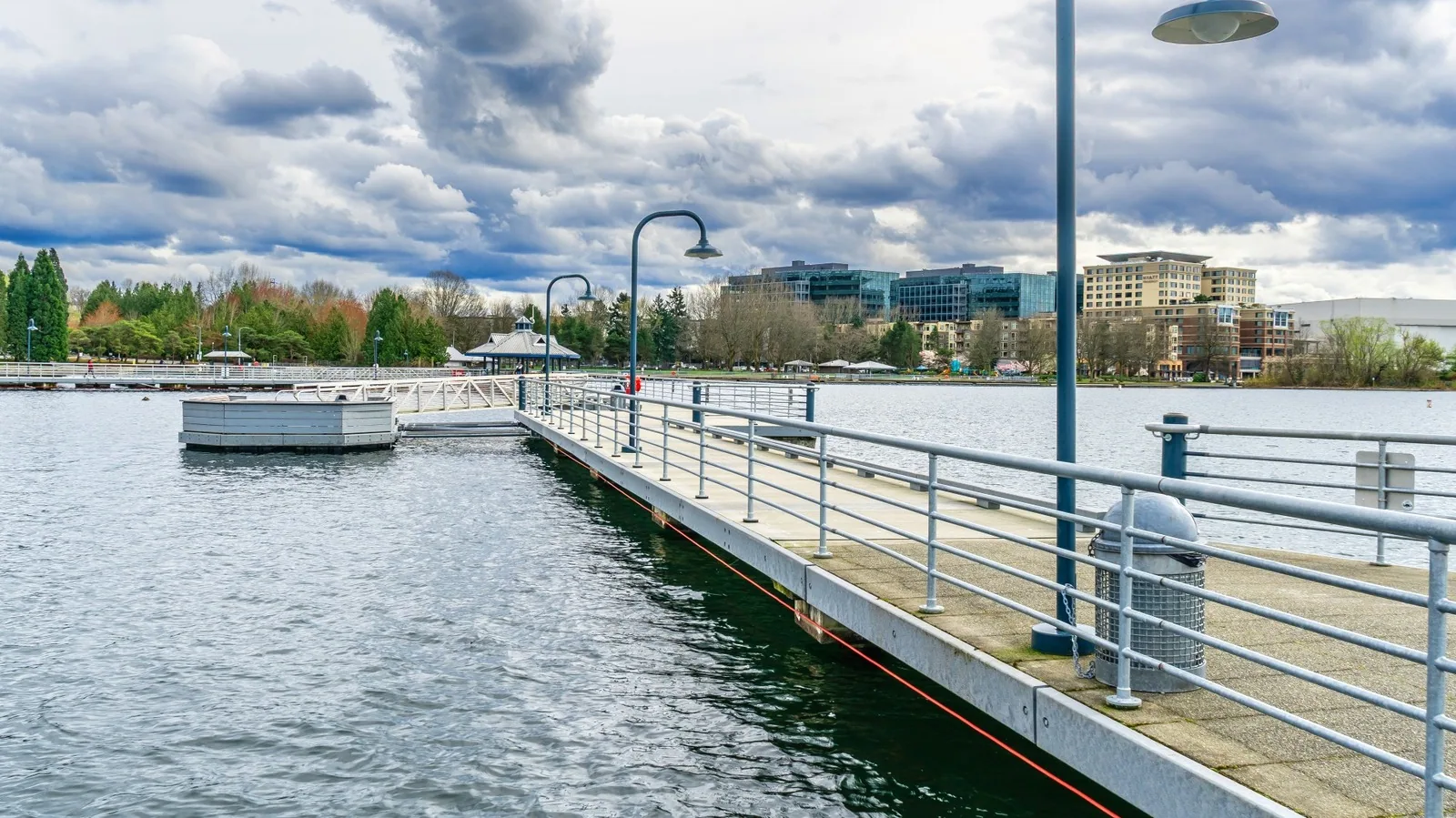
A drain bowl packed with leaf litter, needles and grit is one of the plainest causes of a wet-season leak, and it is more likely wherever trees or open ground sit near a building. Cedar River is a named Community Planning Area in Renton, WA, and commercial and public properties near the river can have roofs that collect the kind of debris that clogs outlets. We start with the drain route and work outward from there.

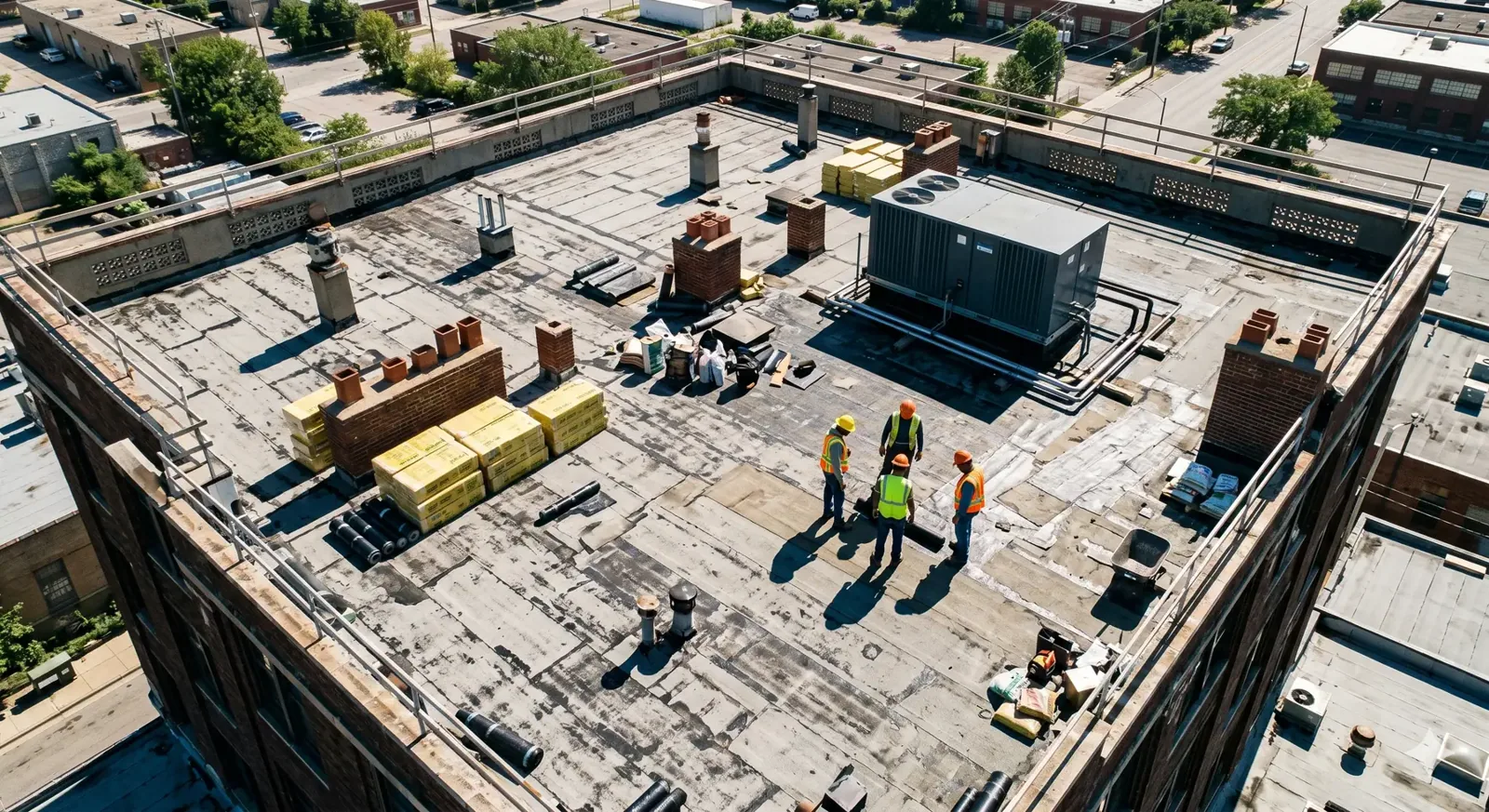
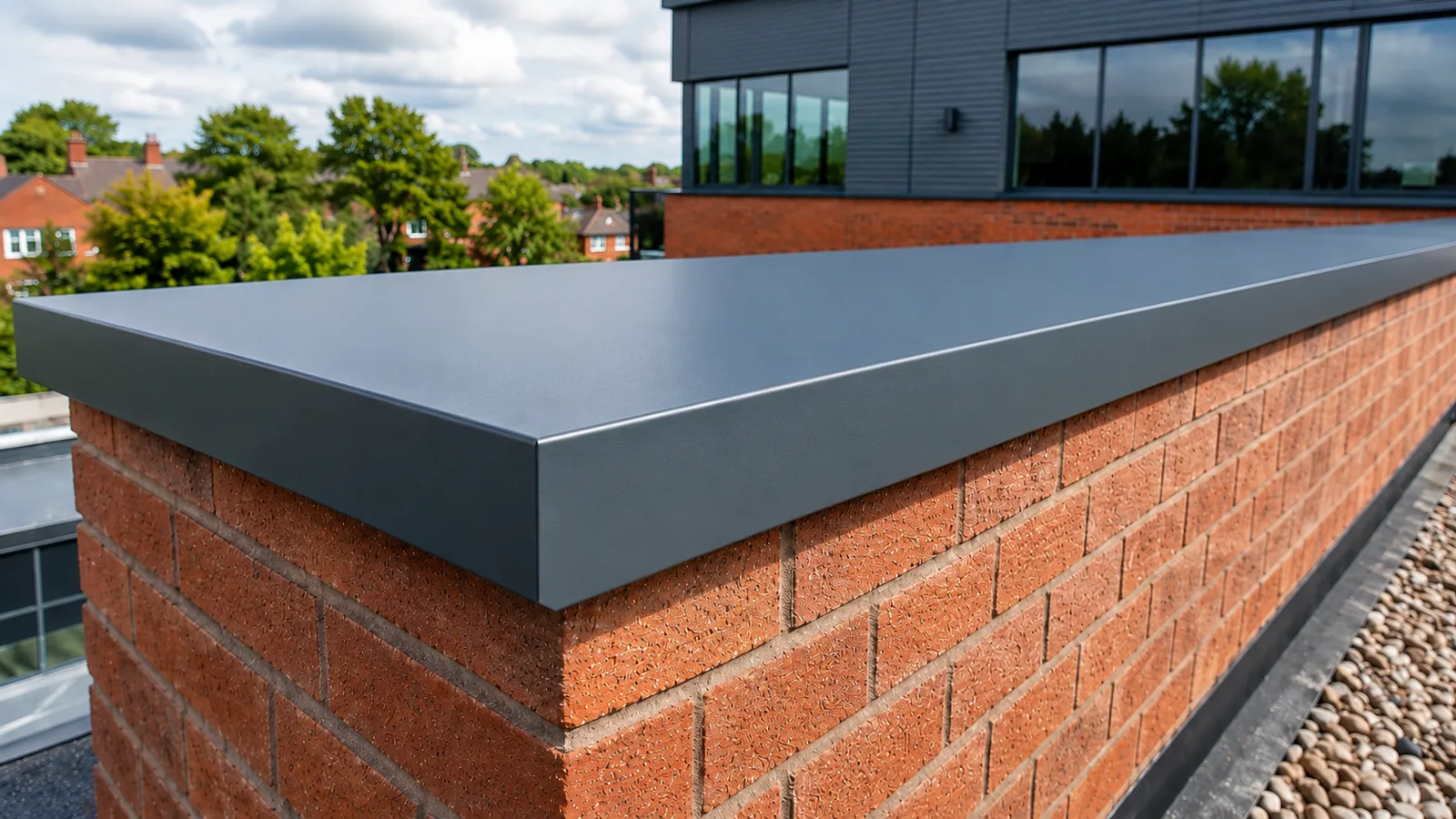
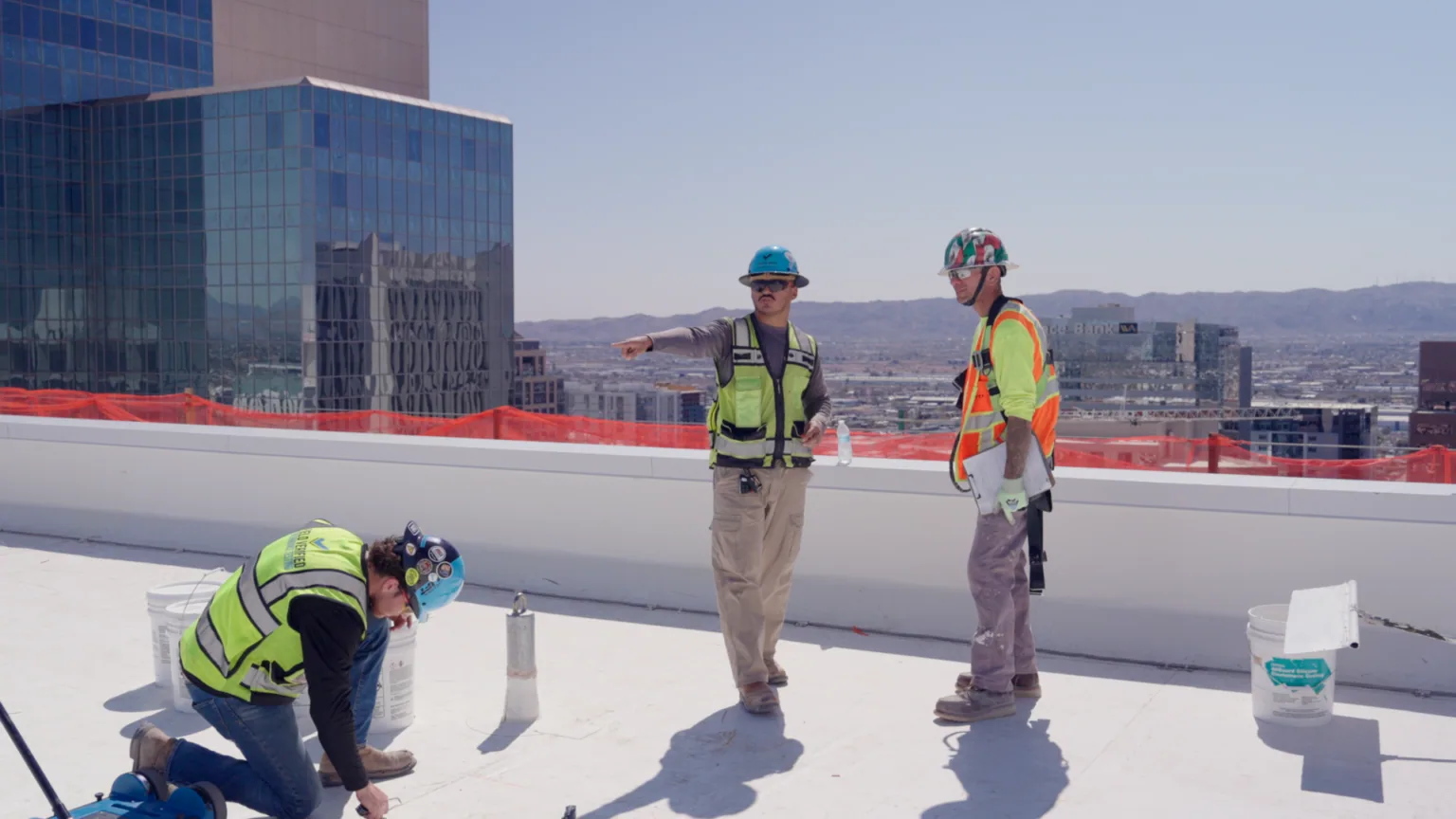
The first roof walk is a plain sequence: the low point, the outlet, the seams and flashing that cross the water's path, then the edge metal that sends water off the roof. We write down what is dry, what is wet and where a repair line should stop. If water has already reached the ceiling, we also look at what sits below the opening, such as lighting, wiring or stored goods, so the interior can be protected while the roof is sorted out. A commercial roof inspection gives the owner this record before anything is priced, so the decision between repair and replacement rests on what was seen on the roof.
Drain route: debris, gutters and the path to the ground
Gutters and downspouts on a commercial building carry a lot of water in a hard rain, and they fail in familiar ways: a loose hanger, a seam that has separated, a downspout that discharges against the wall. We check each run from the roof edge to the ground, then check the connection at the drain bowl and the strainer. Where debris collects, we recommend a cleaning interval that matches what we find, not a calendar date, and we photograph each bowl before and after so the property team can see the difference and repeat the check themselves between visits.
Rain at Sea-Tac peaks in late fall: the 1991 to 2020 normals list 6.31 inches for November, 5.72 for December and only 0.60 for July. As a regional pattern, it is a good cue to clear gutters and edge metal in early autumn. We pair it with what the roof actually shows: staining below a scupper, algae along a seam or a gutter hanger that has pulled from its fascia.
River area: environmental work can touch nearby sites
Renton's current Cedar River Natural Area project is studying trails and ecological restoration, and the city notes that environmental fieldwork and permitting are part of that planning. For an owner near the river area, the practical point is that outdoor work in sensitive settings can come with rules about runoff, staging and debris. We ask early whether the site has any environmental conditions that affect where materials can sit or how wash water and old roofing are handled.
The city's plan framework also covers parks, recreation, utilities, transportation and environmental quality, all of which are relevant to public and commercial property decisions near the river. We use that framework as a prompt for questions, not as a statement about any single building. If a roof project is large enough to need a permit, we confirm the path with the city, and if the building houses a public use, we coordinate work for public agencies around the approvals and notices that apply.
Membrane condition: a shaded or damp roof ages differently
A roof that stays damp, with moss or algae along seams and in low spots, can wear differently from one that dries quickly. We look for surface growth, softened edges at laps and fasteners that have started to corrode. We press on seams to see whether they still hold, and we check whether the membrane near drains has lifted. None of this tells us the roof's age, but together it shows how much service life is left.
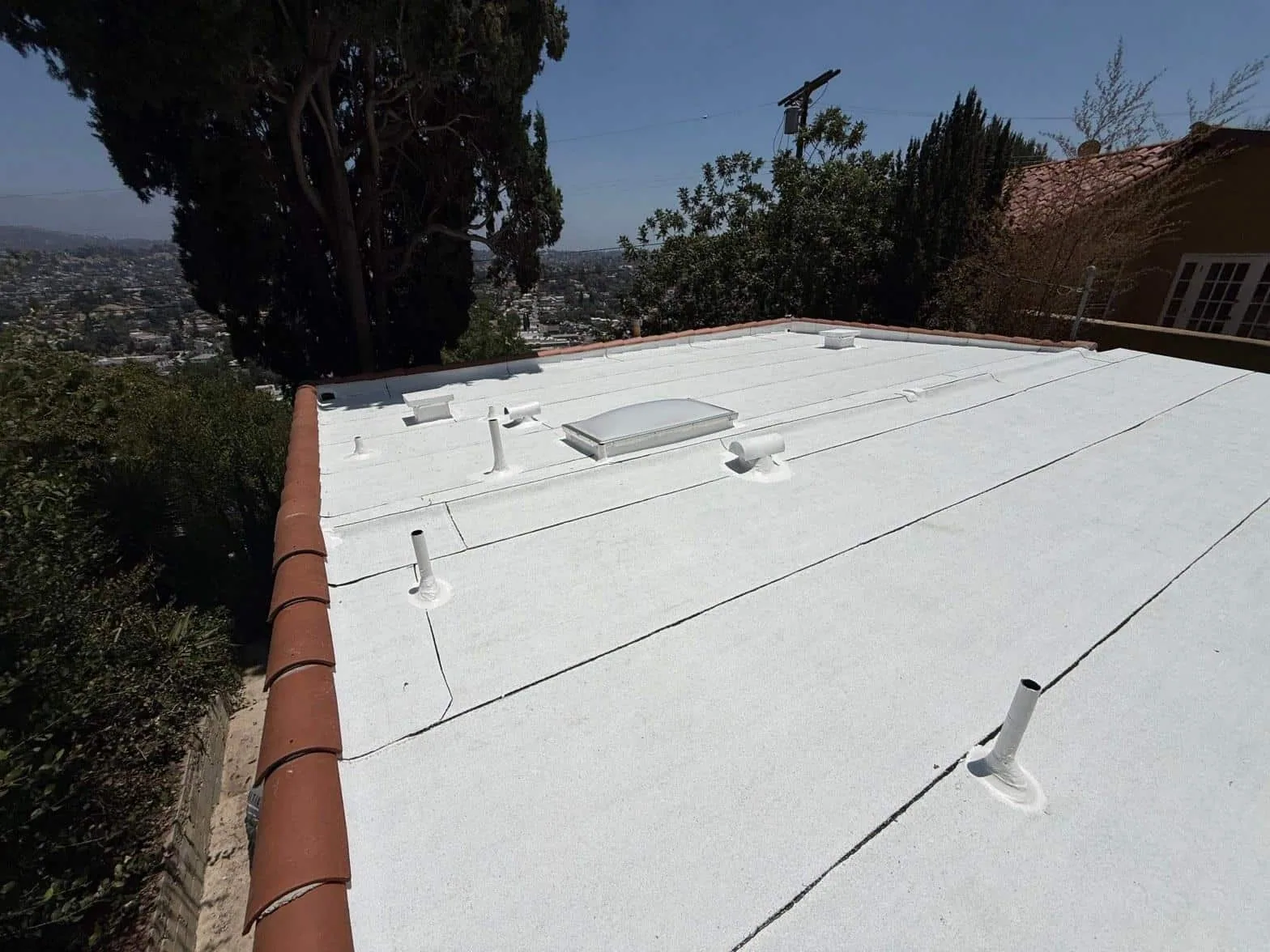
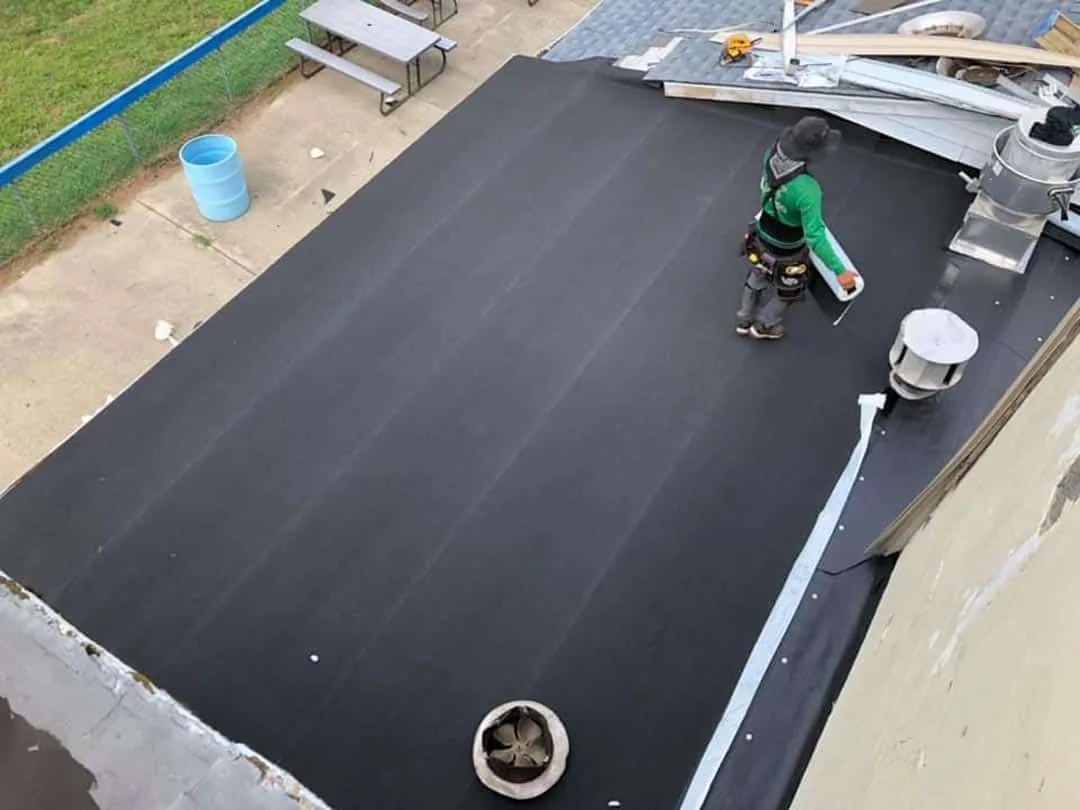
Where the membrane is sound but worn, a coating may be enough, and silicone roof coatings are well suited to roofs that see standing water because they resist ponding. Where the surface is failing or the insulation is wet, we describe a recover or replacement and what each would leave in place. The proposal separates what we saw from what only a test opening or tear-off could confirm. Owners then know which numbers are firm and which depend on what lies under the surface.
Repair or replace: set the line by the evidence
The decision gets easier when the facts are laid out. A small number of failed seams, a cracked boot and a loose edge can be fixed with a defined scope. A roof with repeated leaks, saturated insulation or fasteners backing out in many places points toward replacement. We prepare options side by side with what each includes, what it leaves untouched and what could change the price once layers are removed.
For public or institutional owners that work on a budget cycle, a staged plan can fit better than a single large project. A roof capital plan lists the near-term repairs and the longer-term replacement in order, so funds are set aside before an emergency arrives. When a storm does strike, emergency roof repair can stop the water first, and a permanent scope follows.
Roof record: keep the repair line visible
At closeout we leave photographs of the prepared surface and finished detail, the materials used and a marked plan showing where the repair stopped. If an area was left alone because it tested dry or could not be reached, the record says so. That way the next visit begins from the last one, not from a guess.
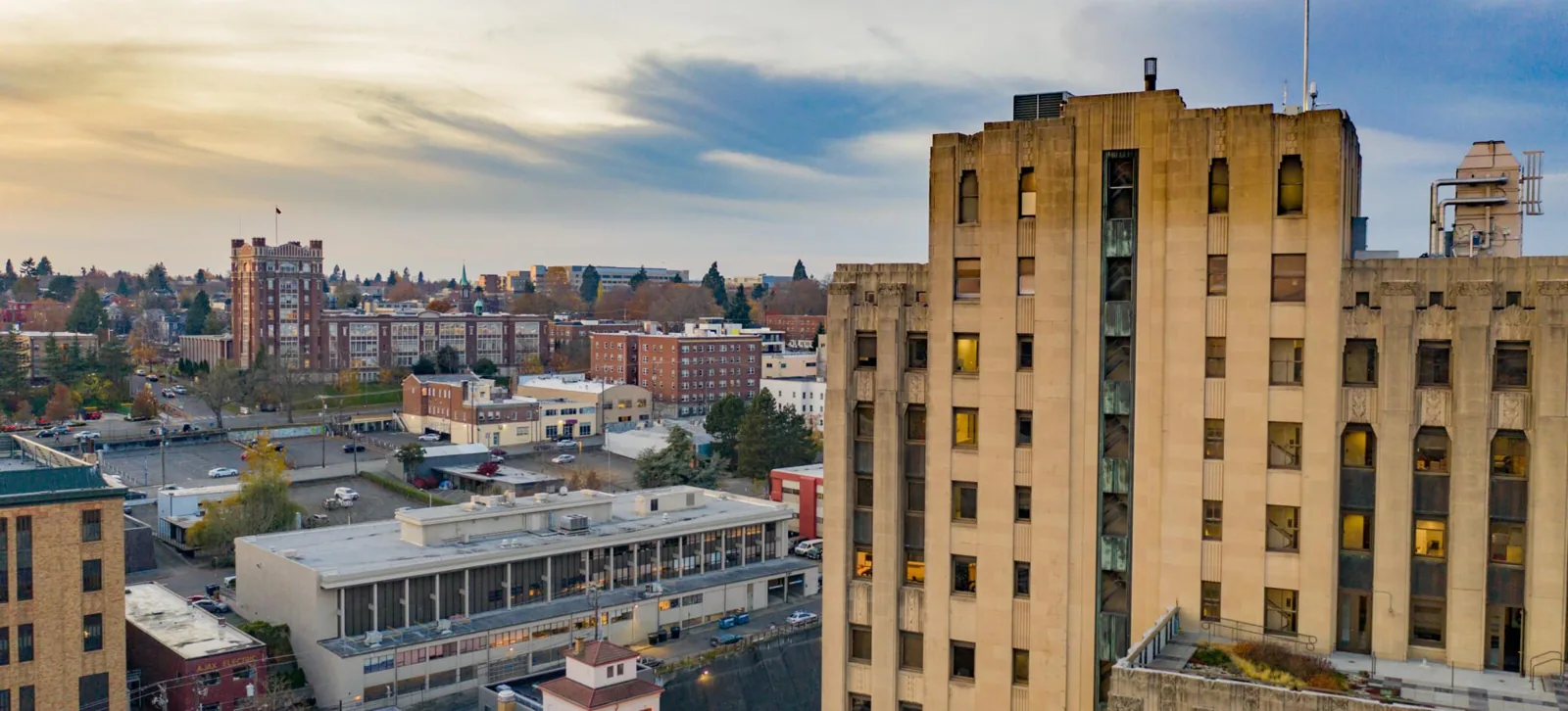
For owners with properties in several parts of Renton, the same record format carries across addresses. Neighboring areas such as Downtown Renton and Benson each need their own roof walk, and the findings at one address do not transfer to the next. The records still make it easier to compare roofs and decide which one needs attention first.
Commercial Roofing Questions
How often should gutters and roof drains be cleared near trees?
Frequency follows what collects, not the calendar. A roof under or beside trees may need clearing before November and again after the first heavy storm, while an open site may need it less. We check the bowls and gutters at each visit and set the interval from what we find.
Can environmental rules affect where roofing materials are staged?
They can, near sensitive ground or water. We ask whether the site has restrictions on runoff, debris or storage before we choose a staging spot. If a rule applies, we plan covered storage, careful disposal and a layout that keeps materials off drainage paths.
Does moss on a membrane mean the roof is failing?
Not by itself, but it shows the surface stays damp and may be hiding a seam problem. We clean a sample area, check the laps beneath and test the fasteners. If the membrane is sound, regular cleaning and drain care may be enough for years.
When does a coating make more sense than replacement?
When the membrane is attached, the insulation is dry and the damage is mostly surface wear. Moisture testing confirms that. A silicone coating can handle ponding better than many alternatives, but it cannot fix a deck, a wet layer or an open seam that moves.
What should a public property manager plan for in a roof project?
Approvals, notices and the budget cycle usually set the timing. We list what each step needs, from permits to access arrangements, and match the roof work to the dry months. A staged plan can spread cost across years without leaving a known leak unaddressed.