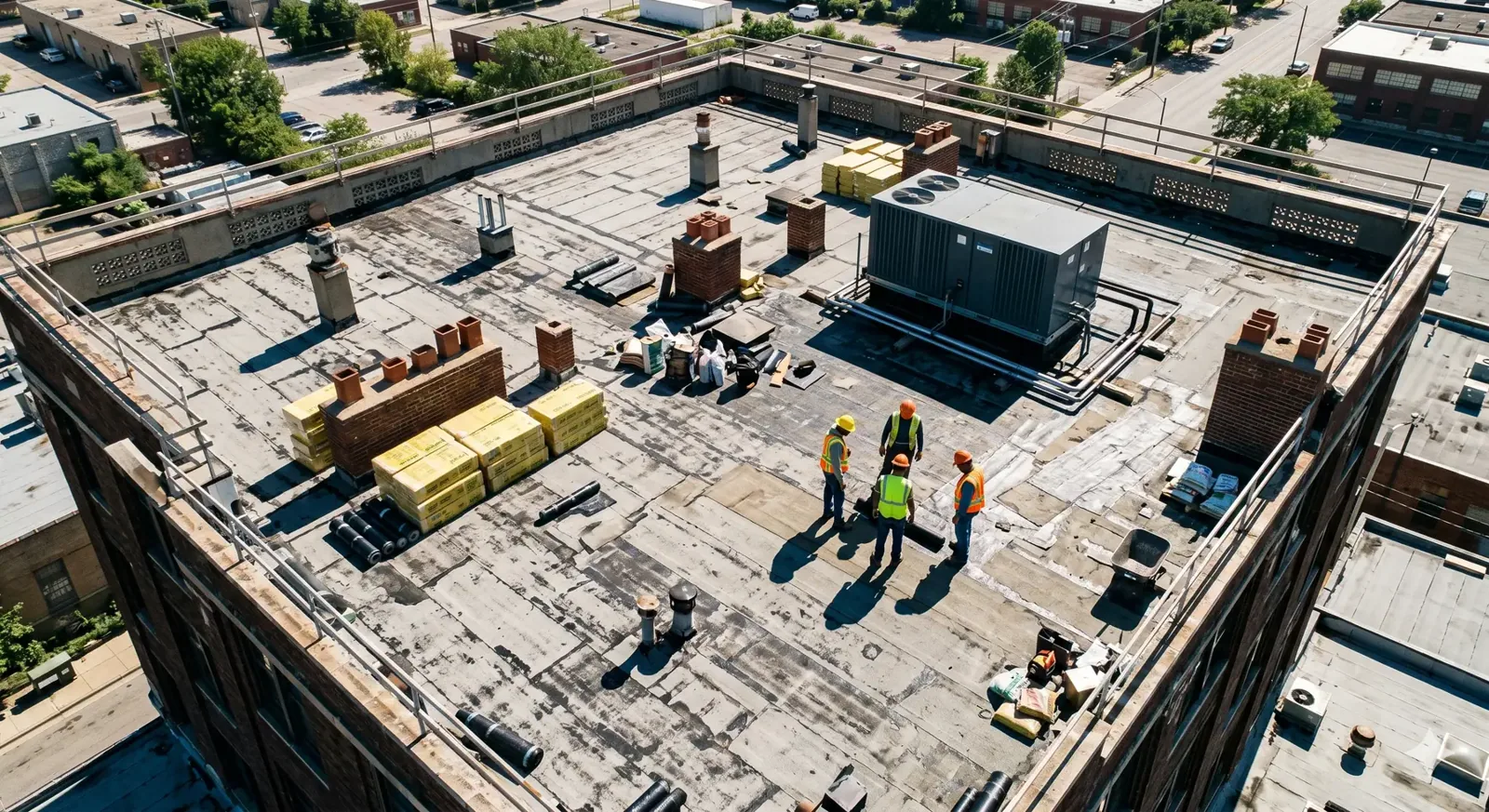
A slow drain can leave water against a membrane seam long enough for a weak lap to open. In Fairwood, we trace that route from the low point toward the reported ceiling mark, then check the outlet, flashing and repair history around it. Fairwood is a named Renton community planning area. That name helps identify a broad neighborhood, not a parcel's use or roof condition, so we confirm the property and its records before choosing a repair detail. The visit notes also identify what the owner should recheck after the next rain.
Renton's land-use map separates residential density, multifamily, commercial and employment categories. The map is parcel-specific context, not a reason to assume every Fairwood property is commercial. We inspect the building the owner identifies and document what the roof itself shows. A commercial roof inspection can tie photos to the water path, seams, penetrations, drainage and next decision without turning a neighborhood map into a roof inventory.
Parcel context: check the property record
A zoning category and a roof system answer different questions. Renton's map distinguishes several parcel uses, while the membrane type, condition and installation history need property records or roof-level observation. We note the actual assembly and any change visible at a patch, curb or edge. If an owner needs a permit or land-use check for a larger alteration, that review is separate from diagnosing the leak and should be confirmed for the project.
When a planned project may alter drainage or rooftop equipment, we identify the roof interface that needs coordination and document it for the owner.
Water route: inspect low points first
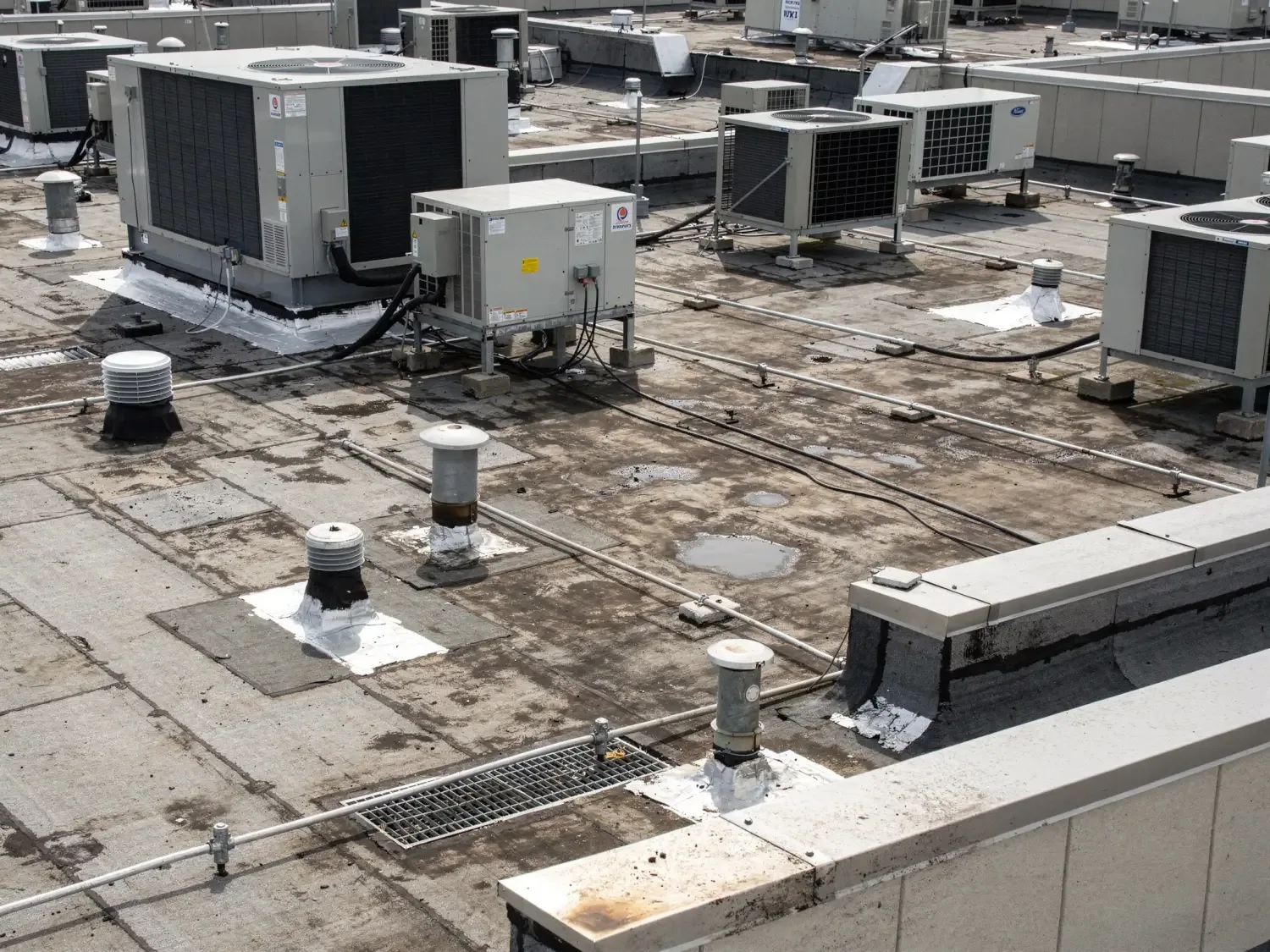
Water follows the low route, but the outlet may not be the only failed detail. We check whether a drain bowl is clear, whether the membrane tie-in is secure and whether a raised lap holds water against a curb. A scupper also needs inspection through its throat and along the flashing. We compare those observations with the interior mark and write down how water could move beneath the surface before setting the repair boundary.
Sea-Tac normals show November and December considerably wetter than midsummer, which makes a drainage check useful before the wetter months where the roof is accessible and weather permits. A drain and scupper correction can be separated from a membrane patch when each has a distinct cause in the water path.
A roof that drains to the exterior through downspouts has a second system to inspect below the edge: the downspout, its elbow and the line to grade or storm inlet. We follow the water from the scupper to where it lands and look for a downspout that dumps against a foundation, a boot that has pulled off or a splash block that has shifted. Those items cause wall dampness that is easy to blame on the roof and easy to fix once found.
Roof detail: inspect each membrane transition
At a pipe boot, curb or wall, the membrane has to turn and stay sealed through a change in plane. We inspect the corner, lap, termination and surrounding substrate for separation or movement. A clean, dry surface may accept a compatible repair; a loose edge or wet insulation can require testing or removal beyond the opening. The first roof walk records what is visible and what remains concealed, rather than assume a surface patch answers both questions.
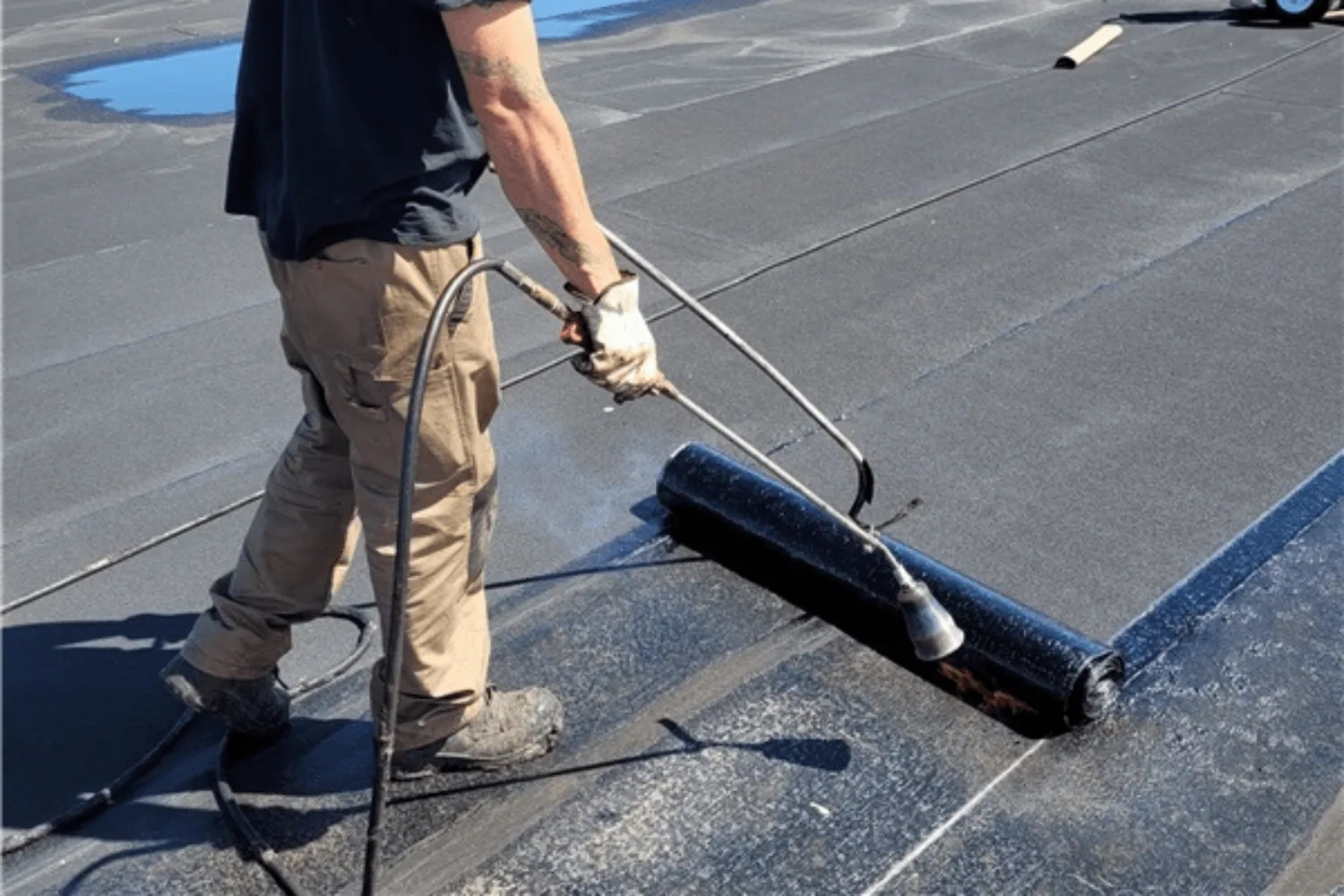
Material matters at the repair line. A welded TPO seam, an EPDM lap and a coated roof need different preparation. We compare available records with visible details and verify the assembly before selecting a patch. For a confirmed EPDM roof repair, the estimate can show seam preparation, compatible material and edge termination as separate work. If the system is uncertain, we state that and identify what small test would clarify compatibility.
Repair choice: compare scope by condition
A local repair is reasonable when damage has a defined edge and the surrounding membrane remains secure. If several details have failed or moisture extends under the surface, a wider repair may be needed. We photograph each limit, identify the work included and separate testing from confirmed quantities. That way, the owner can compare a patch with additional investigation without pricing an unknown area as if it had already been measured.
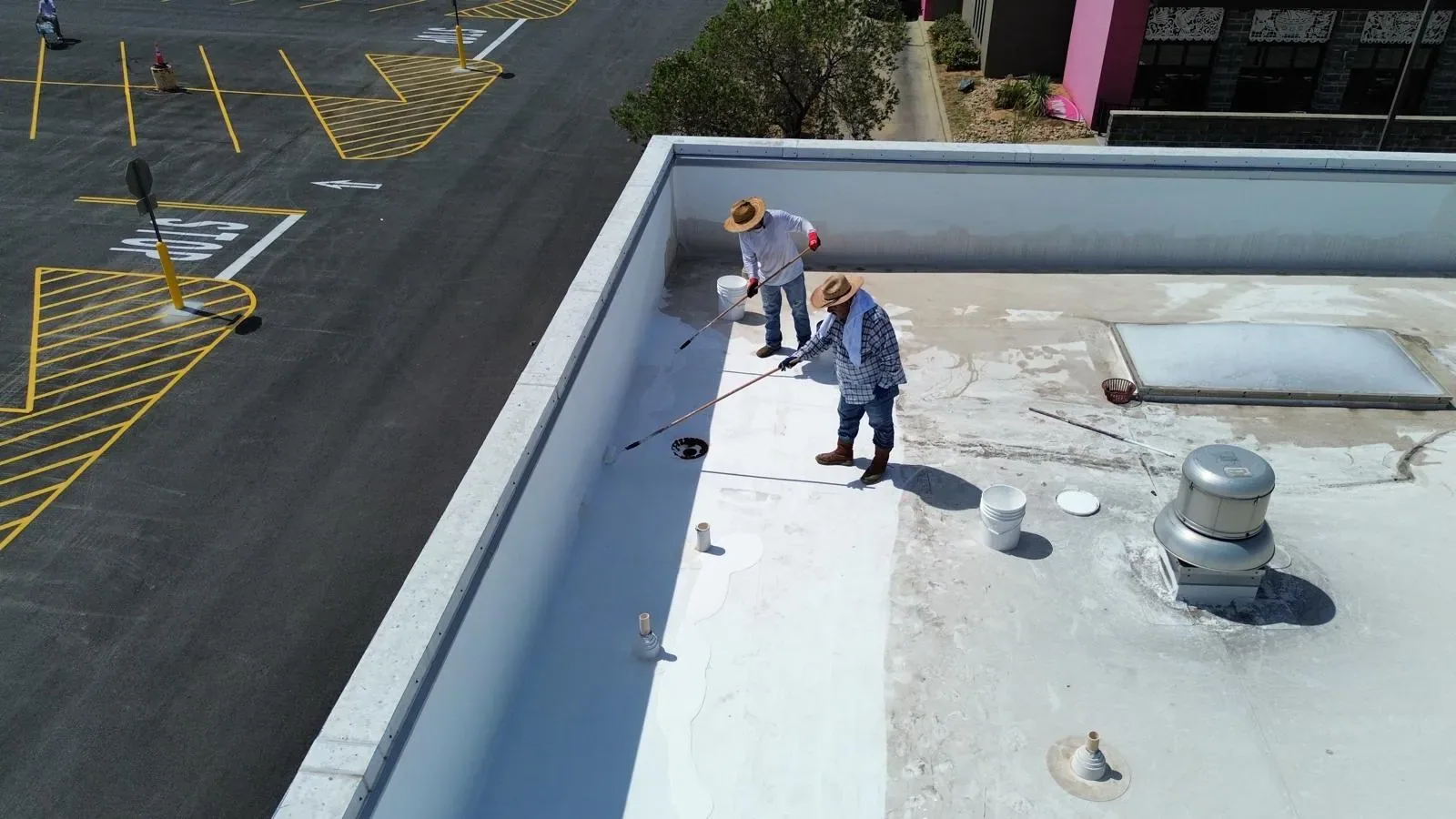
Coating or recover options depend on the substrate, adhesion and drainage. They should not cover wet insulation or hide a loose seam. We can compare a targeted repair with roof restoration once those checks are complete. If replacement is appropriate, a replacement scope should identify tear-off, disposal, insulation and access separately. The recommendation follows the roof condition, not the land-use label.
Coordination: set an access window
Before the walk, we confirm who can approve roof entry, which access point is safe and what area below or beside the work must remain usable. Equipment clearances, tenant schedules and staging limits affect the inspection route and the repair plan. If the roof alteration intersects with utilities or drainage, we identify the handoff that needs coordination instead of folding another trade's work into an undefined allowance.
Weather controls when the membrane can be cleaned and bonded. A damp surface or uncertain substrate may delay permanent work, even when temporary protection is possible. We explain which step can happen now, which needs a dry window and whether a moisture test could change the scope. An occupied-building work sequence can keep the access window clear for staff and trades while the owner decides how to proceed.
Roof record: keep changes traceable
A useful record shows the roof location, the observed detail and the next decision. We note a lifted lap, restricted outlet, flashing gap or suspected moisture area and tie it to a photograph. The owner can compare the findings with prior repairs, warranty documents and any roof plan. If the property record describes one use but current operations differ, we record what the contact confirms instead of assuming the map gives the full picture.
An owner with another building in Talbot or Renton Highlands gets a separate walk for each. Share the Fairwood address, the room or area where water appeared, past roof notes and an access window. We can inspect the actual route, mark the repair boundary and explain which condition could change it.
Commercial Roofing Questions
Does a Fairwood planning-area label mean every parcel is commercial?
No. Renton's map distinguishes residential, multifamily, commercial and employment categories across individual parcels. We confirm the specific property and its use before preparing a project scope.
Does Renton's comprehensive plan affect a roof repair?
It provides broad policy context for topics such as utilities, transportation and climate resilience. The roof repair still depends on the building's assembly, drainage and observed condition, and any permit requirement needs project-specific confirmation.
Why inspect the drain if the leak is near a wall?
Water can travel along a low seam or beneath a membrane before reaching the interior. We check the drain, curb and wall flashing together to see whether they connect the reported mark to an entry point.
When can a membrane patch be done during the first visit?
A repair may proceed when access is approved, the surface is dry, the material is compatible and the opening has a clear edge. If one of those conditions is uncertain, we explain the test or return visit needed.
How do you compare a repair with a coating?
We check attachment, moisture, adhesion and drainage first. If the roof can accept restoration, we price its preparation and limits separately from a localized repair; wet or unstable material needs a different plan.