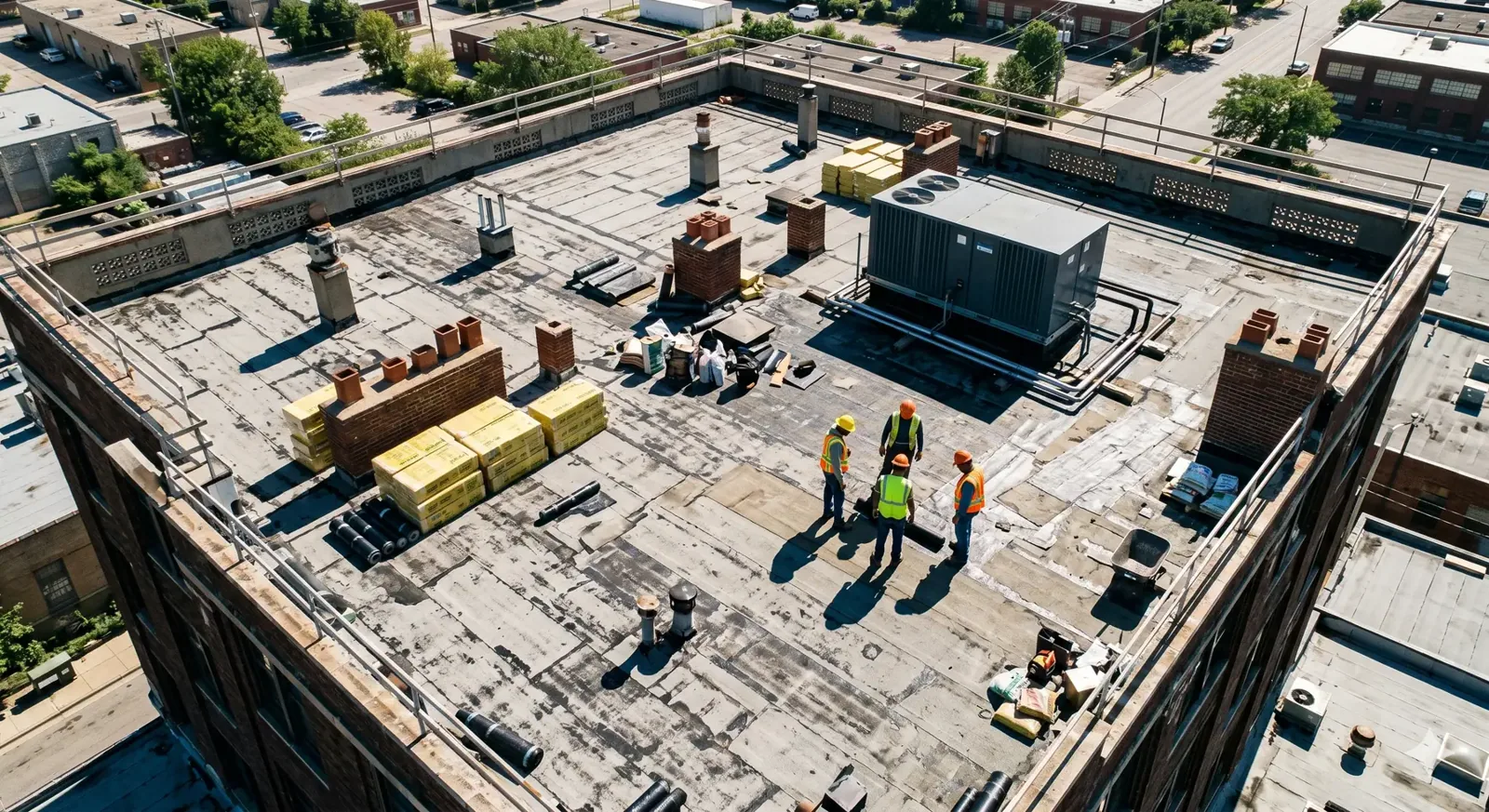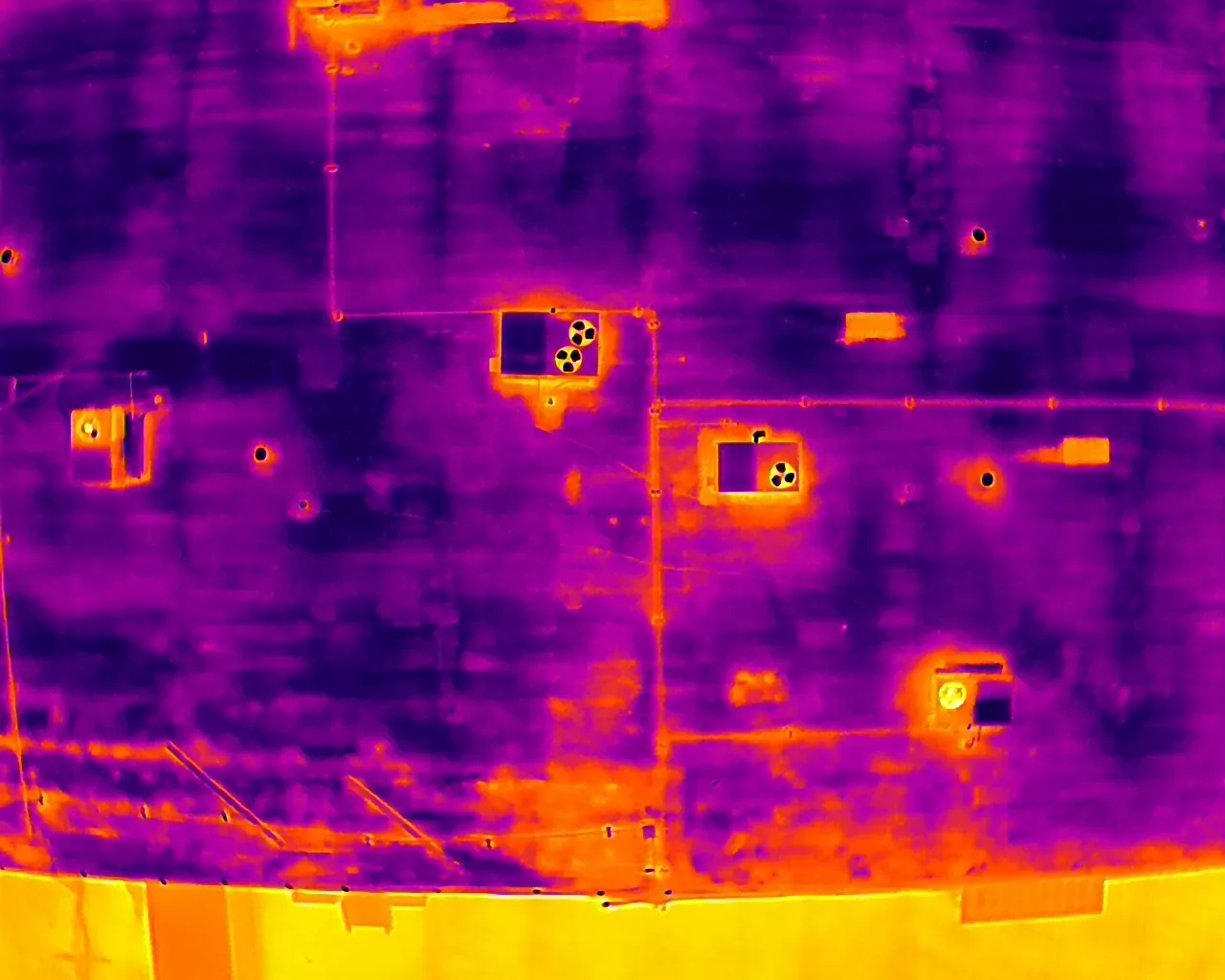

A soft insulation area can change an acquisition conversation faster than a long repair log. In Renton, we begin with the roof assembly, reported water locations, visible patch history and the route to each drain, then separate observed conditions from questions that need testing. Sea-Tac normals show a pronounced late-fall and winter precipitation pattern compared with July, so a review before the wet season should include outlets, penetrations and the temporary protection plan for any open work.
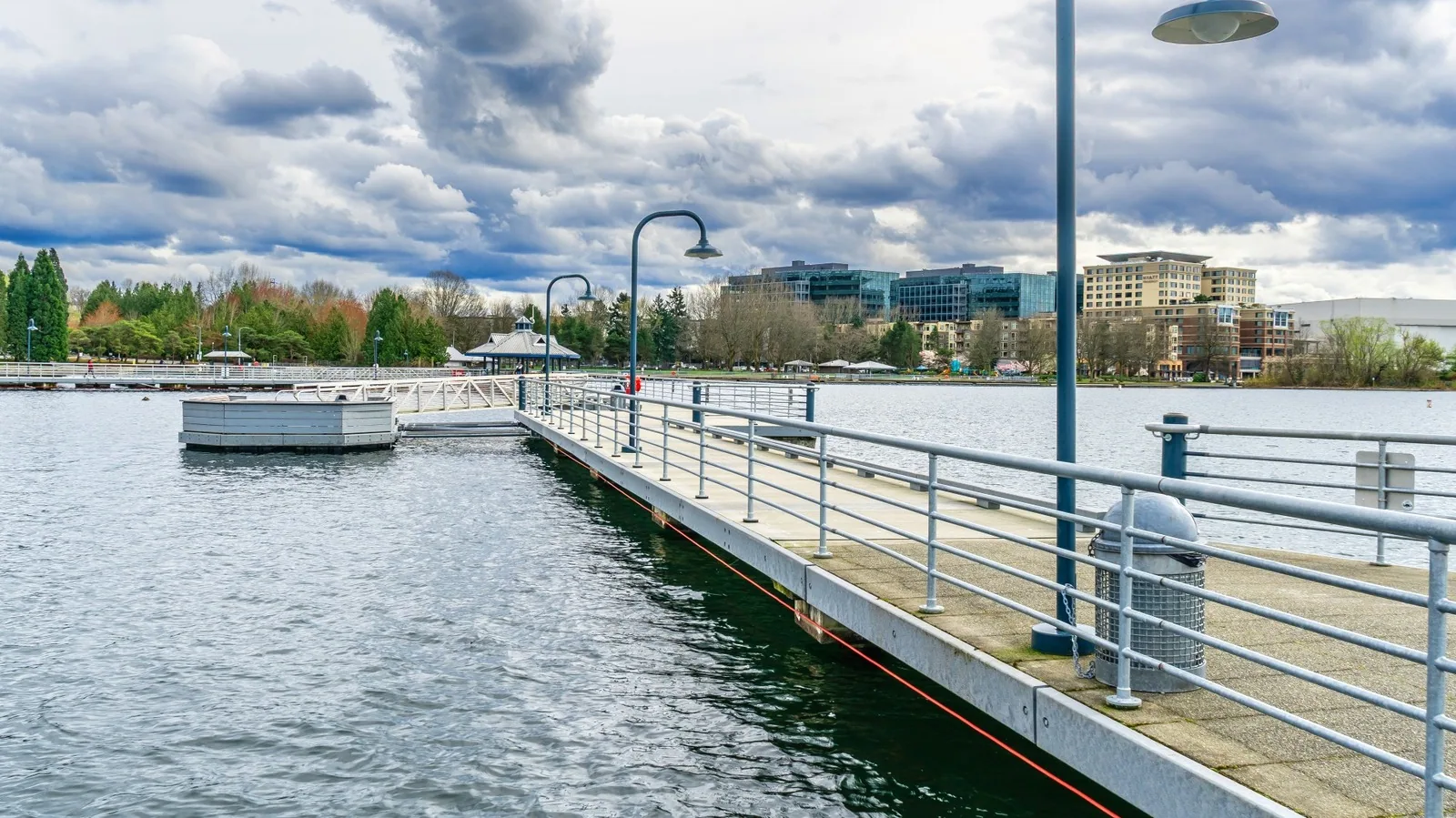
Investors may compare office, healthcare, logistics, manufacturing and retail assets across the same portfolio. Renton reports professional services as its largest employment sector and describes the Valley Subarea as largely industrial and warehousing, so an investor's Renton assets can include office suites and dock buildings with very different access needs. None of that shows a roof type, defect or remaining service life at a particular property.
Acquisition scope: identify what the roof can support
A useful roof review starts with what is visible: membrane type, perimeter condition, seams, penetrations, drainage, past repairs and areas that cannot be reached. We compare those observations with leak reports, maintenance records and any roof plan supplied by ownership. A due-diligence roof survey can give an acquisition team a defined record of current conditions and recommended next steps without implying that a visual visit reveals concealed layers.
A property in the Urban Center or near Downtown Renton still needs its own parcel and roof review, since an address does not answer whether its assembly is dry or serviceable. We record roof-specific observations so asset managers can connect them to the acquisition file and the physical building.
When several properties are under review, a portfolio roof record can organize system, condition, leak history, access and open recommendations by address. The comparison becomes more useful when every roof has a stated inspection limit and a clear distinction between repair items, maintenance and possible capital work.
Moisture question: test only where it changes the decision
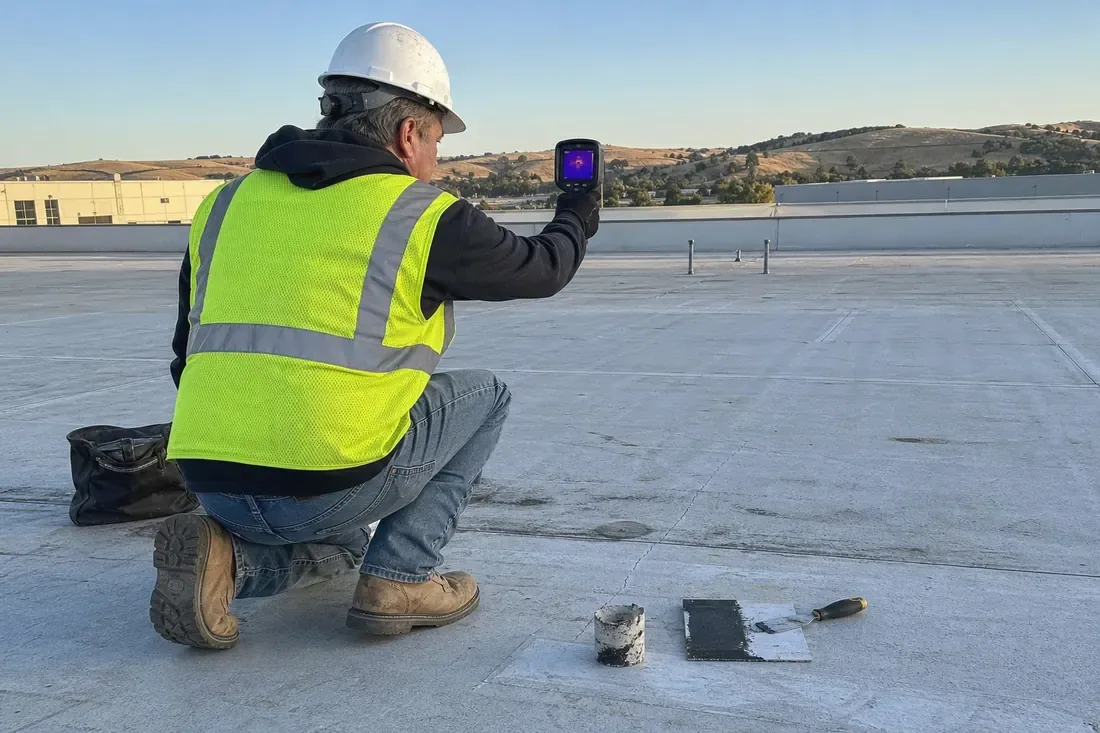
A dark ceiling mark, recurring leak or soft area may point to water movement beyond the visible opening. We follow the likely route across seams, curbs, penetrations and low points, then note what evidence supports a local repair and what remains uncertain. An inspection documents the accessible surface, while an infrared moisture survey or a test cut can show how far wet insulation extends.
Sea-Tac's normal precipitation rises in November and December and drops substantially in July. That regional pattern makes a functioning drain route and sound flashing worth reviewing ahead of sustained rain. We map the roof area examined, identify locations where standing water or a split detail was observed, and describe the next check only when it can refine the repair boundary or replacement recommendation.
For a managed commercial property, bring prior work orders and tenant reports to the roof walk. A separate review of manufacturing assets may need to account for equipment clearances and operating schedules. We tie those discussions to the actual address and roof, rather than treating a portfolio label as evidence about the assembly.
Capital choice: compare repair, recover and removal
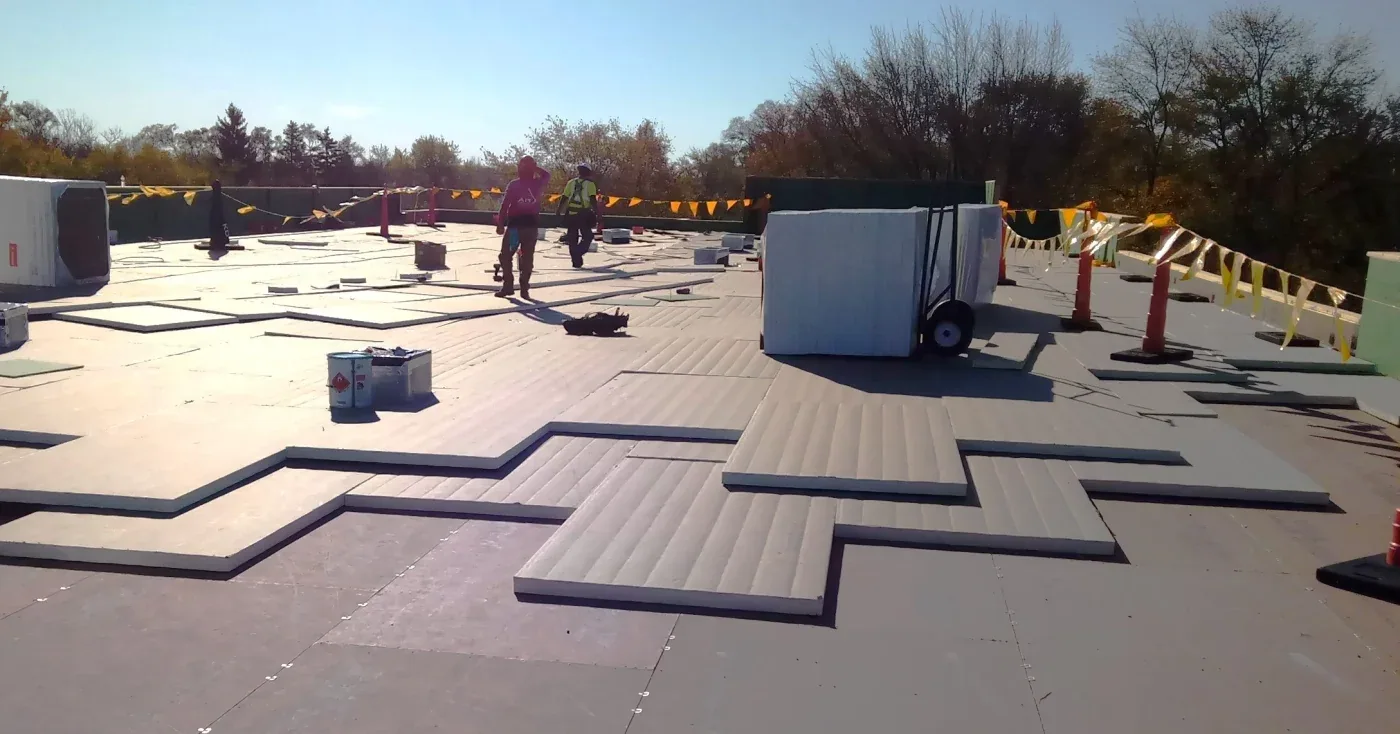
A localized seam or flashing defect may be repairable when the surrounding membrane and insulation remain sound. Widespread moisture, repeated failures, loose attachment or a deteriorated deck can make larger work more reasonable. Our repair scope identifies the affected zone and tie-in; a recover review compares a new layer with removal when the existing assembly can remain; a replacement proposal states preparation, tear-off and substrate work.
Cost and schedule depend on the roof's layers, access, insulation condition, edge details, equipment coordination, disposal and weather protection. A comparison should show those items separately. If a repair is proposed as interim work, the record should state its limit and any known follow-up, so investors can distinguish immediate water control from the capital decision that remains open. When several repair records exist, dates and locations need to be checked against one roof sketch. A patch described in an older invoice may sit upslope from a newer interior stain, while a replacement estimate may leave out a curb or perimeter detail recorded during a later visit. We compare the notes with visible field conditions, mark conflicts for follow-up and explain whether the difference could change the repair boundary or budget. That gives the asset team a specific item to resolve before choosing a broader scope. A lender, investment committee or facilities lead may need the same finding in a different level of detail. We identify the roof area, visible condition, access limits and recommended next step in the Diligence Notes, then keep the repair description consistent with the proposal. If a test is authorized, its location and result belong in the building record. That makes later budgeting easier to revisit when ownership changes, tenants report another leak or a maintenance visit finds a new condition.
Warehouses and industry dominate the Renton Valley Subarea, while engineering, architecture, real estate and corporate support fall under Renton's professional services. Clear roof records help when asset, engineering and property teams review the same recommendation, and the actual building condition sets the scope.
Access and closeout: make the finding transferable
An acquisition review can lose value when access limits are left unstated. We record areas reached, tenant or security restrictions, equipment that needs a separate trade and any roof section hidden from view. If work is recommended, the scope identifies a workable access window and the point where temporary protection will be closed each day. That gives the owner a basis to coordinate the roof with building operations.
After repair or maintenance, photographs linked to a roof sketch can show the repair boundary, drains, seams and nearby penetrations. A condition report keeps the observations and remaining questions together for the next review. For assets with dissimilar systems, retain the product and repair history by building rather than relying on a portfolio-level summary alone.
Send the Renton address, roof plan, leak history, recent repair records and access rules. We can outline what the first roof walk can settle and identify any test or trade coordination that should be considered before an acquisition or capital meeting.
Commercial Roofing Questions
Can a roof walk estimate remaining service life?
A roof walk records visible condition and known history; it cannot expose concealed layers without testing. We identify deterioration, repairs and areas needing follow-up, then explain what evidence would be needed before assigning a broader replacement scope.
Which records help before a property acquisition?
Bring a roof plan, leak log, repair invoices, warranty documents and access rules so we can compare the file with conditions on the roof. We note gaps separately so an investor can decide whether further inspection or a test opening is useful.
How should an investor compare repair and replacement proposals?
Compare preparation, removal or recover conditions, insulation and substrate work, perimeter and penetration details, access, protection and closeout. We define the affected area and the work included, which makes unlike scopes easier to evaluate.
Does a regional wet-season pattern prove a leak source?
No. It makes drainage and flashing timely inspection points, while the roof walk follows the actual water route. We document the observed condition and recommend testing only where the result could change the repair decision.
Can one roof review cover a whole portfolio?
A coordinated program can schedule multiple properties, but each building needs its own condition record, access notes and repair boundaries. Portfolio summaries are most useful when they preserve those site-level differences.