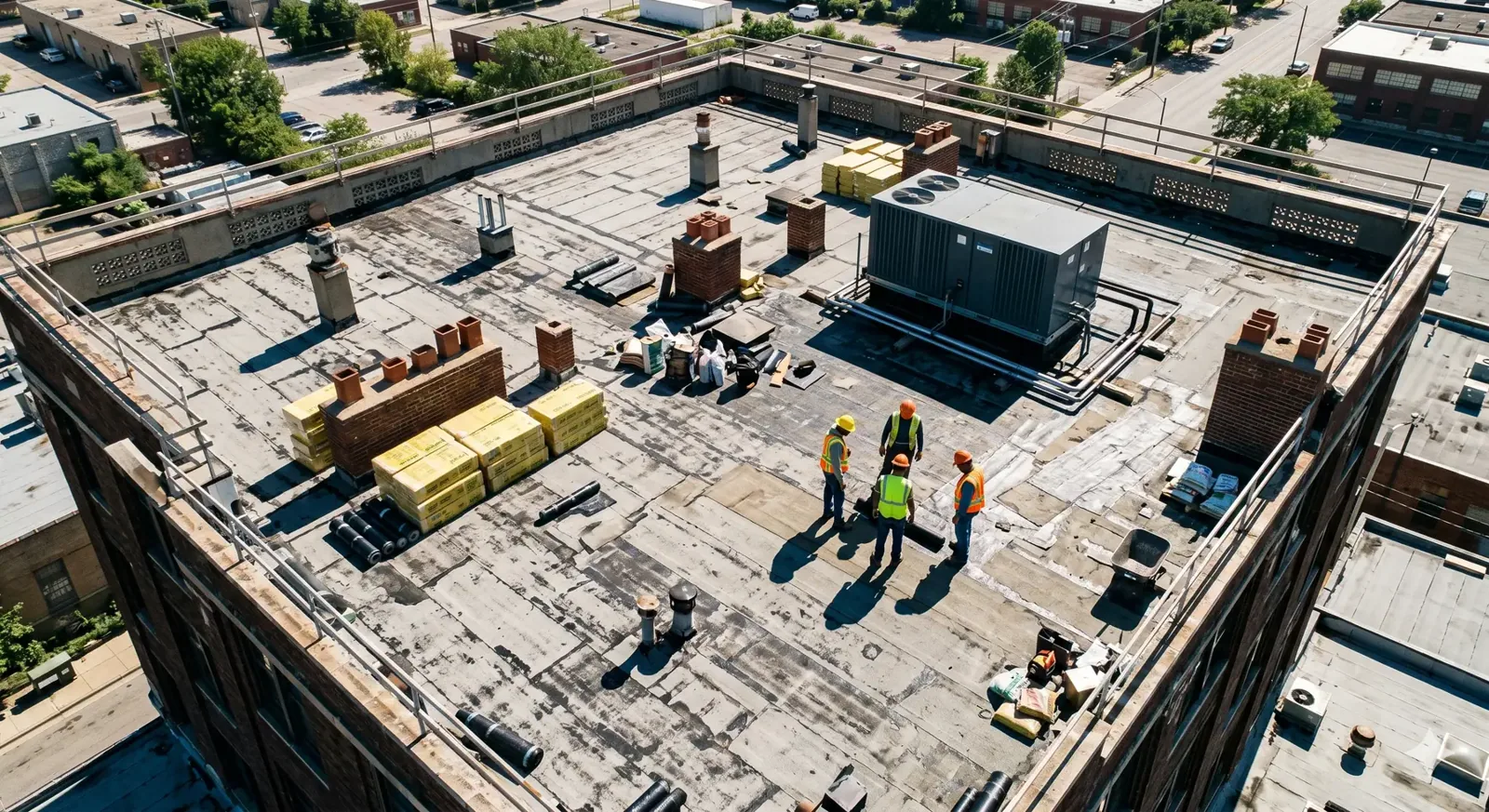

A black EPDM lap that has curled at a corner can leave a narrow path for water, even when the field sheet looks sound. We follow the seam toward the nearest outlet, inspect the flashing and check where an earlier patch meets the rubber. Renton's heavier late-fall precipitation makes that drain route worth reviewing ahead of winter.
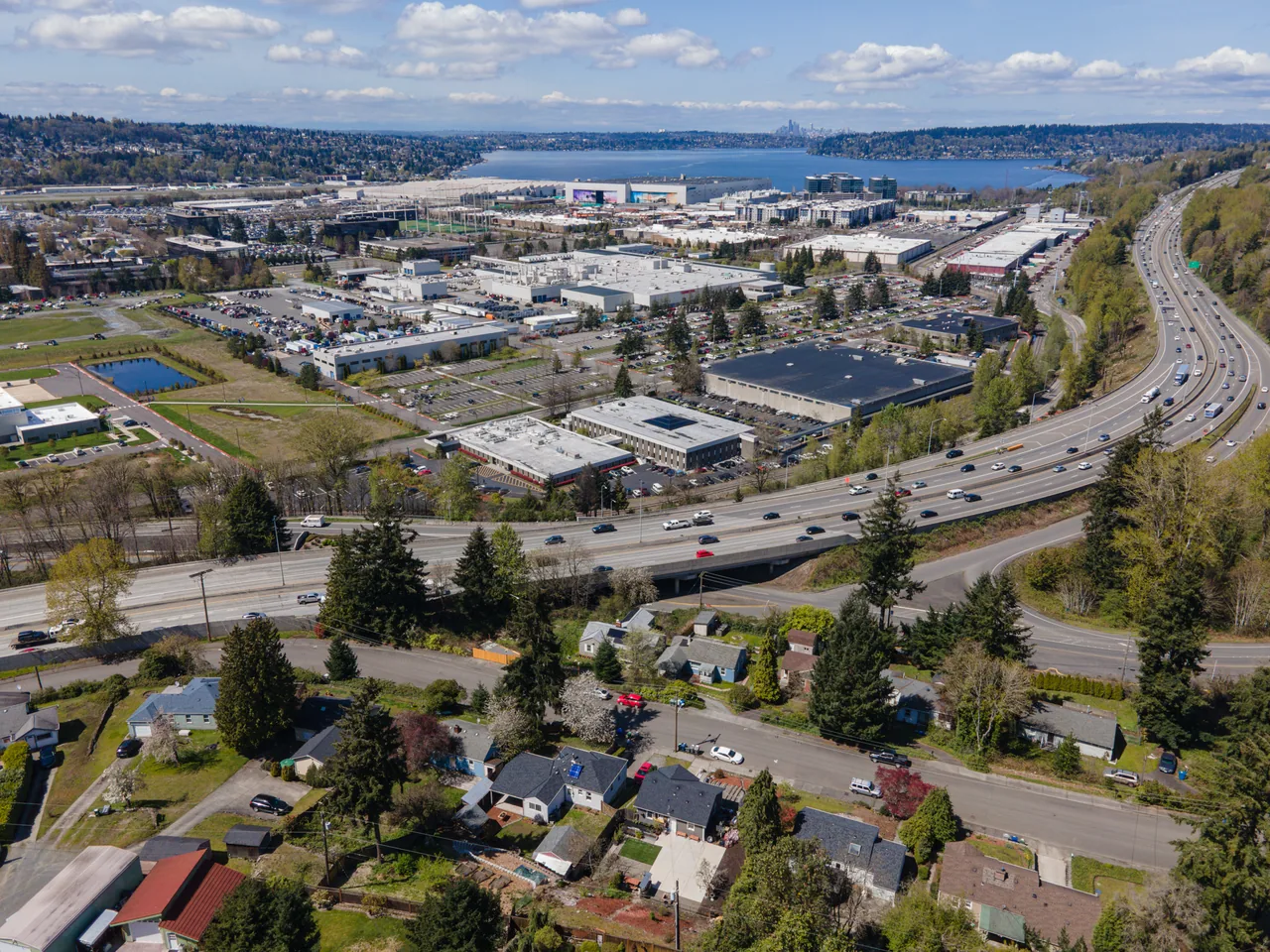
An EPDM roof in Downtown Renton and one in the Renton Valley Subarea are reached differently, with tenant corridors in one case and dock and equipment routes in the other. We identify the membrane, attachment, insulation concerns and details that meet the field, then set a repair line the property contact can match to the building record.
Membrane condition: read the field and the seams
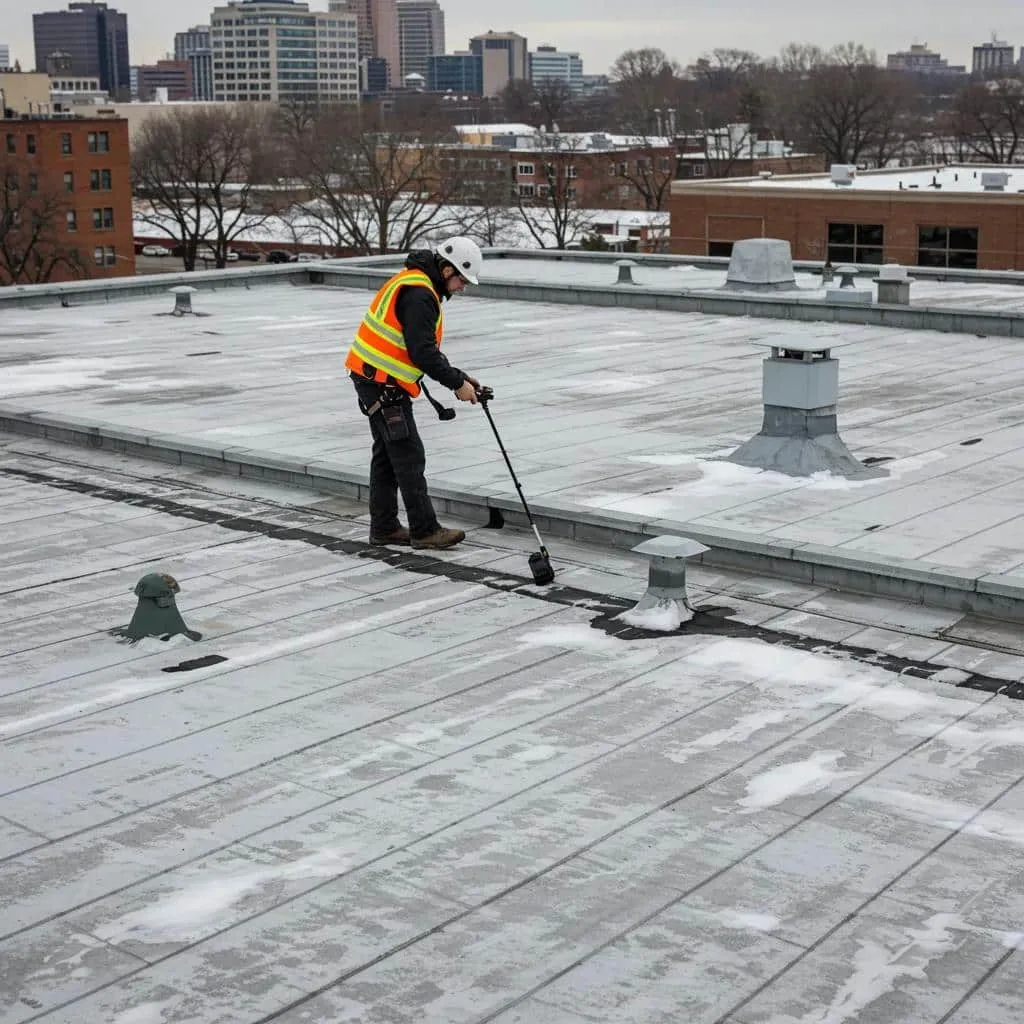
EPDM is a flexible rubber membrane. Its field can remain serviceable while a seam, penetration or termination needs work, so we inspect the surface and the transitions separately. We look for open laps, shrinkage at edges, cuts, punctures, brittle patches and movement around curbs. A stain indoors helps set the route, but the roof walk follows water upslope until the likely entry detail is clear.
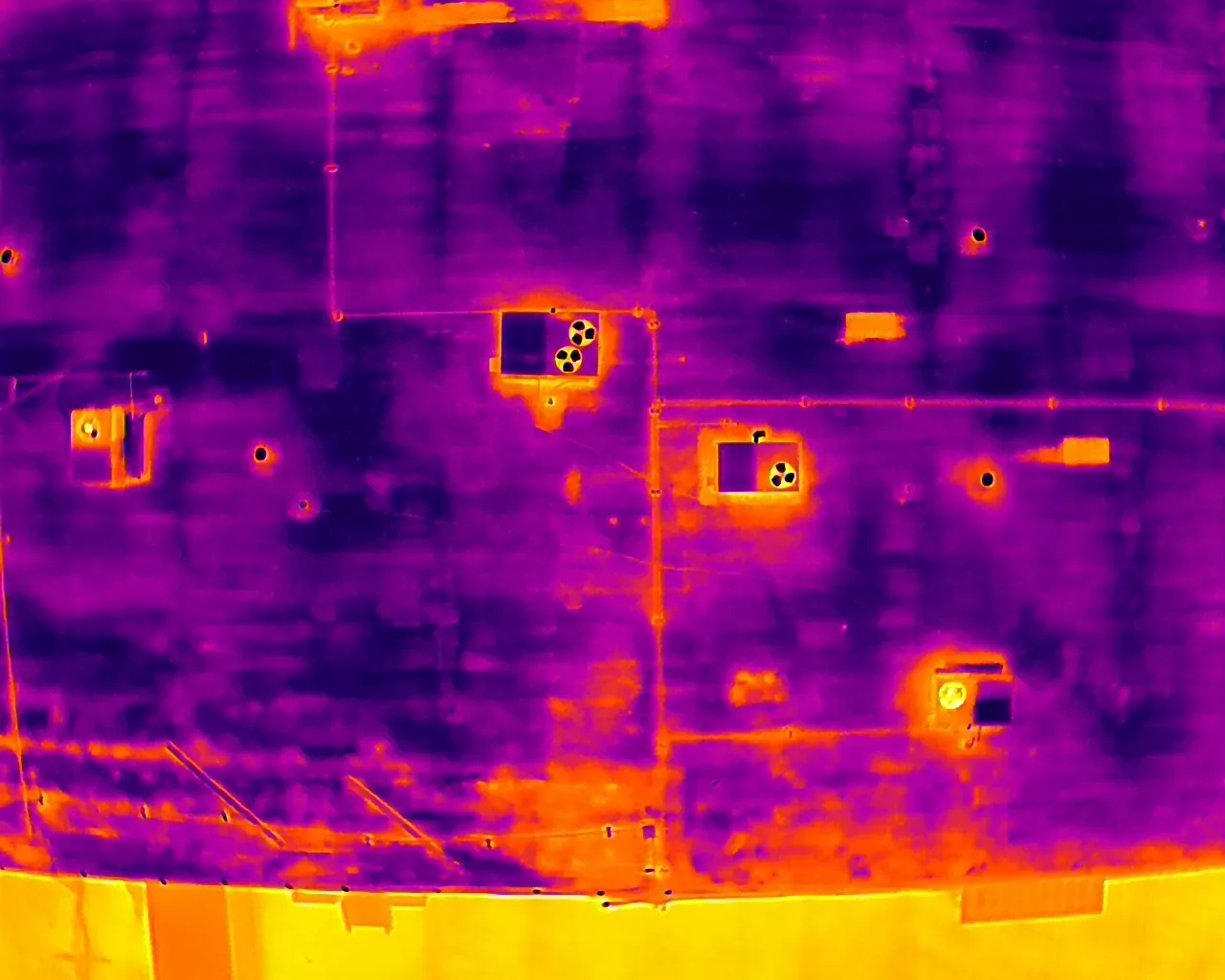
At a broad roof, that route can cross several membrane sheets and past equipment before reaching a drain. The repair notes identify the observed condition and what was reachable, not just a point on the ceiling plan. A commercial roof inspection can map seams and penetrations, and an insulation survey may help choose a test area when moisture is in question. Thermal patterns guide investigation, but a pattern alone does not establish wet insulation.
Rubber seams may use adhesive, tape or a compatible repair approach depending on the existing assembly and prior work. We check the bond area, clean and prepare it as required, then restore the joint with materials suited to that system. If the adjoining sheet is damaged or the old repair has separated at several edges, we enlarge the boundary to sound material instead of covering a weak lap.
Penetrations: keep each change in plane watertight
Pipe boots, curbs and conduit create cuts in a continuous field, and those details can move differently from the membrane around them. We inspect the boot, clamp or flashing edge, nearby sealant and the surface where water can collect. A repair may require replacing a deteriorated boot or rebuilding the transition, rather than adding sealant over a loose part.
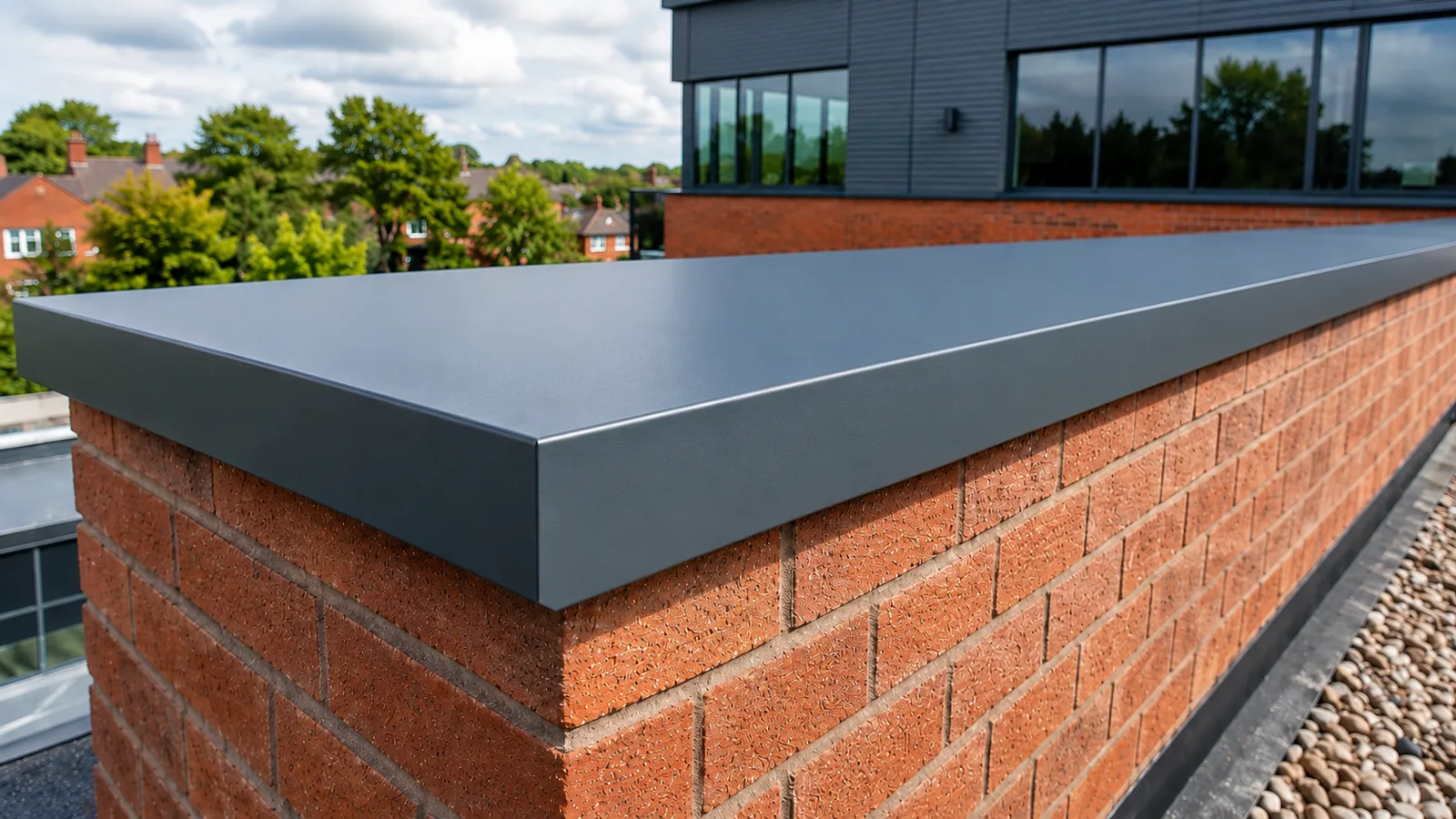
Equipment work can leave abandoned supports or a new penetration that never received a compatible detail. On Renton commercial roofs, we record those changes with equipment clearance and service access in mind. The property contact can help identify which units remain active and which trade owns a move. For edge transitions, coping and metal repair should meet the rubber termination without leaving a gap where wind-driven rain can enter.
A roof plan and photographs help show where the repair begins and ends. We note whether the surrounding field tested firm, whether the flashing could be inspected from the roof, and what needs a closer test. The condition record can keep that information beside prior leak reports so maintenance staff can compare a later water mark with the original repair boundary.
Drainage: trace the low route before patching
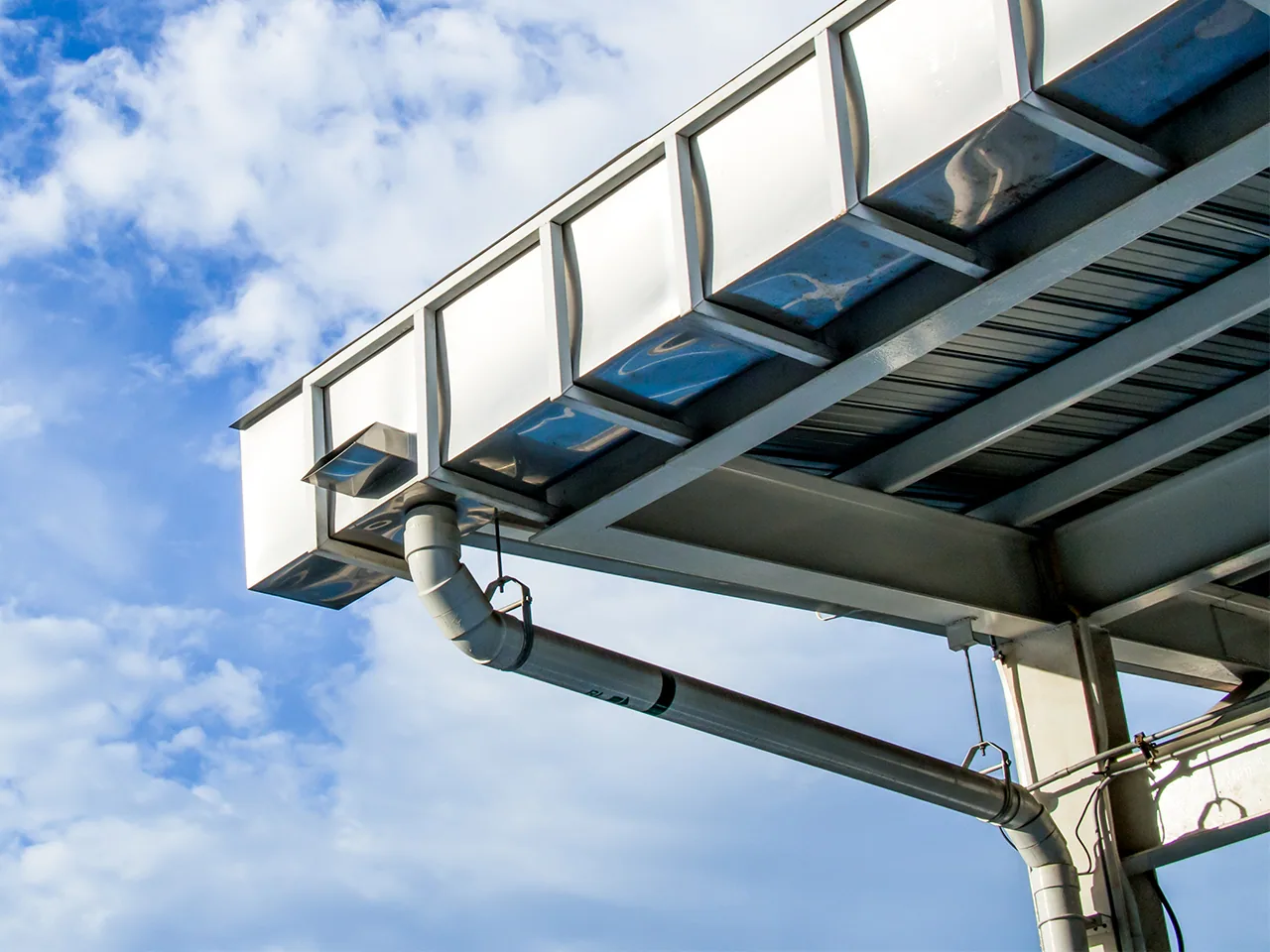
A membrane repair cannot change a low spot that holds water. We inspect the slope, drain bowl, scupper and overflow path, then compare those details with the location of recurring ponding. Sea-Tac's November and December normal precipitation is substantially above July, which makes a seasonal drain check useful for Renton properties. It does not tell us whether a particular outlet is blocked or whether the roof has adequate slope.
A drain and scupper review can separate a clogged strainer from a damaged ring or a broader drainage concern. We clear the view of the detail where safe, check the membrane connection and note water marks or debris that may have changed the route. If water remains after cleaning, we identify the low area and discuss whether a correction can be evaluated with the existing structure and assembly.
The Renton Valley is described as an industrial and warehousing district, while downtown has a separate business-district overlay. For either area, access can influence how drains are reached and which sections are inspected first. We coordinate the roof walk around the building's operating needs and state any limitation plainly. The next step should address the condition observed on that roof, not copy a drainage assumption from a neighboring property.
Repair or replace: let the assembly decide
A few open seams or a damaged boot can support a targeted EPDM repair when the surrounding membrane and attachment remain sound. Widespread shrinkage, recurring separation, soft insulation or repeated leaks may call for a larger comparison. We review visible edges and records, then identify whether an opening or moisture test would change the recommendation. No single interior stain establishes the condition of every roof layer.
When the existing assembly remains eligible, a recover assessment can compare another layer with removal, accounting for edge height, existing layers and drainage. If the roof needs a different assembly, a replacement plan should show how insulation, flashings, drains and rooftop equipment will be addressed. We explain the limits and assumptions behind each choice so the owner can compare the repair horizon with the broader scope.
For a property team considering a different membrane, TPO roofing or a PVC assembly offers another system to compare, while an EPDM repair should remain compatible with the existing sheet. Material choice depends on use, exposure, detail geometry and maintenance access. We can mark the affected area and list the next test before the project grows beyond the condition the roof walk established.
Closeout: leave a useful roof record
After repair, the record should identify the seam, penetration, drain or edge detail completed and show its location on a roof plan. Photographs give the next inspection a way to distinguish a repaired area from an older condition. If an area was not reached, we note that boundary and the access needed to return. A clear record keeps future leak calls from starting with the same missing information.
Send the Renton address, roof plan, leak history, repair records and access instructions when requesting an EPDM assessment. We will walk the water path, check the membrane details and explain whether a repair, recover review or replacement comparison fits what we find. If additional testing is needed, we identify its purpose and ask before opening the roof. The property contact leaves with a defined repair line and practical next step.
Commercial Roofing Questions
Can an EPDM seam be repaired without replacing the whole roof?
A localized seam problem can be repaired when the surrounding membrane and attachment are sound. We inspect adjacent laps and flashing, then define the repair boundary based on what is firm and dry rather than on the visible opening alone.
Why does an EPDM lap pull away from the edge?
Movement, aging, poor preparation or a failed termination can contribute. We check the seam, edge detail and surrounding assembly to see whether the issue is isolated or part of broader shrinkage or attachment loss.
Will a patch stop water that is standing around a drain?
A patch can close a membrane opening, but it cannot clear a blocked outlet or correct a low slope. We inspect both the water route and the membrane connection so the scope addresses the condition keeping water there.
How do you check insulation beneath EPDM?
We review records and visible conditions, then use testing only when it could change the decision. A thermal pattern can help choose where to investigate, and an approved opening may be needed to confirm what is below the sheet.
What information helps plan an EPDM roof walk in Renton?
A roof plan, leak locations, past repairs, equipment layout and access rules help us choose a safe route. Include the operating window so the inspection can account for areas that must remain available.