A seam over a shared service corridor can leak into a different tenant bay than the one where water becomes visible. We compare the report with roof slope, partition lines, equipment curbs and the drain route, then mark the likely repair boundary on the plan. Sea-Tac's November and December precipitation normals exceed July by a wide margin, a regional wet-season signal that makes outlets and transitions worth checking before opening a roof section in Renton.

Renton counts advanced manufacturing and logistics among its business strengths. Whether the building sits in the industrial Renton Valley Subarea or closer to Downtown Renton, its tenants, access rules and roof assembly come from the property walk and the manager's records.
Tenant boundaries: connect interior reports to roof zones
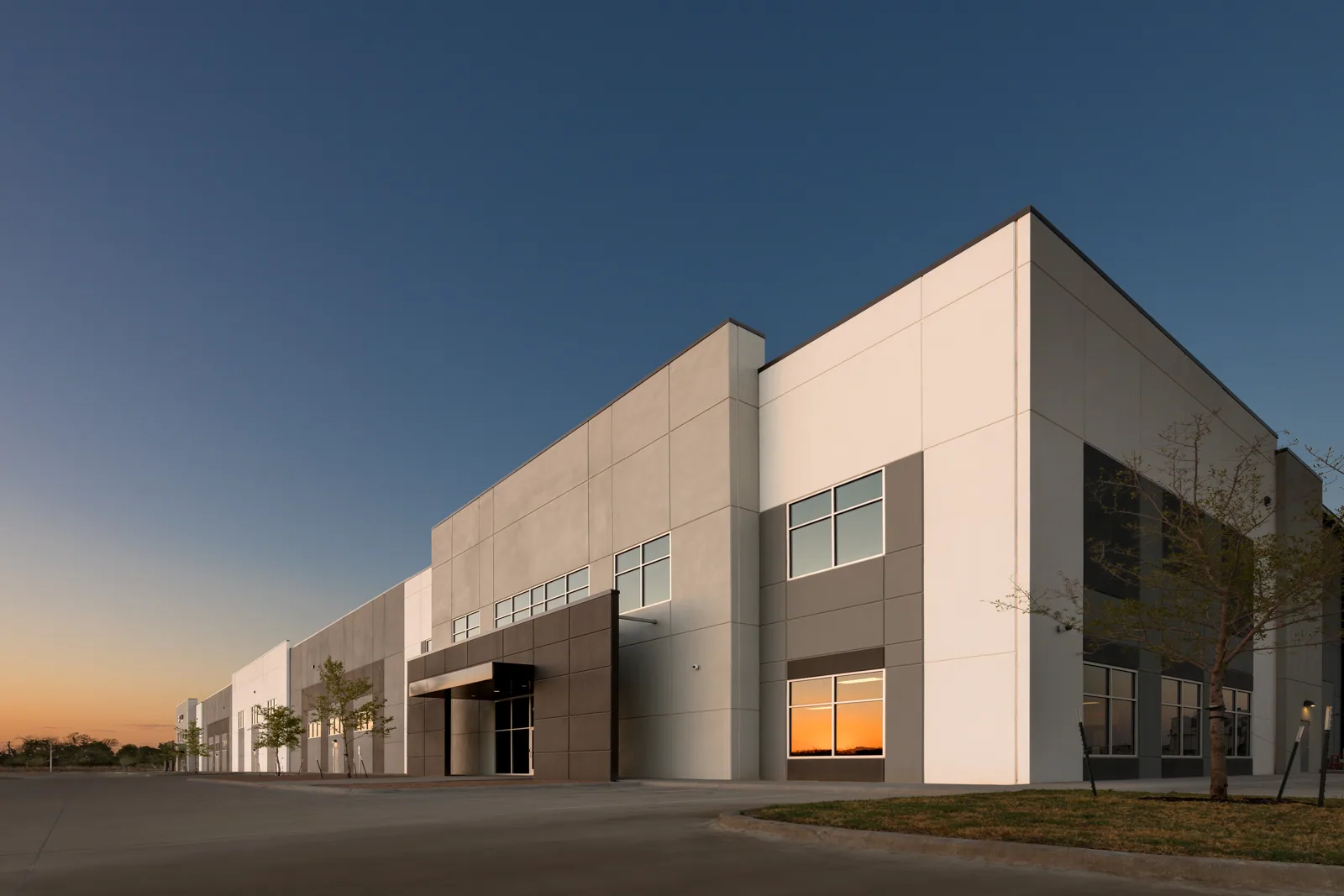
Flex buildings can combine shop floors, office suites, storage bays and loading doors beneath adjoining roof areas. We ask which tenant reported water, what room or column line is affected and whether the property plan shows a partition or addition above it. Those details help us test whether one roof condition follows the same slope or crosses into a separate assembly. A warehouse roof review may focus on broad storage areas, while a distribution-center assessment can consider a different flow of material and vehicle access.
Before moving a lift or staging rolls, we identify the doors and aisles that must remain clear. A property contact can arrange tenant notice and roof-access authorization, while the scope shows which phase affects each area. If separate suites share one roof plane, we keep the repair boundary visible from above and relate it to the interior report without moving a tenant's equipment or work line.
An addition may meet the original building at a change in height, deck or membrane. We inspect the joint for flashing continuity, movement and a route to a drain. If the water report appears on one side but the seam opens on the other, the roof map should show both. That record makes it easier to discuss the needed repair with the owner and affected tenant.
Drain route: follow low points through each roof plane
A blocked strainer, shallow sump or damaged drain connection can keep water on a roof after debris is removed. We trace the low route across each plane, note ponding limits and inspect the bowl, scupper and surrounding membrane. Drain and scupper service can document the outlet alongside the roof conditions that feed it. If water remains after cleaning, the next step is to map the low area and assess slope or assembly conditions separately.
Renton's late-fall and winter precipitation pattern is wetter than midsummer at the nearby Sea-Tac station. For a flex property with multiple tenants, that seasonal change makes it useful to know which outlets serve which roof zones before a repair opens membrane. We identify the daily stopping point, temporary cover and route that must remain free of stored materials. The plan can also state who confirms access before work resumes.
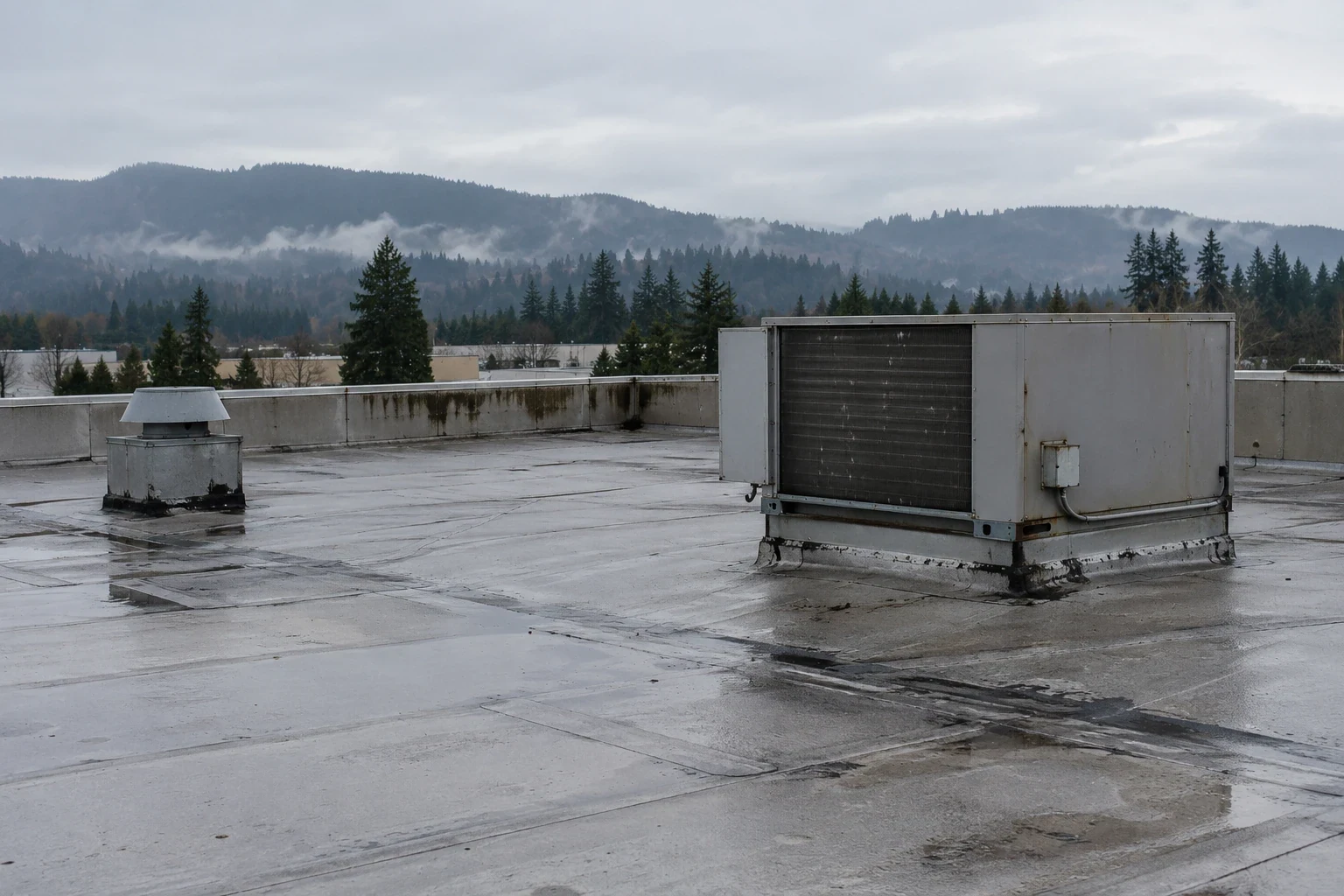
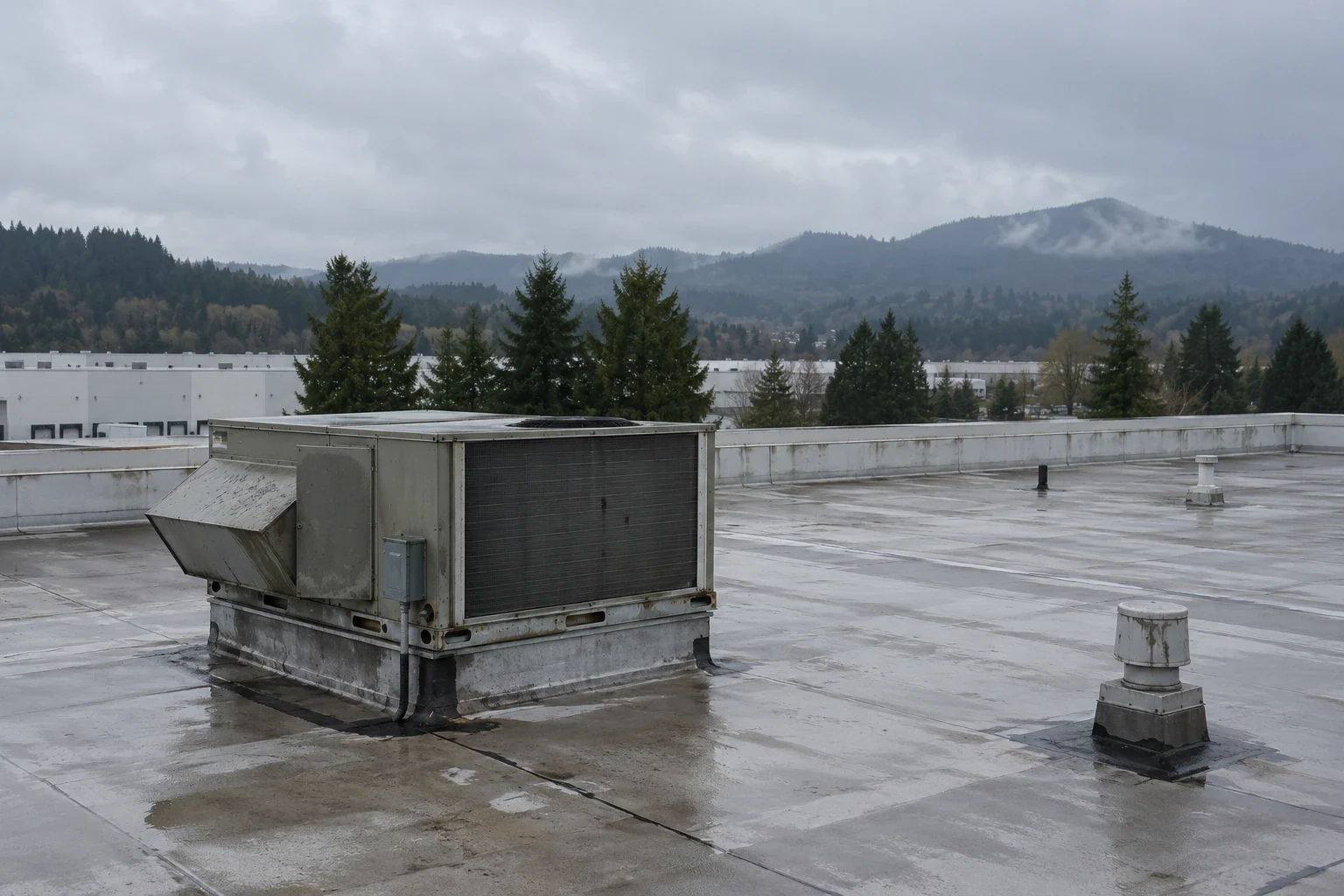
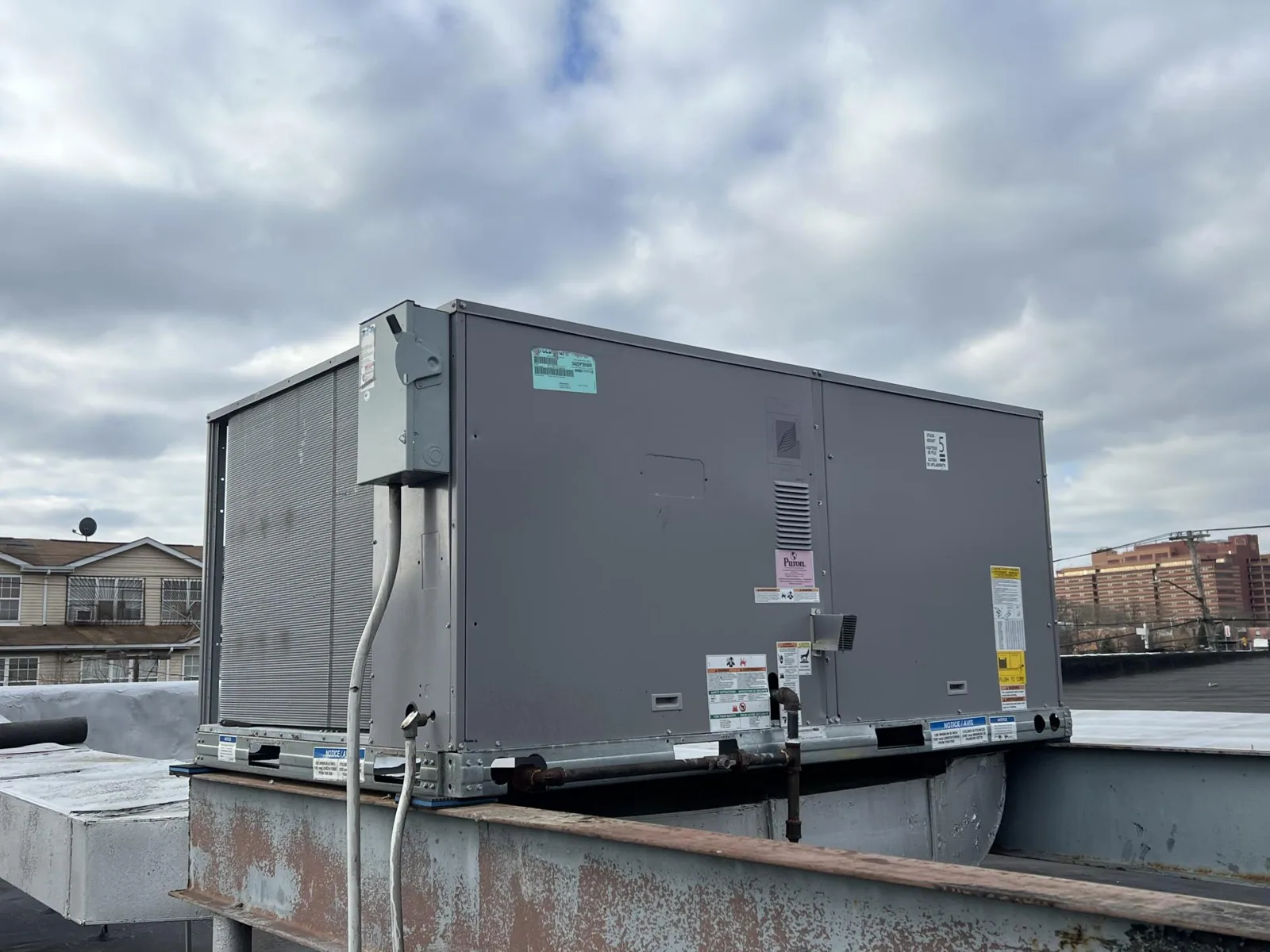
Where rooftop units or service lines sit near an outlet, we check the clear path for maintenance and drainage. Equipment-curb and support work can address a defined transition that affects the water route. We note which trade controls disconnects or equipment movement, so a roof repair does not assume that a mechanical unit can be shifted without coordination.
Roof transitions: inspect curbs, joints and metal edges
Vent stacks, conduit supports, skylights, parapets and mechanical curbs interrupt a low-slope field. We check membrane laps around each one, look for flashing that has lifted and follow the metal corner where water turns toward a wall. A commercial roof inspection can locate those observations on the plan and tie photographs to the affected zone. The record should distinguish a visible split from a hidden condition that needs testing.
Some flex spaces have roof areas built at different times or with different materials. At a joint, we inspect height, attachment, drainage direction and whether the flashing closes both sides of the connection. A patch across the whole seam may hide the point where movement or water enters. We describe the work line and the tie-in material so the owner can compare it with the actual assembly.
Roof access can be limited by equipment density or a narrow hatch route. We note which zones were reachable, what could not be observed and whether a lift or insulation test would change the decision. A test opening should identify its purpose and location before it is made. That gives ownership a clear choice between additional evidence and a scope based on the conditions already visible.
Scope: separate a single leak from a portfolio decision
A puncture, failed curb flashing or open lap can support a focused repair when the nearby field remains dry and attached. If the same defect returns across several zones, we compare the pattern and inspect adjacent materials before broadening the work. The recover review can be considered when layers, moisture, attachment, edge height and drainage allow another assembly. A recover is not a substitute for repairing a wet or unstable roof.
When removal is needed, a replacement scope can break out insulation, deck repairs, drains, curbs, perimeter metal and tenant phasing. This helps an owner distinguish roof-system work from the access steps required to keep the building usable. We list exclusions and concealed-condition allowances clearly, then identify which findings would require approval before expanding the repair line.
A recurring leak can wet insulation or disrupt another suite; replacing sound areas can add cost without correcting the original path. We record immediate protection and the broader capital choice separately. The roof plan shows which zone needs repair, monitoring or testing before broader work.
Roof record: keep the next service call traceable
At closeout, identify repaired seams, drains, curbs, transitions and any area not accessed. Attach photographs to the roof plan and note material, repair limits, temporary cover removed and follow-up work. For a multi-tenant building, keep the interior report and roof location together without including unrelated tenant information. That record lets a later call start from the affected zone rather than treating every mark as a new roof-wide failure.
Send the address, tenant map, roof plan, leak history, equipment locations and access rules. We will trace the reported water path and state what the inspection can resolve.
If the same suite reports water again, compare the date, weather and location with the prior repair line. A return at the same transition may need a closer look at its tie-in; another zone should be mapped independently. The repair record helps keep that follow-up tied to evidence from this property's roof rather than a general description of flex space.
Commercial Roofing Questions
Can roof work be split by tenant or suite?
We map each reported area and identify the roof section, access route and tenant coordination it requires. The sequence can be phased where roof boundaries and weather protection allow it, with any shared transition shown in the scope.
Why does water appear in a different suite from the roof opening?
Water can follow a deck joint, slope or insulation layer before it becomes visible. We compare the report with the roof plan and nearby transitions, then record the likely path and any test that could confirm it.
What should the manager provide before an inspection?
A roof plan, tenant or suite map, access contacts, reported water locations, equipment layout and prior repair notes help us select a route. Identify any door, aisle or operating area that must remain clear.
How do you decide between a repair and a recover?
We inspect moisture, attachment, roof layers, drainage and edge height first. If those conditions support another assembly, we compare it with removal; otherwise the scope explains what needs repair or replacement.
Can drains be cleaned without fixing ponding?
Yes. Cleaning may restore flow through a bowl, but it will not change a low area or failed slope. We record what remains after the outlet is clear and identify any separate corrective work the roof may need.