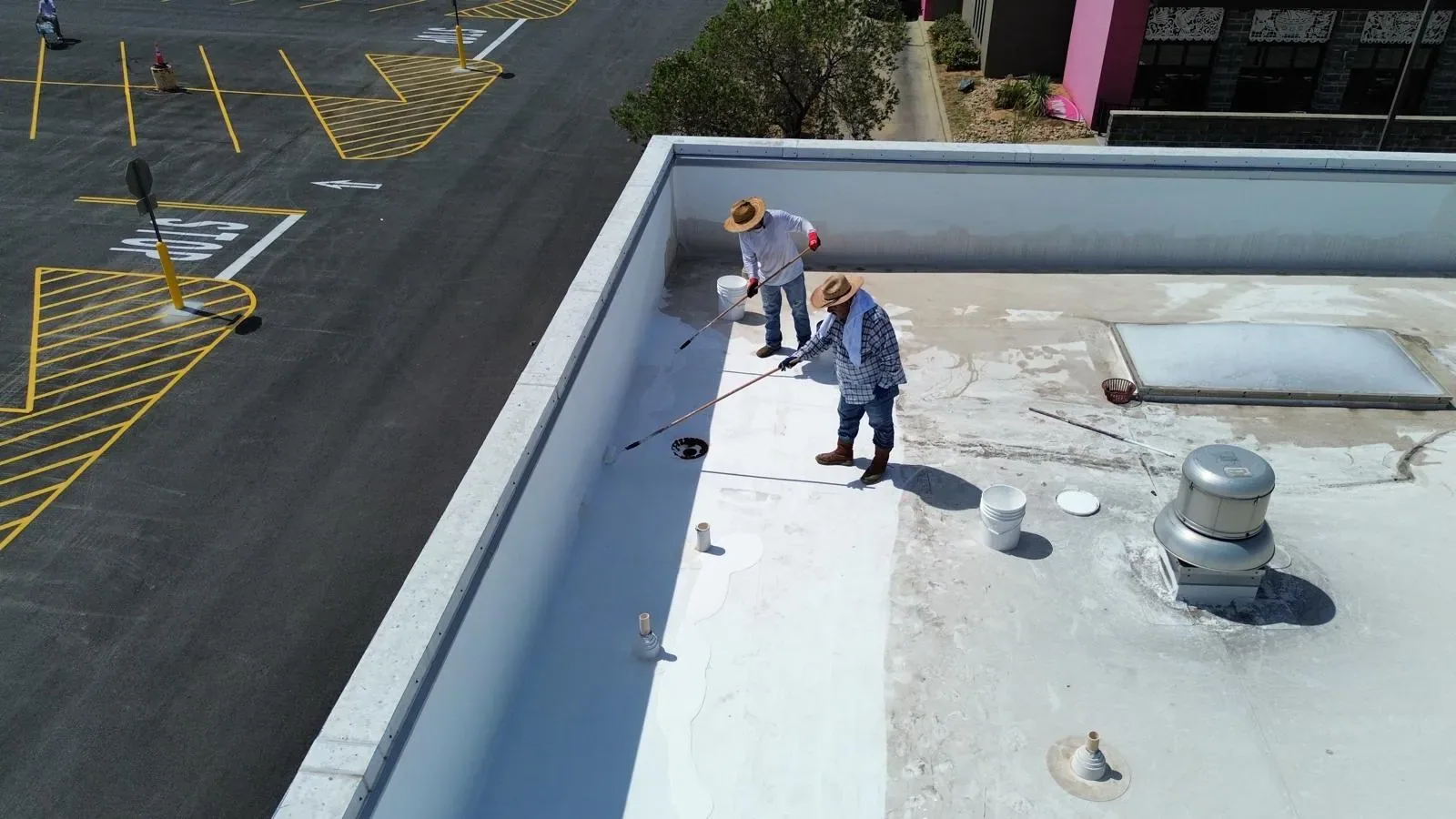

A thin line of silt around a drain bowl shows where water has been carrying grit, but it does not say whether the outlet can move the next rainfall. In Renton, the roof check starts at the low point and follows the path back through crickets, seams and parapet corners. Sea-Tac's long-run monthly averages rise in November and December compared with July, so a pre-wet-season drain review can catch a blocked route or loose connection before rain keeps testing it.

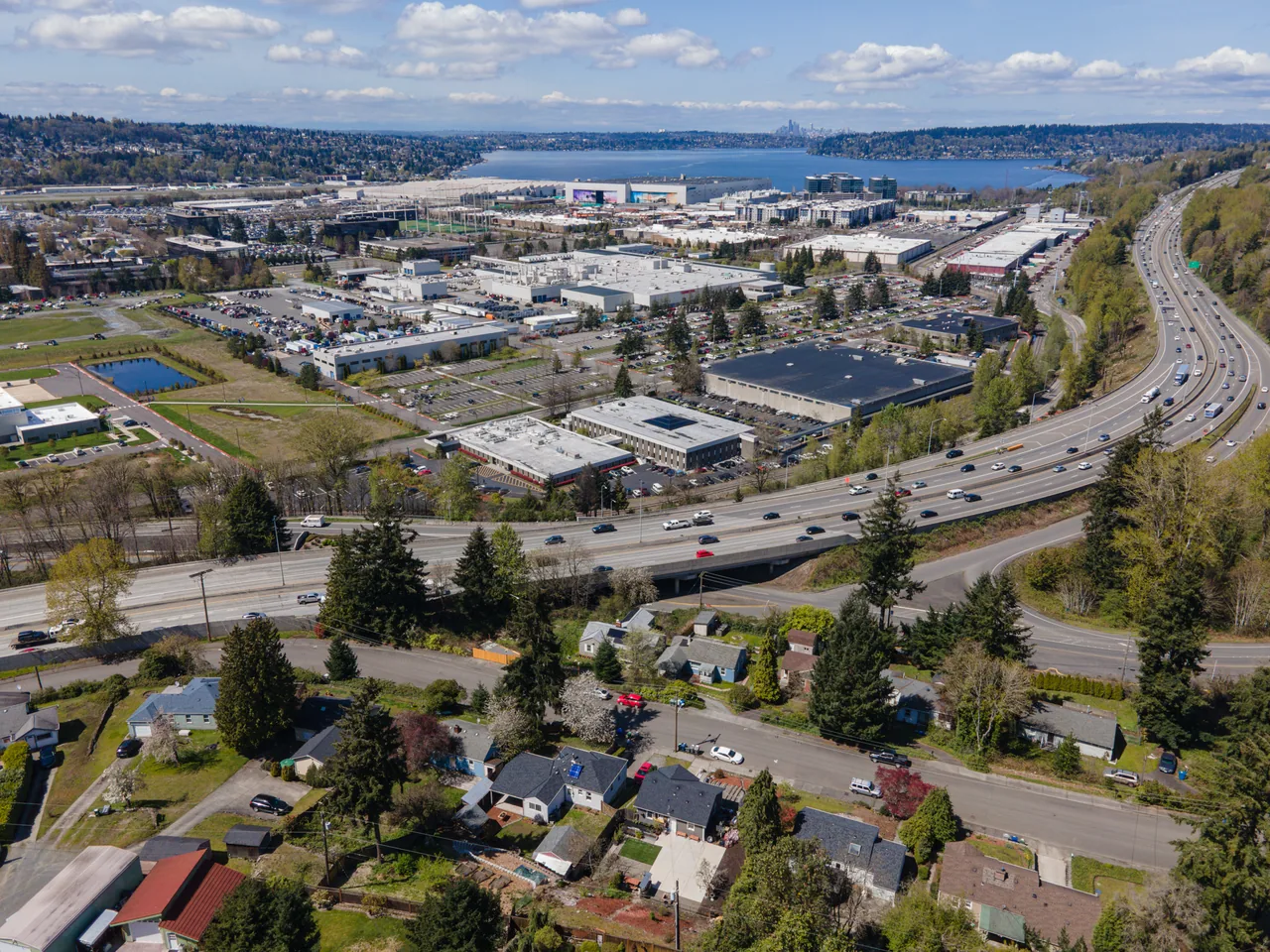
In the Renton Valley Subarea, warehouse and light-manufacturing uses make access near rooftop equipment and receiving areas part of the work plan. We confirm access and mark outlets or overflow paths we could not reach. Cleaning a bowl may restore flow, but it will not correct a damaged drain body, a low area that holds water or an open membrane transition. Those findings need separate repair decisions.
Outlet check: inspect the bowl and connection
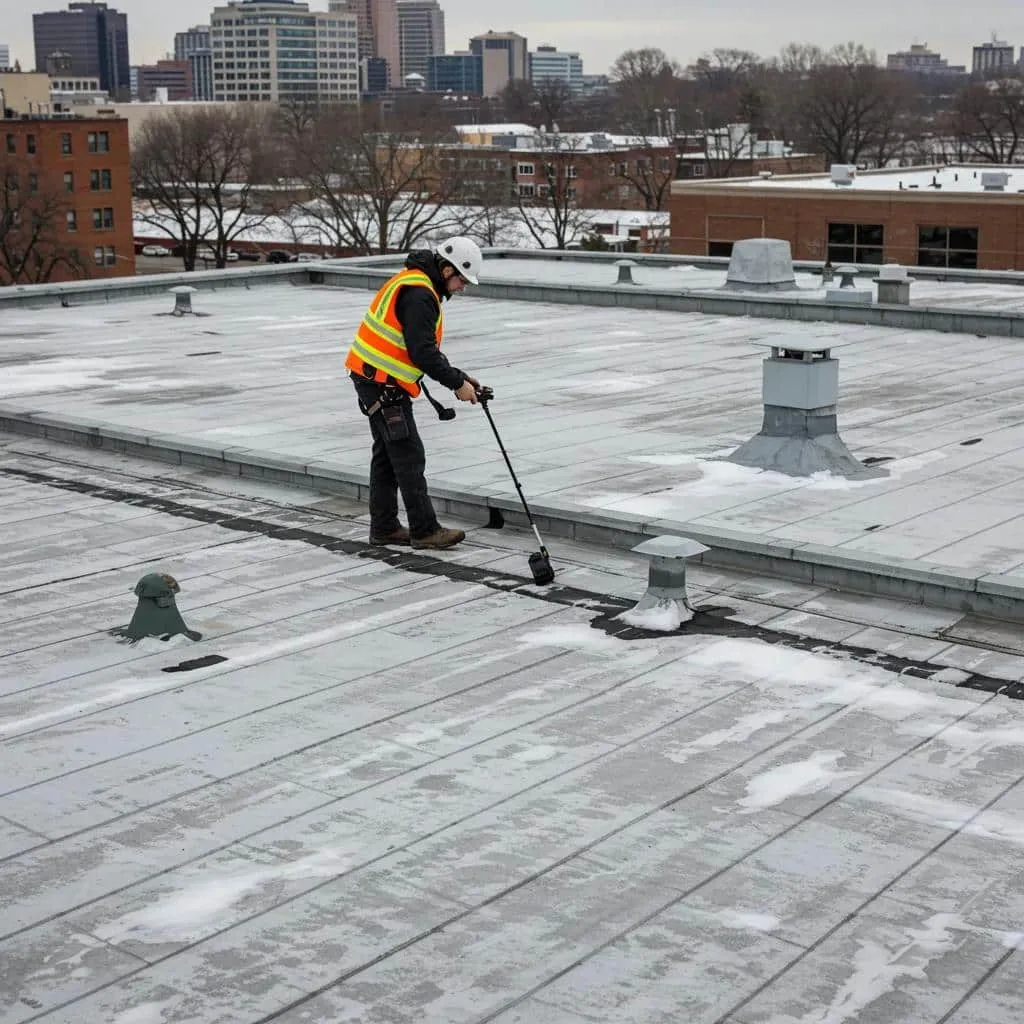
We remove loose debris from the immediate check area where approved, then inspect the strainer, bowl, clamping ring, visible piping and membrane transition. A loose ring, cracked seal, corrosion or a patch that has pulled away can leave a route for water at the penetration. We note whether the concern is a blockage, a connection failure or a condition that needs more access. The drain is only one part of the roof's water path.
On a Downtown Renton office roof or a Valley warehouse roof alike, the bowl is not always at the low point, so we follow the roof plan and visible slope to the outlet. A roof inspection can record surrounding seams, curbs and edges, while a leak-tracing visit can compare an interior report with the drain connection above. That helps separate an outlet problem from water entering at a nearby wall or penetration.
If the connection cannot be viewed safely, we mark the limit and identify the access or test needed. An unseen pipe is not recorded as clear.
Overflow route: keep the secondary path working
A scupper or secondary overflow has its own opening, height and discharge path. We check for debris, loose metal, a blocked outlet, and staining or deterioration around the wall penetration. The exterior discharge should carry water away from the building instead of onto a lower roof or walking area. If a route is obstructed, the repair scope identifies whether cleaning, metal work or a broader drainage correction is needed.
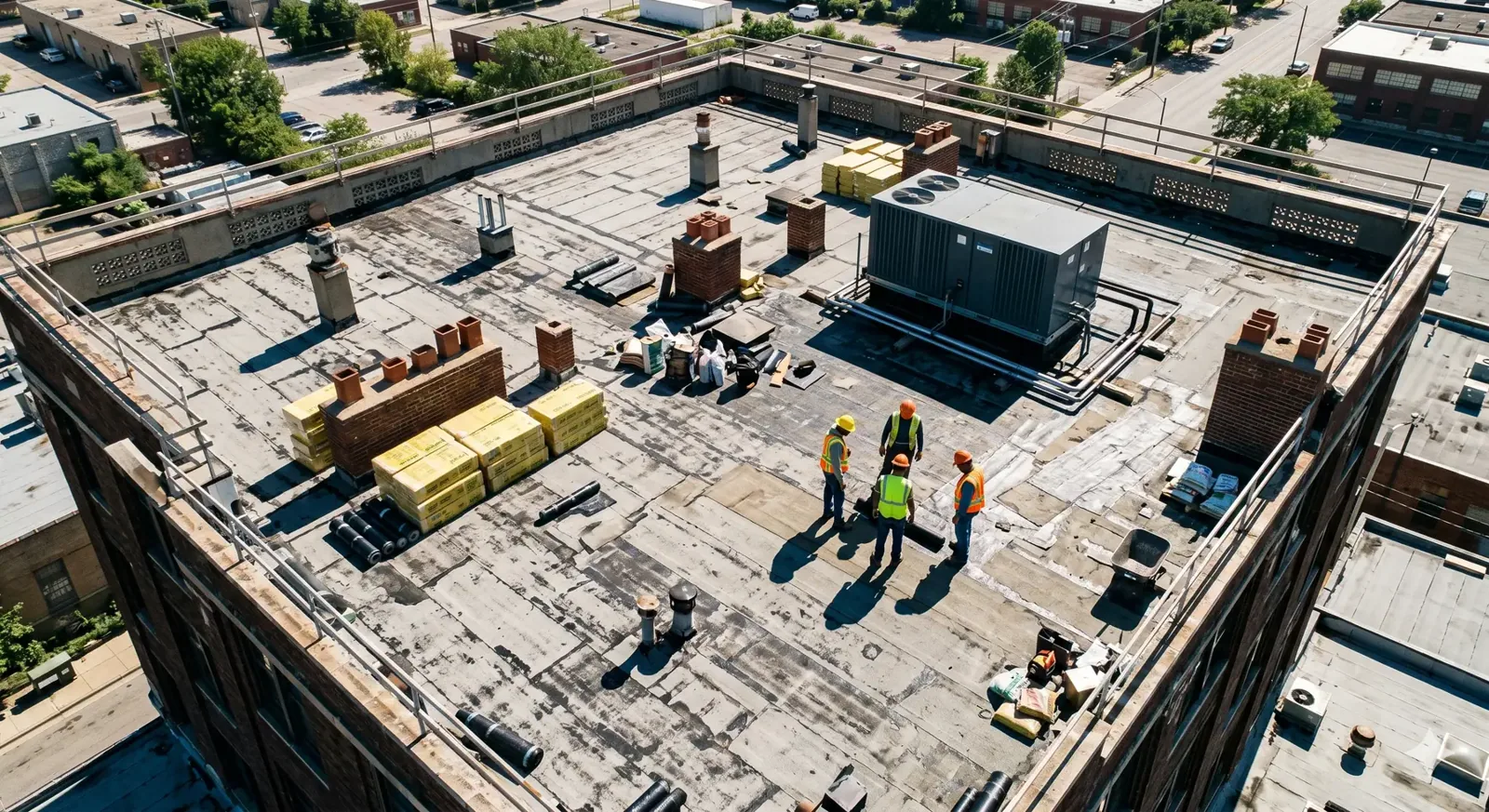
Roof drains and overflows should be reviewed together because one clear outlet does not prove that the roof can drain as intended. We map low areas, outlet locations and any visible cricket that directs water around equipment. In a multi-section building, we note which roof area reaches each outlet so a later crew can follow the same path. The condition report can keep those locations and photos with the roof plan for future maintenance.
For a property in the Renton Valley Subarea, equipment clearances and work routes can affect how the team reaches a scupper. We confirm those limits with the site contact and do not assume that an outlet is accessible from another section. The Diligence Notes distinguishes areas inspected from areas that require a separate access window.
Low points: distinguish ponding from a repairable blockage
Water that remains after surrounding areas have drained may reflect a clogged outlet, a depressed roof section or a change in the assembly. We compare the location with the slope, drains and evidence of movement, then observe what happens after the path is cleared. A small amount of retained water can have more than one cause, so we describe its location and extent rather than treating it as proof of a structural defect.
Crickets and tapered insulation direct water toward drains or around curbs. If a cricket has separated, shifted or lost its drainage path, the roof may send water toward a seam instead. A targeted roof repair can address a failed transition; a broader correction may require a separate slope or assembly review. We identify the available evidence and what measurement or opening would answer the remaining question.
Late-year precipitation at the nearby Sea-Tac station is much higher than the July average, which makes a drainage concern more consequential before the wet season. We use a roof walk and, where useful, compare photographs from different visits to see whether the same low point persists.
Repair line: restore the detail around water
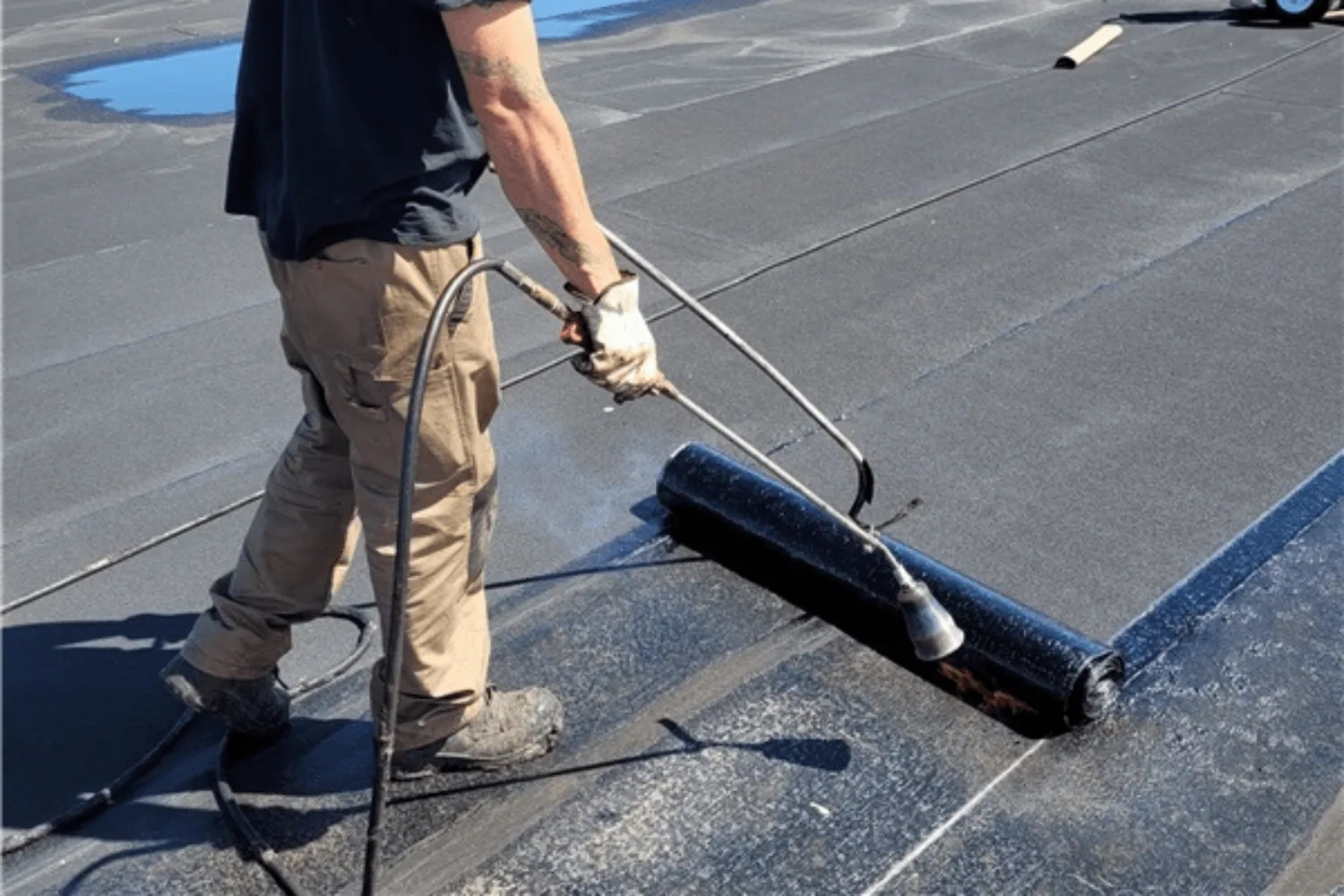
Drain repair depends on the roof membrane, drain body and failure point. Work may include resetting or replacing a clamping ring, renewing compatible flashing, repairing the membrane around the bowl, replacing damaged metal at a scupper or clearing a blocked route. We define the repair area and preparation before work begins. If a connection below the roof is involved, the owner may need a separate trade to address that part of the assembly.
At Downtown Renton properties, building entry and roof access can be tied to tenant schedules and equipment work. We coordinate the repair window with the contact and identify any area that must remain available. If the drain failure is part of a wider wet roof, a coating assessment is appropriate only after moisture and substrate concerns are resolved. Where a new assembly is being considered, a recover review can evaluate whether existing layers support that path.
After work, we document the repaired transition and outlet path, then note any separate low area or later check.
Planning: keep the drainage record current
Before a service visit, send the roof plan, prior leak locations, known drain backups, access rules and any work around rooftop equipment. If interior water is visible, note where it appeared and when. We compare that information with the drain and overflow routes, then identify whether the next step is cleaning, a roof repair, additional testing or a separate trade review.
A maintenance visit can recheck bowls, strainers, overflow paths and visible flashing before the wet season. We record any area the team could not reach and carry open findings into the next appointment. To arrange a visit in Downtown Renton, provide the building contact and a workable access window. That allows us to plan a route that matches the property rather than assuming every roof shares the same drain layout.
For Renton buildings, the useful result is a clear water path, a repair scope tied to the failed detail and a record the next person can use. We will explain what the inspection found and which conditions still need confirmation. If immediate water entry is present, the repair sequence addresses exposure first, then returns to the drain route and surrounding membrane for a permanent solution.
Commercial Roofing Questions
Why does water remain near a roof drain after cleaning?
A clear strainer may not solve a low spot, damaged connection or slope issue. We check the bowl, nearby membrane, roof profile and visible cricket, then note what condition remains after debris is removed. Any concealed issue needs the access or test required to confirm it.
Do scuppers need to be checked with the main drain?
Yes. The overflow route is a separate path and can be blocked or damaged even when the primary drain appears clear. We inspect its opening, metal transition and discharge direction, then record any obstruction or work needed to restore the route.
Can ponding be fixed by adding a cricket?
A cricket may redirect water around a curb or toward an outlet, but the correct approach depends on the roof slope, assembly and drain location. We inspect the existing path and explain whether a local detail repair or broader correction is needed.
What should we do if a drain is leaking inside the building?
Protect the affected area if safe, record where water appears and arrange a roof inspection. We check the bowl, clamping ring, membrane transition and nearby seams, then explain whether a repair, leak trace or additional access is required.
What information helps before a drain repair visit?
A roof plan, drain locations, earlier backups, leak photos, access rules and any recent work near the outlet help set the route. Tell us whether the overflow discharges onto another roof or walking area so we can review that path too.