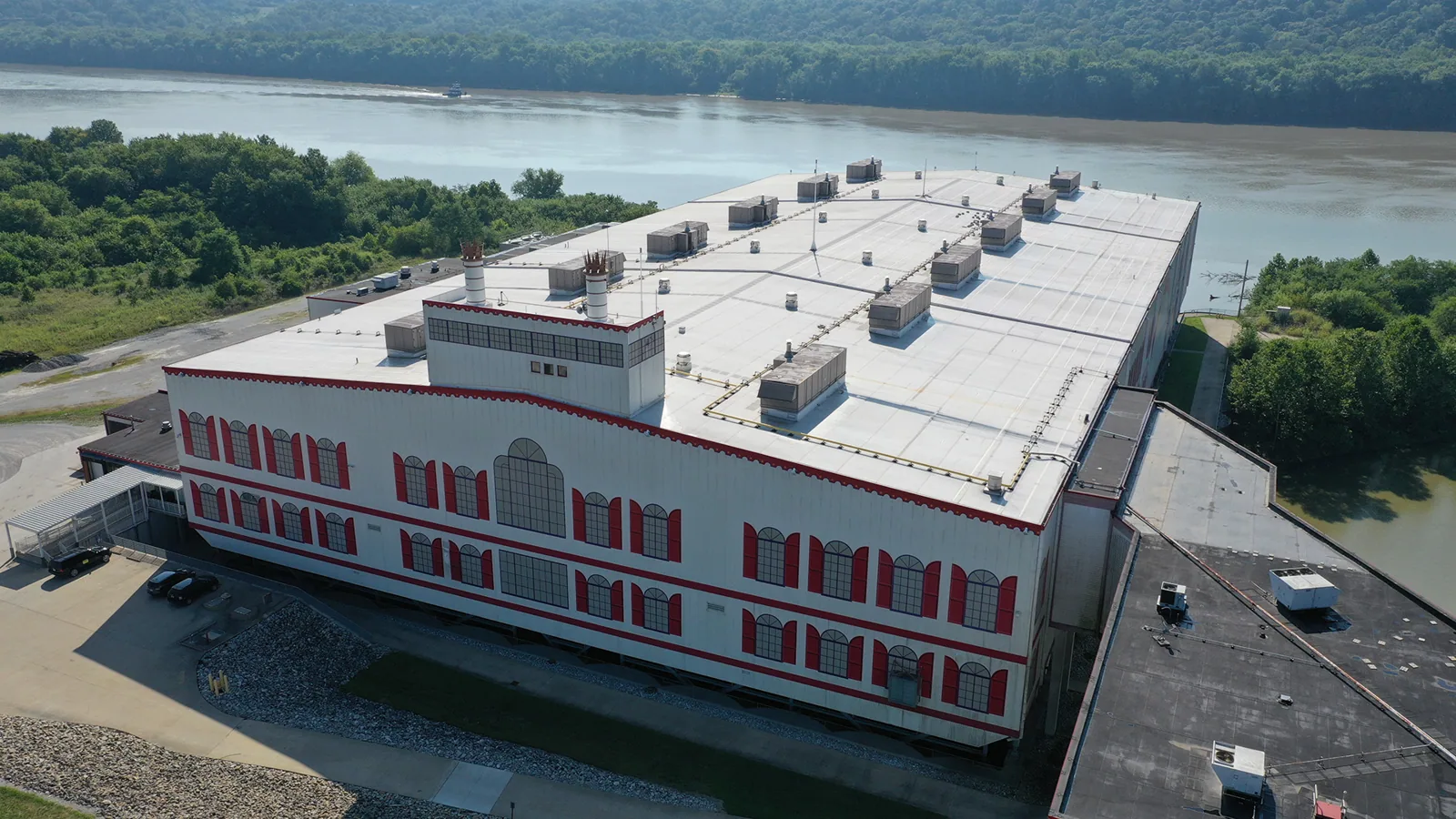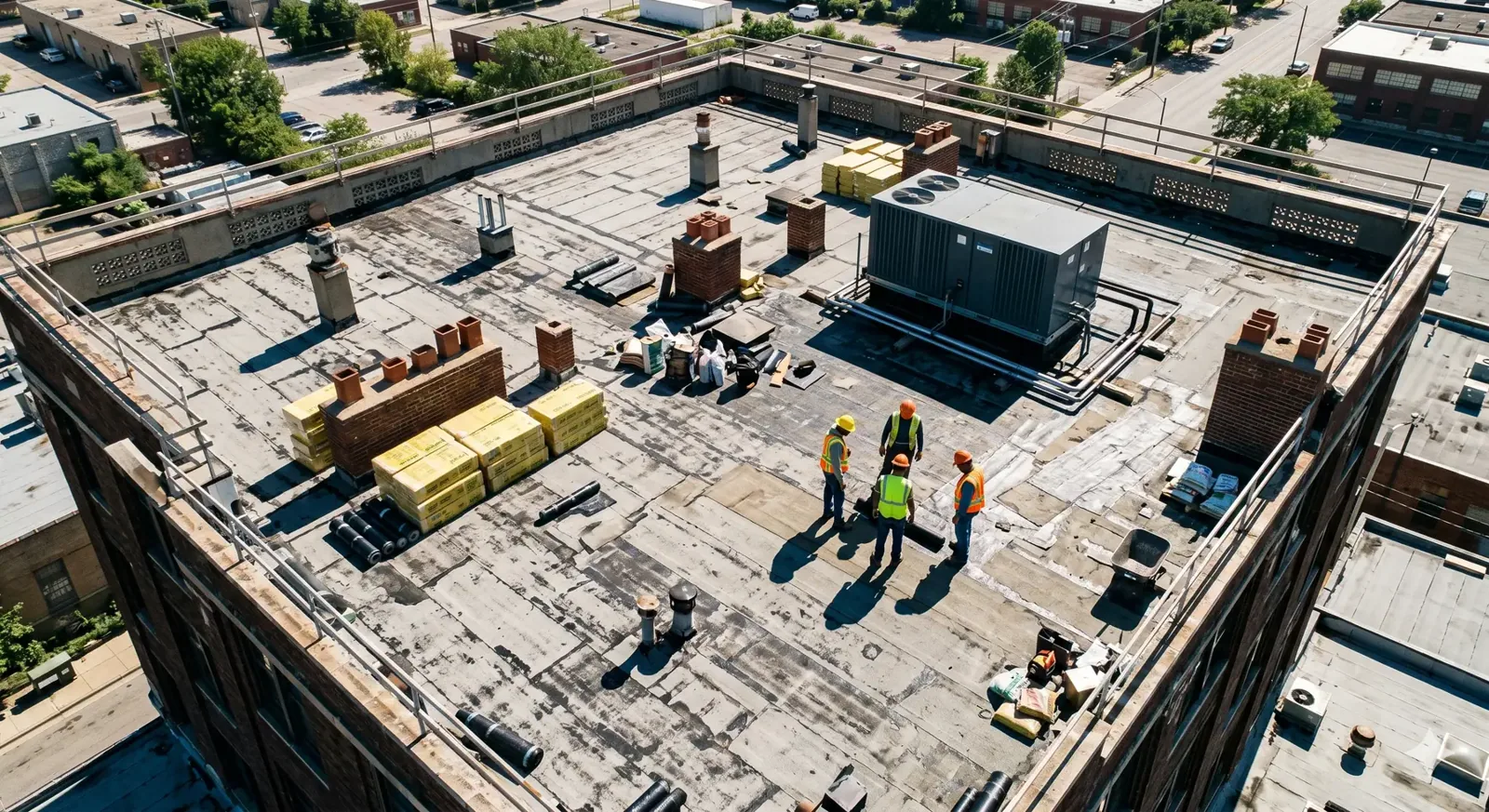
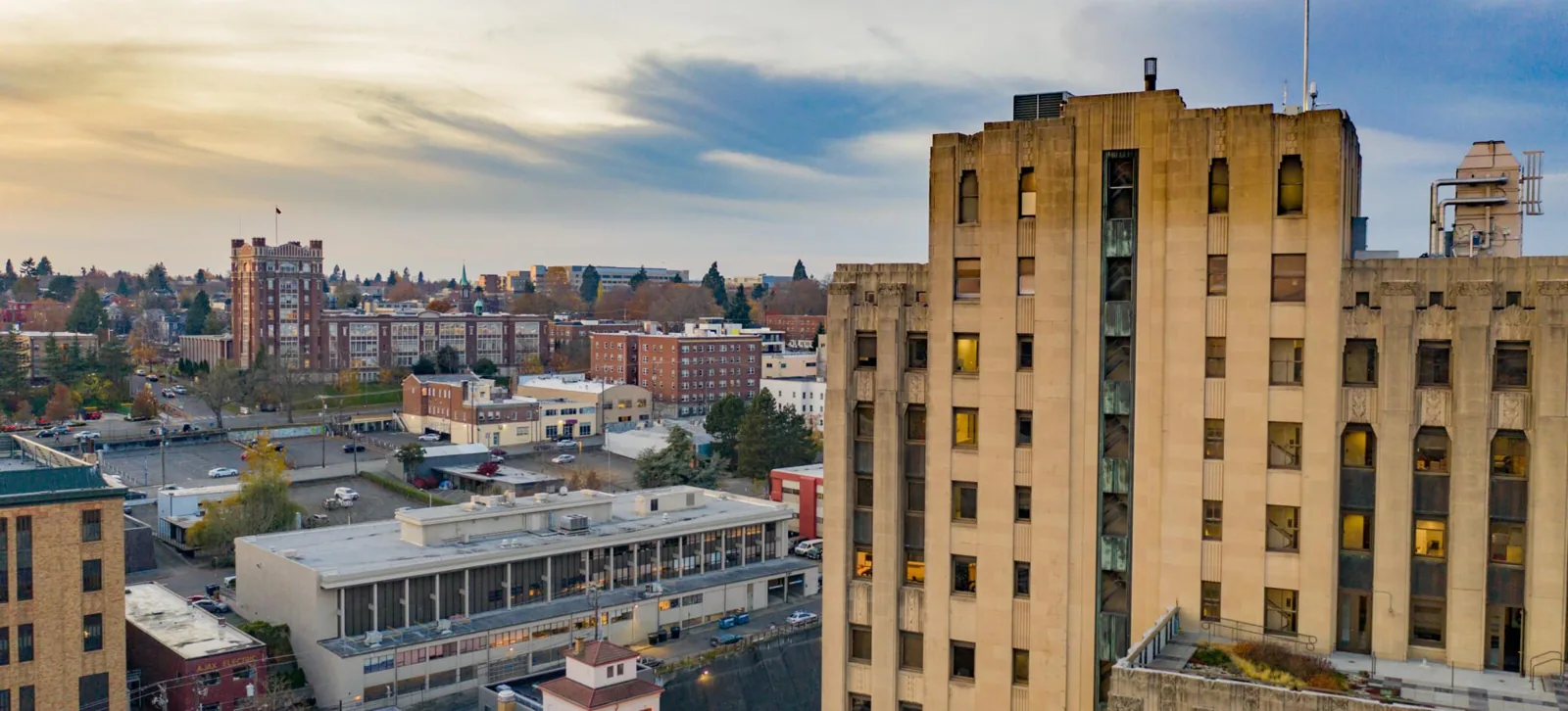
A drain that overflows after a heavy shower can affect more than the room directly below it. For public agencies in Renton, we trace the roof route from the reported area to outlets, curbs and seams, then set an access window with the building contact. Rain at Sea-Tac in November and December far exceeds July's, so a wet-season check of drains and temporary protection can help an agency plan work before sustained rain.
Public portfolios may include offices, service buildings, maintenance properties and occupied community spaces, each with its own access and purchasing requirements, and the roof scope comes from the actual property and its records.
Scope record: make the work easy to compare
A clear bid starts with a defined roof area and observable condition. We identify the system, seams, penetrations, drains, perimeter metal, reported leaks, accessible sections and items needing further review. That gives an agency a basis to compare preparation, repair limits, removal, substrate work and closeout rather than comparing only a system label. If the agency needs alternates, we separate them by assembly or preparation so reviewers can see what changes between the base scope and each option. We also note site access, staging and temporary protection as their own constraints. Those details help keep a proposal review tied to the work that can be scheduled and inspected.
For a public building near Downtown Renton, a condition report can keep observations, photographs and access limits together for the project file.
When the portfolio includes school properties, a district roof review can account for school-calendar access; a restoration scope may need to keep covered-loss documentation with the repair record. We separate those requirements from the physical roof findings so the agency can see what work is proposed, what coordination remains and which decision needs approval.
Site access: work with the building's operating rules
Public buildings can have controlled entrances, public service hours, deliveries and staff routes that must stay open. Before the roof walk, we confirm the escort or key process, areas that cannot close and any lift restrictions. If a shutdown or equipment move is required, the scope identifies the trade responsible and the point in the sequence when the roof can be opened.
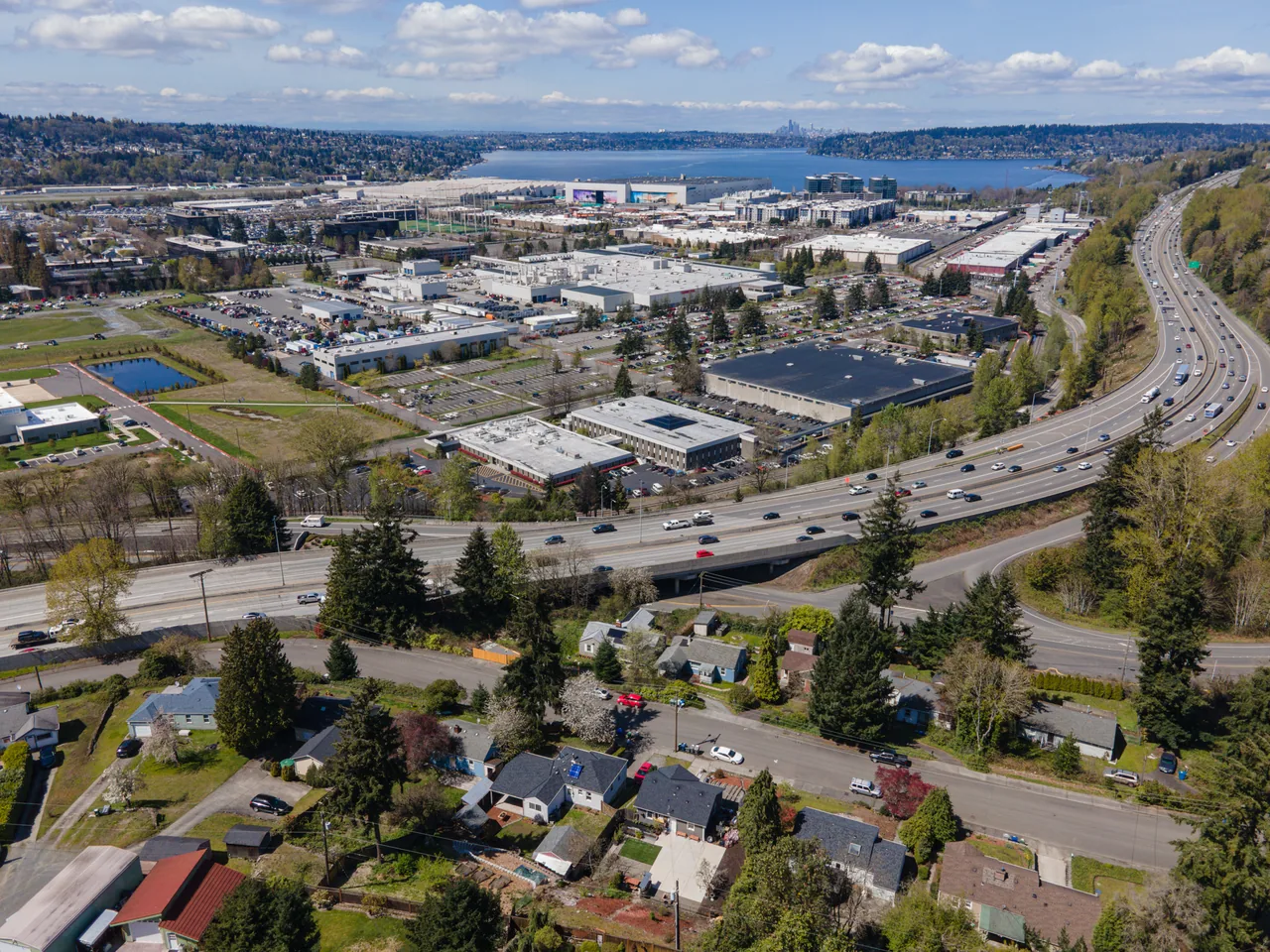
Public properties in the industrial Renton Valley Subarea face truck traffic and dock routes, while those in Downtown Renton face street-side staging. We record the property's actual circulation and roof access before setting work boundaries.
Public buildings often need a bid package that several reviewers can read. We write the scope in numbered line items, each tied to a roof area on the sketch, with unit quantities where they can be measured and allowances where they cannot. A purchasing office can then compare two bids line by line, and a facilities lead can see which items depend on a test opening. If a funding source requires separate documentation, the same line items can be grouped by building or by fund without rewriting the roof findings. Photographs follow the same numbering, so a board packet can show the condition behind each item on a single page.
For occupied sites, phased reroofing can define material staging, noise periods and temporary protection by zone. The phase should show which entrance or service route remains open and who verifies the work area at closeout. That gives staff a concrete notice to share with building users instead of a broad promise about uninterrupted operations.
Drain route: prepare for the rainy stretch
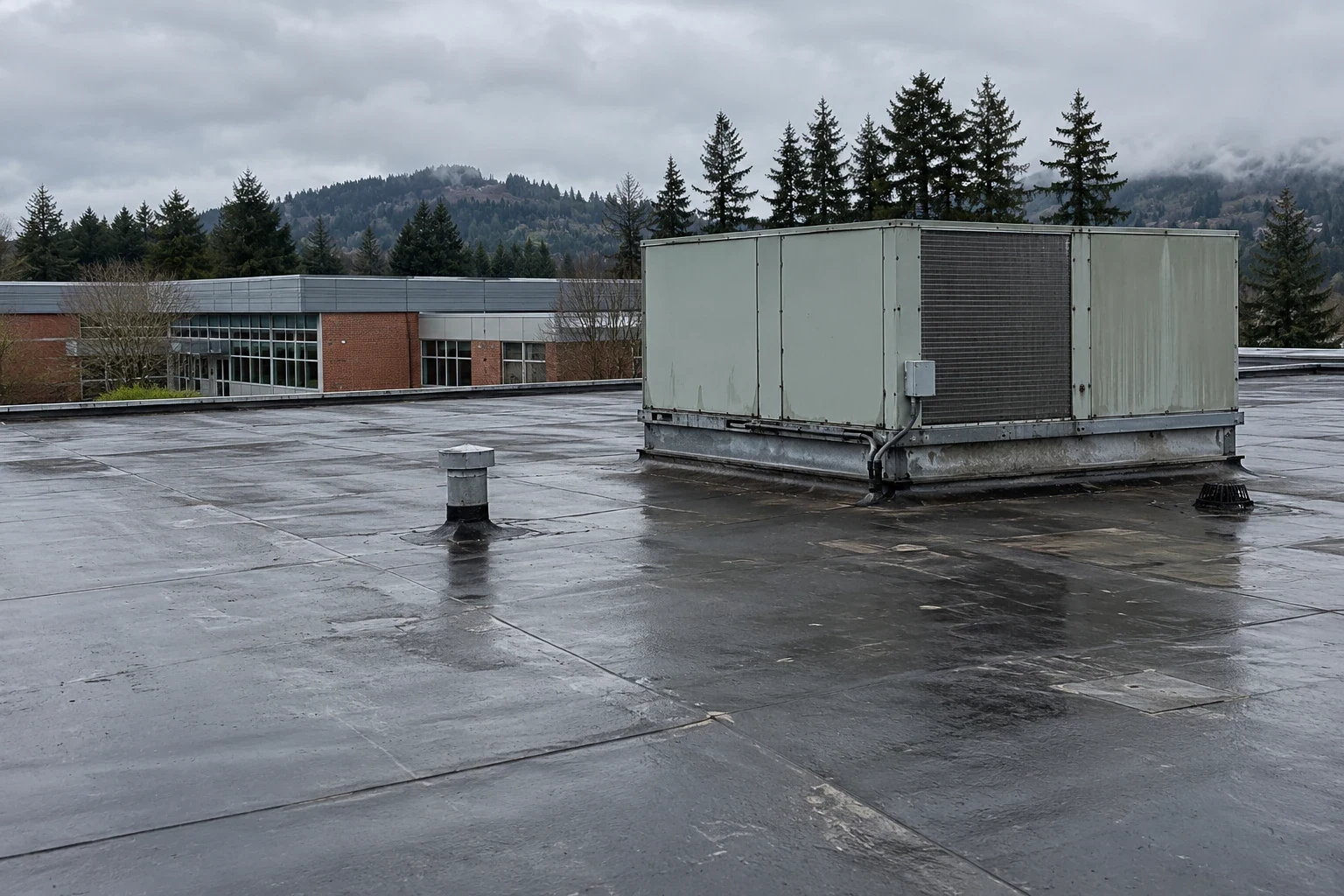
Water may travel beneath a roof layer before reaching a ceiling. We compare the interior report with slope, membrane seams, curb flashings and drain locations, then mark what the walk supports. A commercial roof inspection can document the field and perimeter; a drain review can address a blocked strainer, damaged bowl or scupper connection when those conditions are found.
Sea-Tac's late-fall and winter precipitation normals make drainage worth checking before the wet season. We note what outlet was reached, where water remains and whether nearby seams or transitions need attention. If moisture may extend past the visible opening, we discuss a survey or test cut only when its result could change the repair boundary.
For an agency coordinating roof delivery with street or site access work, the building contact can confirm current routes and restrictions directly, and we keep the roof plan focused on the actual delivery path, lift location and daily protection boundary.
Repair choice: name the limit and next step
A split seam or isolated flashing failure may support a localized repair when the surrounding assembly is sound. Repeated wet areas, failed attachment or broad insulation damage can make a larger comparison useful. Our repair scope identifies the affected zone, tie-in and exclusions. If the roof might remain under a new layer, a recover review compares that option with removal after moisture and drainage are understood.
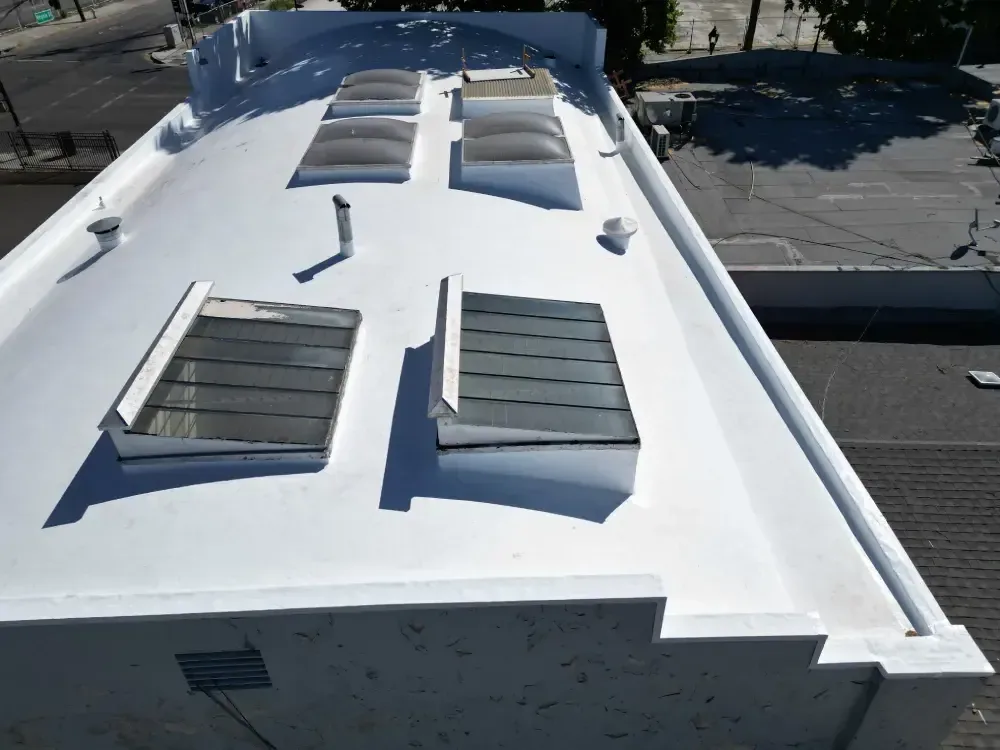
A replacement scope should state which materials are removed, what substrate repairs are included, how edges and curbs are rebuilt, and how the open roof is protected each day. For a specific assembly, the built-up roof system should be inspected at its surfacing, seams, penetrations and drainage points. We document what is visible and note any test that may alter the scope before the agency approves a larger project.
For an active leak, an emergency repair can address immediate water entry while a permanent recommendation is developed. The record should distinguish temporary control from completed work and identify any access or follow-up item still open. This makes the repair history useful for the next inspection and for staff reviewing the project file.
Closeout map: preserve the building record
Mark repaired areas, nearby drains, roof transitions and any section not reached. Photos tied to a sketch help a future building contact place a leak report against work already performed. Keep the access window, materials, temporary protection and remaining tasks with the same record. The project file then shows what the roof walk observed and what the contractor completed.
Send the Renton address, roof plan, reported water location, access rules and any prior repair record. We will identify a practical first route, state where more information is needed and explain whether the roof supports a repair, test or capital comparison. That gives public staff a specific scope to review and a clear question for the next approval step.
Commercial Roofing Questions
What information should an agency include in a roofing request?
Include the address, roof plan, known system, leak history, access contact, occupancy hours and any schedule or purchasing requirement. We can then define the inspection route and what information a proposal needs to contain.
How can we compare public-building roof bids?
Compare the roof area, preparation, removal or recover assumptions, substrate work, flashing, access, weather protection and closeout. We state those boundaries so the agency can review like scope against like scope.
Can roof work proceed while a public building remains open?
We identify the work zone, material route, access restriction and any needed closure with the building contact. A phased plan can preserve confirmed routes while naming any period that needs a temporary change.
When is the best time to schedule drain work?
Early autumn, before the wet months. Sea-Tac's normals show 6.31 inches in November against 0.60 in July, so clearing outlets and probing laps ahead of that swing keeps a small defect from becoming a ceiling stain.
What should the agency retain after a repair?
Keep the repair location, photos, materials, roof sketch, access notes and remaining follow-up together. That record helps the next maintenance contact connect a new report to the work completed.