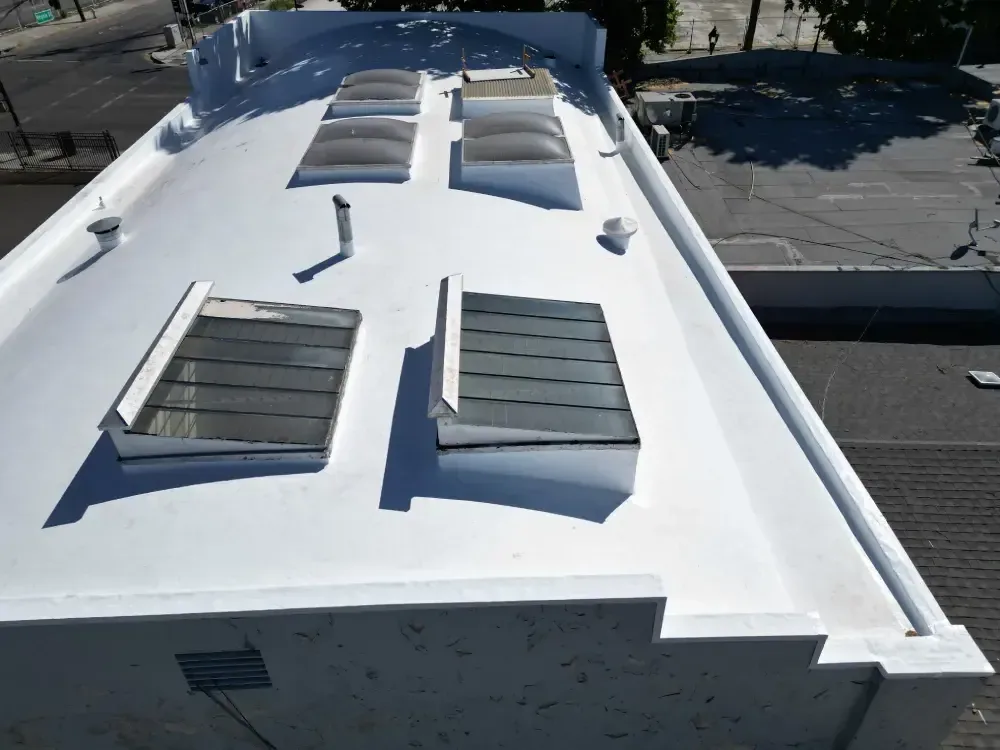
A wet ceiling after a storm needs a roof record before the repair line is guessed. In Renton, we compare the reported room with drains, seams, curbs and penetrations, then photograph the accessible conditions and mark where the water path can be followed. Sea-Tac's November and December rainfall runs far above July's, which makes prompt drainage checks useful, but the source of a loss still has to be tied to the property itself.

Restoration work can involve an adjuster, building owner, property manager and several trades, each needing a clear description of what the roofer observed. Whether the building sits in the industrial Valley Subarea or among downtown offices, the cause and extent of damage come from its own roof.
Roof evidence: separate observation from repair scope
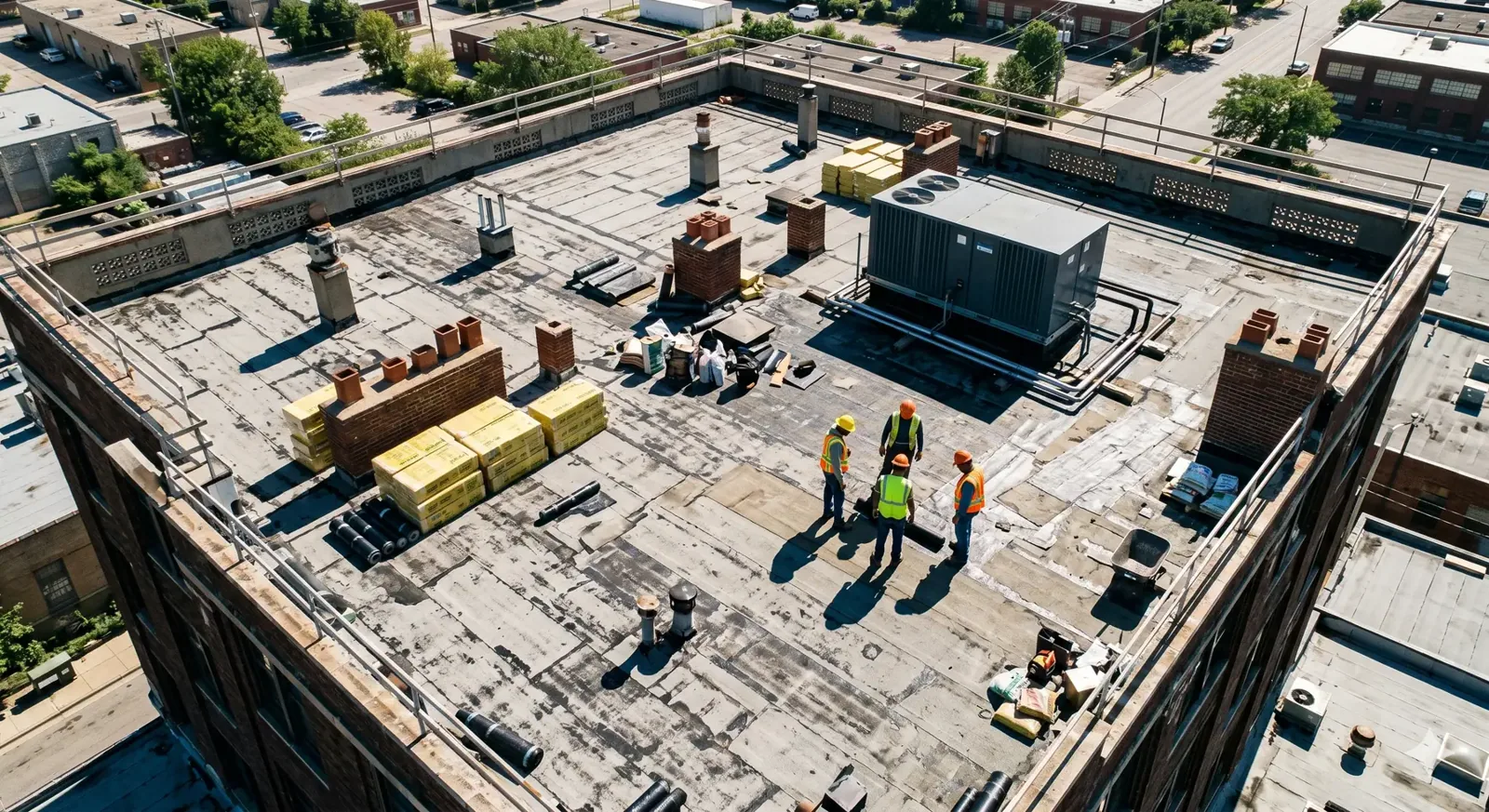
We record the roof system, affected zone, visible opening, nearby transitions and area inspected. If the interior stain sits away from the apparent entry point, the notes should describe the route considered and the details checked rather than label the stain as the source. A commercial roof inspection can document accessible field and perimeter conditions, with photographs tied to a roof plan and a note for any area not reached.
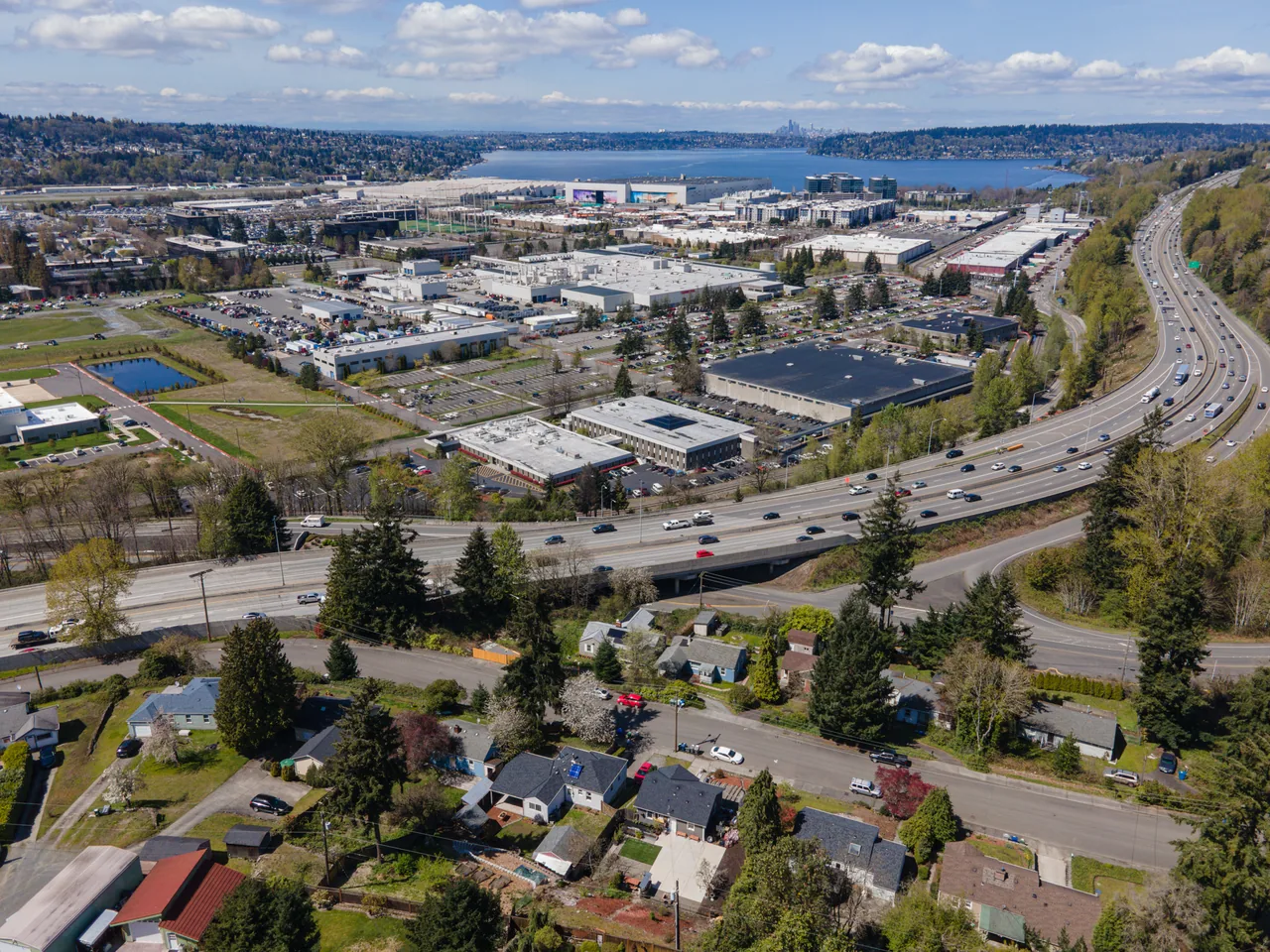
A building in Renton Valley Subarea and one closer to Downtown Renton each need the address and actual roof details identified before a condition is connected to a repair recommendation or claim file.
A healthcare property may need access coordination around patient services, while a restoration contractor may schedule several trades in sequence. In either case, we state which observations are roofing findings, what repair was completed and what remains outside the roofing scope. That keeps the handoff useful without speaking for an insurer or promising a coverage decision.
Water path: inspect beyond the ceiling mark
Water can travel along a membrane lap, under insulation, around a curb or toward a drain before reaching a room. We compare the report's location with roof slopes, seams, flashings and outlets, then mark the details that need a closer view. An active leak repair may control water at an opening, while a broader inspection can help determine whether the affected area extends beyond that detail.
Sea-Tac's late-fall and winter precipitation normals make a clear drain route worth reviewing ahead of sustained rain. We record what the outlet and surrounding membrane show, whether standing water remains and if debris or a damaged connection needs attention. When moisture may extend beneath the visible membrane, an infrared moisture survey or test cut can help define the next check if it could change the scope.
Keep photos from the roof and interior tied to the same date and room or roof zone. If temporary protection is installed, note where it begins and what inspection or permanent repair is still needed. That record gives the owner and restoration team a practical sequence: control active water, examine the surrounding assembly and decide whether a larger repair boundary is supported.
Repair boundary: document the work that is completed
A split seam, displaced flashing or puncture may be repaired locally when adjacent membrane and insulation remain serviceable. We describe preparation, materials, tie-in and the perimeter of the work so the repair can be compared with the observed damage. A storm-damage repair should identify the affected roof zone and any separate condition that was not part of that work.
If the roof needs temporary water control before the full scope is clear, an emergency response can address the exposed detail and record its limit. The note should make clear whether it is a temporary measure or a completed permanent repair. When damage extends to insulation, deck or multiple transitions, we identify what testing or opening would be needed to support a broader proposal.
After an event, do not assume that every loose edge or ponding area came from the same cause. We record each observed detail and compare it with roof history, material transitions and the reported timeline. For work that moves beyond repair, a roof claim documentation service can organize roofing observations and repair scope information for the property team; it does not decide coverage or settlement.
Trade coordination: keep roof and interior work distinct
Restoration work can bring roofers, mechanical trades, ceiling contractors and property staff into the same area. We state where the roof opening was repaired, what temporary cover was used, and which interior work or equipment move belongs to another trade. If a unit or service line must be moved, the plan names the responsible party before the roof is opened beneath it.
Timing matters on a restoration job. Dated photographs taken before temporary protection goes on show the original opening, and photographs taken after show the dry-in. When both sets are kept, an adjuster can compare the condition found with the work done, and the owner can see why a section was opened. If rain arrives before the permanent repair, the file also records when the temporary cover was checked and whether water was found under it. Roof findings are written in plain terms, with locations tied to the roof sketch, so the same page can be read by an adjuster, a mitigation crew and a facilities lead without translation.
The roofing notes stay specific to the inspected assembly and work completed, whoever assembles the project record. A phased occupied-building plan can identify access limits and protection for the areas below a roof section.
The file should include a roof sketch, condition photographs, repair description, materials and any follow-up test or access limit. A condition report can keep those items together for facilities staff and ownership. For a restoration file, arrange images in the same order as the roof sketch and label the room or roof zone visible in each frame. Keep the initial condition, temporary protection and completed repair as separate observations. When the permanent scope differs from the first response, describe what changed and why, such as a wider wet area found after access or a detail concealed by equipment. That sequence lets the owner compare the initial report with the completed roofing work without mixing it with another trade's interior repairs. Share the Renton address, reported water area, roof plan, weather timeline and prior repair notes, and we will explain which roof observations can be confirmed on the first visit.
Commercial Roofing Questions
What should a roof damage report include?
Include the address, reported room, date, roof plan, photographs, accessible details, repair performed and any area not reached. We tie the observations to a roof zone and distinguish completed work from a recommendation that still needs approval.
Can the roofer determine whether a claim is covered?
We document roofing conditions and describe the work required to address them. Coverage decisions belong to the insurer and policy process; our record stays focused on what the roof shows and what repair was completed or proposed.
Why can a roof stain be far from the opening?
Water may follow a seam, curb, insulation joint or deck before appearing indoors. We inspect the likely route, note the details reached and identify testing only if it could help define the repair area.
Should temporary work be separated from permanent repair?
Yes. The work record should state the area protected, the repair limit, the materials used and what follow-up remains. That lets the owner distinguish immediate water control from a permanent scope.
How can several restoration trades coordinate a roof opening?
Set the roof work boundary, equipment responsibility, interior protection and closeout point before removal. We identify where our scope ends and which other trade must complete or inspect an adjoining detail.