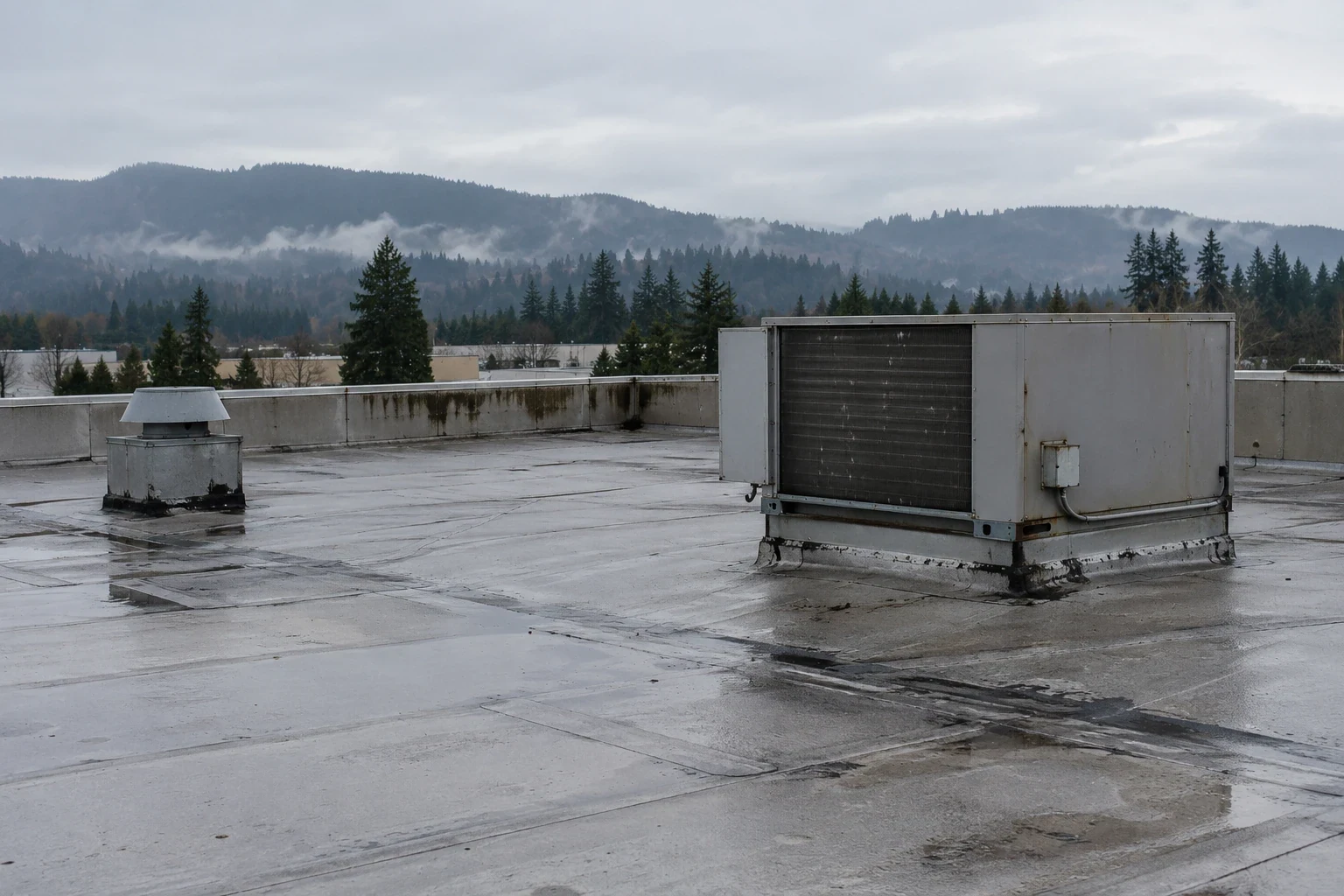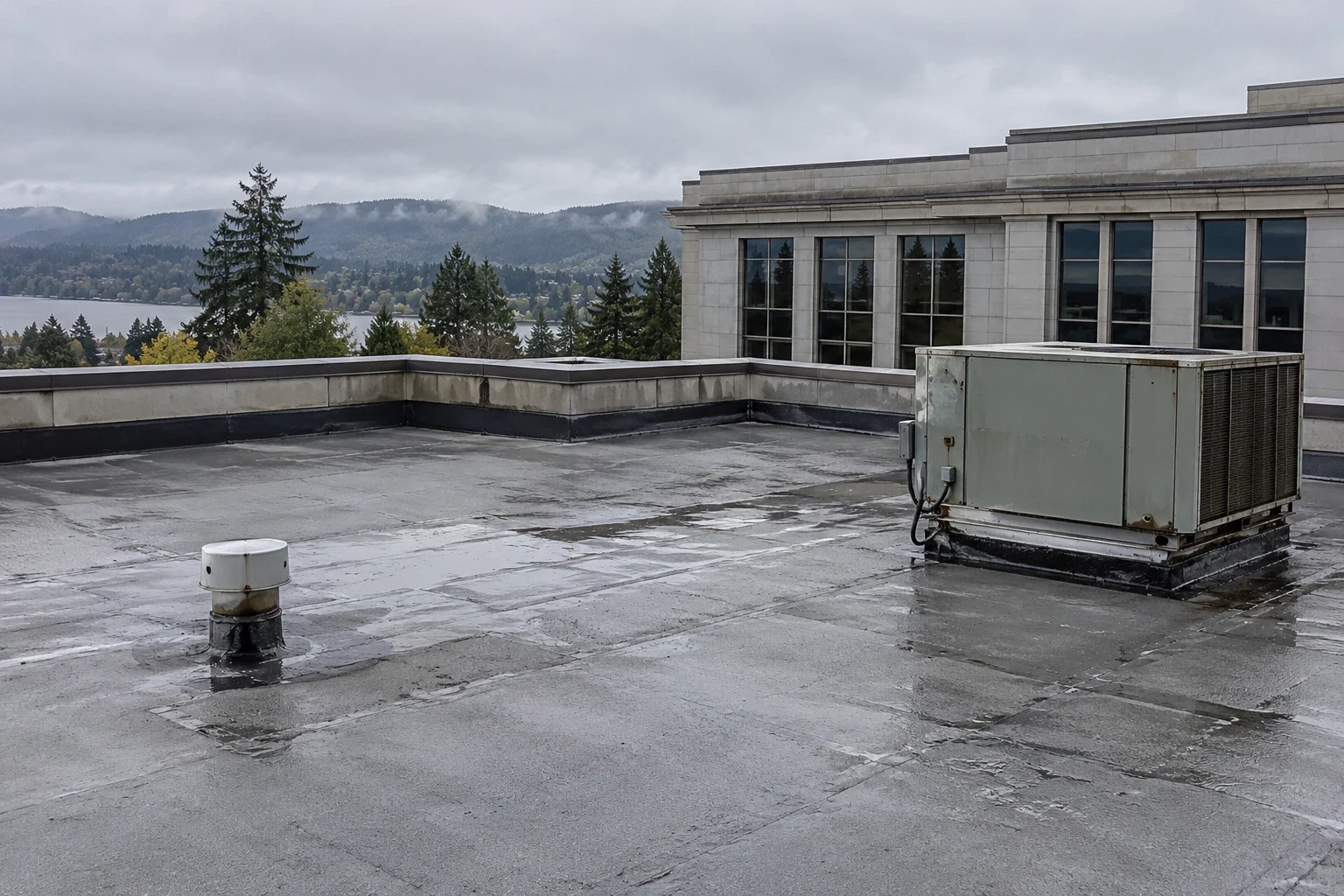
Water spotted beside a service-bay door may have crossed the roof before it reached the wall. We start with the report, then follow roof slope, drain route, curb flashing and the perimeter above the affected area. Sea-Tac's November and December normals are several times higher than July, which makes a wet-season review of outlets and metal transitions useful for Renton facilities. The roof walk checks the actual assembly and keeps the repair line tied to what can be seen.
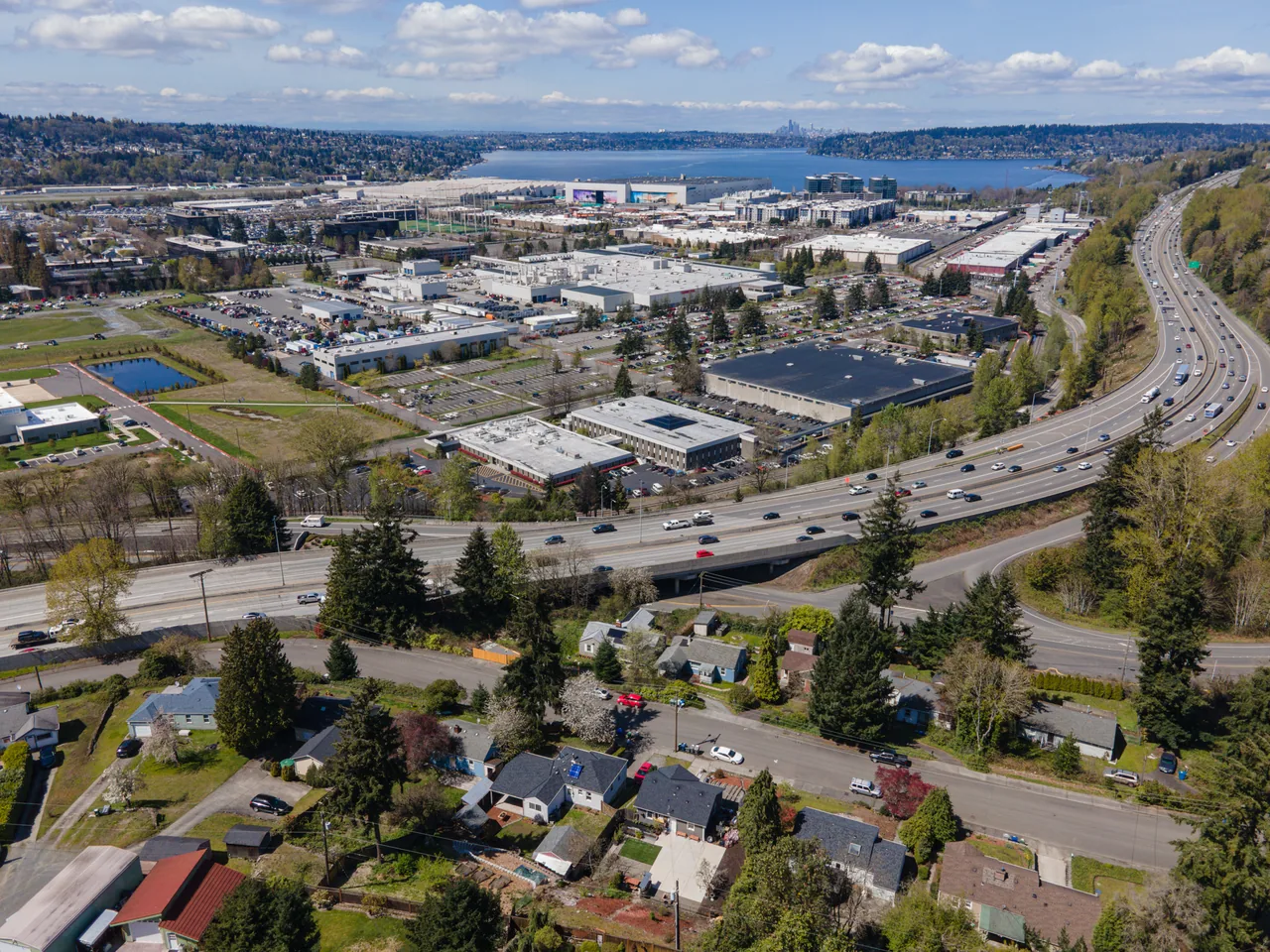
A dealership may have showroom, service, parts and vehicle-storage areas under one property plan, with different access and operating needs. A dealership in Downtown Renton and one near the industrial Renton Valley Subarea work from different street layouts, so we confirm the address, roof route and work window with the property contact.
Showroom and service bays: plan the roof route
A roof visit should account for customer parking, vehicle movement, service deliveries and any bay that needs to stay open. We ask where lifts can stage and which doors must remain clear, then mark the roof areas that can be reached without crossing an active work zone. A warehouse roof assessment addresses broad field conditions, while a government building roof plan can illustrate public-entry phasing. Each dealership still gets its own access sequence.
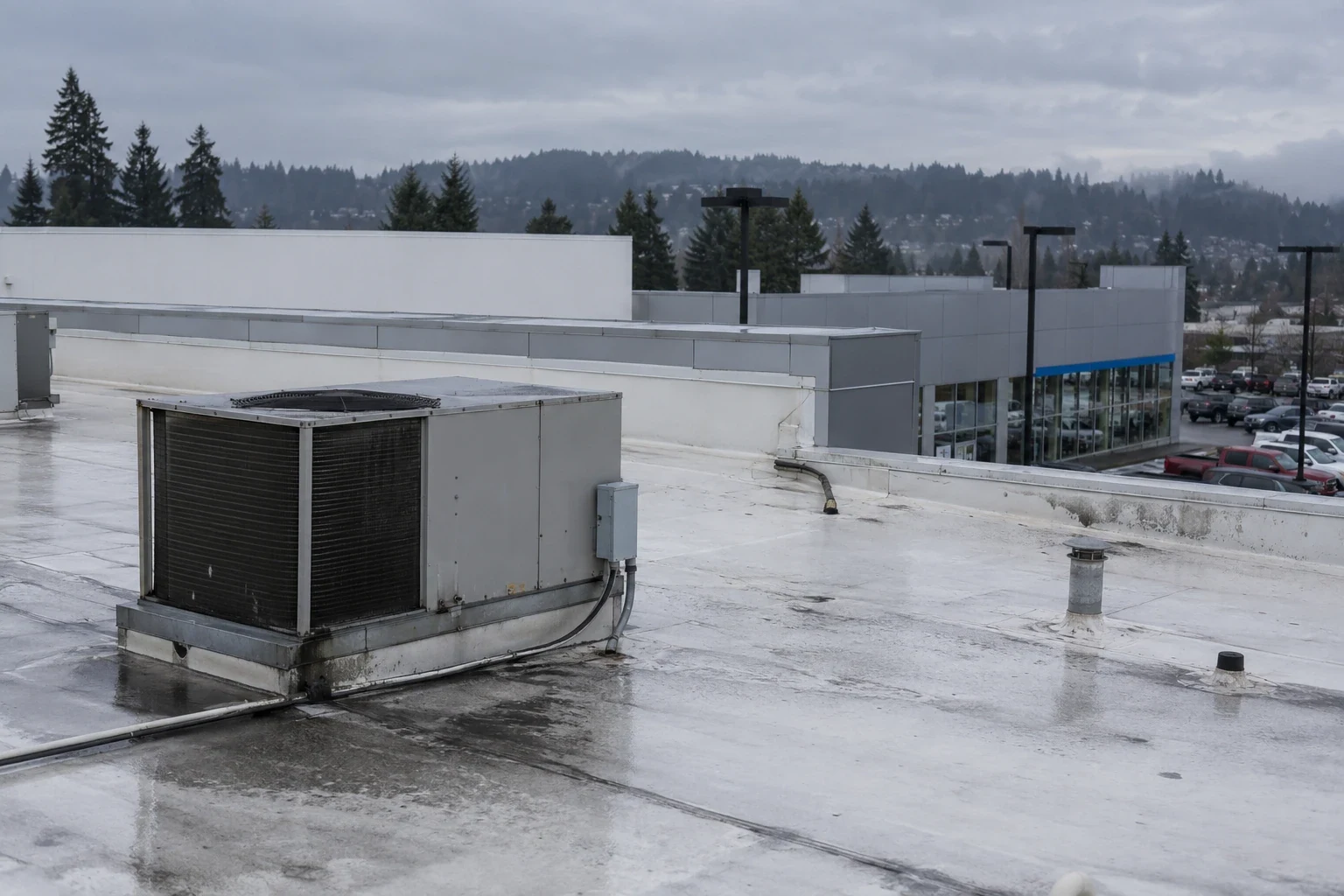
Service equipment can add curbs, vents and line supports to the roof field. We identify them on the plan before moving material or setting a repair boundary. If an equipment contractor needs to lift or disconnect a unit, we coordinate that step with the property's responsible contact. The roof scope states which work is included, which trade must act first and what area must remain open.
Showroom ceilings and service bays may show different symptoms even when they share a roof plane. We compare each report with the drains, slopes, wall turns and penetrations nearby, then record whether the suspected routes meet. That prevents a repair to one curb from being presented as the answer to every leak in the building. A roof inspection can document each observed condition with a location and photograph.
Drainage: check the low route before the next rain
Leaves, packaging and settled debris can restrict a drain bowl or scupper, but a clear outlet does not correct a low slope or damaged connection. We follow the path across the roof, inspect strainers and drain bodies, and note where water remains after cleaning. Drain and scupper work can address the outlet and adjacent membrane together. If a pond persists, the map should show its limits before the scope considers slope correction or broader assembly work.
Heavy late-year rain at Sea-Tac makes it useful, for a dealership, to review how water leaves the roof before a sequence opens membrane around an occupied bay. We identify a daily closeout point, temporary protection and any drain that must remain clear while repairs proceed. A forecast change should not leave an exposed work edge without a defined cover and return check.
Vehicle and parts operations continue below the roof even when a repair is small. We agree on the service lane, material staging and any temporary boundary with the property contact. If a drain sits above a customer entrance or loading point, the sequence should account for both roof access and safe movement below. The report notes the planned route, not just the drain itself.
Roof transitions: inspect curbs, walls and metal edges
Equipment curbs, skylights, parapets, exhausts and wall transitions interrupt a roof field. We inspect the flashing at each opening, check adjacent membrane laps and follow the metal corner that directs water toward a drain or wall. A split boot may need a local repair, while a loose curb flange can require more surface preparation. Penetration flashing work addresses a defined roof-to-equipment transition; the inspection record states the actual detail found.
Dealership additions can create a change in roof height, material or drainage direction. We look at the joint from both sides and note where the old and new assemblies meet. A patch should not bridge a movement joint or cover a wet edge without explaining how the tie-in will hold. If the roof is metal, we inspect fasteners, laps and perimeter trim separately from any low-slope field beside it.
Equipment clearance may limit the path a crew can take across the roof. We note the access point, roof walkway, fragile areas and any location that needs a lift or a separate trade. A test opening is useful only when it answers a question about insulation or deck condition that could change the scope. We identify the proposed spot and expected information before requesting approval.
Repair or replacement: define each work boundary
A split seam, puncture or failed flashing can support a targeted repair if nearby material is dry and attached. Recurring leaks, wet insulation or deterioration across several areas call for a wider review. We mark the confirmed repair line, explain what remains concealed and identify whether testing could alter the recommendation. Commercial roof repair can resolve a defined opening, while a repeated symptom should be compared against the surrounding field before the scope expands.
If moisture, attachment and edge height allow another layer, a recover review can be compared with removal and replacement. A replacement scope can list deck work, insulation, drainage, flashing and metal edges separately. The condition of the current assembly determines which option remains practical. The showroom, bay and customer routes affect phasing, but do not determine whether the roof can accept a recover.
Waiting on a known opening may allow moisture to reach insulation or interior finishes, while replacing a sound area creates unnecessary work. We distinguish the immediate leak control from the broader capital choice and record what evidence supports each. The owner can then compare repair, testing and replacement by roof area instead of receiving one all-or-nothing recommendation.
Closeout: give facilities staff a roof map
At turnover, mark repaired seams, curbs, drains, edge metal and any section not reached. Tie photographs to the roof plan and list the material installed, the limit of the repair and follow-up work separately. A condition report can organize those observations for maintenance planning. Staff can compare later reports with the completed work.
We keep the file tied to the property: access point, reported water location, equipment layout, service schedule and known repairs. Send the Renton address, a roof plan and the areas that must remain available, and we can explain what the first walk should cover.
For a multi-building property, keep photos and repair notes separate. Similar stains can follow different routes where a bay roof meets a showroom addition or perimeter wall. The next inspection can start at the prior repair line and check adjacent seams.
Commercial Roofing Questions
Can roof work proceed while service bays are open?
The affected roof area, equipment movement and access route set the workable phase. We review the service schedule with the property contact, mark any temporary boundary and identify the task that needs a separate window.
What makes a leak near a bay door hard to trace?
Water can travel along a seam or deck before reaching the wall or ceiling. We compare the reported spot with nearby curbs, slopes, drains and metal edges, then record the likely route and any test that could confirm it.
How do you protect customer and vehicle access?
We map lift placement, delivery movement and the repair boundary with the site contact before materials arrive. The sequence should keep required doors and drive paths clear or state exactly when access needs to change.
When is a dealership roof a recover candidate?
The existing layers, moisture, attachment, drainage and perimeter height determine whether another assembly can be considered. We inspect those conditions and explain what a test opening would add before comparing recover with replacement.
What details should the roof record include?
Show drains, seams, equipment curbs, repaired areas, photos, access limits and the edge of each completed task. Tie the notes to a roof plan so staff can locate the work when another report comes in.