A damp ceiling edge after a long rain can point to a seam, curb or blocked outlet. The first roof walk separates those possibilities before anyone prices a larger repair. In Renton, WA, the Sea-Tac climate record places late fall and early winter on the wet side of the year, with midsummer drier. That regional cue makes drainage and flashing worth checking ahead of winter, while the building itself tells us where water is entering. We trace the stain back across the roof and note which parts of the assembly remain sound.
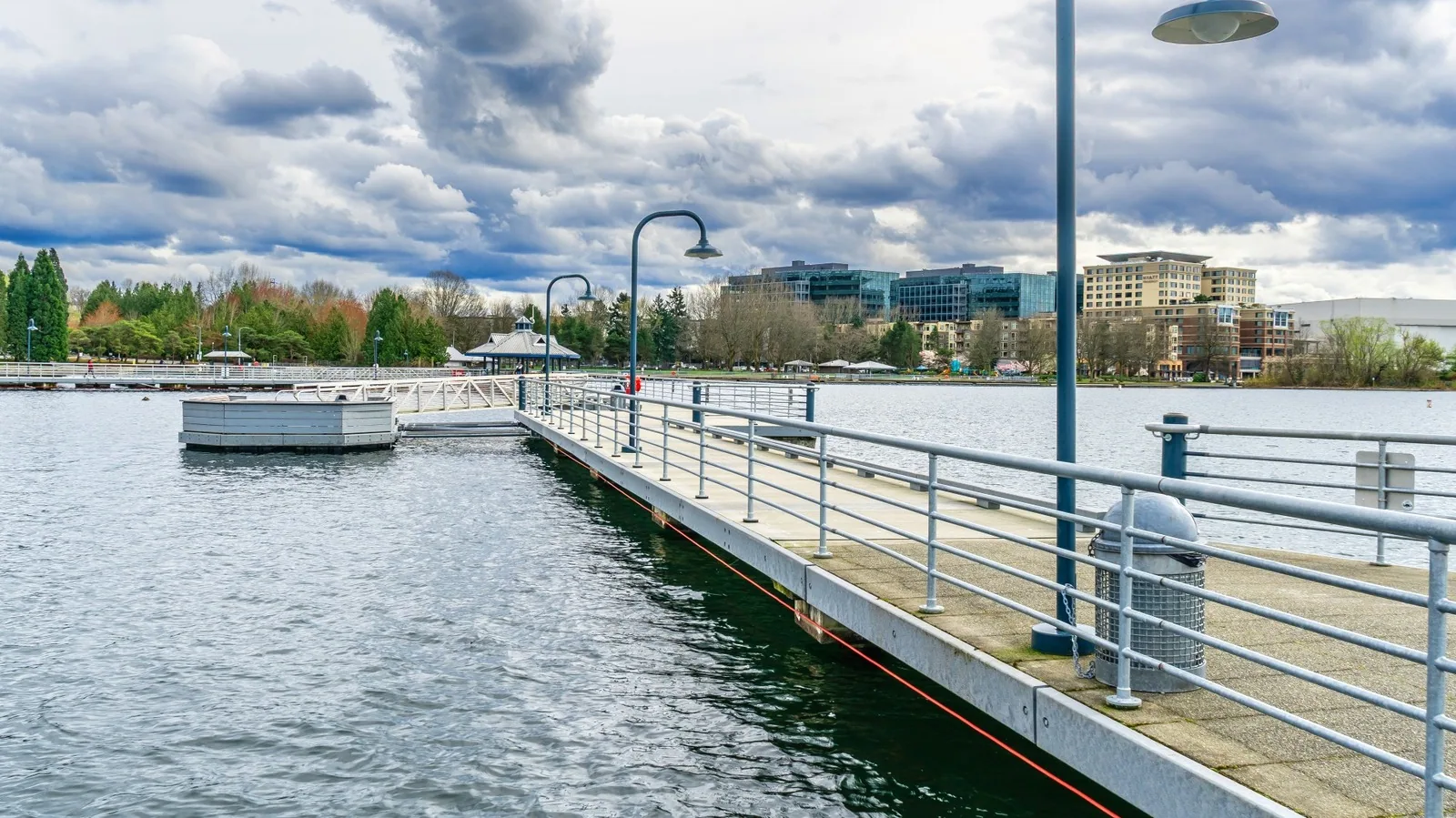
Renton identifies the Highlands as a Community Planning Area and lists commercial, office, mixed-use and employment categories in its land-use map. We check the membrane, slope, edge, penetrations and drainage, then match the work to the property's use and access rules. A hands-on roof inspection can establish the repair line before patching, restoration or replacement is compared.
Roof walk: start with the water path
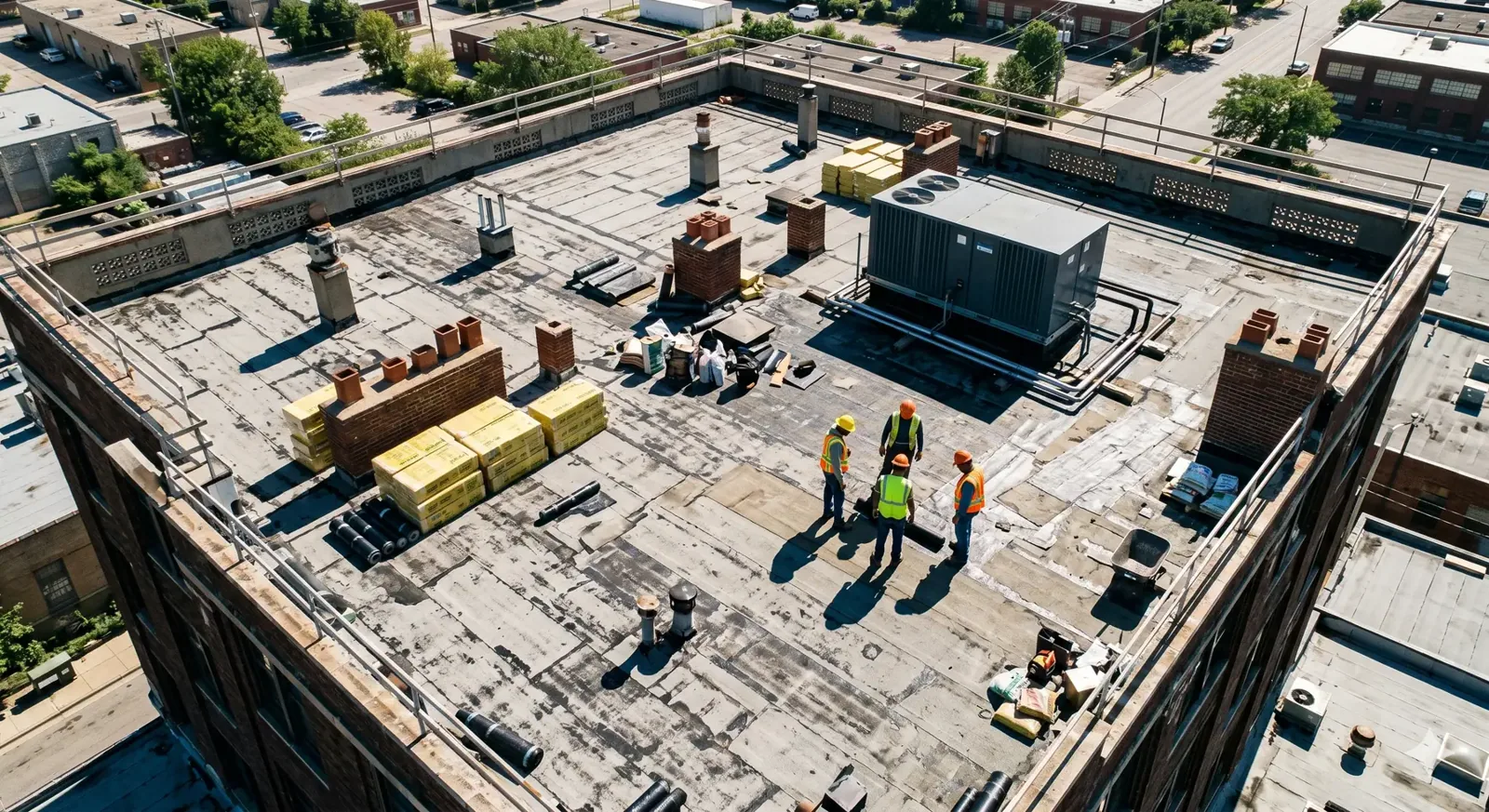
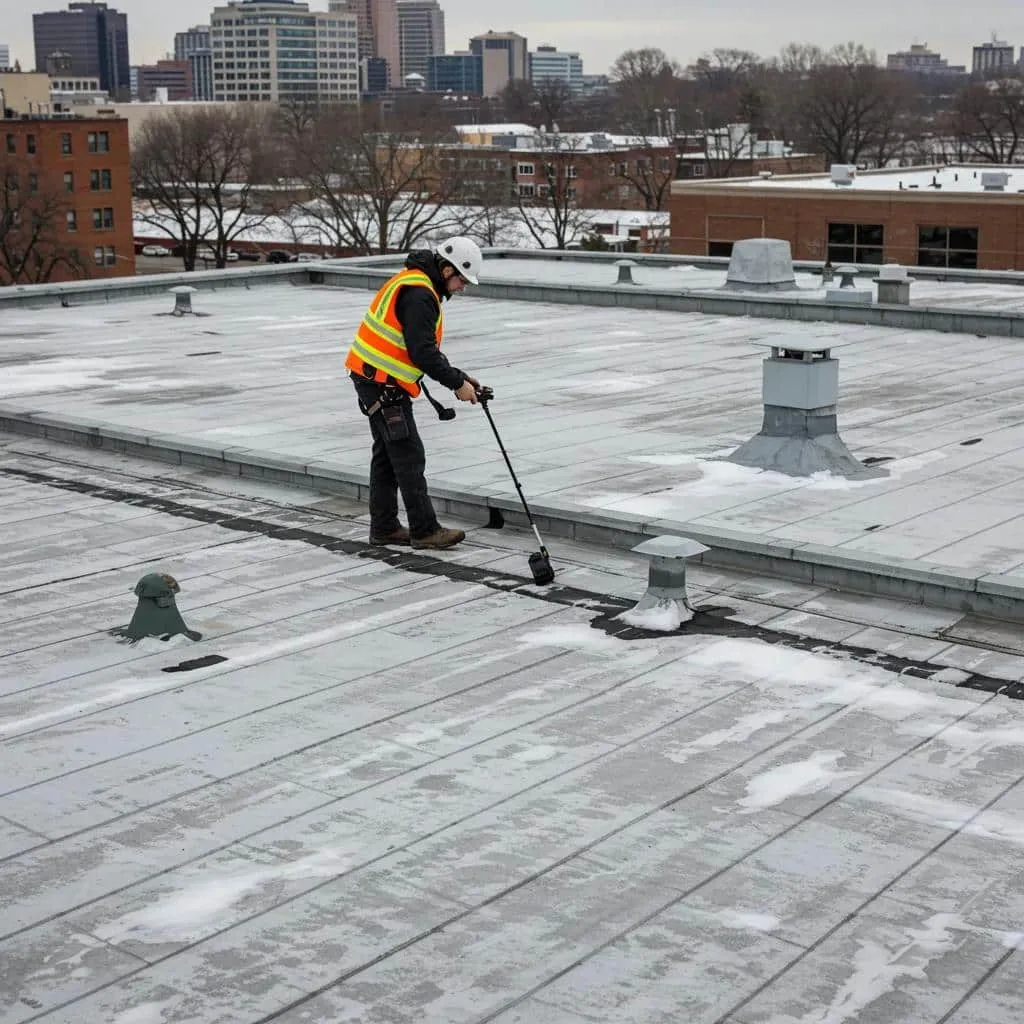
We begin where water collects or changes direction. Drains, overflow points, wall transitions and low membrane areas are compared with the interior leak location. Water can travel beneath a membrane or along a deck before reaching a ceiling, so the visible mark is a starting point, not a map of the opening. Photos identify what is wet, what tested dry and which section needs closer access.
Renton's map separates commercial, office, mixed-use and employment categories, but a district label does not identify a roof assembly. On the building, we note membrane, seams, insulation signs, equipment curbs and past repairs. A drain and scupper check can follow a backed-up outlet. We trace the same low area before deciding whether a repair or a broader correction fits.
Local use: plan around the people inside
Professional services are Renton's largest employment sector, with 22,270 jobs in fields that include finance, engineering, architecture, technology, real estate and corporate support. A roof over an office may have sensitive rooms or service equipment below, but each building sets its own limits. Before opening a seam or moving materials, we confirm roof entry, equipment clearance and the access window with the property contact.
We photograph the affected detail, mark the repair boundary and record any section that could not be reached. If a moisture test or core opening would change the choice, we identify its location and obtain permission first. For a multi-property owner, condition reporting can make observations easier to compare. An occupied building at a separate address, say in Renton Highlands, has its own access plan and roof record.
Repair line: choose the smallest sound scope
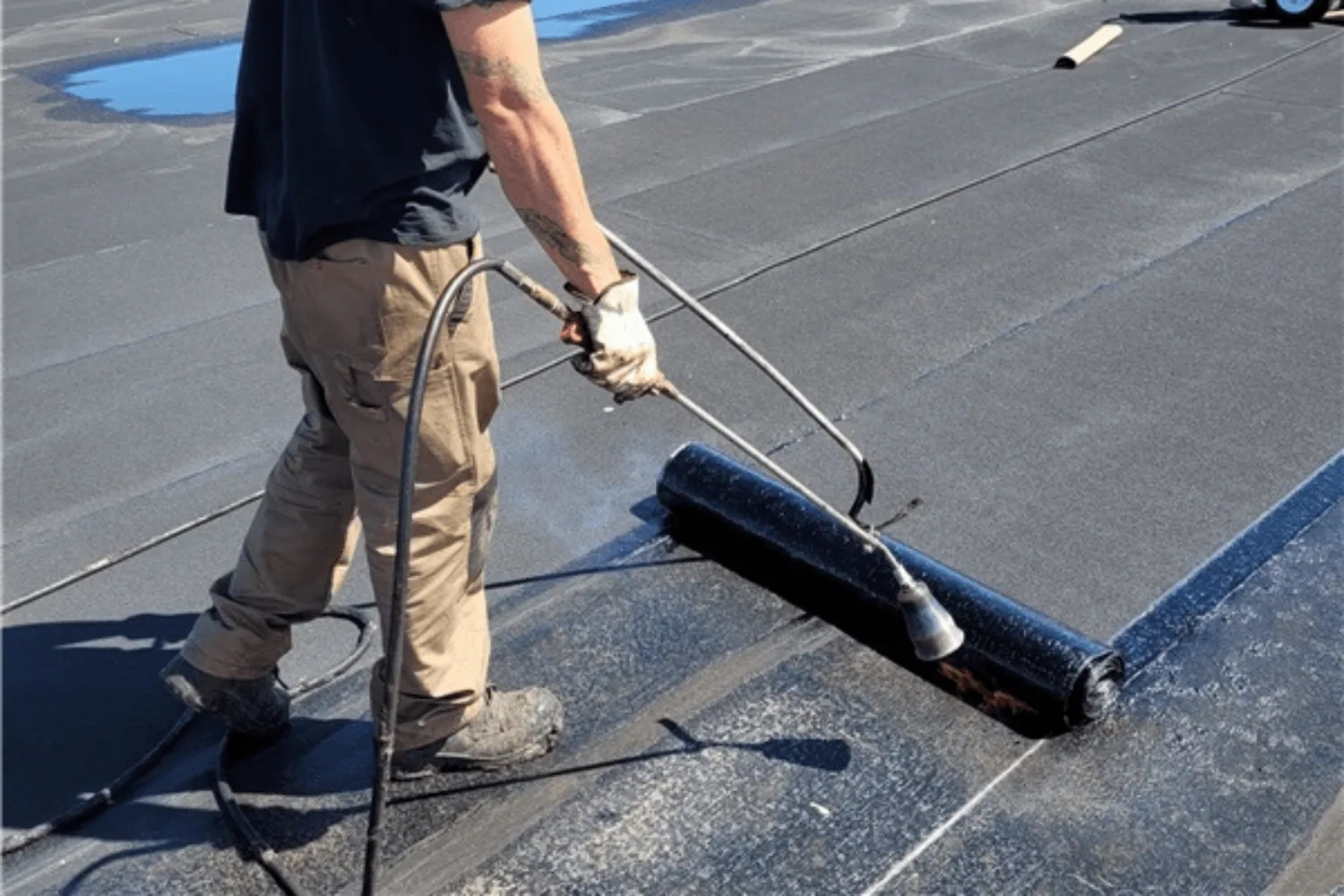
A puncture, open lap or failed penetration flashing may be repairable when nearby material is dry, attached and compatible with the patch. We prepare the surface, restore the detail and check its transition into the existing roof. Sealant over loose material can hide a symptom without restoring the connection. The repair note identifies what was opened, what was replaced and where the work ends.
If the same detail has been patched repeatedly, we compare it with nearby seams, edge metal and insulation. Widespread moisture or movement in the substrate can change the recommendation. Commercial roof repair fits a confined failure. For a second address in Kennydale, the roof still needs its own walk, photos and decision record.
Assembly choice: keep transitions working together
A membrane field meets walls, curbs and pipes through flashing that must stay connected as the roof moves. We check corners, loose terminations, exposed fasteners and sealant that may be covering a failed detail. Equipment clearance matters when service work and roofing share the same area. The installed assembly needs room for both.
Replacement may include tear-off, deck review, insulation, cover board, membrane and new sheet metal. A recover is an option only when existing layers, moisture, attachment and applicable requirements allow it. Each roofing project still needs its own code and approval review. We compare TPO roofing with other assemblies by deck, slope, transitions and maintenance needs, then record the choice.
Work window: set a weather-aware sequence
Temporary protection and the size of each work area depend on the forecast. A changing forecast affects how much roof can be opened and what temporary protection is needed. On each Renton project, we review the expected conditions with the property contact and set a secure stopping point before work begins. We set daily limits, check the tie-in and keep outlets clear.
Access, deck findings, equipment and material selection also affect timing. A test opening needs approval and a plan for proper closure. A replacement needs staging, safe roof entry and protection for occupied areas. The emergency repair service can address active water entry at any hour while we confirm the first safe access window.
Roof record: leave the next decision clear
Closeout should make the next visit easier. We note the assembly observed, completed work, repair photos and any condition outside the scope. If a manager has roof plans or prior repair records, we compare them with field observations and mark differences that may affect maintenance. The record separates a completed repair from a recommendation that still needs approval or testing.
For a Renton property in the Sunset Boulevard Corridor, send the address, leak location, roof history and access requirements. We will trace the water route, inspect related transitions and explain what can be repaired now. If several conditions compete for attention, capital planning can help order work by condition and consequence.
Commercial Roofing Questions
Can one leak tell us whether the full roof needs replacement?
A single leak does not settle that decision. We check the surrounding field, seams, flashing, insulation and drainage to see whether the failure is local or part of a wider pattern. If the neighboring assembly is sound, a defined repair may be enough. If moisture or loose attachment continues beyond the visible stain, we explain what further testing would establish before setting a replacement limit.
What should the first roof walk include?
Start with the leak location, but continue along the likely water path. We check the nearest outlet, seam, curb, wall transition and perimeter detail, then compare those observations with interior stains and prior repairs. The contact can provide roof plans, access rules and photos beforehand. A written note should separate what was observed from a concealed condition that would need a test opening.
When is a coating a reasonable option?
The existing assembly must be suitable for restoration, with the substrate, moisture condition and surface preparation addressed first. We inspect adhesion, seams, penetrations and drainage, then explain any repairs needed before coating. If wet insulation, unstable material or a failing deck sits beneath the surface, covering it may not resolve the cause. The scope should name the preparation and areas included.
How do you plan roofing work around an occupied property?
Access and work limits are set with the people who manage the building. We identify entry, staging, equipment clearances, sensitive rooms and the areas that can be opened and closed within a shift. A phased sequence can help keep operations moving, but each phase needs a sound tie-in and temporary protection. Those constraints belong in the work plan before materials arrive.
What details can change the repair price or schedule?
Removal depth, concealed moisture, deck condition, edge metal, equipment coordination and weather protection can all change the scope. Access restrictions may also affect staging and crew sequence. We identify allowances separately from confirmed work and explain which finding would trigger a change. That gives the owner a useful comparison between a repair, recover and replacement instead of a single unexplained total.