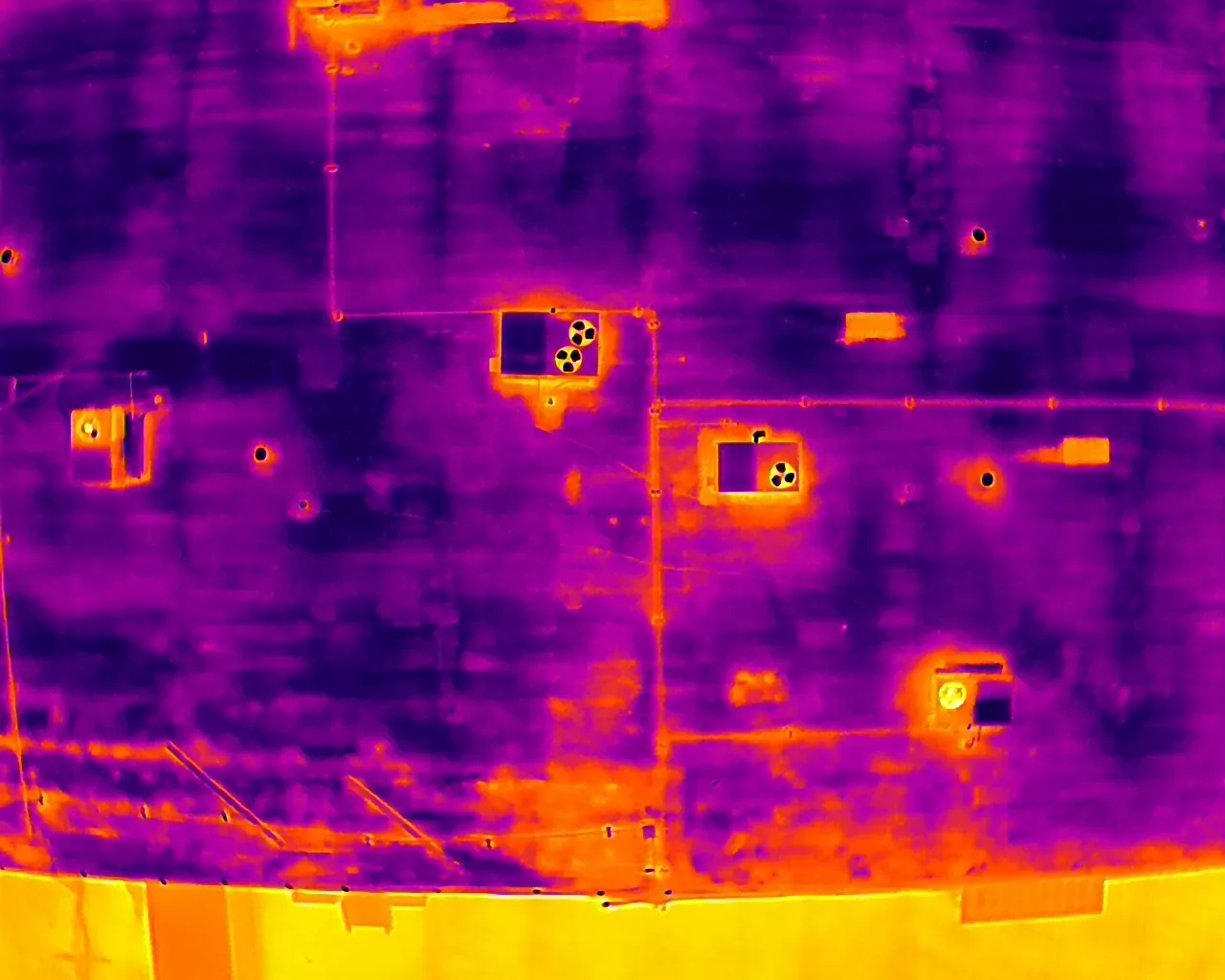
Infrared imaging can help a property team narrow a large roof to areas that deserve closer review, but temperature patterns have several possible causes. Our Renton survey process pairs the image with roof history, visible conditions and a follow-up plan. The goal is a focused next inspection, not a label for every color change.
Timing matters. The regional precipitation pattern shifts into the wet season: Sea-Tac averages 6.31 inches in November and 5.72 inches in December, compared with 0.60 inches in July. For a building near Renton, that seasonal context can help teams schedule a review before wet weather makes access and leak tracing harder. It does not predict any roof’s condition. We still evaluate the assembly, recent weather, surface exposure and the reason for the survey.
Start with the question the scan must answer
Before equipment is set up, we ask what prompted the request. A leak near a wall, a stain below a drain, a repair that keeps returning or a concern about insulation can each call for a different inspection path. The property contact can share a roof plan, repair history, photos, known penetrations and access rules. If records are incomplete, that is useful to know; we mark assumptions rather than filling gaps with guesses.
We also identify areas that should not be treated as comparable. A recently repaired section may have a different surface history from an older membrane. Equipment, shade, parapets and changes in roof elevation can affect temperature across a roof. The survey plan notes those conditions so a reviewer can distinguish a pattern worth investigating from an expected surface variation. If the roof has active leaks, we record the reported locations separately from what the scan shows.
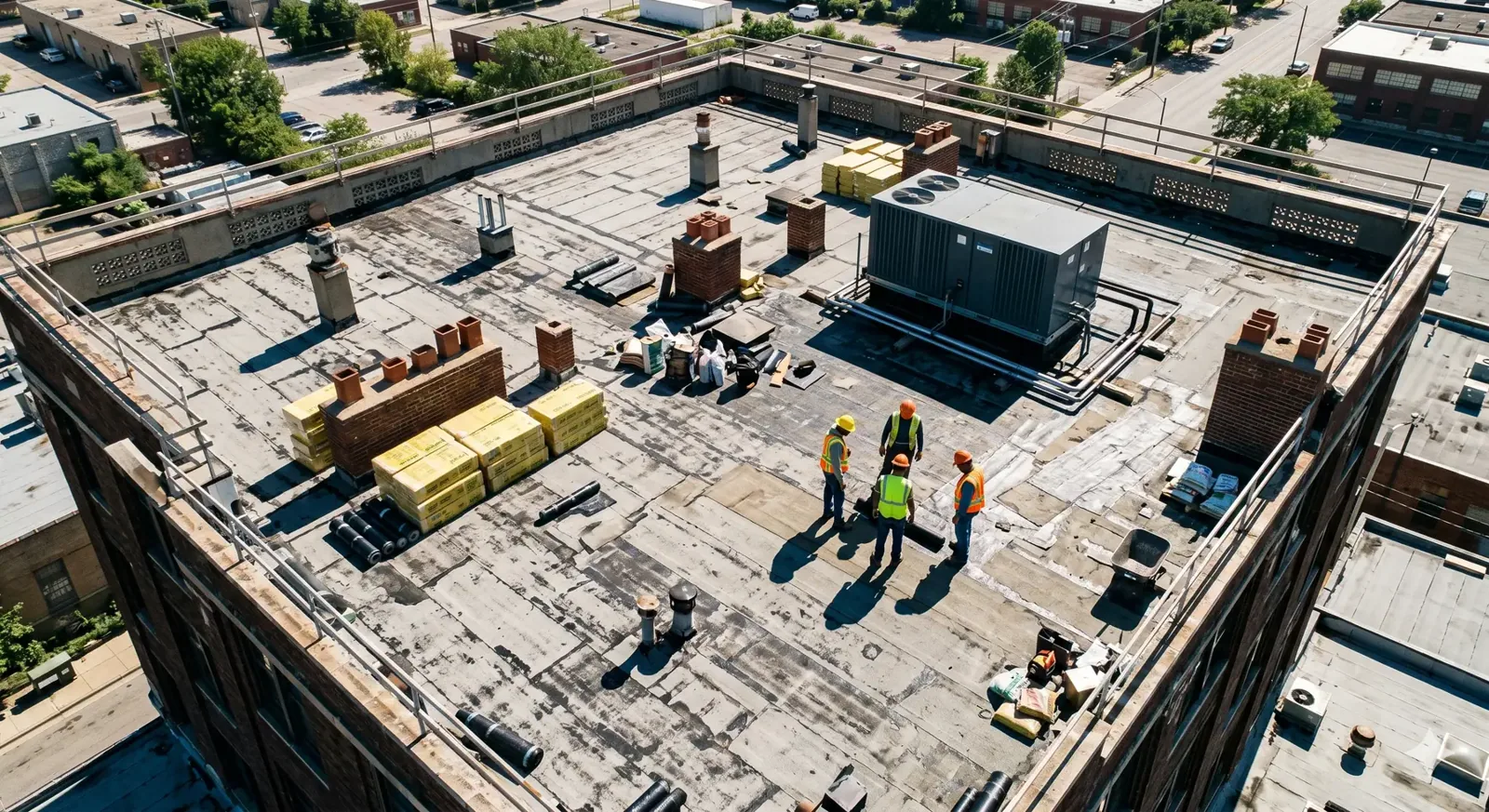
The Renton Valley Subarea includes industrial and warehousing uses, where roof access may share space with loading, rooftop equipment or scheduled operations. A survey is coordinated with the building contact, and access is limited to approved routes.
Choose a useful window and capture conditions
Infrared work depends on a temperature difference that can reveal patterns at the surface. The useful window varies with the roof assembly, cloud cover, wind, recent rain, sunlight and building operations. A scan taken at the wrong time can be inconclusive. Before the visit, we discuss conditions and reschedule or adjust the method when the available window is unlikely to answer the original question.
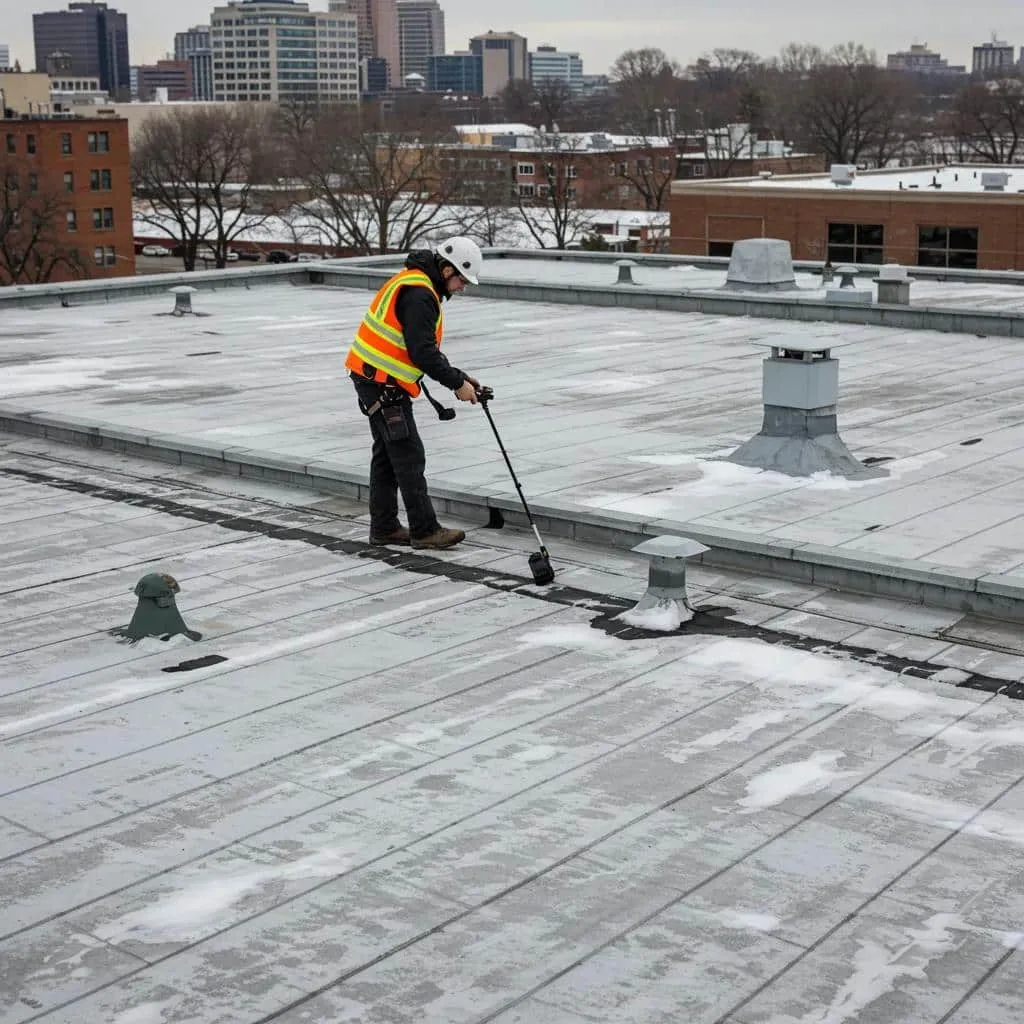
During the survey, the team records the areas viewed and the conditions that may affect interpretation. Images are tied to roof sections and landmarks such as drains, curbs, seams or access points. We look for patterns that stand out from adjacent areas, then compare them with visible details and known repair history. A pattern is documented as an observation for follow-up, not as proof of the material beneath the membrane.
Some roofs are better evaluated with a hands-on inspection, a moisture meter, or a carefully selected core cut. Each method answers a different question and has access, approval and repair considerations. When an infrared result is uncertain, we explain what additional check would reduce uncertainty and where it should be considered. We do not recommend opening a roof without the owner's authorization and a plan for protecting the assembly afterward.
Review the pattern with the roof details
Membrane type, insulation layers, cover board, deck, slope, drainage and prior repairs can change what a surface pattern means. A dark or bright area may relate to moisture, but it can also reflect shade, stored heat, surface conditions or a difference in construction. We describe the observed contrast and its location, then list plausible next checks without overstating what the image establishes.
We compare flagged areas with drains, seams, penetrations, wall transitions and the interior leak history when that information is available. A repeat stain below a drain may warrant one kind of investigation; a broad pattern with no interior symptom may call for a different one. The hands-on roof inspection can check accessible details around the locations that merit attention. If the concern is a known active leak, leak tracing can focus on the reported symptoms while keeping the thermal observations in context.
We separate findings into what was observed, what remains uncertain and what action is reasonable. That distinction helps facilities staff, ownership and a roofing consultant decide whether to monitor, inspect further or plan a repair. It also keeps a screening survey from becoming an unsupported replacement recommendation.
Turn the survey into a practical next step
We organize image references by roof area, include a simple location key and note access or visibility limits. A flagged area is described in plain language: where it is, what pattern was seen, what nearby detail may matter and what follow-up could confirm or rule out the concern. If no pattern is conclusive, the report says so.
For a portfolio manager, the useful question is often how to sequence work across a building rather than how to read an image. We can connect observations to the condition report format or roof capital planning when a broader decision is needed. A recurring maintenance issue may instead fit a maintenance program. Those options depend on the roof findings and owner priorities; the survey itself does not prescribe a project.
When field confirmation is appropriate, we identify the location and the question to resolve before the visit. The property team can approve access, coordinate occupants and decide whether a limited opening or other test is acceptable. We document any repair made after testing separately from the original observation so future reviewers can understand what changed.
Plan for Renton-area access
The building contact can identify roof hatches, ladders, escort requirements, fall-protection procedures and areas affected by tenants or operations. We ask about rooftop electrical equipment, restricted zones and any current work that could change the access route. If conditions differ on arrival, we pause and confirm a safe alternative with the contact.
A facility in Downtown Renton usually means a different route and staging plan from an industrial property in the Valley, though the rule is the same: survey only the approved roof areas and record any section that could not be reached, so nobody reads the report as full coverage when part of the roof was unavailable. If conditions do not support a meaningful infrared window, we explain that limitation and discuss whether a visual roof walk or another scheduled visit better fits the need.
After the review, the property team receives the observations and a concise follow-up path. That may be a targeted visual check, a separate moisture test, a repair evaluation or no immediate work where evidence is limited. The decision remains tied to the roof's actual condition and the level of confirmation the owner needs.
Commercial Roofing Questions
Does infrared imaging prove that insulation is wet?
No. It shows surface temperature patterns that may point to an area for investigation. Several roof and weather conditions can create a similar contrast, so confirmation may require a hands-on check or another approved test.
When should an infrared roof survey be scheduled?
The useful window depends on the roof, weather and temperature conditions. We review the forecast and site history with the property contact and will explain if the available conditions are unlikely to produce a useful comparison.
Can the survey locate an active leak?
It may help focus attention on an area, but a thermal pattern does not establish the leak path. We compare it with reported symptoms and roof details; leak tracing or a closer inspection may still be needed.
Will the survey require cutting the roof?
Infrared imaging is a surface screening method. A separate core cut or other invasive test may be considered to confirm a specific question, but only with owner approval and a plan to restore the roof opening.
What should we provide before the visit?
Share the roof plan if available, repair and leak history, roof access rules, known restricted areas and the question you want the survey to answer. Photos of interior symptoms can help us plan where to compare the roof surface.