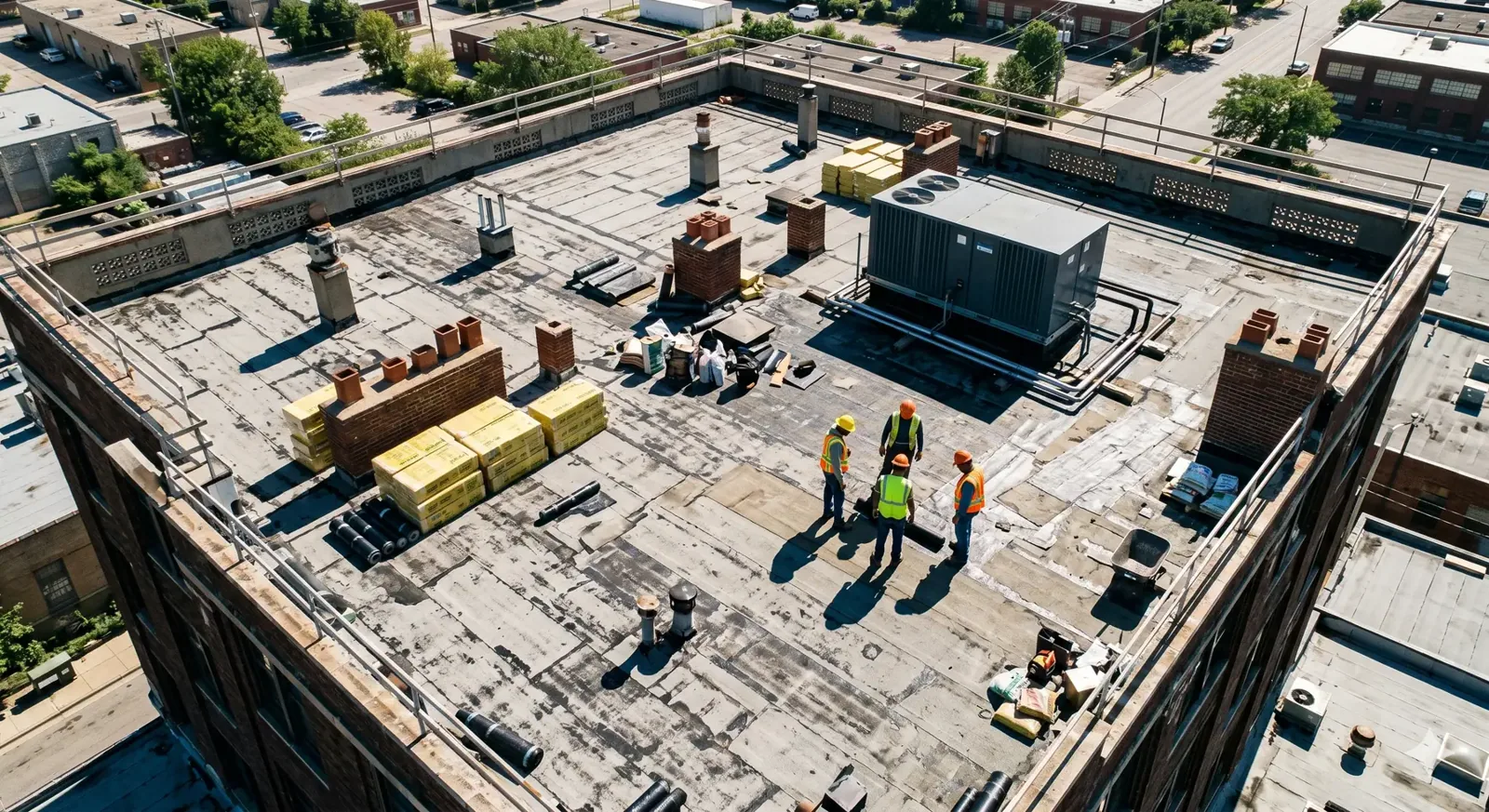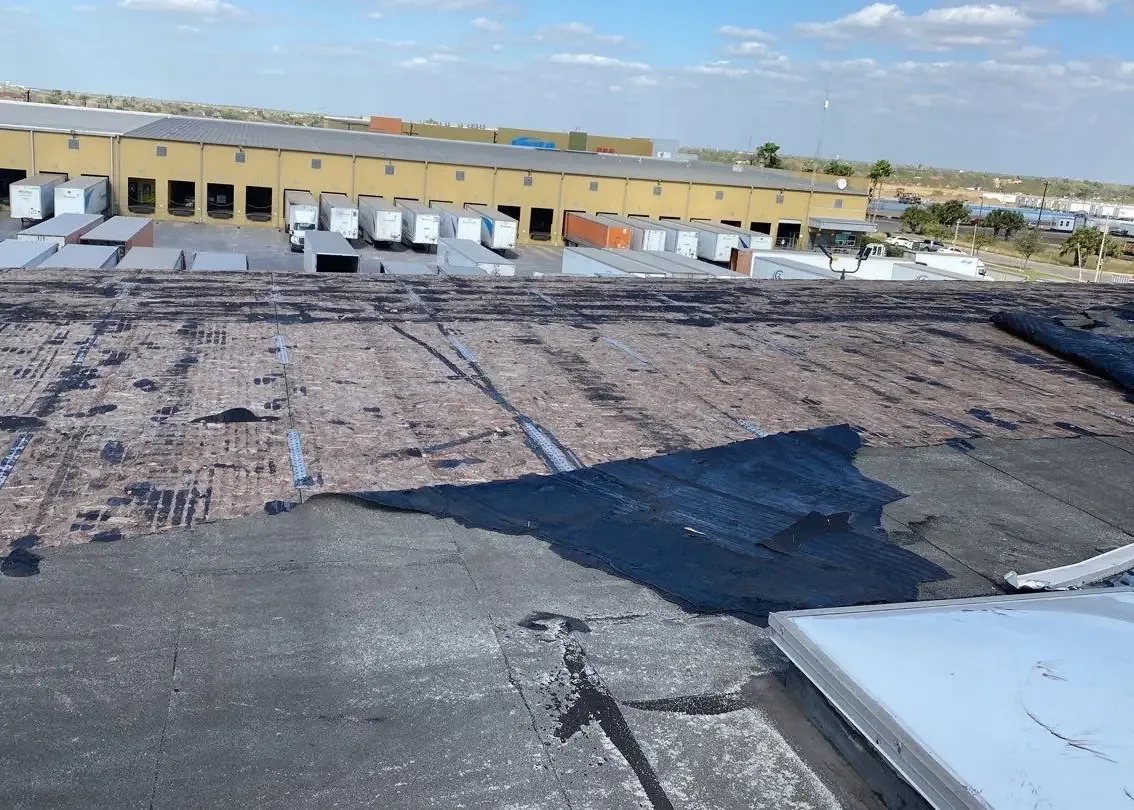
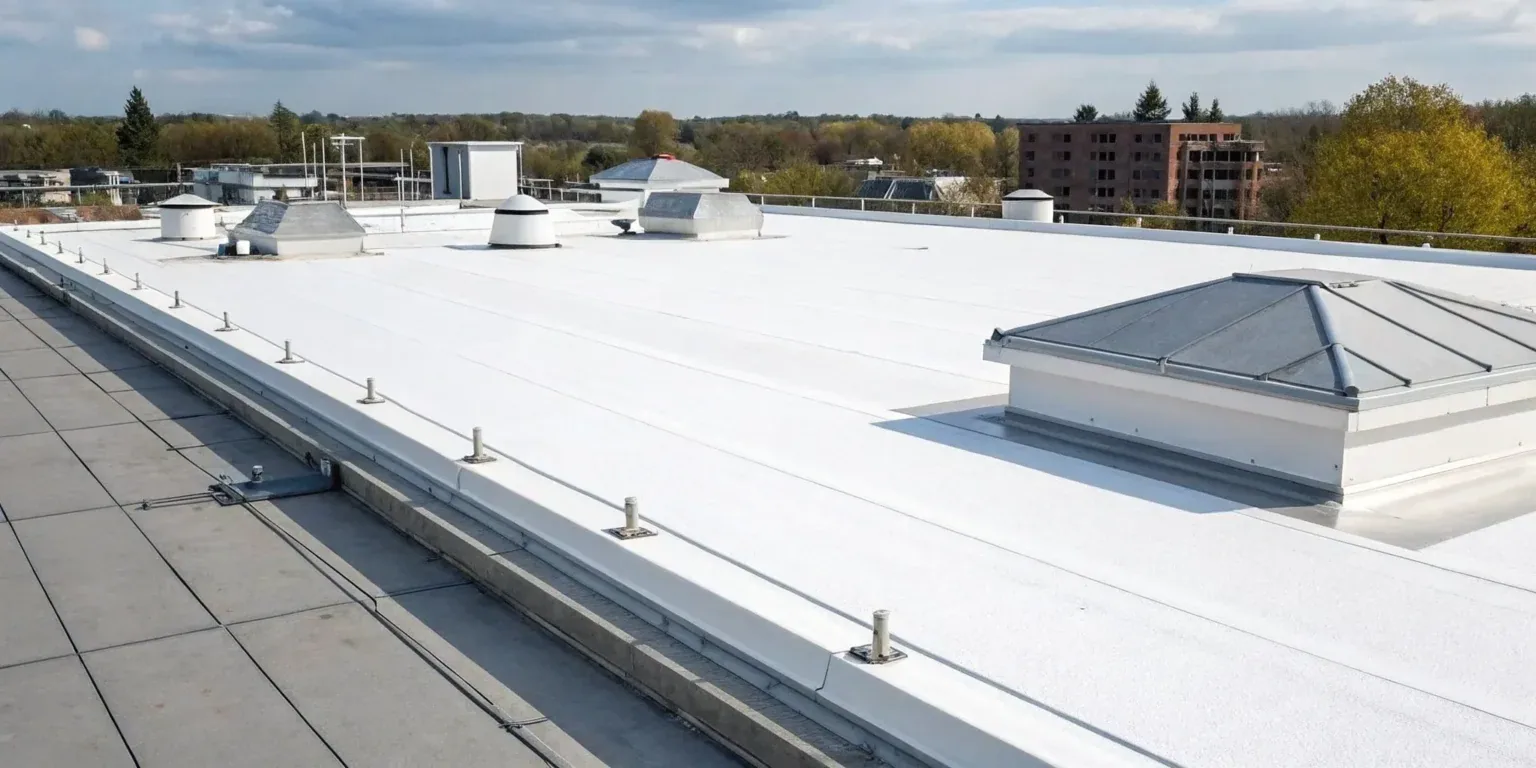
A membrane puncture may be small at the surface and still deserve a careful roof check. A dropped fastener, maintenance tool, sharp debris or equipment work can leave an opening that is hard to see from the ground. In Renton, WA, we document the suspected spot, inspect the roof layers around it and compare the location with the reported leak before defining the repair. We do not infer the cause from a ceiling stain alone.

Share when the leak began, whether anyone worked above the affected room and what earlier repairs were made. A commercial roof inspection can record the puncture, nearby seams and drainage route in one visit, while noting any area that could not be reached safely.
Opening: document the puncture before covering it
At the roof, the inspector marks the suspected point and checks whether the membrane has a cut, hole, abrasion or displaced patch. We note the size, direction, edge condition and any loose material nearby. The record should distinguish a confirmed opening from a suspected location where dirt, standing water or an overlying object limits the view. Before temporary cover or repair, photographs with a scale and a roof-plan reference help the owner compare the finding with the work proposal.
Do not pull embedded material or enlarge a puncture to see what is below. The roof may have a cover board, insulation and deck that need separate evaluation, and an unplanned probe can create more damage. If a tool or fastener may be involved, preserve the item when practical and record who last worked in the area. The wind-damage roof review addresses storm movement separately when the event affected a wider roof section, so a single puncture is not automatically assigned to wind.
Punctures often sit where people and equipment travel: around rooftop units, along service paths and beside the access hatch. We look first at those zones and at any area where a recent contractor visit coincided with the first leak report. If walk pads are missing along a service route, the repair record notes it, since a patched puncture beside an unprotected path tends to be followed by another.
Leak report: trace moisture beyond the visible mark
Water can travel sideways after entering through a membrane opening. Compare the ceiling report with deck direction, insulation joints, seams and low areas, then identify the route that best fits the evidence. If moisture is found below the puncture, record its extent and determine whether a test is needed to assess the insulation or deck. Do not assume that the wettest indoor spot sits directly below the entry point.
A building log with leak dates, roof conditions and interior locations shows whether water tracks with long rains or with something else, and Sea-Tac's normals (6.31 inches in November, 5.72 in December and 0.60 in July) make the wet months the likeliest time for a hidden puncture to show itself.
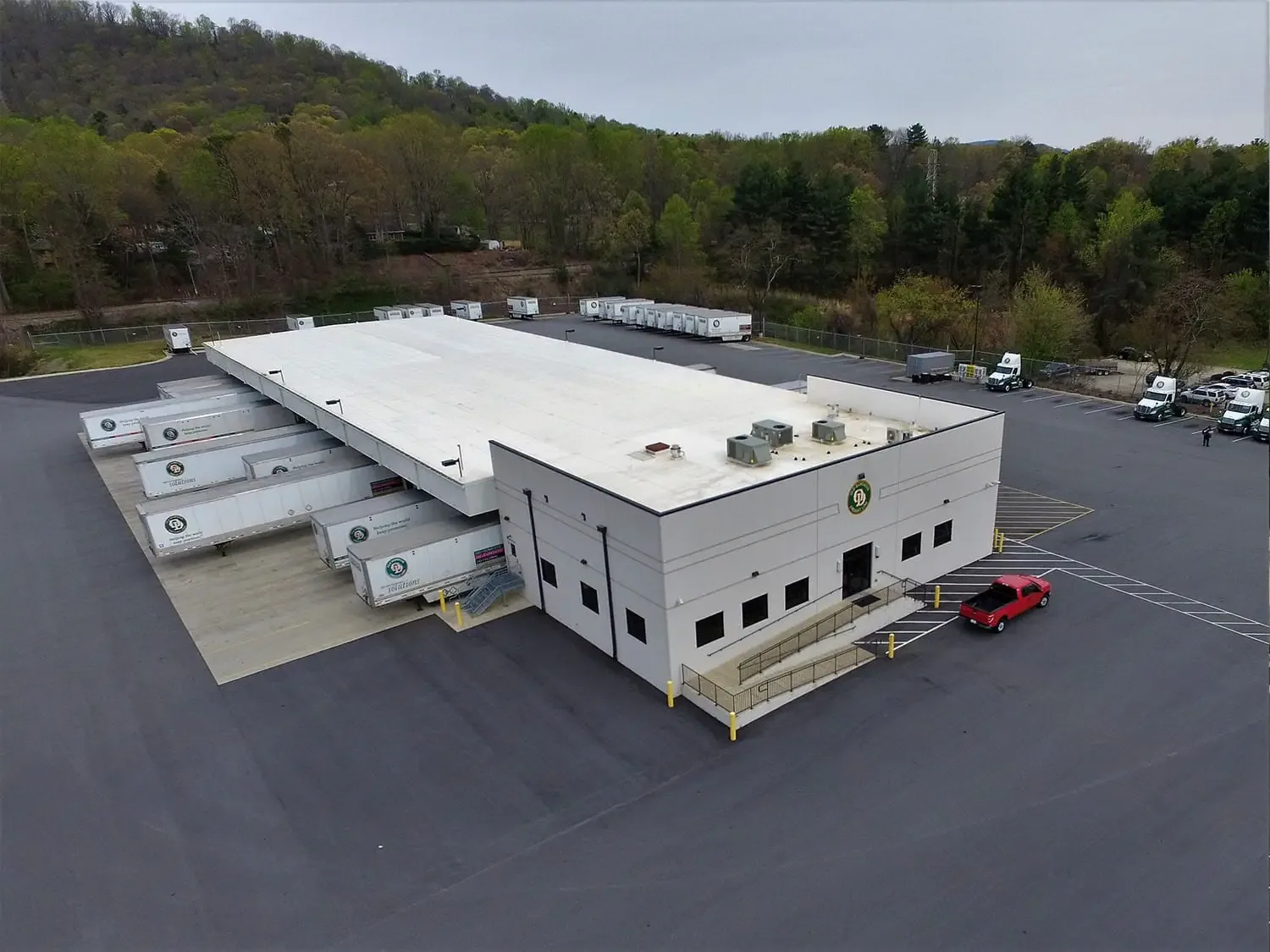
At a warehouse in the Renton Valley Subarea, coordinate a temporary barrier around loading access and plan the visit around deliveries. The roof plan and field observations determine where repair work is needed.
Installed system: choose a compatible patch and attachment
A patch has to work with the existing membrane, surface condition and repair method. Identify the roof material and check whether it is clean, dry and sound enough for the specified preparation. A repair may require a welded patch, adhered membrane, compatible flashing or another system-specific detail. The scope should state the patch dimensions, overlap, surface preparation and edge treatment rather than using a generic instruction to seal the hole.
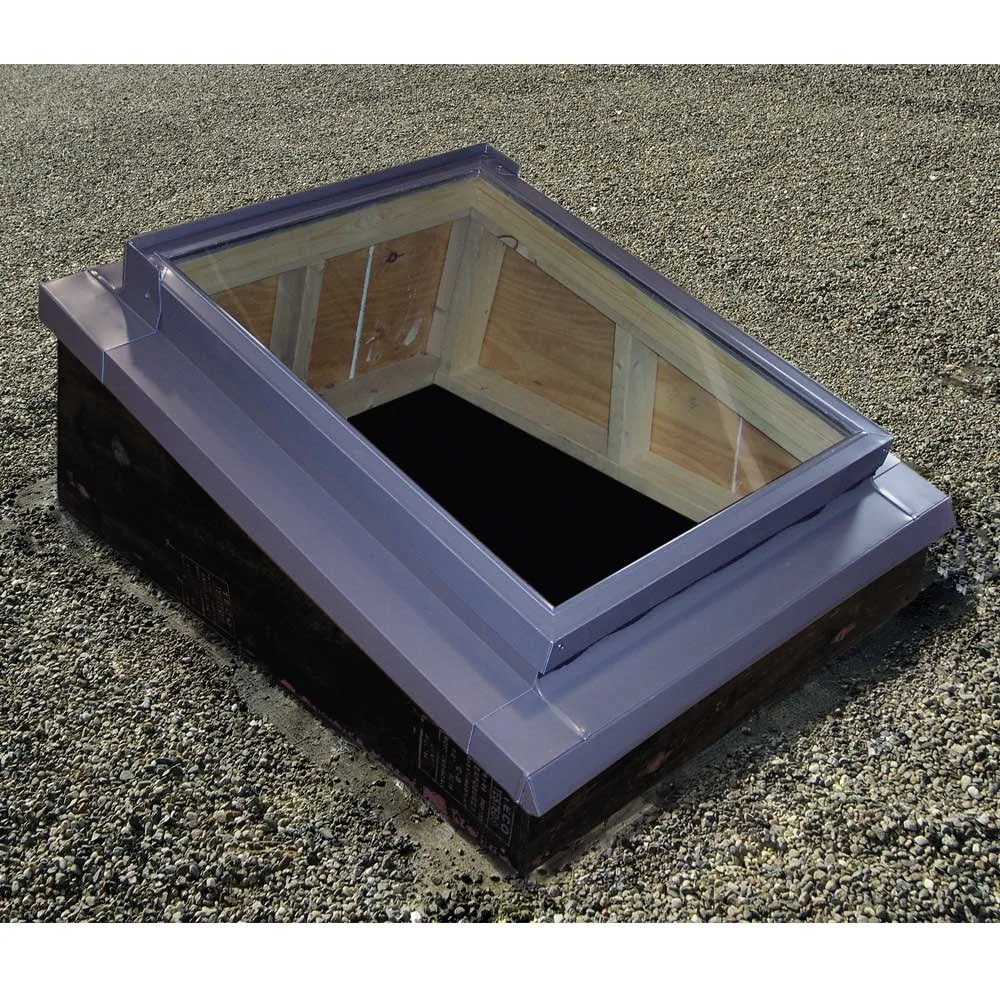
Near a seam, curb or roof penetration, determine whether the puncture is separate from a larger failure. If the adjacent lap is open, a roof seam failure repair review can address that defect as its own scope line. If the opening is near a skylight, curb or pipe, inspect the transition with the skylight and penetration flashing service. For modified bitumen, the patch and surface preparation must suit the installed sheet; which is why a modified-bitumen roof is repaired with its own materials.
Where the puncture overlaps an older patch, photograph the layers and edges before deciding whether to remove prior work. Avoid placing a new patch over a loose or contaminated surface. If the substrate feels soft or moisture is detected below, describe a test or limited opening that can verify the condition before the repair boundary is expanded.
Work area: control tools, debris and roof traffic
Repair work needs a clear route for tools and materials, especially where service crews share a roof with maintenance activity. Confirm which hatch or ladder is approved, where materials can be staged and how the crew will keep fasteners, cutoffs and packaging from remaining on the roof. Ask other trades to avoid the work area until the repair and inspection are complete. The visit record should show the portion examined and note any equipment or obstruction that limited access.
For a Downtown Renton roof visit, coordinate access with the building contact, then document the actual route and work zone. If a larger leak pattern suggests water collecting at a low area, the ponding-water repair review can address drainage separately from the puncture repair.
Closeout: verify the patch and preserve a useful record
After repair, inspect the patch perimeter and verify that the intended attachment or weld is continuous. Record the repair location on the roof plan, photograph the finished detail and note the material and date. If the work requires a cure period or follow-up test, state that in the closeout and explain what the owner should observe. A later leak report can then be compared with the exact repair rather than an approximate roof area.
When a puncture came from a dropped object, consider whether walk pads or a designated maintenance route would reduce repeat damage in the same area. That is a practical operating measure; future openings still require inspection. If the roof is generally wearing at many separate locations, describe those observations independently and compare repair, monitoring and broader renewal options only after the system condition is known.
Send the address, roof plan, leak dates, earlier repair information and access requirements, and the approved area gets inspected, the opening documented and the right patch or test named.
Commercial Roofing Questions
Can a puncture leak if it is smaller than a coin?
A small opening can admit water, but size alone does not establish the leak rate or damage below. The inspector checks the membrane, the layers beneath and the reported water path before recommending repair or testing.
Should we place a temporary patch before the inspection?
If temporary protection is needed to limit active water entry, use a qualified roofer and document the original condition first when it is safe. Keep the location and materials noted so the permanent repair can be checked against the underlying detail.
Can you determine what caused the puncture?
Sometimes the shape, nearby work and preserved object help explain it, but cause may remain uncertain. The report separates what was observed from what is only suspected and avoids assigning responsibility without supporting evidence.
What if insulation below the puncture is wet?
Moisture should be mapped and assessed before the repair area is closed. Depending on access and assembly, a suitable test or limited opening may be needed to determine whether insulation or deck material requires separate work.
How is the repair checked after installation?
The crew documents the patch edge and attachment, takes closeout photographs and notes any required cure or follow-up check. The owner should retain the roof-plan mark and compare it with future leak reports.