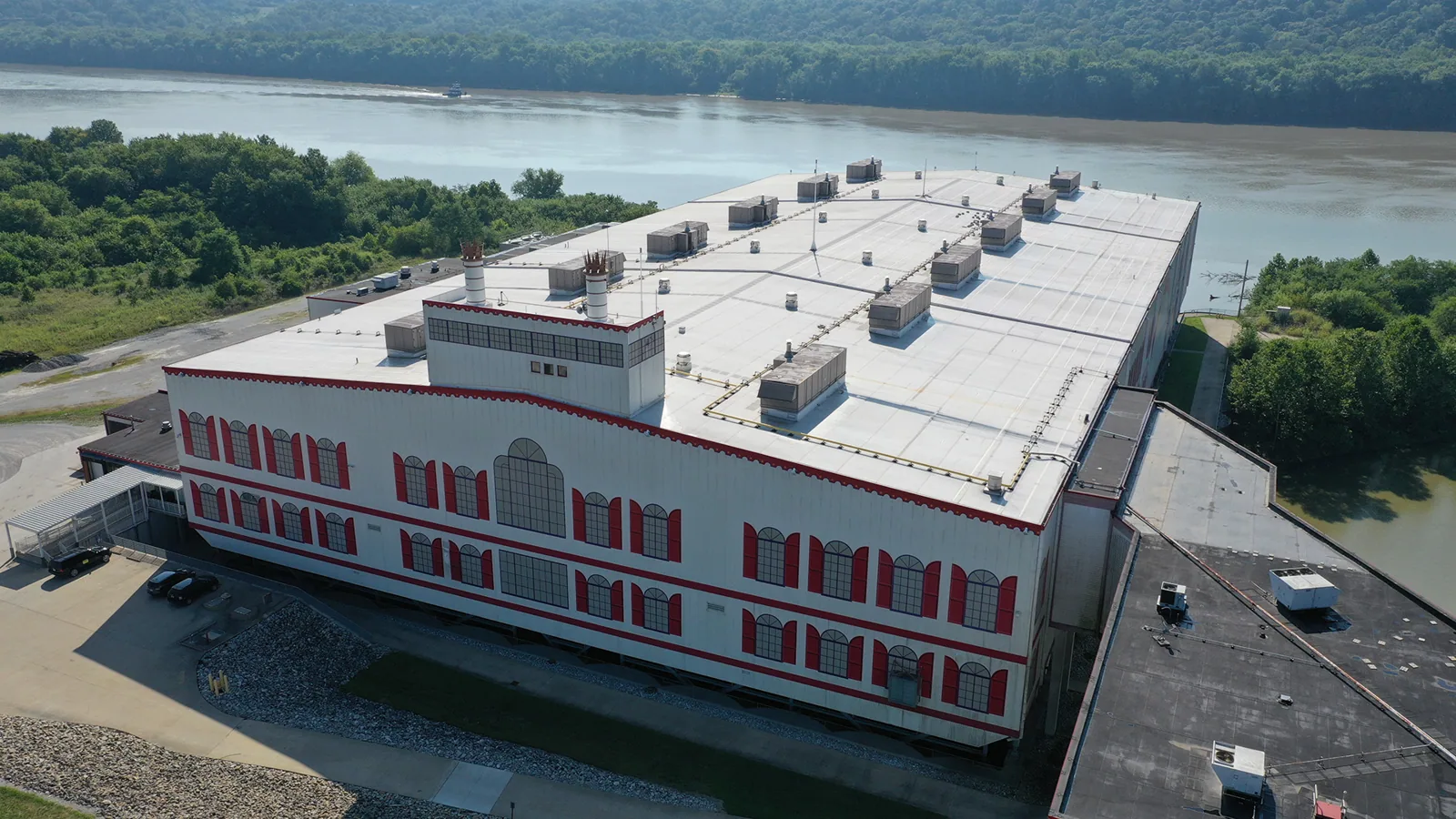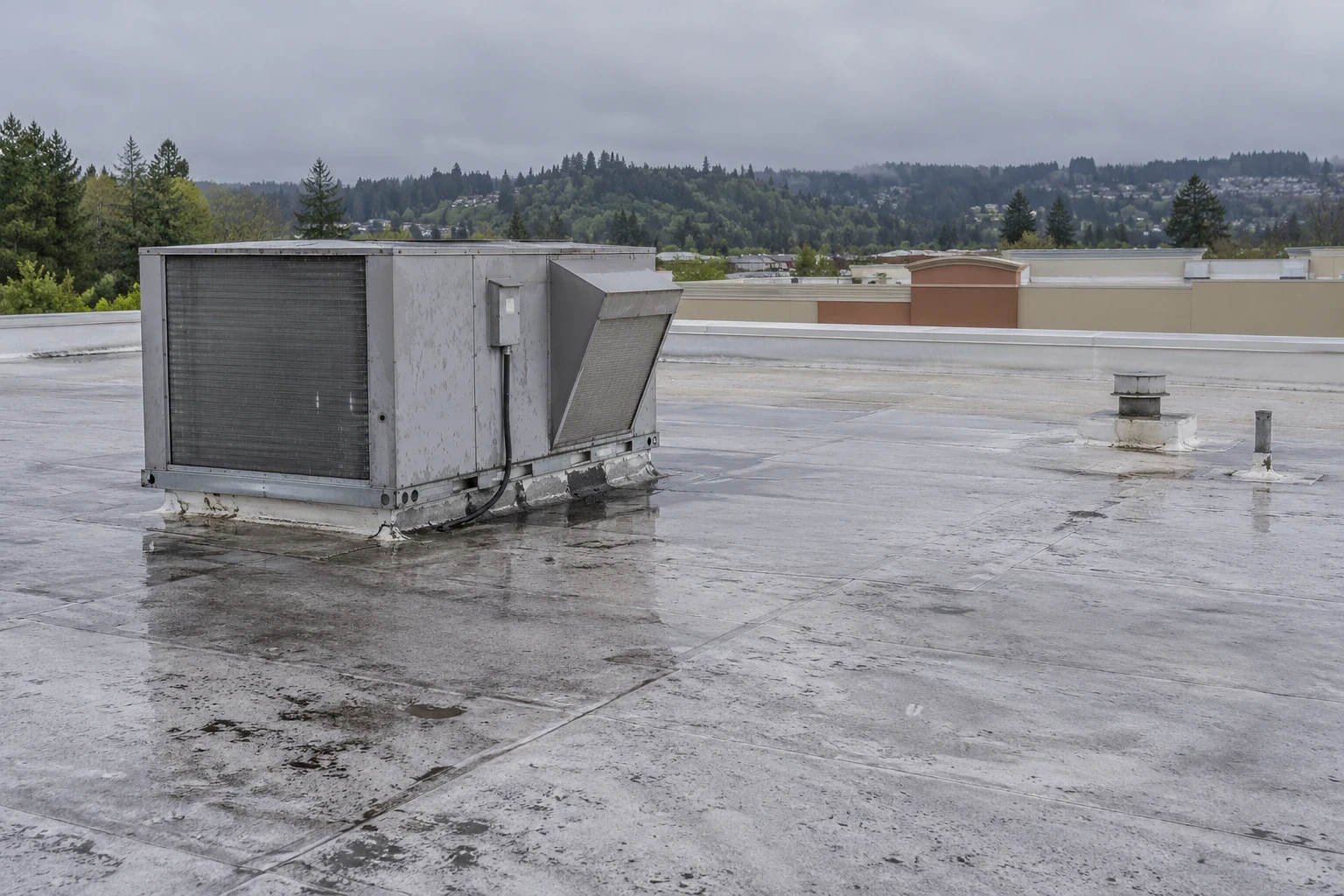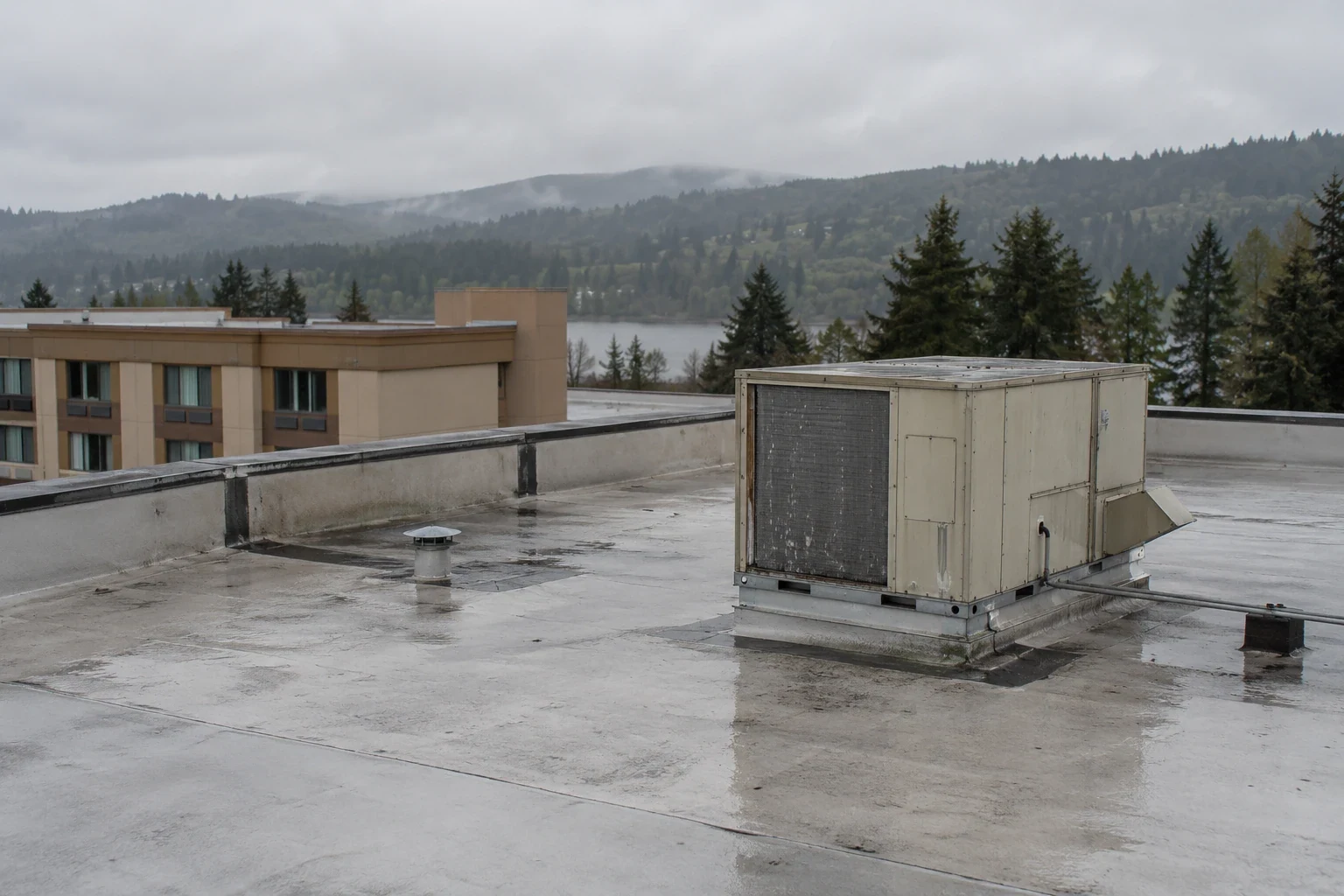
A roof access hatch near guest rooms can turn a routine inspection into a scheduling question. For hospitality operators in Renton, we start by mapping the water report and roof route, then agree on the access window, lift location and any guest-facing area that must remain clear. Sea-Tac's wet November and December, far above July, make drains and temporary protection worth a check before the wet season.
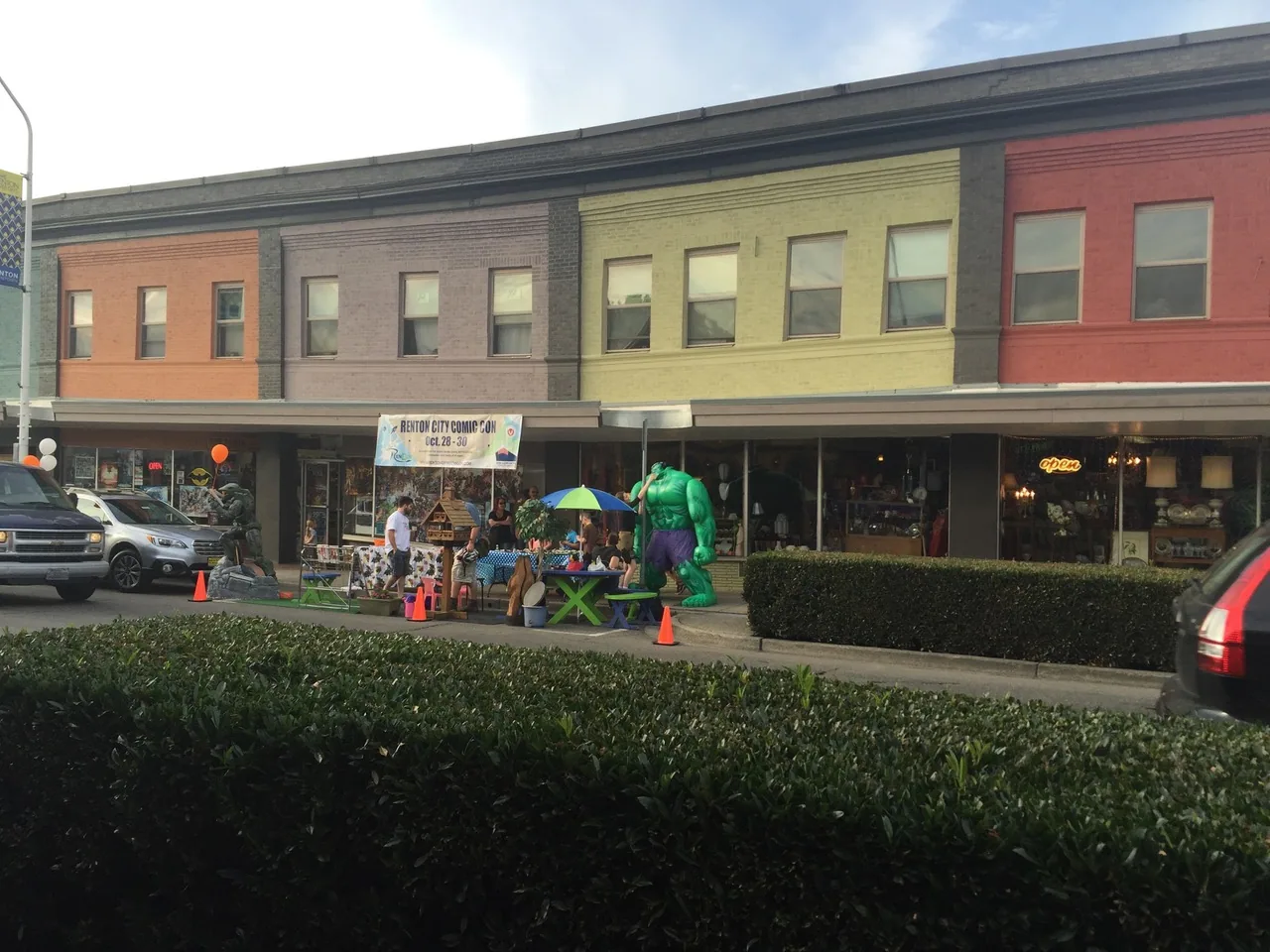
Southcenter, in nearby Tukwila, combines lodging with regional retail, offices, warehouses, distribution and light industry, while Downtown Renton is where the city maps Center Downtown zoning. A hospitality portfolio across those settings gets a roof plan for each address.
Guest route: keep access and work boundaries clear
Before a roof walk, confirm which entrances stay open, how staff reach mechanical areas and whether a lift or material delivery crosses a guest route. We coordinate the sequence with the property contact, identify where temporary protection is needed and state what work may affect an occupied room or service space. If a guest route needs a brief change, the plan should name the alternate path, start time and person who will reopen it. A phased occupied-building reroof can define roof sections, daily closeout and the access window for each phase.
For a property close to Downtown Renton, access may involve a compact commercial setting; a building near Tukwila Southcenter may have a different mix of delivery, retail or lodging movements. We inspect the actual routes and roof details before writing the sequence.
Event spaces and ballrooms often have tall walls and large rooftop units, so a wet-season leak there can disturb a booked function and not just a single room. We ask the property contact for the event calendar before choosing a repair window, mark roof sections that sit over banquet, lobby and pool areas as the first to protect, and keep a note of which sections stay closed to roof traffic on event days.
A retail or restaurant operation may need a similar guest-area boundary, while a managed property portfolio can add separate ownership and tenant approvals. The roof plan should show who gives access, which rooms or service routes need protection and when a mechanical trade has to work before or after the roofer.
Drain route: prepare the roof for winter rain
Water can travel from a higher roof bay to a low drain before reaching a guest room or back-of-house ceiling. We check slope, crickets, outlets, seams, curb flashings and visible repairs, then compare those details with the reported room. A roof inspection records the route and accessible details. If debris or damage is found at an outlet, a drain and scupper repair can be scoped around that finding.
Sea-Tac's wetter November and December normals are a regional cue to review drainage before sustained rain. We note the outlets reached, whether water remains and which seams or penetrations sit along the route. Where moisture may extend under the membrane, an infrared moisture survey or test opening can help define the affected area if the result could alter the work scope.
Kitchen exhaust, HVAC supports and refrigeration lines may interrupt the open roof field. During inspection, we mark clearances and identify any flashing or service detail that needs a separate trade. That helps the property contact plan room access or a temporary service window before a roof section is opened.
Repair choice: keep the service line precise
A separated flashing, split lap or puncture can support a local repair when surrounding material is sound. Repeated leaks, broad moisture or failing attachment may warrant a larger comparison. We describe the visible condition, affected roof area, tie-in and exclusions so the operator can judge what the proposal actually covers. An emergency response may control active water while a permanent scope is prepared, with the temporary limit recorded.
For a replacement project, the scope should identify removal, insulation or substrate work, perimeter metal, equipment curbs and daily weather protection. If another roof layer is being considered, a recover review weighs existing layers, moisture, drainage and edge height before making that option part of the comparison. Cost and timing depend on those physical conditions and the access window available at the property.
If a leak appears above a guest room, map the interior report to the roof zone and record whether the room needs ceiling work from a separate trade. The roof crew can protect the opening and complete its scope, while the property contact coordinates room availability and any finish repair. A clear line between roof work and interior work prevents a closeout note from implying that both trades have finished when only one has.
End-of-day cover: protect the exposed edge
Roof work that uncovers the deck needs a secure stop point before the crew leaves. We identify the temporary cover, clear drain paths and confirm who checks the boundary. If weather moves the schedule, the site contact should know which section is protected and what work needs a later access window. This is especially useful when the roof area sits above guest rooms or a public corridor.
Material staging and debris removal also need a route that does not conflict with arrivals, housekeeping or deliveries. We agree on those details with the property contact and note any hours when a guest path must remain open. When a separate mechanical trade needs access, the project sequence should identify which party completes that step and how the repaired flashing is checked afterward.
At closeout, record the roof area completed, drains checked, repair lines and any follow-up test. The property team can then connect a later report with a specific zone instead of relying on a general note about the roof.
Property record: make the next visit easier to plan
A closeout sketch can show drains, seams, curbs and areas reached, with photographs tied to each roof zone. Keep access notes, materials and any remaining work with the address. A condition report can organize those observations for ownership and facilities staff without mixing findings from different properties.
Send the Renton address, roof plan, reported water location, room or service-area access limits and available work windows. We will outline the inspection route, note any trade coordination and explain whether the visible roof supports a repair, test or replacement comparison. The result gives a hospitality team a practical way to schedule work while keeping the decision grounded in that building.
Commercial Roofing Questions
Can roof work be scheduled around guest occupancy?
We map the work area, lift and material route with the property contact, then identify any guest path or room access affected. The phase plan states the work window and how temporary protection closes before the next operating period.
What roof details matter above a restaurant or lodging space?
Drains, seams, exhaust curbs, refrigeration lines, HVAC supports and perimeter transitions can all affect the water route. We inspect the details present on that roof and coordinate any move with its responsible trade.
How do you handle an active leak over a guest room?
The first step is to protect the room and locate the reported area on the roof plan. We trace nearby drains and penetrations, control active water where conditions allow and record the repair boundary and any follow-up.
When should a hospitality property consider replacement?
Repeated failures, widespread wet insulation, deteriorated attachment or deck concerns can make broader work worth comparing. We document what is visible, identify any needed test and separate a local repair from a full assembly scope.
What should be included in the roof closeout?
Include the repair location, roof sketch, photographs, materials, drains or penetrations checked, access limits and any remaining test. Keep it with the property's maintenance record for the next service call.