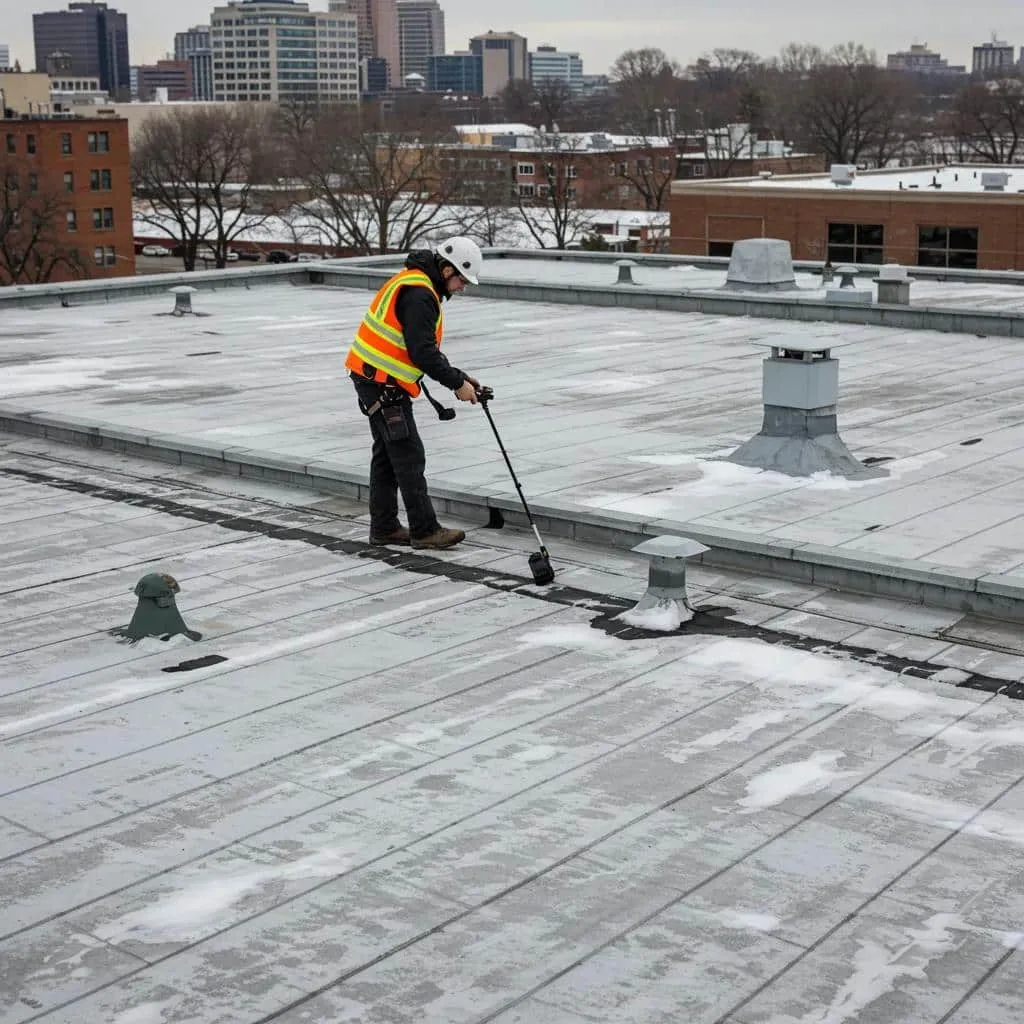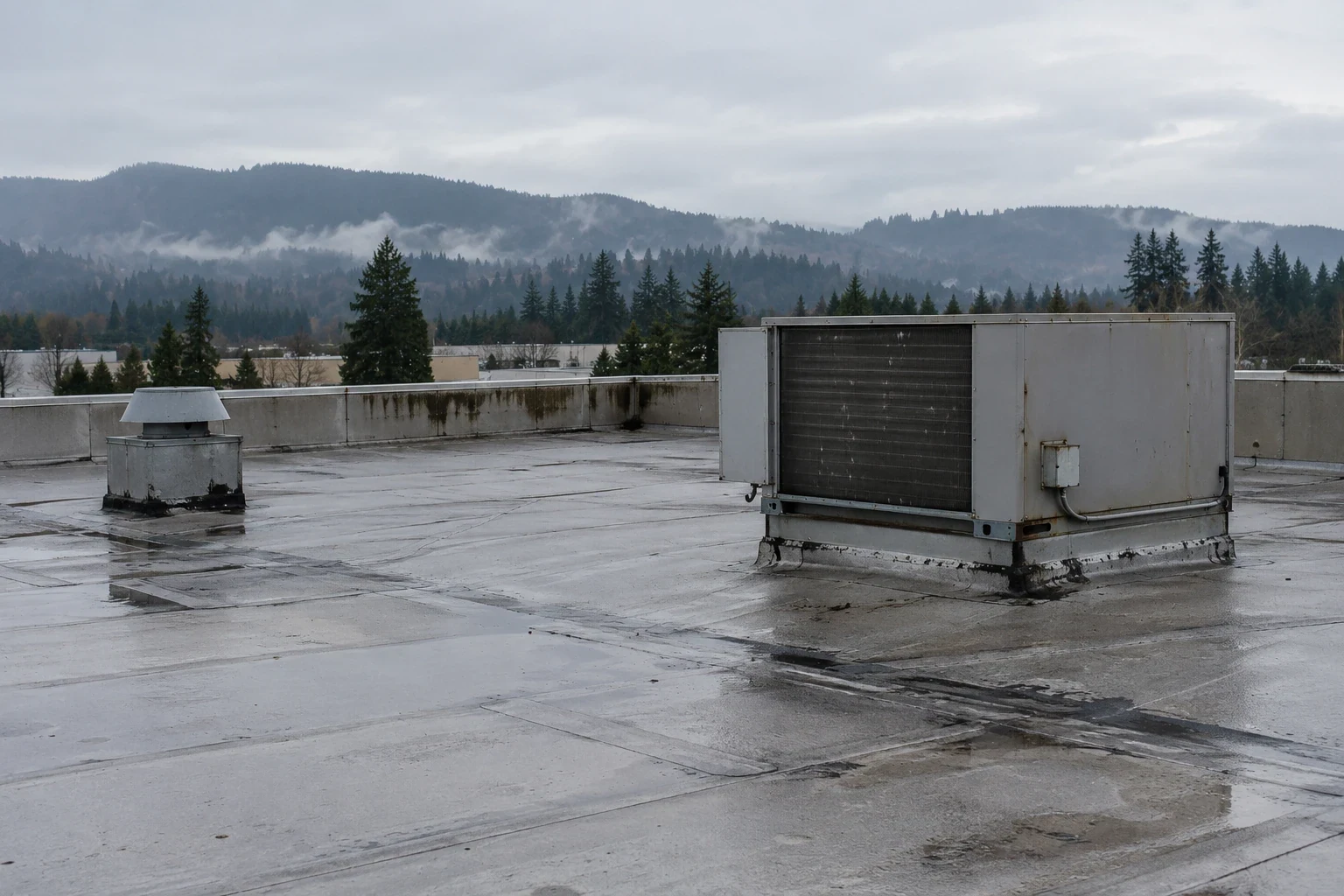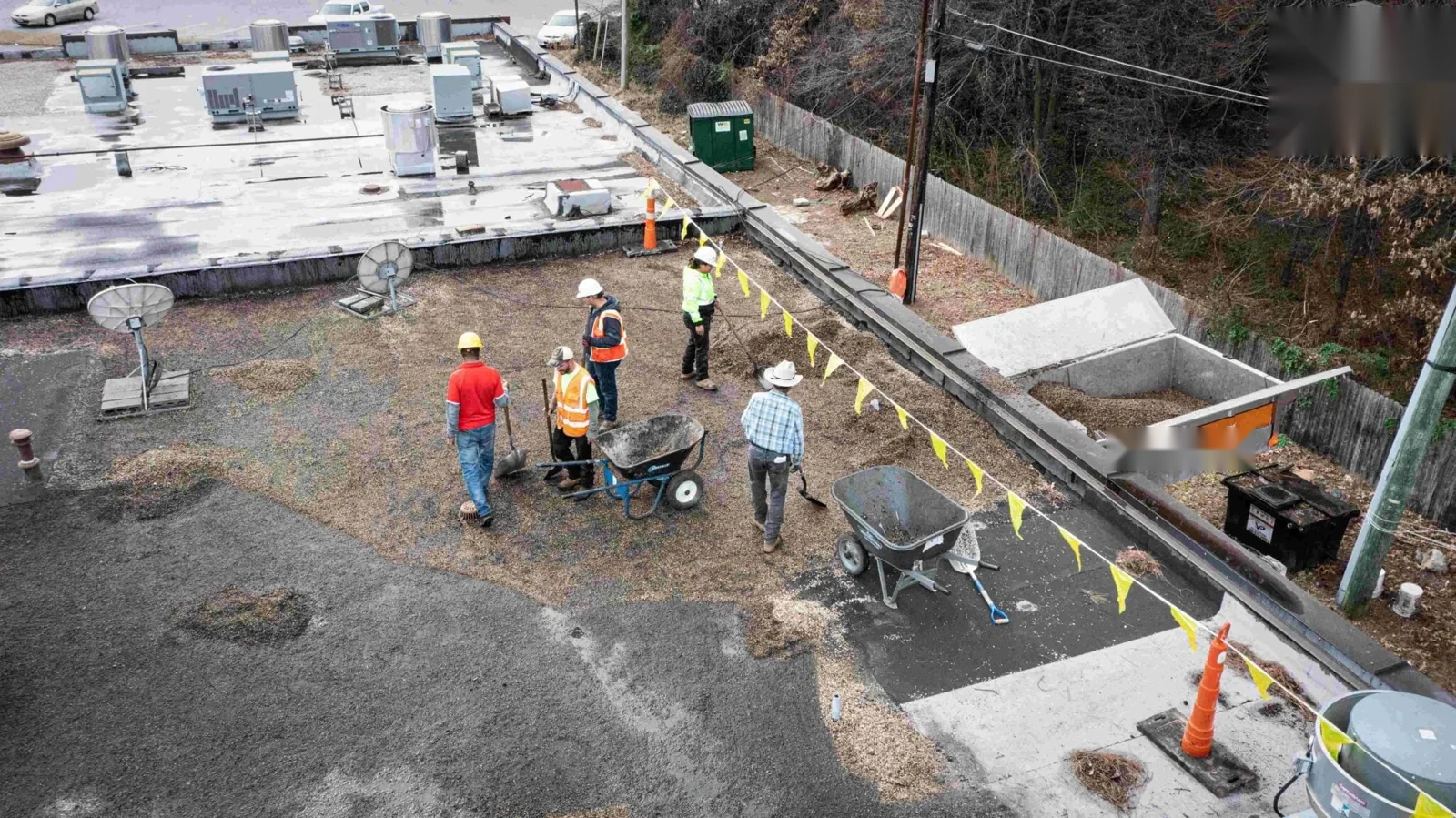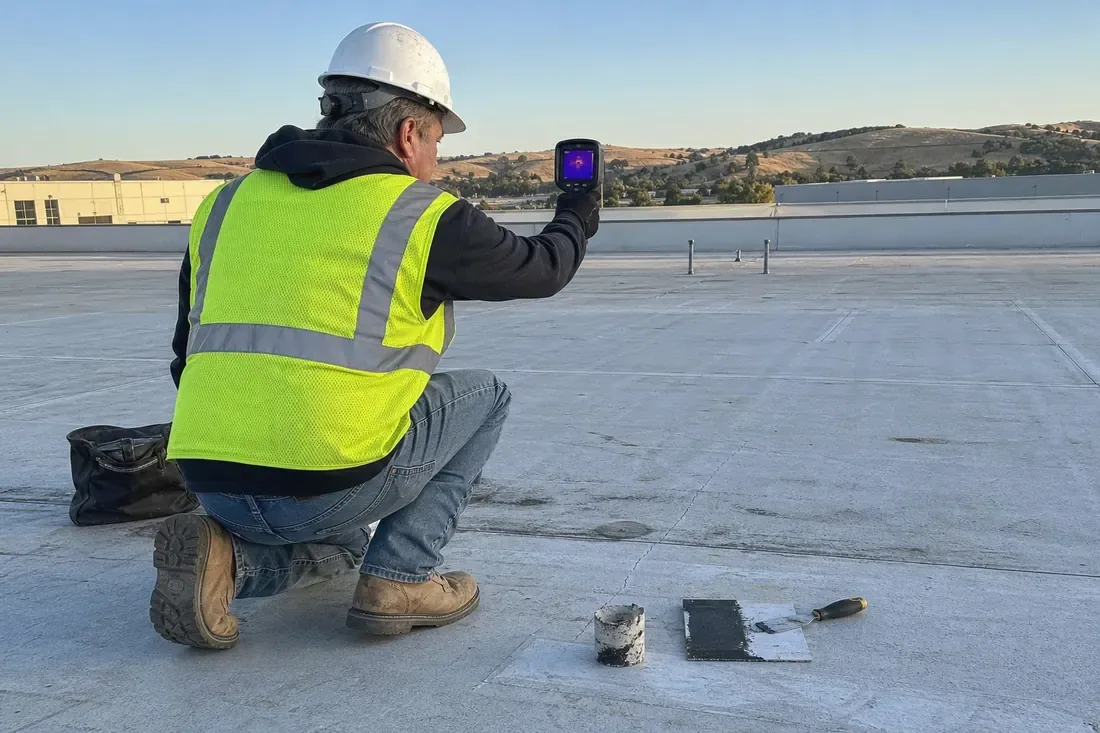
A lender's file can list a roof as serviceable while the latest repair invoice shows an unresolved leak. In Renton, WA, a due-diligence roof survey brings those records beside current field observations so a buyer or owner can see what is known before a transaction or refinancing decision. We inspect the roof itself and identify where access or testing limits the conclusion.
The survey records visible assembly clues, drainage, membrane and metal details, prior repairs and areas that may need follow-up. A commercial roof inspection establishes the field findings; a condition report preserves photos, roof-zone references and recommendations in a file the decision team can review.
Records review: reconcile plans, invoices and field details
Before the roof walk, we review available plans, maintenance logs, leak reports, repair invoices and any warranty paperwork supplied for the property. These records can describe different roof sections or dates, so we keep them tied to the area they actually cover. On site, we compare the documents with exposed edges, penetrations, seams, drains and transitions. When the assembly cannot be confirmed from records or visible details, we say what additional access or test would help.
The Renton Valley Subarea's logistics and light-manufacturing history may make loading access and equipment routes relevant to the visit. We confirm the address and site contact before documenting access conditions. A warehouse roof survey can account for receiving schedules when that use applies.
Timing drives the scope. A buyer working to a closing date may have days, not weeks, so the survey is built in layers: records and a roof walk first, then a short list of tests that the owner or seller must approve, then a cost range for the items that surfaced. Each layer is labeled so the deal team can stop at the point where the answer is good enough for the decision at hand. Roofs that cannot be reached in the window are listed by address with the reason, and the report states which findings would be reopened if access were granted later.
The survey distinguishes reported history from current condition. A manager may report a recurring leak, but the roof walk still needs to locate an opening, test area or possible water path. If work orders use different area names, we map the descriptions to roof zones that the buyer's team can follow.
Observed condition: describe the repair exposure
We note open laps, loose edge metal, split flashing, ponding, surface wear, patch buildup and visible damage by roof section. The report separates an isolated repair from a condition that appears across several areas, then explains whether moisture or deck review could change the scope. We avoid assigning a roof age or remaining life without documentation that supports it. The buyer can see which conclusions come from direct observation and which need confirmation.
Sea-Tac's wet November and December make drainage records and wet-season leak history useful during review. We inspect actual outlets and water paths. A drain and scupper inspection can document whether an obstruction, low area or damaged detail may affect the next repair decision.
The survey stays tied to the property's address, roof plan and accessible conditions, whether the building sits near Rainier-Grady Junction or in the Valley.
Scope boundary: show what was and was not checked
A due-diligence visit has a defined access window and a specific scope. We list the areas walked, the features observed, and any roof section kept out of reach by a locked hatch, active equipment, weather or safety condition. If moisture testing would affect the recommendation, we identify the proposed area and need for approval before an opening. That makes the limits visible to a buyer reviewing the report after the inspection date.
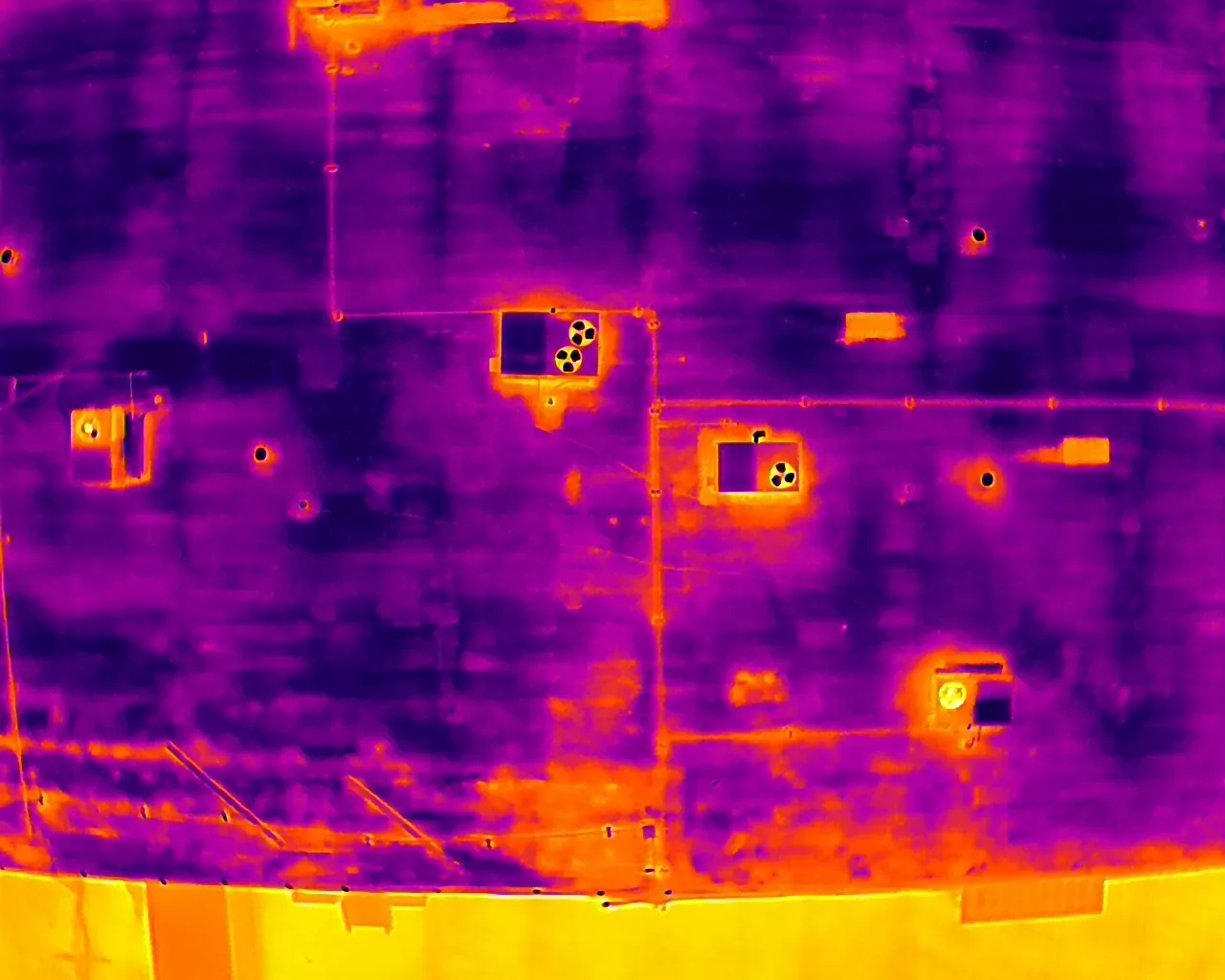
A moisture survey may help direct further review, but its results should be read with the roof assembly and field observations. A TPO system assessment can examine seams and repair compatibility when the installed assembly is confirmed. Other systems need their own details; a survey does not infer TPO from color or a previous marketing description.
A property in the Southcenter area of Tukwila sits among retail, office, lodging, warehouse, distribution and light-industrial uses. We record actual access, occupied areas and service routes at the subject property so the buyer can judge how roof work might be coordinated.
Decision uses: separate immediate repair from future work
The findings can support a short-term repair list, a request for further testing or a capital discussion. We state the roof area, evidence and access needed for each action, then distinguish a condition that may expose interior space from routine wear that can be scheduled. A capital planning review can carry the survey findings into a longer project conversation, while a roof asset record can keep them with the property's future inspection history.
Lenders and insurers read the same report differently. A lender cares whether a roof will need capital within the loan term, and an insurer cares whether a visible condition could become a claim, so the report keeps observed condition, which comes from the roof, apart from any remaining-life opinion, which needs records we may not have.
Where a leak is active, temporary protection may be needed while the buyer and seller coordinate responsibility. We document that measure separately from permanent repair. If a field repair is appropriate, the proposal should specify preparation, material compatibility and the boundary of work; if the assembly or moisture condition is unresolved, the report identifies the information needed before a firm scope.
For an office property near Downtown Renton, a roof survey is based on the subject address and the documents supplied for review.
Handoff: give the transaction team a clear file
The report should make its date and scope easy to find, with roof-zone references, photos, supplied records, observed conditions and recommended follow-up together. We identify the contact who can approve another visit or test and note any weather or access condition that could change the reading. The owner can then compare the survey with later invoices and decide whether a new inspection is needed before work begins.
Send the Renton address, roof plans, repair history, leak reports and transaction timing. We will inspect approved areas, document visible conditions and explain the repair, test or capital steps supported by the roof evidence. Emergency response remains available around the clock if the property has active water entry that needs prompt stabilization.
Commercial Roofing Questions
What does a roof survey for a commercial acquisition cover?
We review available records, inspect accessible roof areas and document drainage, membrane, metal and penetration conditions. The report states its date, scope, limits and any test needed before a broader conclusion.
Can the survey estimate the remaining life of a roof?
We can explain the observed condition and available history, but a remaining-life conclusion needs records and field evidence that support it. We identify what is known and any gap that would affect that discussion.
How should a buyer handle a leak reported before closing?
We record the reported area and inspect the roof features that could connect to it. The findings can identify a repair or follow-up test, while any responsibility or contract decision remains with the transaction parties.
Will the survey include areas that cannot be accessed?
We name those sections and the access limit instead of treating them as inspected. If another visit or approval is needed, the report explains how that affects the scope.
Can the survey help with refinancing documentation?
A dated report can give the owner and lender a record of observed conditions, repairs and follow-up needs. We tailor the inspection scope to the requested review and state what the roof walk did not establish.