A damp ceiling tile near a classroom can send a facilities lead looking at the nearest roof drain, but the water may have crossed a seam or curb before it reached that room. In Renton, WA, we trace the report back through the roof route, noting the membrane laps, pipe boots, skylight edges and metal turns that could explain it. Sea-Tac normals record far more rain in November and December than July, a regional wet-season signal, and the inspection records the school roof's own condition directly.

School work has to fit the people using the rooms below. A roof walk may involve classroom wings, a gym, cafeteria, offices or a library, each with a different access contact and schedule. We mark what can be inspected, what must stay in service and which finding needs a repair, test or follow-up. The result gives the district a sequence it can review before a crew is scheduled.
Calendar: choose a useful school window
Set a school roof visit around access and condition, not a date copied from an old work order. We review plans, leak reports and prior patches, then agree on the route with the facilities contact. If rooms are occupied, the scope needs clear boundaries for roof hatches, ladders and work areas. A commercial roof inspection lists the sections reached and flags what needs a closer look.
The Renton Valley Subarea has long hosted logistics and light manufacturing, so a school roof near it can share delivery lanes and restricted doors with industrial neighbors. We ask where the lanes, restricted doors and safe staging are, and record those limits instead of assuming an open route.
Sea-Tac's late-year precipitation pattern makes a pre-wet-season look at drains and old repairs useful. The school's own records determine which roof areas need attention first.
Drain route: find where water slows
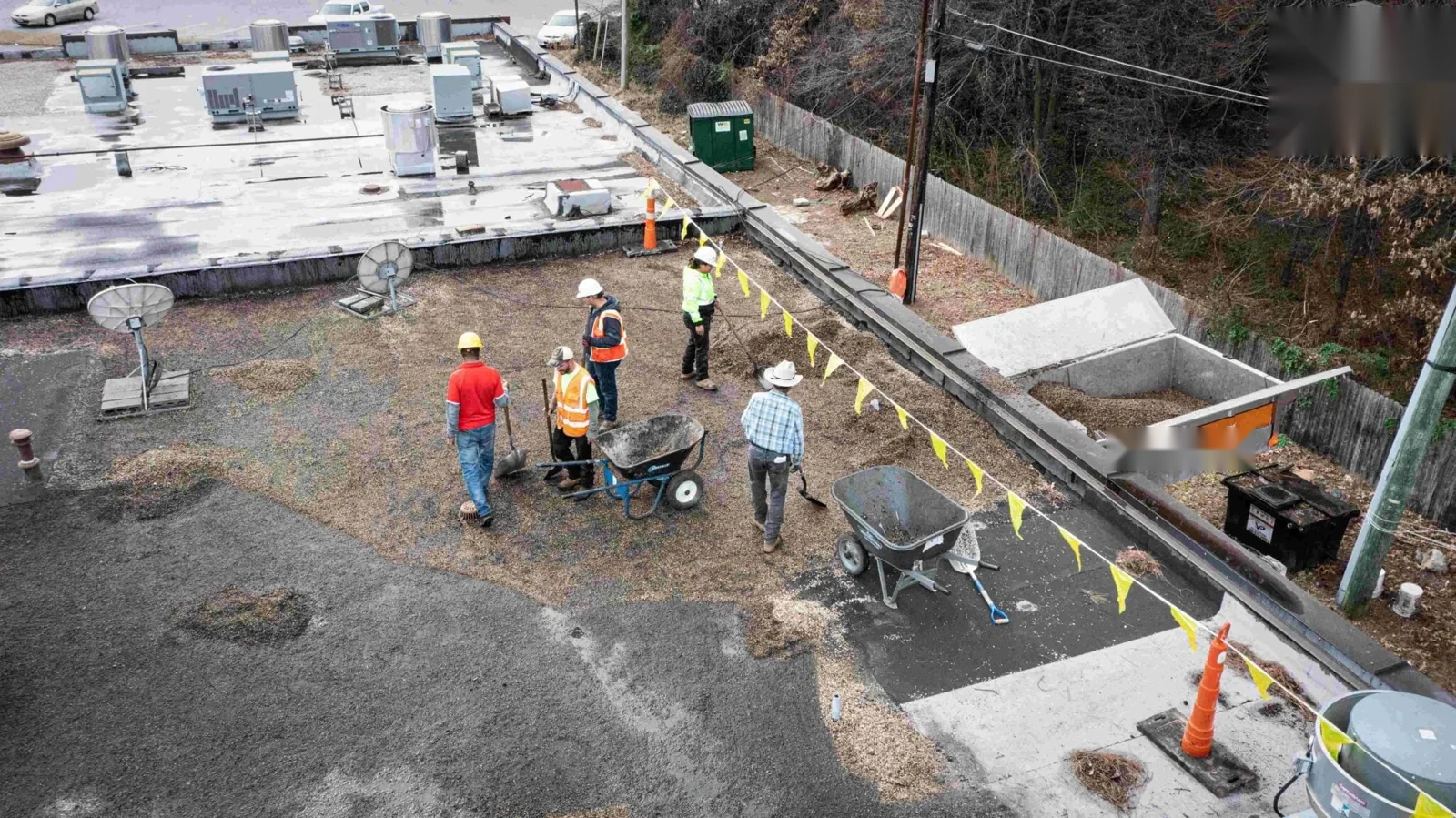
Leaves, gravel or roofing scraps can slow a drain. A low area may hold water even after the bowl is clear. We inspect the strainer, ring, nearby membrane and overflow route, then follow the slope to the next outlet. A classroom leak report can be far from the roof opening, so we compare the room with seams, curbs and penetrations along the water path. The drain and scupper review records what is blocked, damaged or beyond the accessible area.
Clearing an outlet does not close an open lap, and a membrane repair does not change slope. We keep those conditions separate so the district can weigh a local repair against a broader correction. If a stain follows rain, its room and date belong in the notes beside what was visible above; neither detail proves the full path alone.
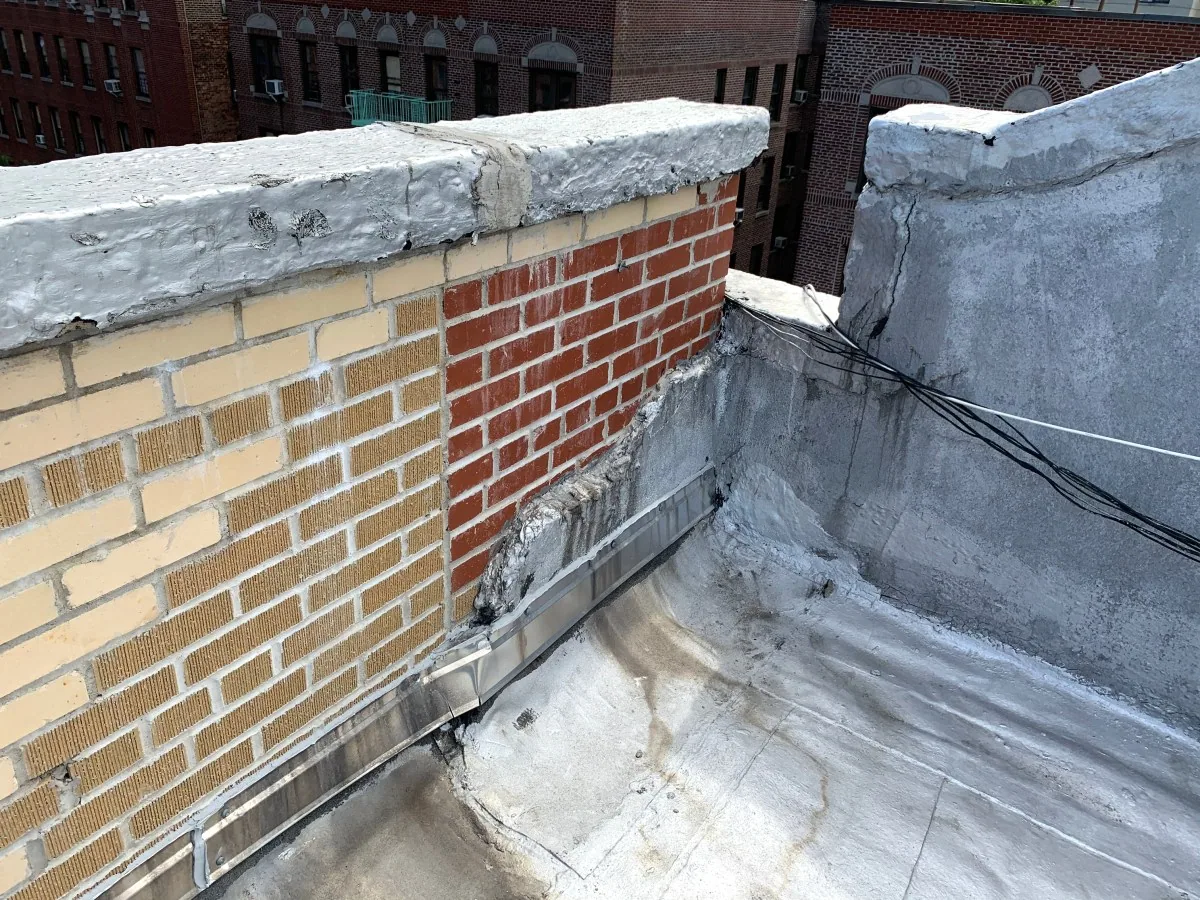
A school near Downtown Renton has no standard roof assembly either; plans, observed details and approved tests identify it. A suspected split near a wall or curb may need a flashing repair assessment that reaches sound membrane.
Room schedule: protect the work below
Work over active classrooms can be phased by wing, entry or use. We coordinate the work area, material route and roof access with the building contact. If a room must stay quiet or a kitchen exhaust cannot stop, that limit belongs in the sequence. Repairs during the term may still be possible when the staging and communication plan fits the school day.
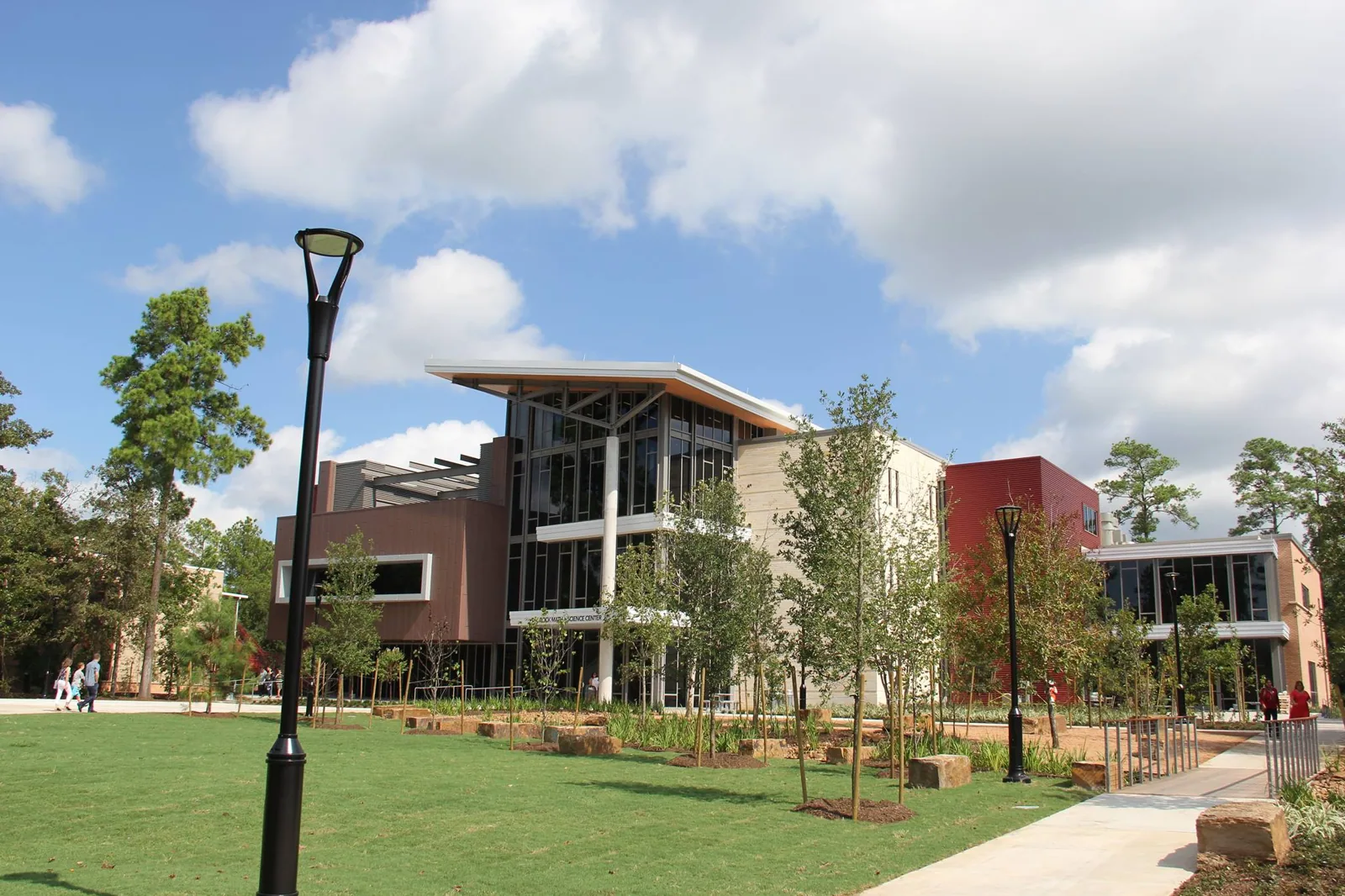
Noise, odors and debris control vary by method. We identify preparation, staging and weather requirements, then tell the contact which roof section is active. A built-up roof review can identify a layered assembly; a TPO assessment examines sheet seams. Neither system should be inferred from the room below. For a separate college building with different hours and roof access, a college roof review can account for that operating pattern.
A larger scope can be split so the school retains access to other roof areas. We mark where each phase ends, what stays protected below and what must be checked before work moves on. The district can compare that sequence with its own summer or closure calendar.
Roof details: inspect the interruptions
Vent stacks, exhaust curbs, skylights, conduit supports and parapet turns break up the roof field. Each transition needs compatible flashing and attachment to the surrounding surface. We check open corners, lifted seams, moving sealant and patches that stop short of sound material. A roof plan connects each finding to a wing or room for the next facilities shift.
Additions may come from different periods, but records or field confirmation must identify a particular roof's age and assembly. A visible coating does not show every layer below. If moisture or deck condition could change the scope, we explain the test and request approval before an opening. An office wing may also have a different occupancy pattern; an office building roof review can address that use without assuming the school has the same hours.
Gym and cafeteria roofs have long spans and tall walls, so their parapets and wall flashings are longer runs than a classroom wing has, and the rooftop units for those rooms are larger. We walk those runs end to end, because a short open section at a wall can feed a leak that shows up in the middle of a floor. Where the district keeps maintenance logs, we compare the dates of past leak calls with the wing so a repeat at the same wall is recognized as a repeat.
After wind or fallen material, we check for an opened seam, moved edge metal or damaged curb. We photograph the condition, separate the reported event from what the roof shows and set a repair line that reaches sound surfaces. A storm assessment can organize those findings for district review.
Repair record: give the district a clear choice
A school roof record separates water entry from wear that can be scheduled. Each item names the roof area, observed condition and next action. Photos need enough context for staff to find the curb, drain or wall transition. If an area could not be reached, we say so plainly rather than counting it as inspected.
Renton's economy rests on professional services, healthcare, advanced manufacturing and logistics, and the city is considering office, residential and healthcare uses in the Valley alongside industrial activity. A district budgeting capital years should plan from each building's own assembly and timing.
Send the Renton address, roof plans, leak locations, repair notes and a workable school access window. We will walk the approved areas, explain what we observed and identify any test needed before the scope is set. If a leak needs prompt attention, we coordinate the response with the building contact.
Commercial Roofing Questions
Can the inspection be scheduled while classes are in session?
We plan the route with the facilities contact around room schedules, restricted doors and active areas. The record separates sections reached from anything inaccessible.
What roof information helps before a school repair is priced?
Roof plans, addition dates, repair notes and the room where water appeared help us match the report to a section. If records do not identify the assembly, we explain the field check that could settle it.
How do you handle a leak above a classroom or library?
We note the room and staff report, then inspect the roof route and nearby transitions. Water can travel before reaching a ceiling, so the room is a clue, not a confirmed entry point.
Can roof work be divided by school wing?
We divide the scope by access, assembly and schedule, marking phase boundaries and protections below. The district can compare that sequence with a summer or closure window.
Does the wet season change what should be checked first?
Sea-Tac normals show heavier November and December precipitation than July. That regional signal can inform timing; the school's observed roof conditions set the repair priority.