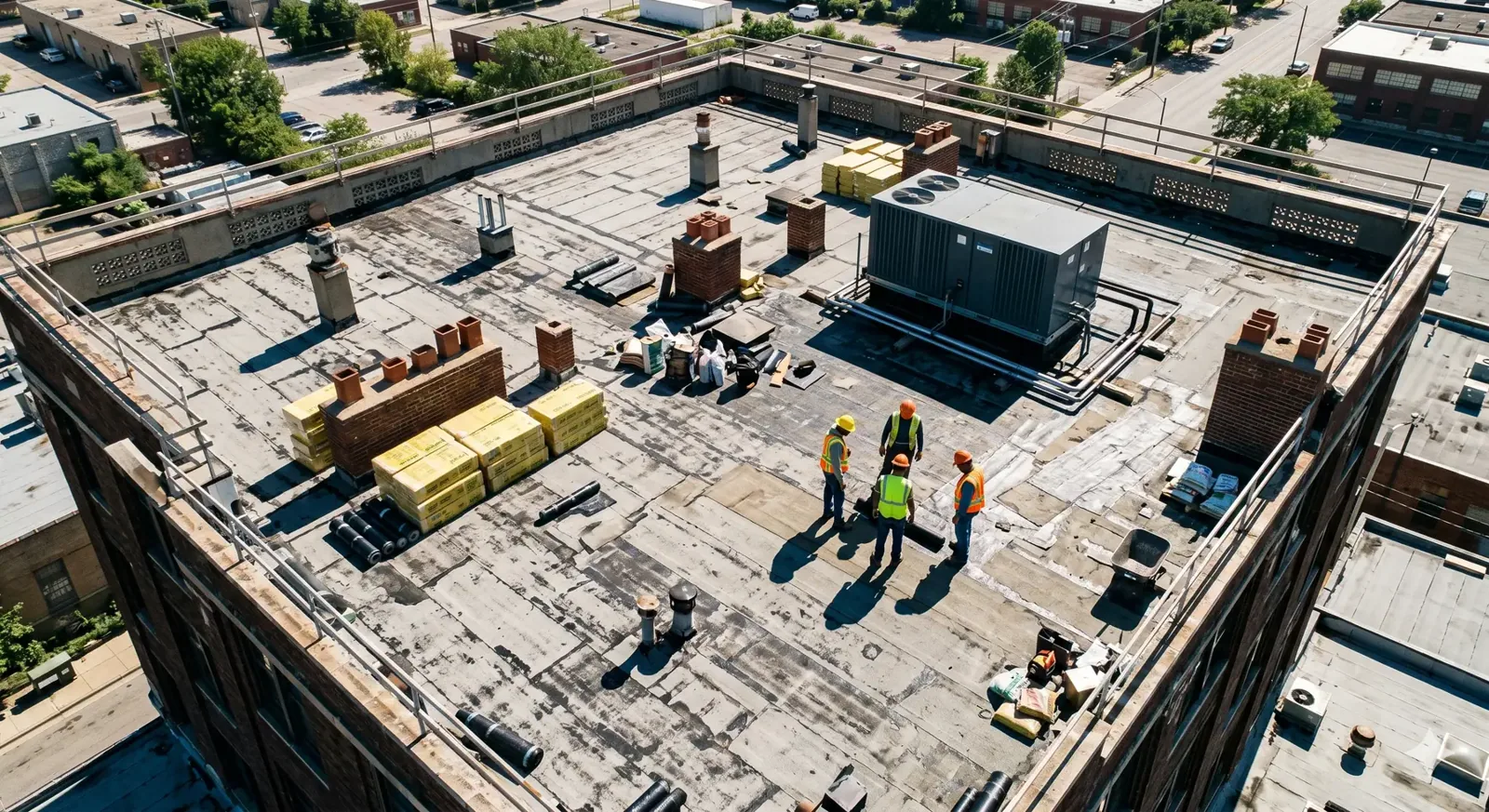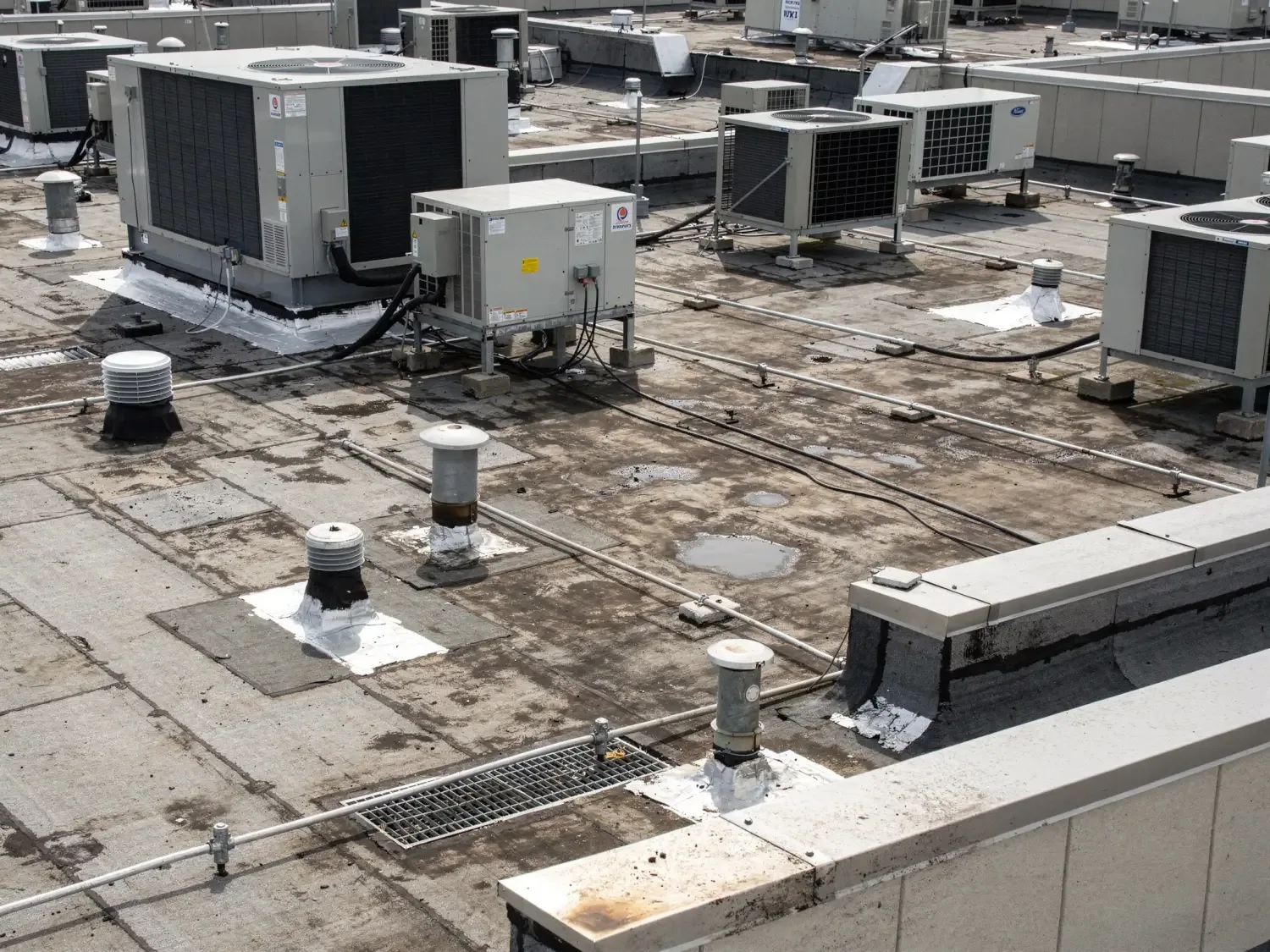

A loose flashing corner can send water along a roof edge before it shows on a ceiling. In Talbot, we begin at the interior mark and check the nearby lap, curb and outlet, then note which detail could carry water to that room. Talbot is one of Renton's named community planning areas. That boundary gives a useful neighborhood reference, but it does not mean every parcel has a commercial use or the same roof. We confirm the specific property, its roof records and access conditions before setting a repair line.

Renton's land-use map separates categories such as commercial neighborhood, commercial arterial, center-village, employment and industrial. Those labels belong to parcels, not to Talbot as a whole, so we verify zoning or use only when it affects the project. A commercial roof inspection focuses on the assembly, seams, flashing and drainage that can be seen at the building, then identifies what needs repair and what remains uncertain.
Parcel check: do not assume the use
A neighborhood name cannot identify a roof's system or the operation below it. Renton's land-use map distinguishes multiple categories across the city, including commercial, employment and industrial designations. We treat that as a reason to confirm the parcel and owner contact rather than apply a citywide label to one building. The inspection records the actual equipment, membrane and safe roof path visible at the property.
Healthcare accounts for more than 22 percent of Renton's jobs, which adds institutional and service properties to the south-city market. If an occupied property requires escorted access or protected entrances, the manager sets those conditions before our walk, and we document the approved routes.
Water path: trace the stain to a roof detail
Water at an interior joint can come from a curb or seam that is not directly overhead. We inspect the nearest roof penetrations, follow the low path toward a drain and look for patches or raised laps that interrupt the route. A drain that clears slowly and a membrane split near it may need separate work. We photograph both conditions so the owner can compare a detail repair, drain correction or test against the cause we can confirm.
Sea-Tac normals show late fall and early winter notably wetter than July. Where access and weather permit, checking the water path before that period can expose a restricted outlet or an open lap while repairs remain straightforward to plan. A drain and scupper inspection helps separate an outlet issue from a seam failure.
Flashing: check the turn, corner and termination
At a roof curb or wall, the membrane turns upward and meets metal or another flashing detail. We check for a split corner, loose termination, open lap or sealant that has released, then inspect whether the substrate is stable and dry. A patch needs a clean, compatible surface. If the roof has shifted or moisture extends beyond the visible opening, the repair boundary may need a test before more material is removed.
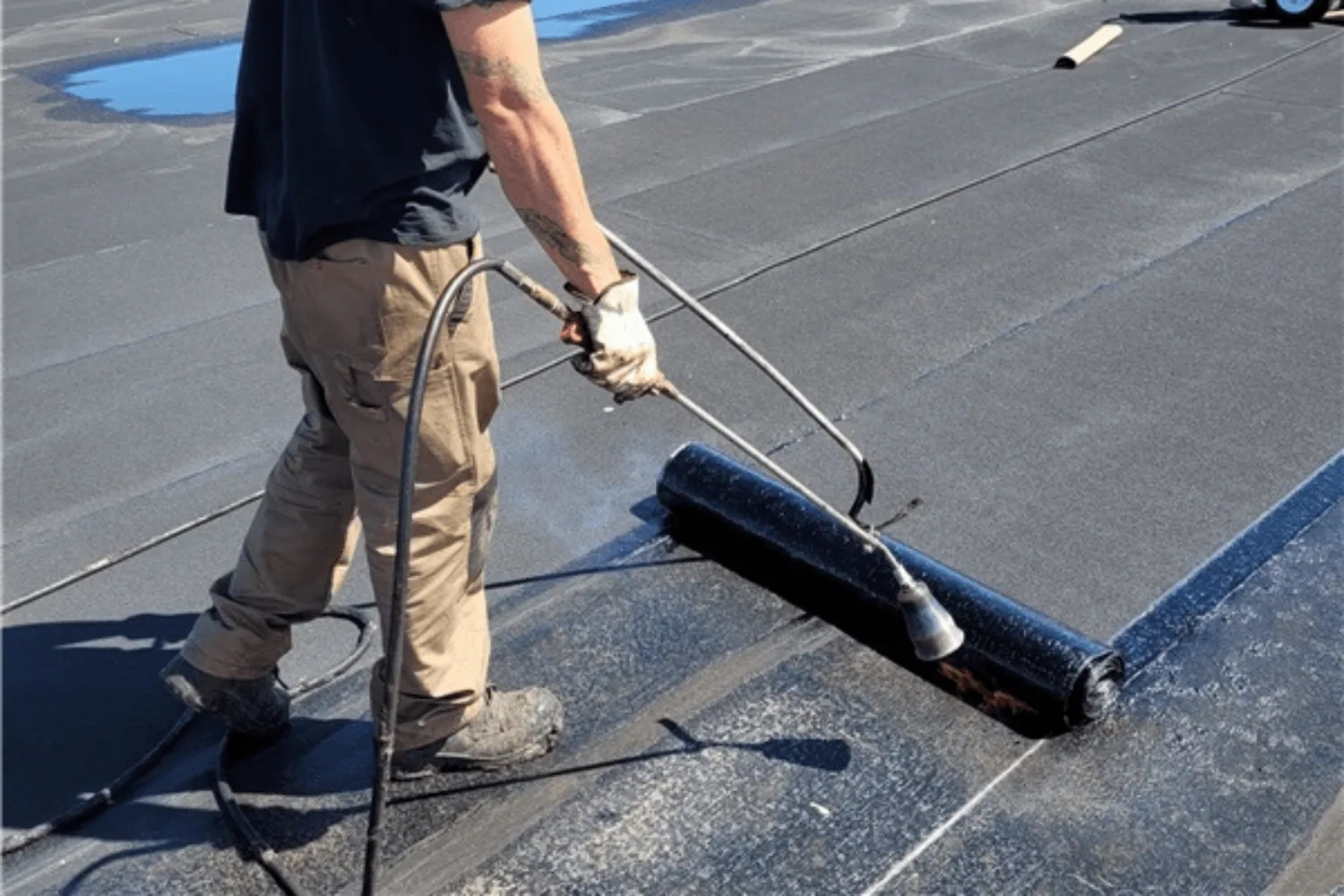
The system matters when selecting that patch. A welded TPO detail, an EPDM seam and a coated surface require different preparation and materials. We review records, confirm the visible assembly and state any uncertainty instead of choosing by appearance. If the roof includes a TPO membrane, the estimate can describe seam preparation and the field patch separately. This makes it easier to compare a small repair with a broader replacement when the roof's condition warrants both.
The mix of commercial neighborhood, commercial arterial and center-village categories on Renton's map means small buildings with a few rooftop units may sit beside larger ones, and the right repair differs. On a small roof, one failed boot can be the whole story; on a larger one, it can be the first of several. We count similar details on the same roof and report them as a group, so a repair crew does not return three times for the same kind of failure.
Repair scope: identify the limit and the unknown
A short opening surrounded by bonded, dry material may support a local repair. Several loose seams, repeated leaks or wet insulation can move the scope beyond that point. We mark what was observed, state the proposed repair boundary and list testing or concealed-condition allowances separately. If testing could change the removal area, the owner can decide whether to authorize it before approving a larger number of square feet.
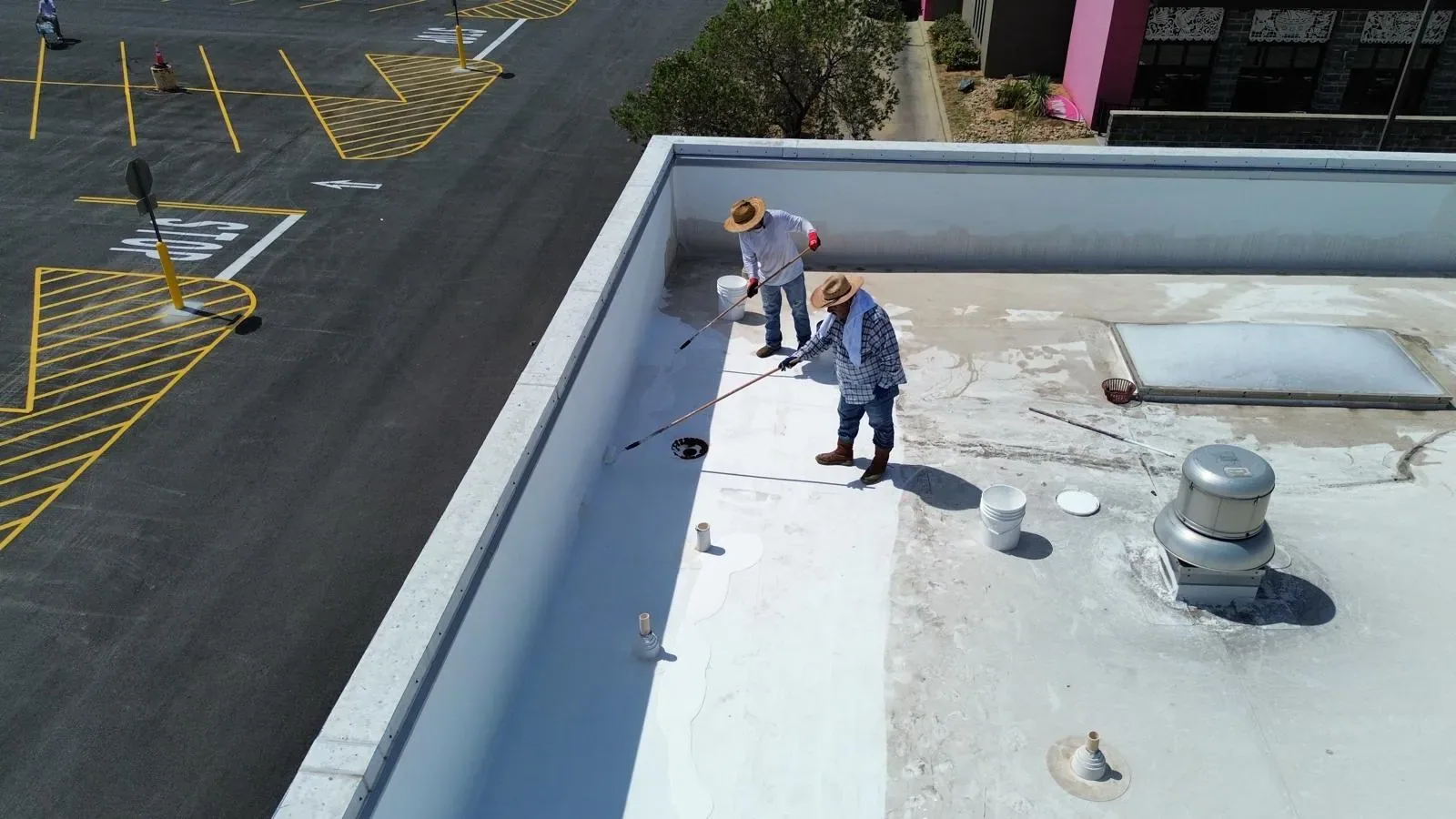
A coating or recover depends on secure attachment, acceptable adhesion and a substrate that can support the new work. It is not a way to cover moisture or loose metal. We can compare a defined repair with restoration once those conditions are checked. Where replacement is a real option, the replacement estimate should identify tear-off, disposal, insulation and access costs, not hide them in a single line.
Coordination: set the roof access window
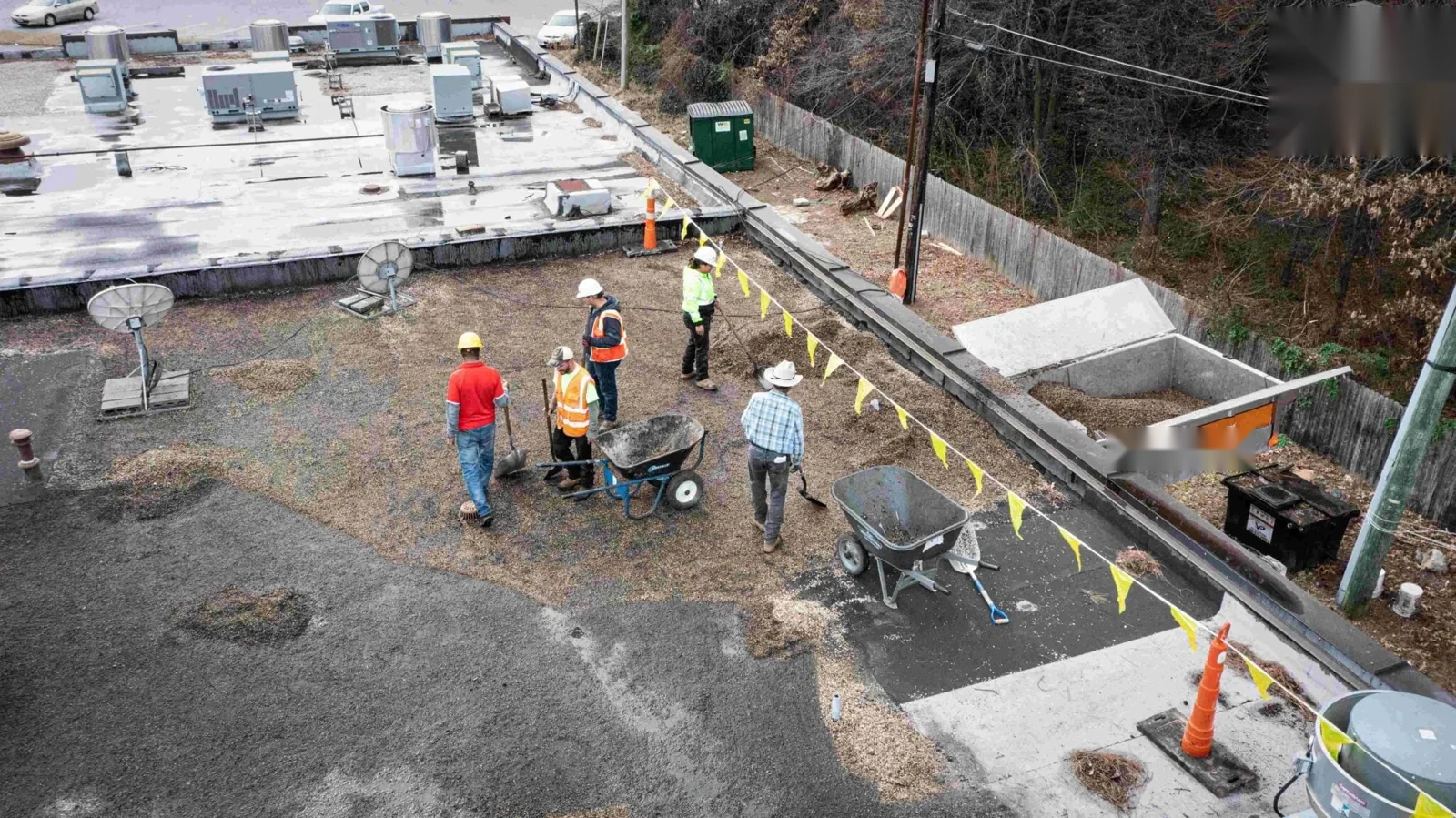
Before we schedule a walk, the property contact confirms roof entry, safety requirements, staging and the areas that need to stay open. Those details can affect the time needed for a repair, particularly where equipment service or tenant activity shares the route. We document any hatch condition, restricted zone or material movement that changes the work plan. If the property remains occupied, a phased occupied-building approach keeps access and communication in the scope.
Weather affects cleaning, welding and cure time. A damp surface or uncertain moisture boundary may postpone permanent work even when temporary water control can happen sooner. We tell the owner which step is ready, what condition needs to change and whether a follow-up test is required. That sequence is coordinated with the building's actual operations.
Roof record: keep parcel facts separate from repair facts
The service record links each photo to a roof location, observed condition and next action. We note the seam, outlet, metal corner or suspected moisture area, along with any test that would move the repair line. The owner can compare those findings with warranty papers, previous service records and available drawings. If the map category or building use differs from the roof record, we document the distinction instead of treating one as proof of the other.
An owner with another building in Fairwood or Renton Highlands gets a separate walk for each. For Talbot, share the address, water location, roof history and a workable access window. We can inspect the visible assembly, define the repair line and explain what additional information would change the recommendation.
Commercial Roofing Questions
Does the Talbot planning-area label mean a property is commercial?
No. Renton's map uses multiple parcel categories across the city. We verify the individual property and its operation instead of applying one land-use description to every building in the area.
Can a leak in one room come from a seam farther away?
Water can travel under a membrane or along the deck before appearing inside. We trace the route toward nearby laps, curbs and outlets, then note whether testing could narrow the repair boundary.
How does an unknown roof system affect the repair estimate?
We identify the membrane from records and visible details before choosing a patch. If compatibility or substrate condition remains uncertain, the estimate can separate a test from confirmed repair work.
When is a drain repair separate from a membrane repair?
A blocked or damaged outlet has a different cause from a split lap beside it. We photograph each condition and price both only when each is confirmed as part of the water path.
What should a property contact provide before the roof walk?
The access instructions, a contact who can approve entry, the reported leak location and prior repair notes help us prepare. We confirm the route and safety requirements before setting the inspection window.