Water coming through the ceiling of a busy commercial space can interrupt more than the room where it appears. In SeaTac’s International Boulevard area, we start with the reported stain, then follow the likely water path across the roof to its drain, seam, curb or edge. We confirm the property location and access details before setting an inspection route. SeaTac Central is a broad planning area along International Boulevard and nearby neighborhoods; it excludes the airport, so we focus on commercial properties in the surrounding district rather than an operating facility.

At the first visit, we document what is visible, ask about prior repairs and separate confirmed damage from areas that need testing. That keeps a small repair from absorbing unrelated work and gives an owner a clear next decision. We can coordinate an inspection, targeted repair or larger evaluation after seeing the assembly and operating conditions at the property.
Corridor use: shops, restaurants, apartments and airport-serving businesses
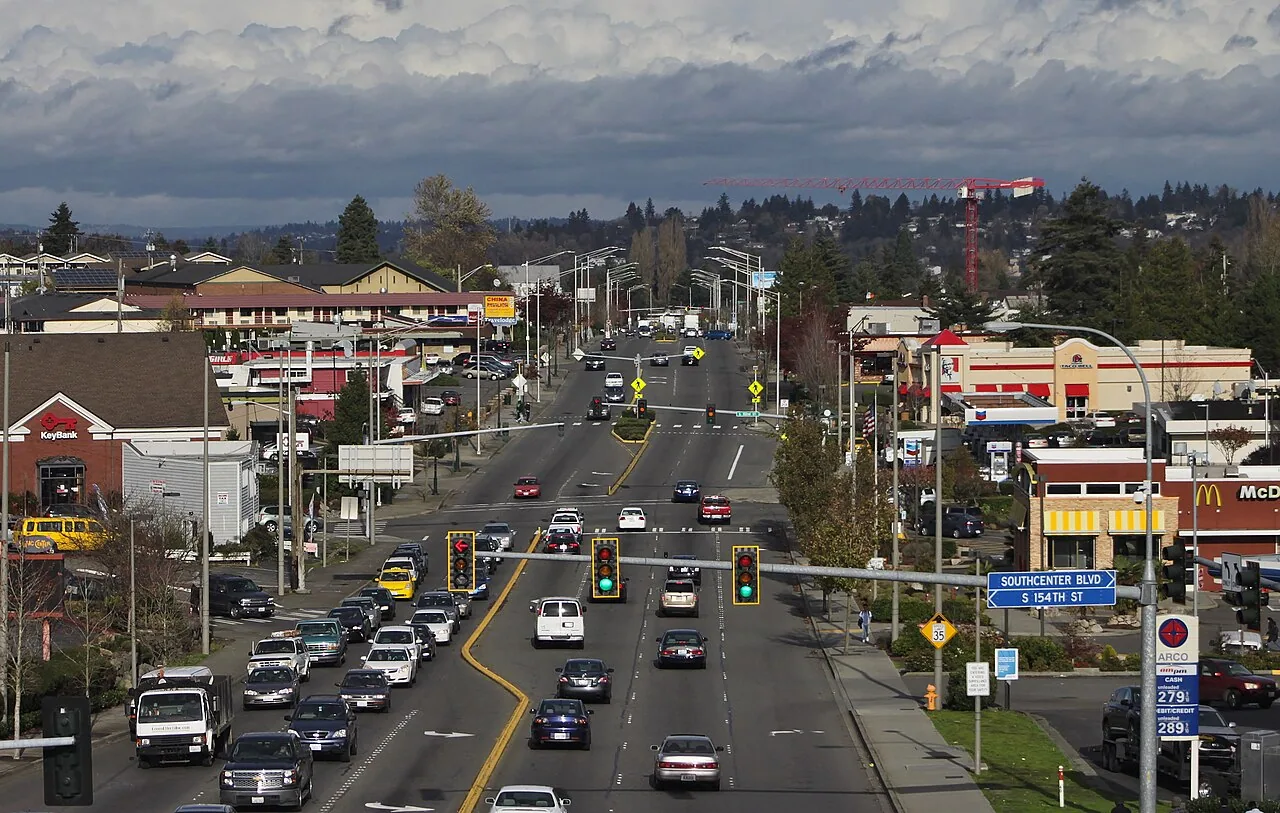
SeaTac identifies shops, restaurants, airport-serving businesses, apartment households, workers and visitors as part of the Central area's planning community, so roofs along International Boulevard sit over very different occupants and schedules. The membrane, insulation and condition above a particular tenant space are verified on site.
SeaTac is preparing an updated subarea plan from its Global Green preferred scenario, which combines mixed uses, walkable streets, public spaces and transit connections and remains guidance. For an owner weighing a rooftop alteration, we first identify the existing assembly and the proposed change, then flag which questions belong with the design professional or permitting authority. A roofing estimate should make that boundary clear.
Water path: trace beyond the interior mark
A ceiling stain is a starting point, not proof that the opening sits directly above it. Water can travel along a deck, insulation joint or framing before it becomes visible. We compare the reported location with roof slopes, drains, seams and penetrations, then record plausible paths instead of naming a cause before inspection. If several areas appear wet, we map them separately.
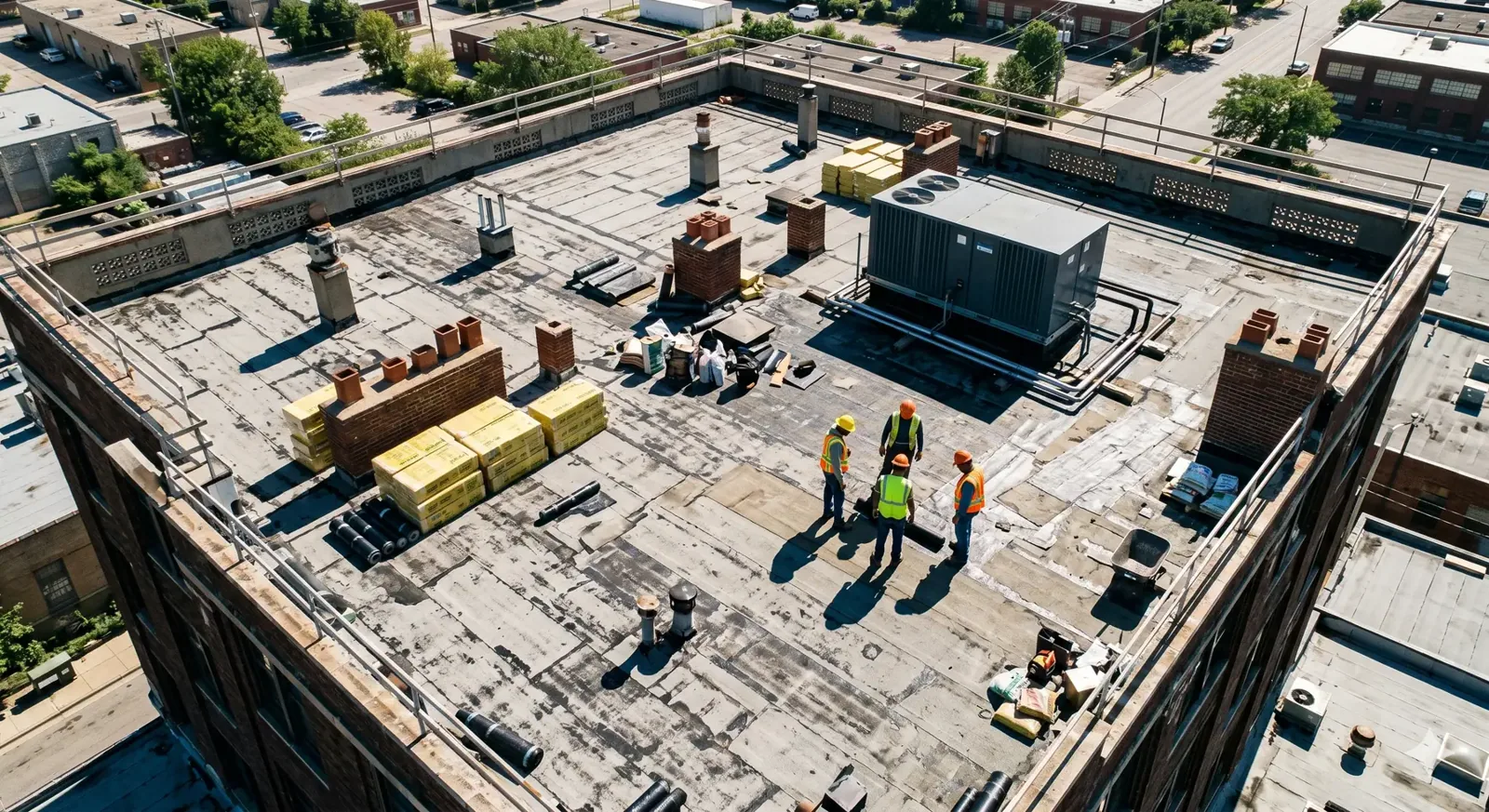
Drainage checks include the bowl, strainer, clamping detail and membrane tie-in. At a scupper, we look through the throat and along the surrounding flashing. We also note ponding, debris, displaced materials and any obstruction that could change runoff. The inspection may show a clear repair boundary, or it may point to moisture testing before the owner authorizes a broader opening. Photographs and measurements help distinguish those outcomes and keep the written scope tied to observed conditions.
Transitions: inspect seams, curbs and edges
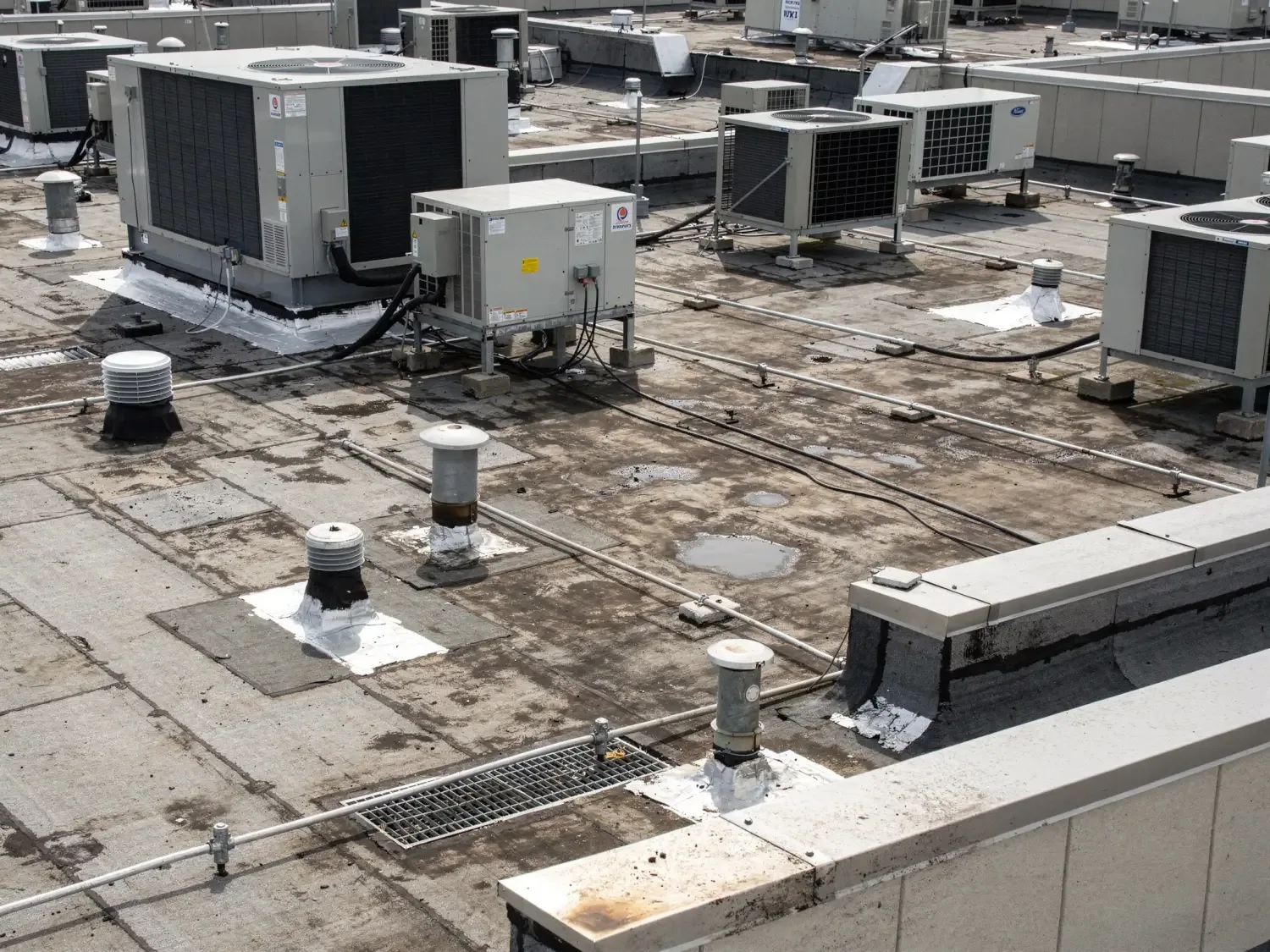
Changes in plane deserve careful attention because membrane, flashing and metal must work as one water-shedding assembly. We check corners for splits, look for open laps and inspect whether a termination remains secure at walls and curbs. At rooftop equipment, the details around supports and service clearances matter as much as the field membrane. We note movement, incompatible sealant, corrosion or a patch that bridges a joint without correcting its cause.
Where an edge is involved, we follow the metal back to its cleat or termination and check the transition into the field. A repair may require cleaning and a compatible patch, replacement of a loose detail, or a test opening if concealed moisture is plausible. We photograph each condition and explain what the evidence supports. If the roof is dry and stable around a single defect, the work can remain focused; if separation repeats across several transitions, the evaluation should account for that pattern.
Restaurants and airport-serving businesses along the corridor run kitchen exhaust, walk-in refrigeration and large rooftop units, all of which put curbs and condensate lines on the roof. We check where a condensate line discharges onto the membrane, because a constant drip wears a spot in the sheet long before it leaks, and we note any line that should be extended to a drain.
Repair options: price known work separately
A targeted repair can make sense when the defect has a defined edge and the surrounding membrane remains sound. Widespread seam failure, repeated water entry or wet insulation may point to a larger corrective area. We describe the limits of each option and identify the observations that could change the recommendation. That gives the owner a useful comparison instead of a patch price described as a confirmed outcome.
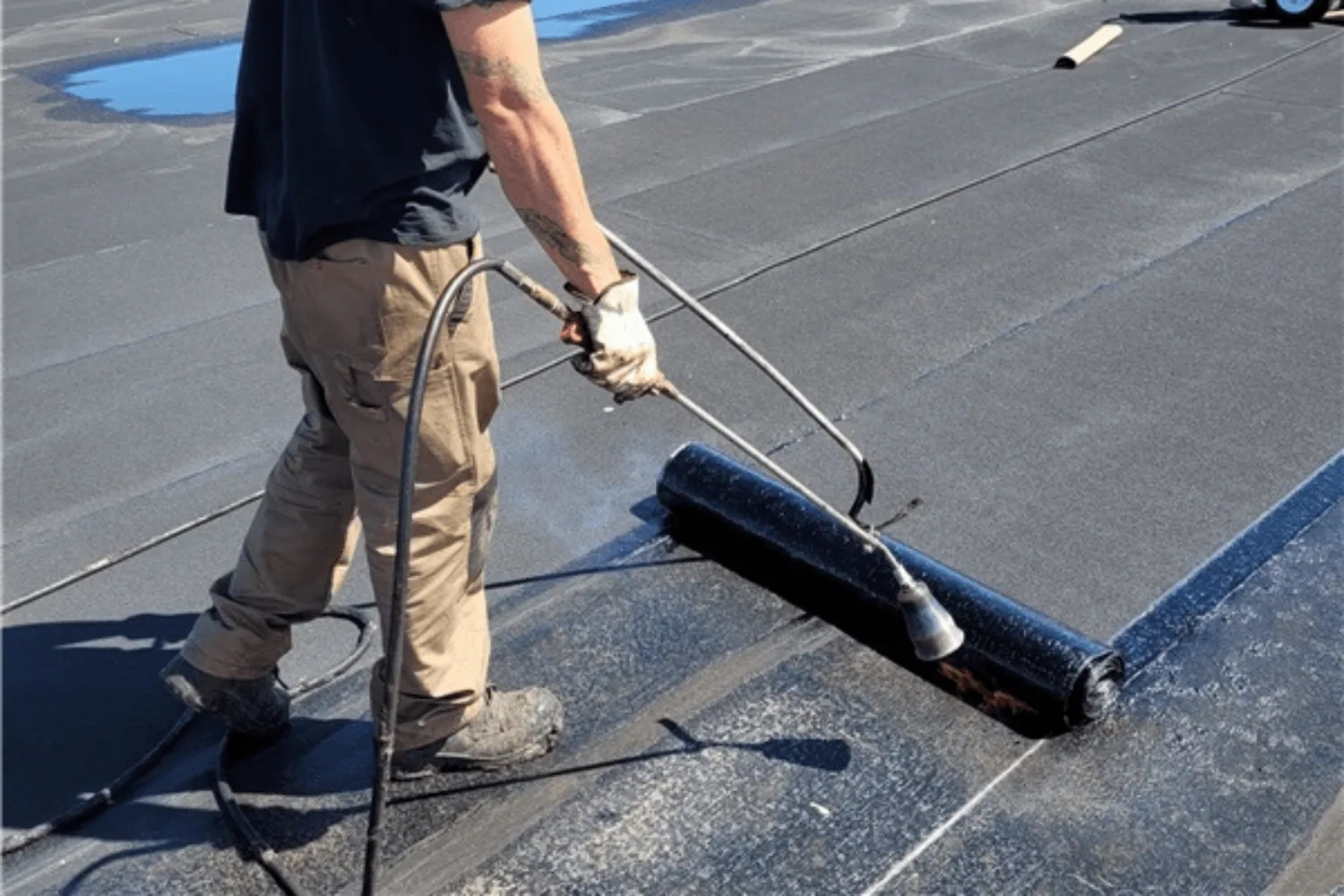
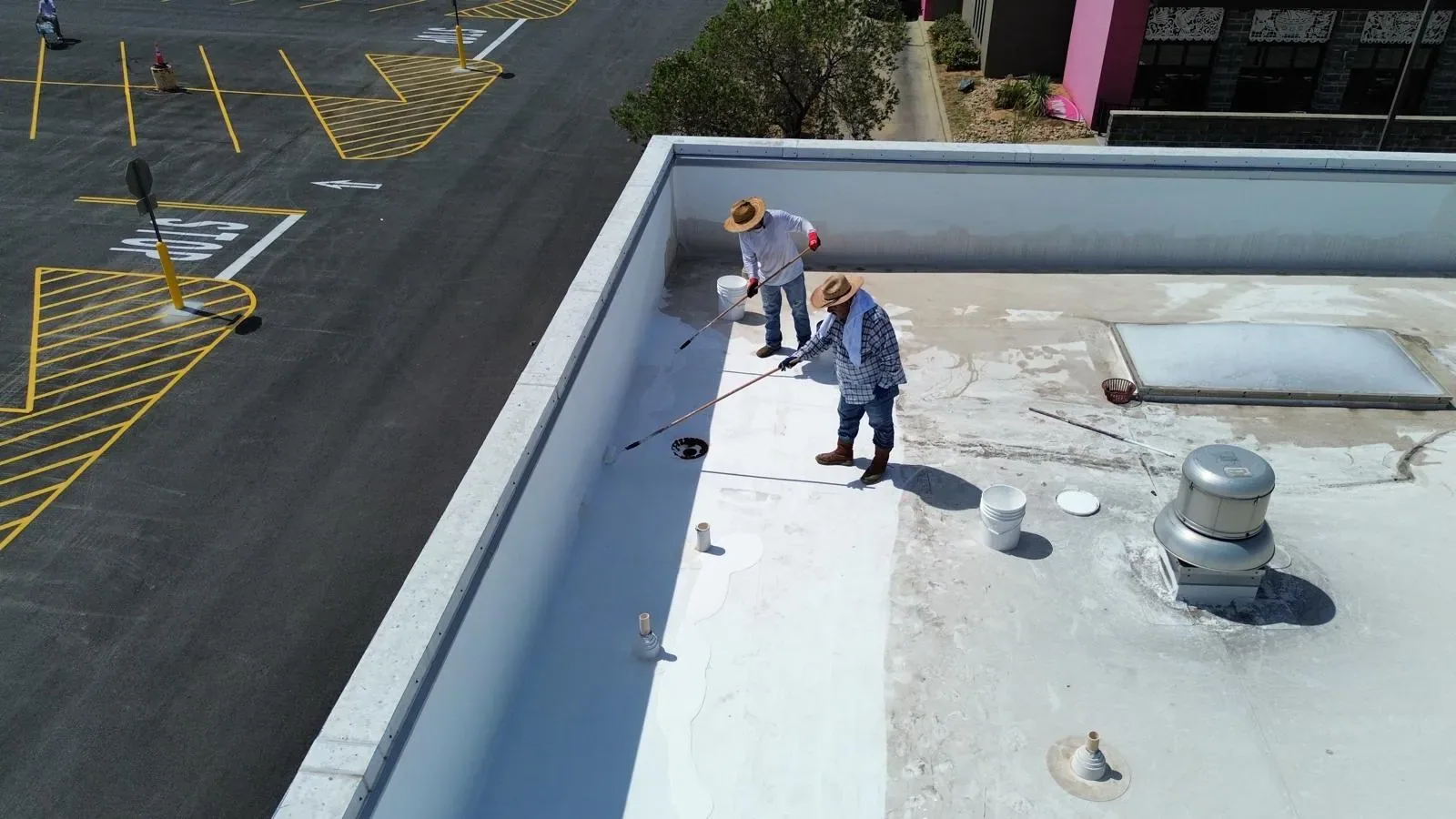
For an older assembly, a coating or recover should follow a condition review, adhesion checks and confirmation that the substrate can support the proposed system. Replacement planning adds tear-off, insulation, edge metal, drainage and access decisions. The same property-level inspection applies whether work is a small service call or a phased project. Related options include targeted commercial roof repair, roof restoration and commercial roof replacement.
Access: protect business operations during the visit
Before arrival, we confirm the approved entry point, roof access method, escort requirements and areas that must remain clear. At an individual property, the owner or manager tells us which routes and hours are workable. We do not assume that a public street or neighboring lot provides roof access.
For an occupied building, the inspection plan should account for interior protection, noise, equipment shutdowns and safe movement around rooftop units. If a test cut is appropriate, we explain its location, closure method and reason before proceeding. A repair schedule can then separate inspection, material lead time and installation rather than promising a date before access and scope are confirmed. An owner with another building in Tukwila Southcenter or Des Moines downtown and waterfront gets a separate review for each.
Closeout: leave a record the next decision can use
A useful roof record connects each photograph to a location, observed detail and recommended next step. We note the reported interior symptom, the route inspected and whether the repair line is supported by visible conditions or further testing. If a prior patch is present, we record its material and relationship to the surrounding membrane when those details can be confirmed. Unknown conditions stay labeled as unknown.
After work, the owner should have a concise description of completed areas, materials used and any remaining monitoring item. For a broader repair or replacement, that history helps the next reviewer understand what changed and why. Request a commercial roof inspection, a drain and scupper review or a phased occupied-building plan. We will confirm the property, inspect the relevant details and explain a scope that follows the evidence.
Commercial Roofing Questions
Do you work on roofs near the airport?
We work on commercial properties along International Boulevard and the adjacent neighborhoods. The airport itself is outside SeaTac's central plan area and is not a service target, so the visit starts from the address and the roof in front of us.
Does Global Green determine which roof repair is required?
It does not determine roof condition or set a final roof code. It is planning guidance for the updated subarea plan. We inspect the individual assembly and identify any project questions that need separate review.
Can a ceiling stain identify the roof leak location?
Not by itself. Water may move through roof layers before appearing indoors. We compare the stain with drainage, seams and penetrations, then document the path that inspection supports.
When would testing be needed before a repair price is final?
If moisture may extend beyond the visible opening or insulation condition is unclear, testing can define the repair boundary. We describe the purpose and location before recommending that step.
What should a manager provide before scheduling an inspection?
Share the property address, symptom location, known repair history and a workable access window. We will confirm entry requirements and explain what the first roof walk can establish.