After a snow or ice event, check the building reports and roof access conditions before deciding that the roof has been damaged. Meltwater, a blocked drain, a lifted edge or a leak that appears later can point to different issues. In Renton, WA, we inspect approved roof areas, document water paths and compare observed conditions with the system and prior repair history. A weather event alone does not establish a roof defect or a design load.

Ask the property contact to confirm that roof access is safe and permitted. Gather the event dates, interior reports, roof plan and photographs from the ground. A commercial roof inspection can map the reported location against drains, seams and edges while recording any area that could not be reached.
Event record: separate weather observations from roof findings
Record what was observed at the property: approximate timing, visible accumulation, meltwater, blocked outlets and any interior leak. If snow remains on a roof, do not send unqualified staff onto the surface or attempt removal without an appropriate plan. The inspection report should identify when the roof was accessed and what conditions were present. Distinguish a report from a measured condition so later decisions do not depend on a vague recollection of the event.
Sea-Tac's 1991-2020 normals show 6.3 inches of mean annual snowfall, a modest regional signal that does not establish a snow-load value for any Renton roof. The roof plan, field observations and any qualified engineering review determine whether a structural or system question needs a separate evaluation.
Cold snaps matter more for details than for the field. Ice at a drain bowl can crack a strainer or lift a clamping ring, meltwater can refreeze in a scupper, and thawing runoff can push water behind edge metal or counterflashing that was tight in summer. After a cold week we recheck those small parts first: the bowl, the ring, the scupper throat and the first foot of flashing at each wall. Sea-Tac's modest 6.3 inches of mean annual snowfall means such weeks are infrequent, so the check is quick when nothing has changed.
Where wind also moved edge metal or a rooftop item, a wind-damage roof inspection can record that condition independently. Keep the event timeline and the physical evidence together, but do not combine unrelated damage into one repair line.
Meltwater route: follow the drainage path to the interior report
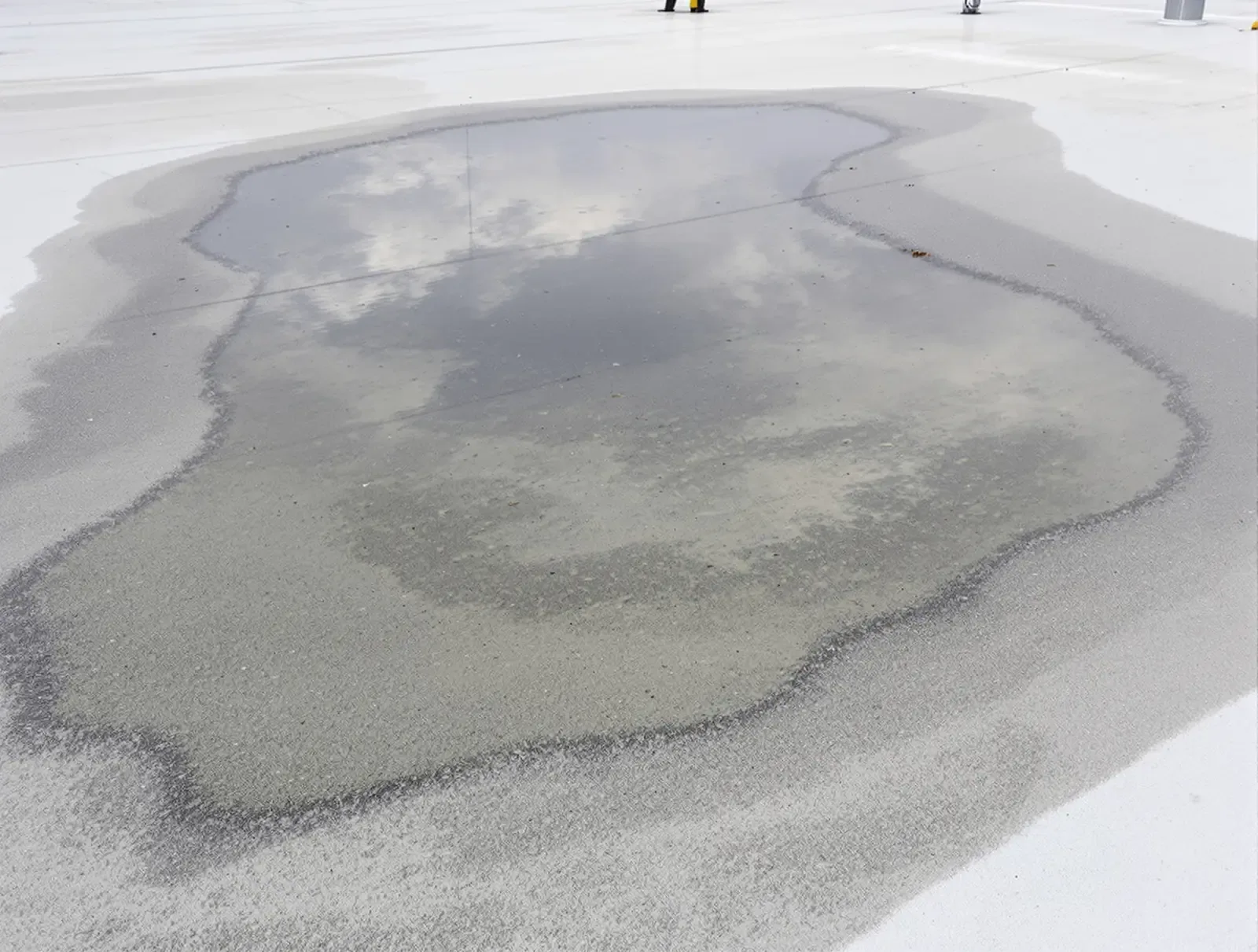
After thaw, inspect drains, scuppers, gutters and low areas for debris or a restriction that may have delayed runoff. Compare the outlet condition with the location and timing of indoor moisture. Water may travel from an opening or along the roof deck before it appears in a room below. Map the suspected route and identify whether the next step is cleaning, testing or a roof repair. A ponding-water repair review can define a low area that keeps water after the event, separate from a leak at an edge or seam.
For properties in the Renton Valley Subarea, coordinate the thaw inspection with loading areas and service access, since the roof walk may need a quiet window around loading and service traffic. The crew records the actual drain route, membrane and building contact requirements, and the roof itself supplies the evidence of damage.
If a drain is restricted, document the debris and outlet condition before cleaning where practical. After the work, confirm that the discharge route is clear and record anything that remains inaccessible. The roof drain and scupper service addresses outlet conditions as a separate maintenance item from membrane repair.
Roof details: inspect edges, seams and penetrations
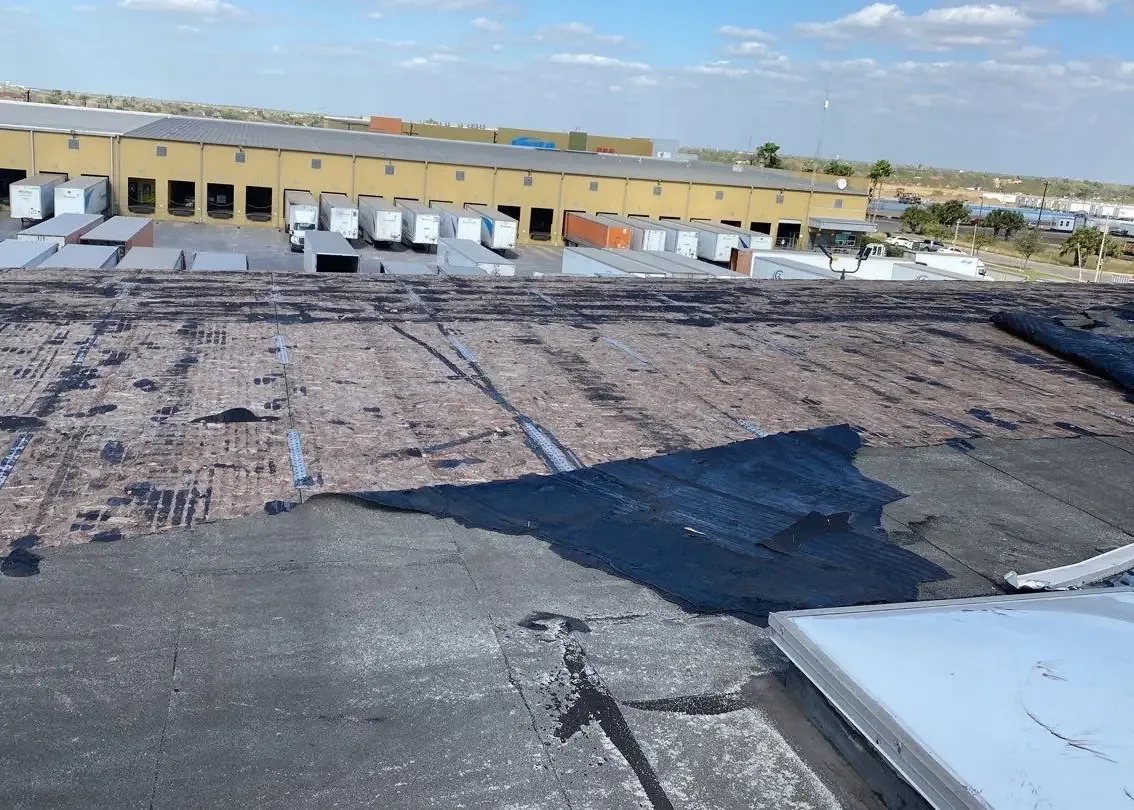
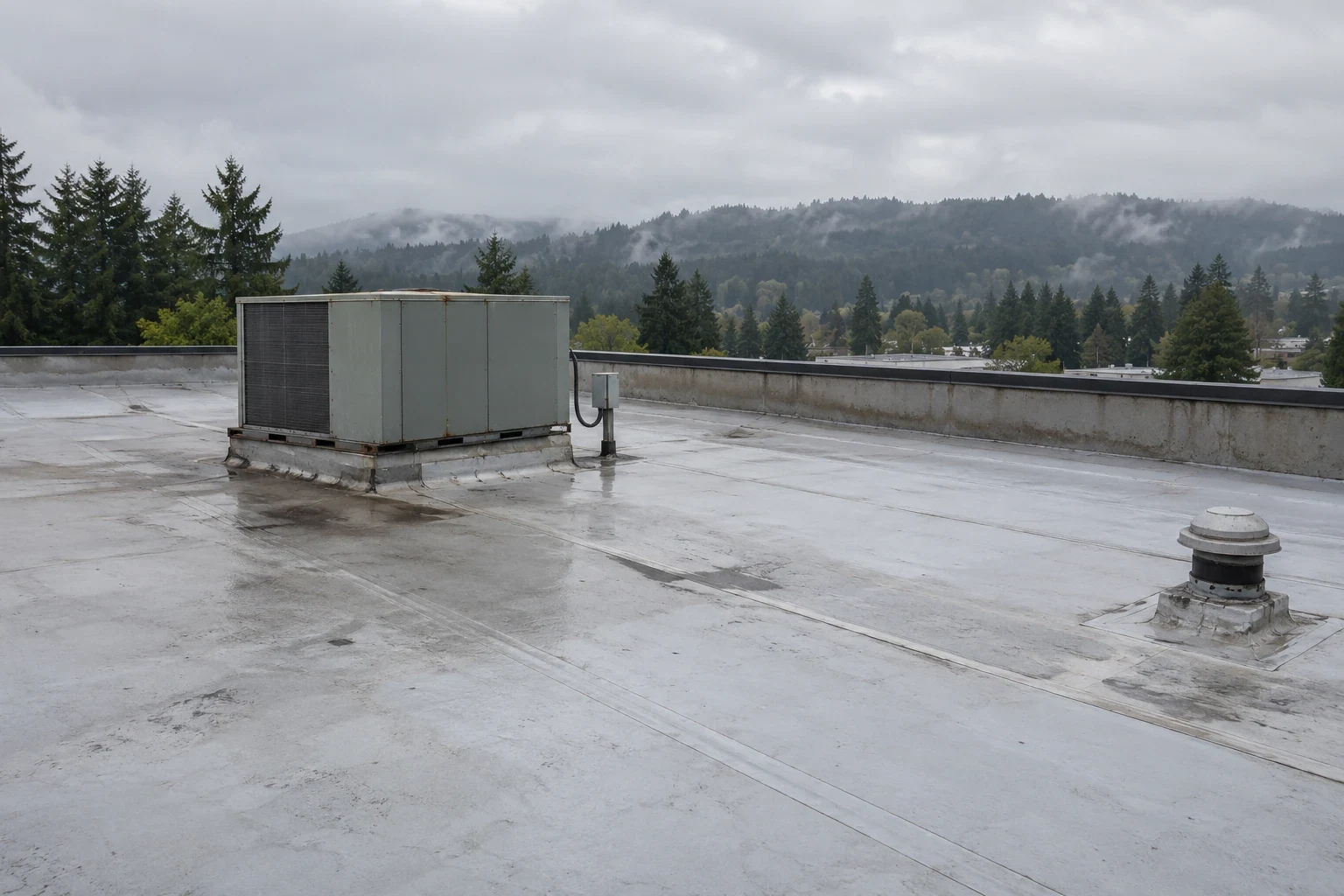
Inspect perimeter metal, membrane terminations, wall transitions, curb corners and seams for movement or open laps. Do not assume that a dark line is an opening or that a sealant bead is a permanent repair. Note the material condition, approximate dimensions and whether the area can be viewed without disturbing the roof. If a seam has separated, the commercial roof seam failure review can define the lap and the repair method.
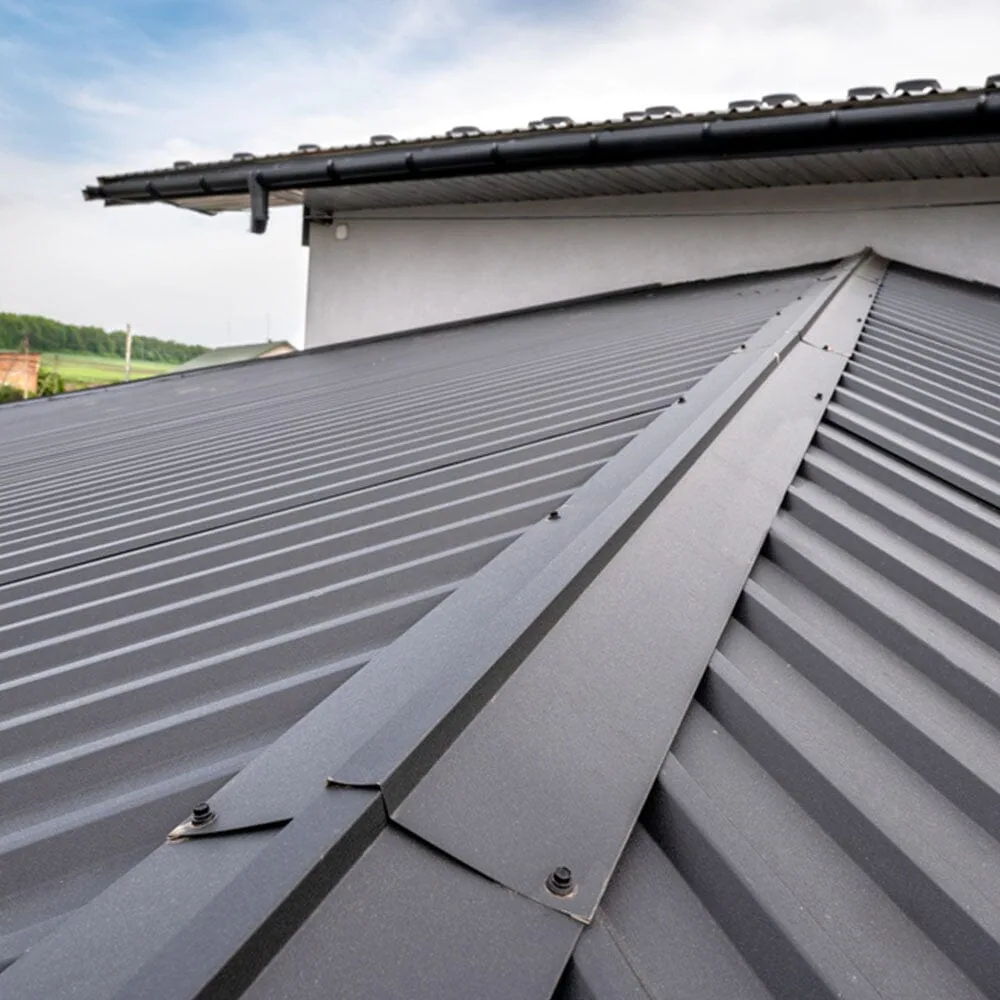
Roof systems respond differently to temperature changes, so identify the assembly before recommending materials. On a standing-seam metal roof, inspect panel movement, clips, fasteners and transitions. For a membrane assembly, document seams, flashing and any puncture separately. A small opening should not be hidden beneath a temporary patch without a record of its location and condition.
If ice or falling material affected a skylight, equipment curb or pipe flashing, identify the specific detail and request a suitable follow-up review. Take photos from stable positions and note the building contact's access limits rather than stepping onto an unapproved surface.
Access plan: keep personnel and operations clear
Confirm roof access, ladders, escorts, weather restrictions and any active maintenance work before the visit. Keep occupants away from areas where tools, temporary protection or falling debris could create a hazard. If interior rooms need a second look, coordinate with the building contact and explain which ceiling areas will be checked. The report should state which roof sections were reviewed and what conditions limited the inspection.
For a Downtown Renton roof visit, the site contact provides the approved route and any temporary restrictions, and the roof plan and photos document the observed repair area.
Next step: choose repair, maintenance or further review
Use the inspection record to separate a cleared drain, an open seam, a displaced flashing and a suspected structural concern. Each condition requires its own evidence and scope. If water remains after outlets are cleared, document the low area and consider whether roof geometry, insulation or deck conditions require further assessment. If the reported damage is not visible, preserve the event notes and identify what monitoring or test would resolve the uncertainty.
For snow accumulation questions that may affect structural capacity, refer the issue to a qualified design professional using the building records and applicable site information. A regional climate normal is not a substitute for project-specific design values. When a repair is supported, record the location, method, material and verification step. If the roof's broader condition is uncertain, explain the limits and gather the information needed to compare a local repair with other options.
Send the address, roof plan, event dates, leak reports and access requirements. We will inspect the approved areas, document what can be confirmed and outline the maintenance, repair or testing steps supported by the findings.
Commercial Roofing Questions
Should employees remove snow from a commercial roof?
Do not send unqualified staff onto the roof or attempt removal without an appropriate plan. Confirm access and safety requirements with the property contact and use qualified professionals for any roof work or structural concern.
Does a snowfall report show that the roof was overloaded?
No. Regional climate records describe a station, not the load or condition of a specific building. A qualified design professional should evaluate structural questions using project-specific information.
Why can a leak appear after snow and ice melt?
Meltwater may expose an existing opening, reach a restricted drain or travel within the assembly before appearing inside. The inspection compares the event timeline, roof details and interior location before assigning a cause.
What should we inspect after ice forms at a roof edge?
Once access is released and conditions are safe, document the edge metal, membrane termination, drains and nearby flashing. Avoid standing below areas where loose material may fall and coordinate any restricted access with the building contact.
Can a roofer determine snow-load capacity during a repair visit?
A repair inspection is not a structural design evaluation. If capacity is in question, the owner should involve a qualified design professional and provide building records and site-specific information.