A standing seam panel can look straight while a clip, end lap or metal corner is beginning to move. We check the panel runs, seams, fasteners and transitions, then trace water toward gutters and drains before deciding whether a repair is local or part of a larger condition. Renton's wetter November and December make drainage worth reviewing before winter, but Sea-Tac normals do not describe any single building's roof.

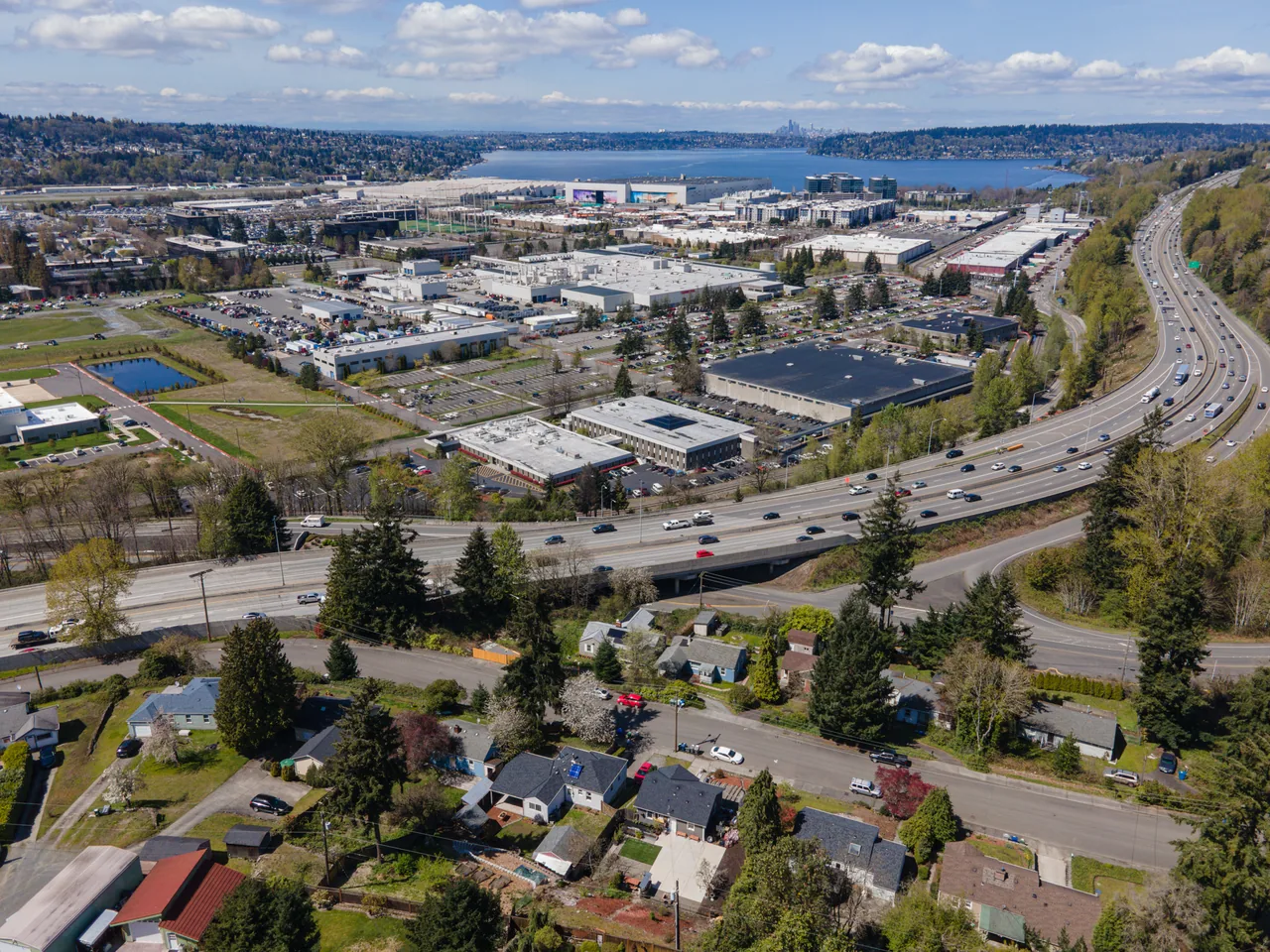
Reaching a standing seam roof differs between a building in the Renton Valley Subarea and an office in Downtown Renton: dock traffic and equipment lanes on one, tenant corridors and hatch access on the other. We inspect the actual panel system, its support and the route needed to reach it, then plan work around the property contact's operating window.
Panel movement: read the seam and clip line
Standing seam panels need room to move as temperatures change. Clips, seams and end conditions keep that movement controlled while limiting water entry. We inspect whether a seam is open or distorted, whether clips or fasteners appear loose, and whether a panel edge has pulled away from its intended position. The roof record should separate those observations from ordinary surface wear.
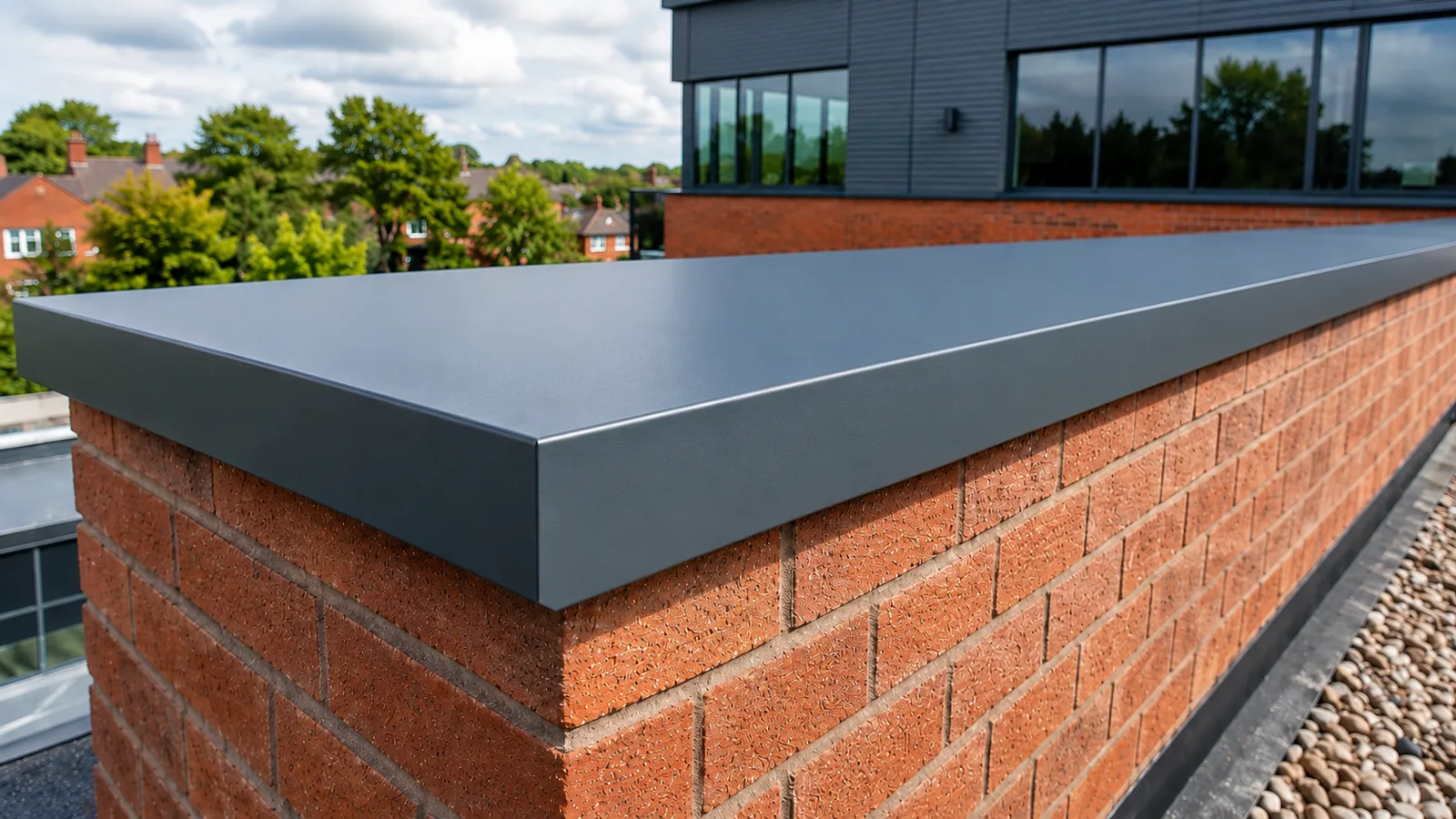
Long panel runs can transfer movement into a fixed detail if the support or clip layout is not working as intended. At penetrations, curb edges and end laps, we look for buckling, torn sealant or metal that has lost its overlap. A commercial roof inspection can map the seam pattern and detail locations, while edge-metal repair can address a perimeter transition that no longer sheds water.
We do not tighten every fastener as a general remedy. The system may rely on concealed clips, fixed points and planned expansion zones, so the repair must match its construction. We identify visible attachment and any records that clarify the panel arrangement before touching a joint. If the detail is hidden, we describe what would need to be opened and get approval first.
Water route: follow the panel to its discharge
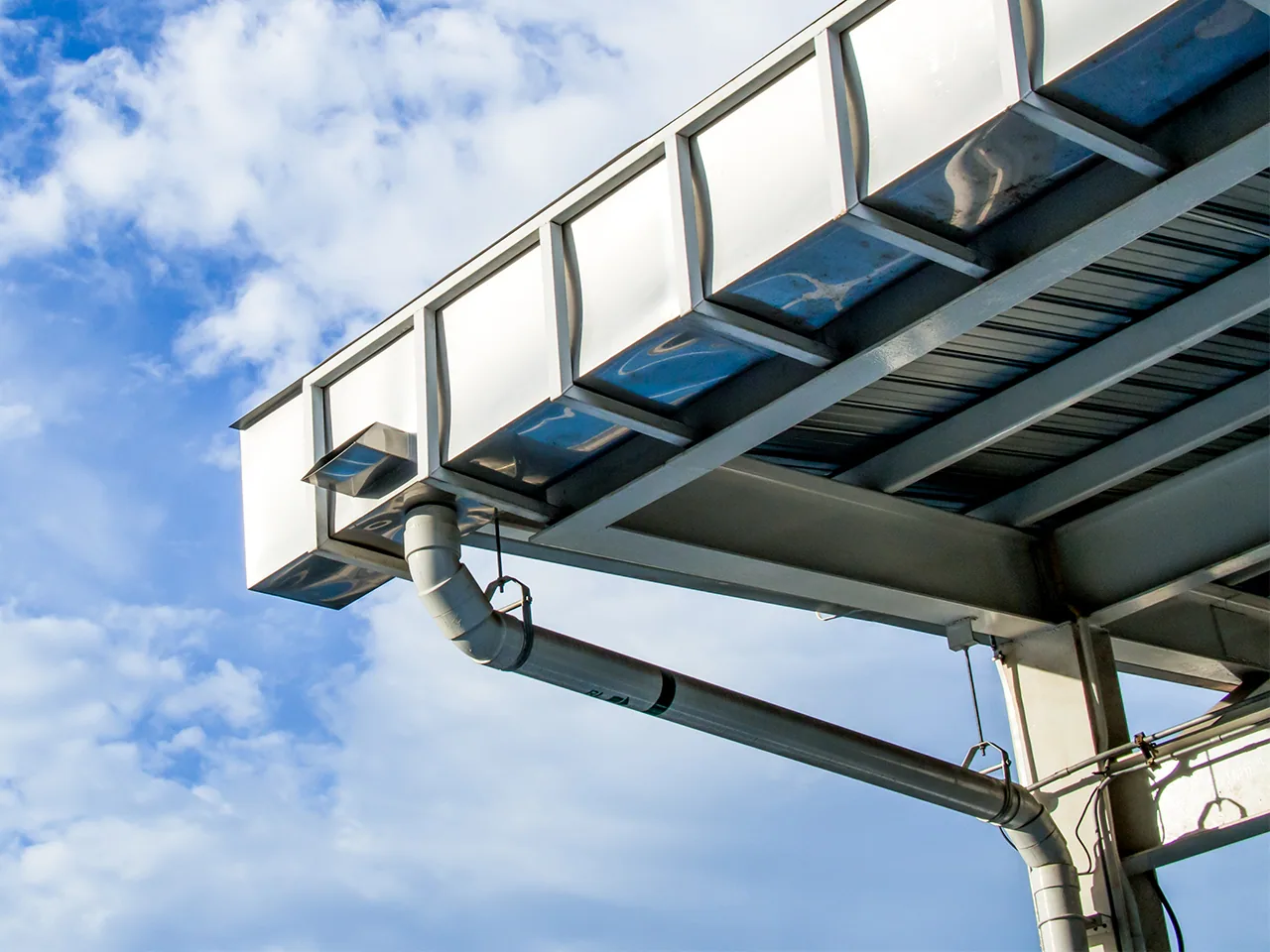
A standing seam roof sheds water along panel valleys, but a gutter or outlet can still create a backup that reaches a joint. We inspect eaves, valleys, gutters, downspout connections and the points where panel seams terminate. Sea-Tac's regional normals show far more precipitation in November and December than in July, so a Renton wet-season check should follow that discharge route as well as the metal surface.
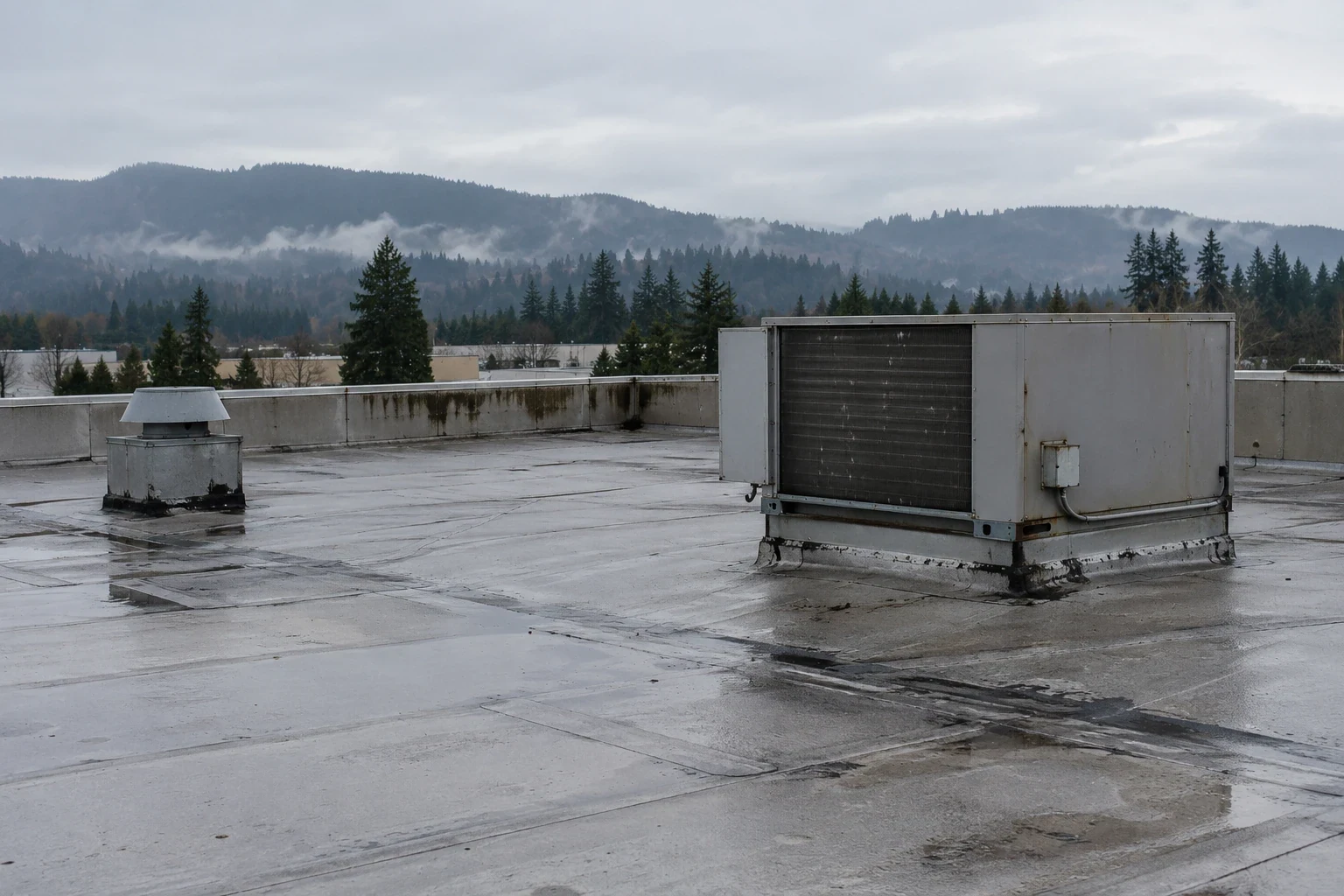
A drainage assessment can separate a blocked outlet from a leaking seam or flashing. We note where debris or standing water appears, check gutter support and inspect whether runoff reaches the intended discharge. If the metal is intact but water backs up, a panel repair alone will not solve the outlet problem. The scope should identify both conditions when they occur together. We also note whether runoff crosses a walkway or reaches an area that needs controlled access during the repair, then keep the discharge path open as work proceeds.
At a property in the Renton Valley, equipment or loading may shape where a lift can be staged; Downtown Renton can bring different roof-entry and occupancy limits. We confirm access with the site contact and preserve the route used for maintenance. A warehouse roof assessment can account for operating paths, while the water route still needs to be traced on the individual roof.
Metal details: protect cuts, corners and penetrations
Panel systems rely on formed metal at ridges, eaves, valleys and wall connections. A loose flashing leg or an open corner can admit wind-driven rain even when the field seam is intact. We inspect laps, closures, sealant joints and attachment at each change of plane. Where a pipe, curb or skylight interrupts the panel, the metal detail must connect to that shape without restricting the panel's movement.
A repair sequence should keep adjacent panels supported while the damaged section is opened. We check where the panel is fixed, how its clips engage and whether the surrounding metal can move as designed. If water has entered at a fastener, closure or side lap, each detail needs a different correction. We note temporary protection for any exposed area and specify how the day's edge will be closed if weather shortens the work window. That sequence matters more than a surface seal that leaves the original movement or drainage problem in place.
A penetration detail repair can address a transition around an opening, while curb and equipment work can be coordinated when supports or service lines need attention. We record what is part of the roof scope and what requires the responsible trade. That keeps the repair boundary clear if equipment is moved or a curb needs adjustment.
Corrosion, scratches and coating wear are not all the same defect. We check whether bare metal is exposed, whether water is being trapped, and whether the panel itself remains firm. A repair plan should state whether it restores a formed detail, replaces a panel section or treats a separate surface condition. It should not rely on sealant as a substitute for a loose or missing metal connection.
Retrofit decision: compare repair with a new roof line
One loose panel or failed closure can be a focused repair. Widespread seam distortion, repeated leakage or corrosion across multiple runs may justify a broader evaluation. We map the affected sections, check the support and attachment we can see, and review the roof's repair history. Where the underside or support is hidden, an approved opening may be needed before a replacement scope can be set.
A metal roof retrofit can compare a new assembly over exposed-fastener panels when the existing roof and framing are suitable. The same review should account for drainage, panel height, perimeter and penetrations. If the building needs a different membrane system, a TPO assembly may be another comparison, but the chosen scope has to resolve transitions and equipment access.
For an assessment, send the Renton address, roof plan, panel records, leak locations and access instructions. We will follow the seam line and discharge path, then explain what a roof walk can settle. If a test opening or structural review could change the recommendation, we identify it before including that step. The owner receives a repair line tied to the observed panel system.
Commercial Roofing Questions
Can a standing seam roof be repaired without replacing panels?
A loose closure, isolated flashing or limited seam defect may be repaired when the surrounding panels and support remain sound. We inspect the movement and attachment around it before setting the repair boundary.
Why are some panel seams raised above the roof surface?
The raised seam is part of how the panels join and shed water. We inspect whether its shape is consistent, whether the joint is closed and how it connects at eaves, ridges and penetrations.
Does a leak at the gutter mean the roof panels have failed?
Not necessarily. We check the panel termination, gutter support, outlet and nearby flashing so the repair addresses the actual entry or backup point rather than replacing sound metal.
When should an owner compare a metal retrofit with replacement?
Panel condition, attachment, framing, drainage, insulation and edge height guide that review. We document what can be observed and identify any opening or structural check needed before comparing assemblies.
What should a Renton manager provide before a metal roof inspection?
Panel records, leak locations, roof plans, access rules and information about equipment or roof work help us plan a safe route. A known service or loading window helps set the visit around operations.