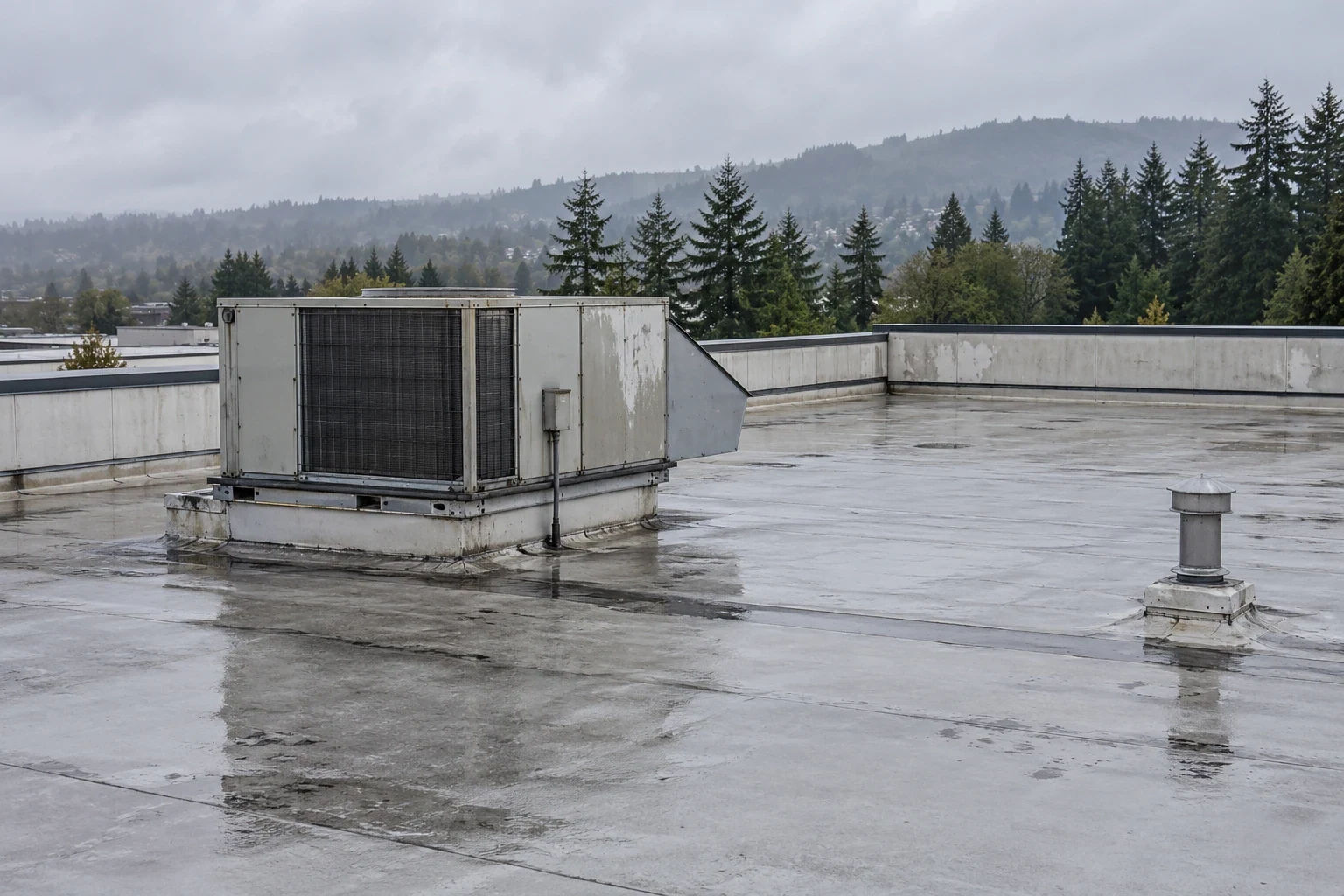
A row of exhaust curbs can break a broad roof into many short water paths. At a big-box store in Renton, WA, we start at the reported leak or low point, follow the membrane toward an outlet and check each curb, seam and edge along the way. Sea-Tac normals show November and December are much wetter than July. That regional pattern makes a fall roof walk useful for drainage and prior repairs, while the store's own roof record determines the work.

Large-format retail can keep receiving, customer entrances and rooftop equipment in service while a repair is planned. We confirm the delivery window, safe staging and any area that cannot be closed, then record the route the crew will use. A broad roof may contain different repairs or additions, so the findings should name a section rather than treating every square foot as one condition.
Receiving route: keep the loading area clear
Before a roof walk, the store contact identifies the receiving schedule, truck route, lift access and any door that must remain open. The work area may be above a loading bay, sales floor or service department, each with a different consequence if debris or water is present below. We note the access route and protect the area tied to the repair, then give the manager a clear update before moving equipment.
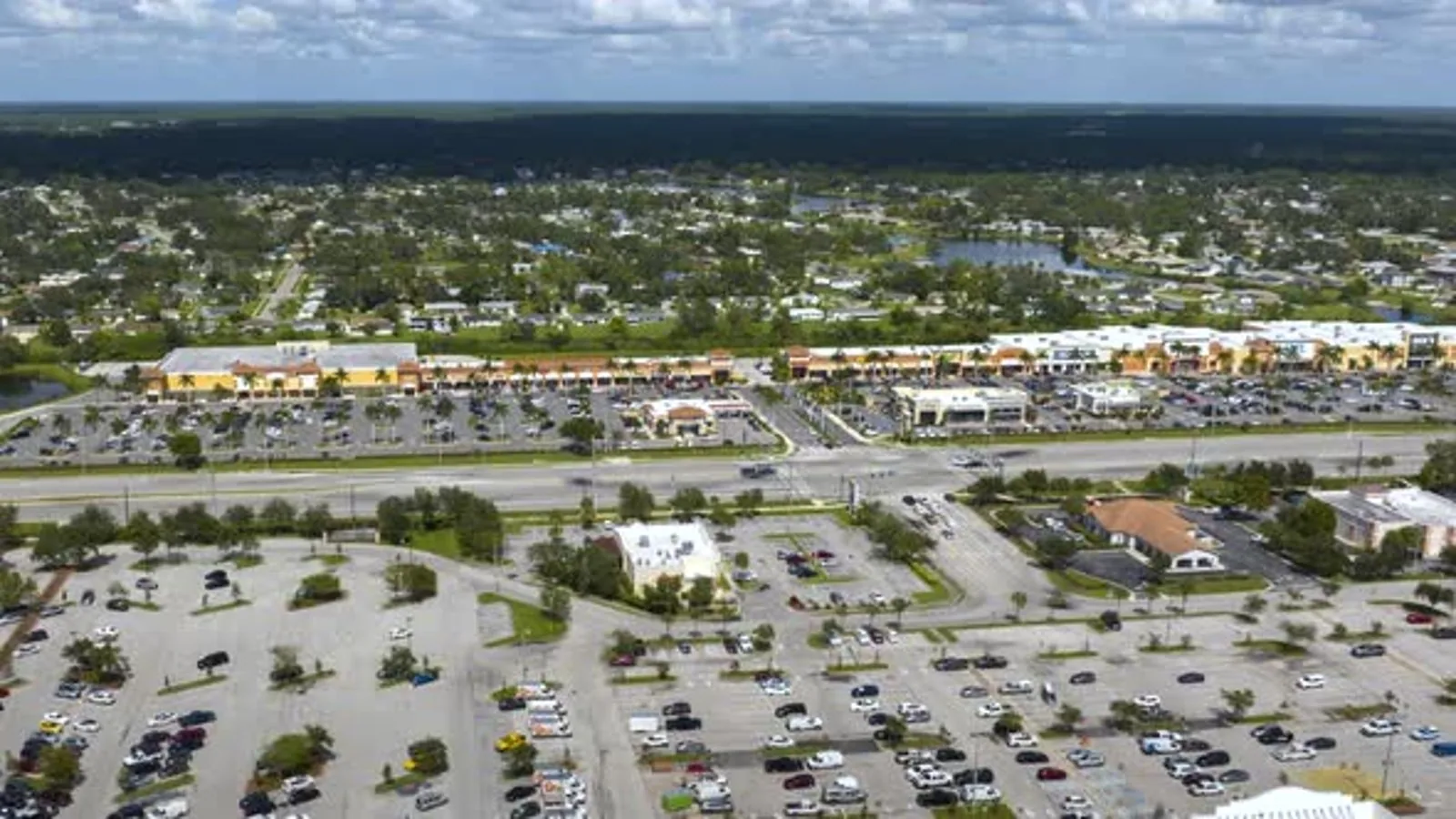
Renton's Valley Subarea is a largely industrial and warehousing district with a long history of logistics and light manufacturing. A store near the Valley shares those truck routes and still needs a building-specific review of its receiving lanes and roof hatch. A shopping center roof adds shared tenant coordination, while a single large store usually has one operating contact but a similarly active delivery path.
A commercial roof inspection records which sections were reached and what remains outside the agreed route. If an urgent leak crosses the work area, we coordinate the immediate response with the store's facilities contact instead of leaving a route or barrier undefined.
Equipment lines: inspect each curb and penetration
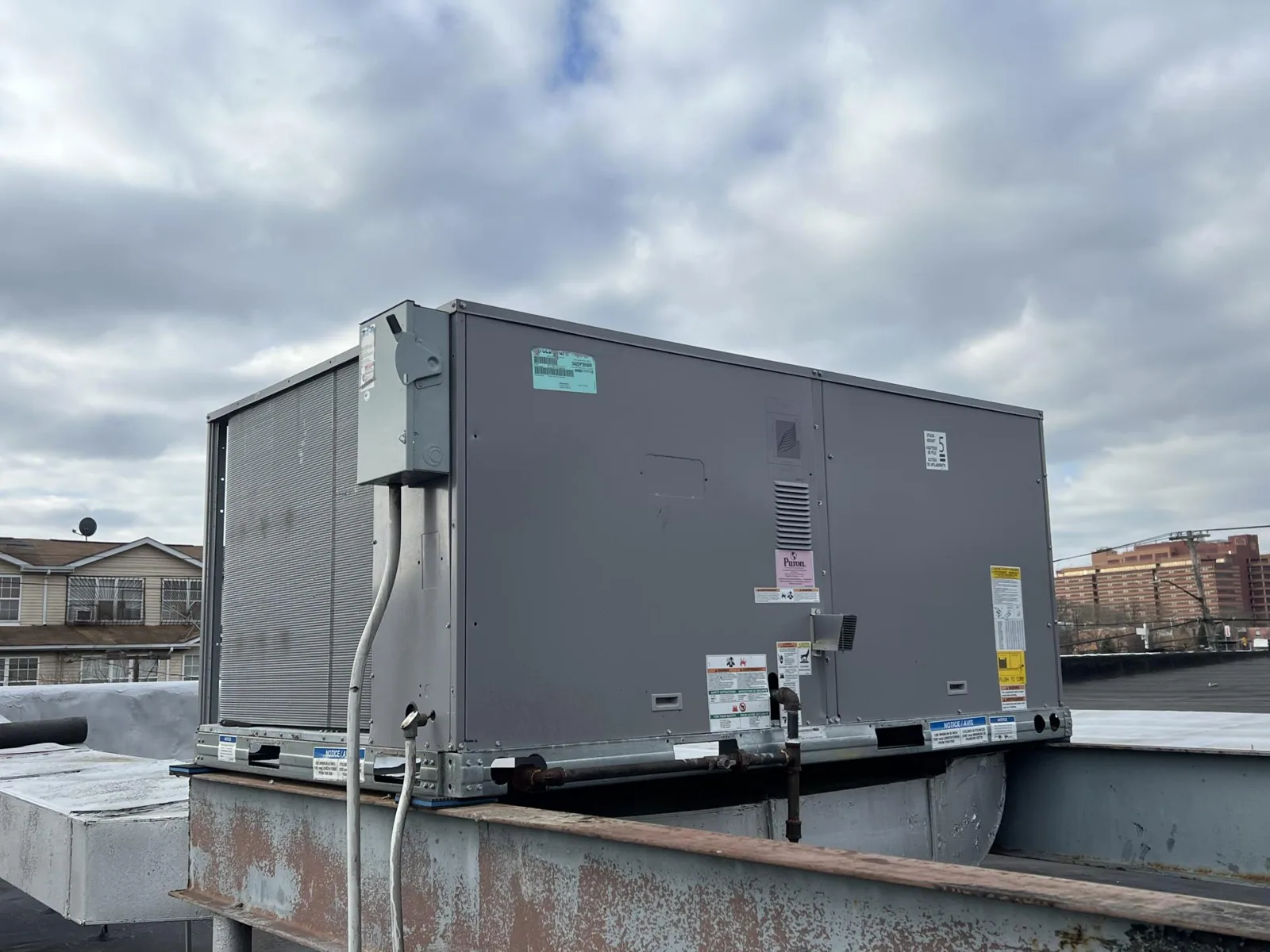
Rooftop HVAC units, kitchen exhausts, sign supports and utility penetrations create repeated transitions through the membrane. We check curb corners, flashing height, fasteners and the seam around each opening. Where equipment has been replaced, we look for abandoned supports, cuts and sealant that bridges a joint without restoring the sheet. A curb and support review can identify which detail needs repair and which area should be monitored.
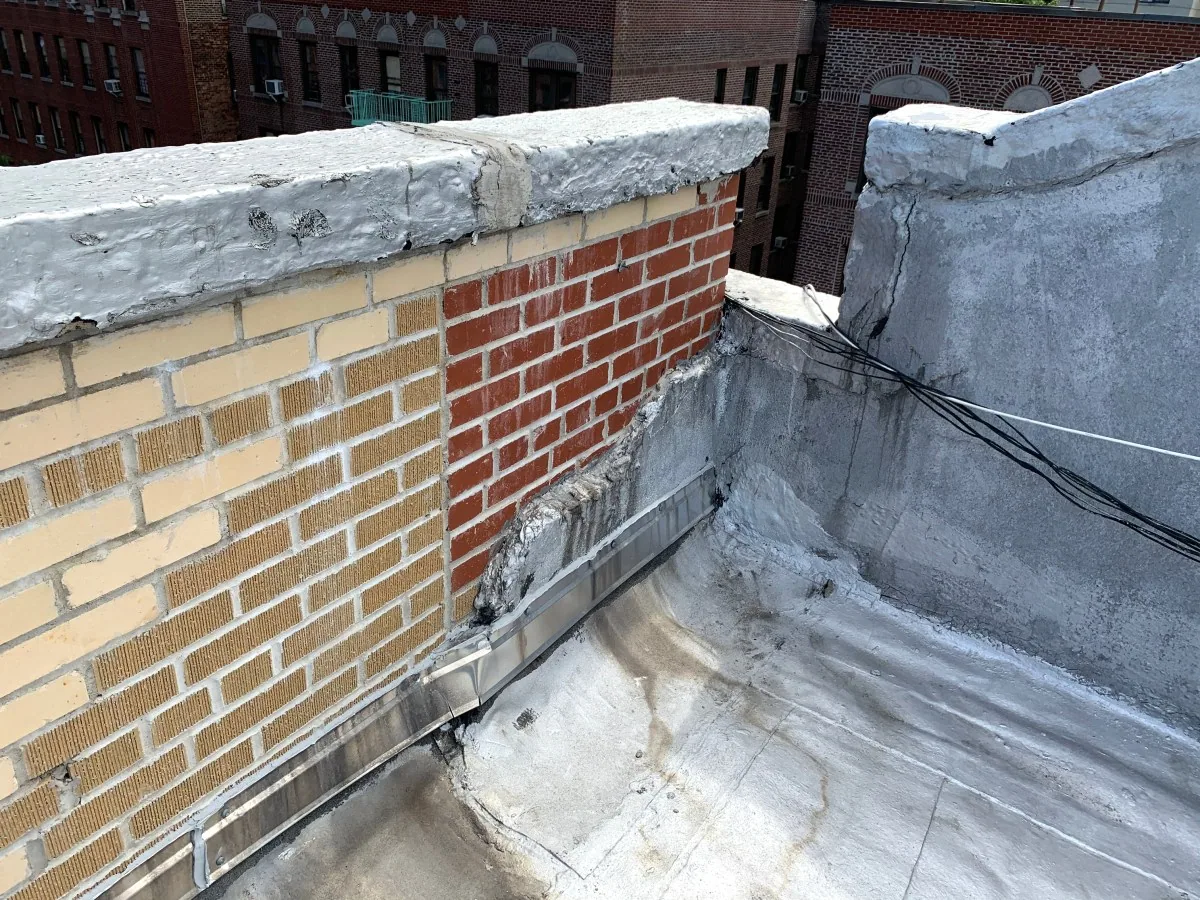
Big-box retail often has long equipment rows, but the count and layout of a particular roof come from its plans and walk. The report should distinguish a sound curb from one with a lifted corner or loose flashing. If an interior stain sits near an equipment line, we compare the room report with the roof route; water can travel before it reaches a ceiling. A flashing repair assessment can focus on a curb transition when the observed condition supports that work.
Any test or opening that could change the scope is explained first. Infrared may help select an area, but a thermal pattern alone does not confirm wet insulation. The manager can authorize a closer check after seeing the location and purpose.
Outlet check: trace the drainage run
Water may cross a wide retail roof before it reaches the drain, so we follow the low route rather than checking only the outlet bowl. We inspect strainers, drain rings, scuppers and overflow paths, then look for debris, ponding or an open seam along the way. A clear outlet cannot correct a low spot, and clearing debris will not reconnect a split lap. A drain and scupper assessment separates those findings.
In nearby Tukwila, Southcenter is a regional commercial center whose uses include retail, large-format stores, offices, lodging, warehouses and light industry, so a roof visit there has to account for delivery access and operating hours instead of assuming a store can pause the floor below.
Scuppers on a large store often discharge onto the paving below, so we check where the water lands and whether a downspout or splash block is missing, since a puddle beside a loading door is a hazard that looks like a roof problem.
For a wet-season check in Renton, we compare drains and prior repairs with the documented leak history. Sea-Tac's monthly normals set regional timing context; the roof itself shows whether a seam, drain or edge needs work.
System choice: compare the actual assembly
The visible membrane does not show every layer that matters to a recover or replacement. We review plans and repair notes, inspect exposed edges and look for signs that call for moisture or attachment testing. TPO welds, EPDM seams and built-up roof surfaces require different repair approaches; we identify what is there before comparing systems. A TPO seam review can assess a sheet assembly, while a built-up surface calls for a different inspection.
A store in Downtown Renton or anywhere else in the market gets its roof type from the records and field details. If water entry repeats at several curbs or insulation is affected across a broad area, the comparison may extend beyond a single patch. A recover assessment considers existing layers, drainage, edge height and project requirements before an added assembly is proposed.
Big-box stores and grocery stores can share a large roof footprint but differ in equipment and interior operations. The grocery roof review looks at food-retail operating concerns; each property's roof system still needs its own inspection and repair record.
Work order: make the repair easy to follow
Each finding should identify the roof section, curb or drain, observed condition and proposed next step. Photos need enough surrounding detail for a store manager to locate the item without reopening every roof plan. If the area was inaccessible, the record should say why and what would be needed to return. This gives the facilities team a useful basis for scheduling without confusing an untested area with a completed repair.
We keep the repair scope tied to the store being inspected and note any condition that may affect receiving or customer areas.
Send the Renton address, roof plan, leak reports, repair history and delivery or access limits. We will inspect the approved areas, explain what the outlets and equipment details show, and identify any test before it is included. If water is entering now, the around-the-clock response can be coordinated with the store contact while the permanent work is documented.
Commercial Roofing Questions
Can repairs happen while the store stays open?
We plan the work area, delivery route and access window with the store contact. The method and weather determine what can proceed; the schedule identifies where crews and materials will be and what must stay clear.
How do you trace a leak on a wide retail roof?
We start with the reported room, then follow seams, curbs and low drainage paths around it. Water can travel before it appears indoors, so the room location guides the walk without proving the entry point by itself.
What should be checked after rooftop equipment changes?
We inspect new curb flashing, supports, abandoned fasteners and cuts around the equipment line. Plans and service records can show what changed; the roof walk confirms which transitions need work.
When is a recover worth comparing with replacement?
Existing layers, moisture, attachment, drainage and edge height all matter. We review the records and roof surface, then identify testing needed before the store compares another assembly with replacement.
Does Renton's rainy season set the repair priority?
Sea-Tac normals show a late-year precipitation increase compared with July, which supports checking drains and known repairs before wetter months. The store's observed conditions determine which item comes first.