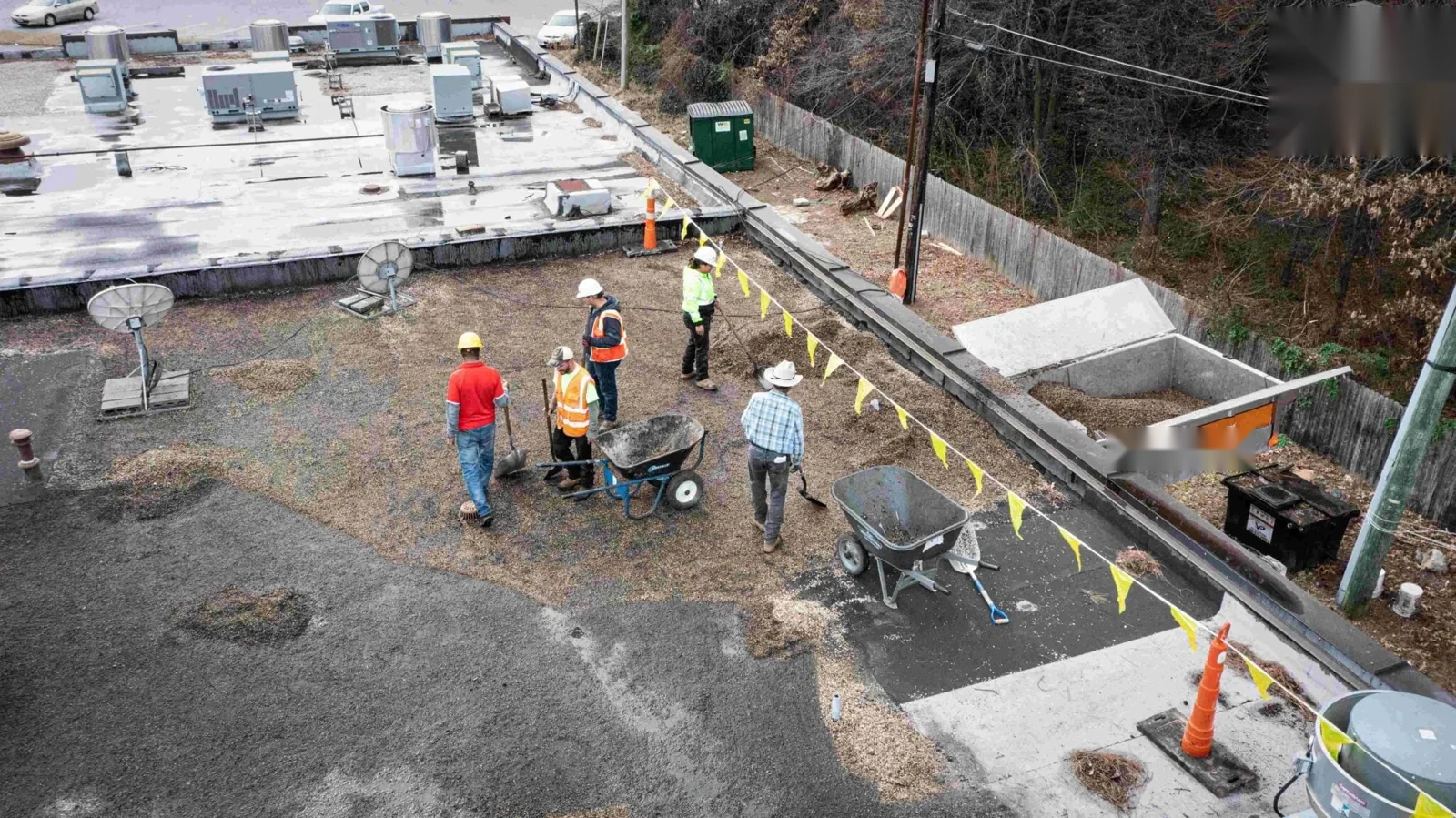
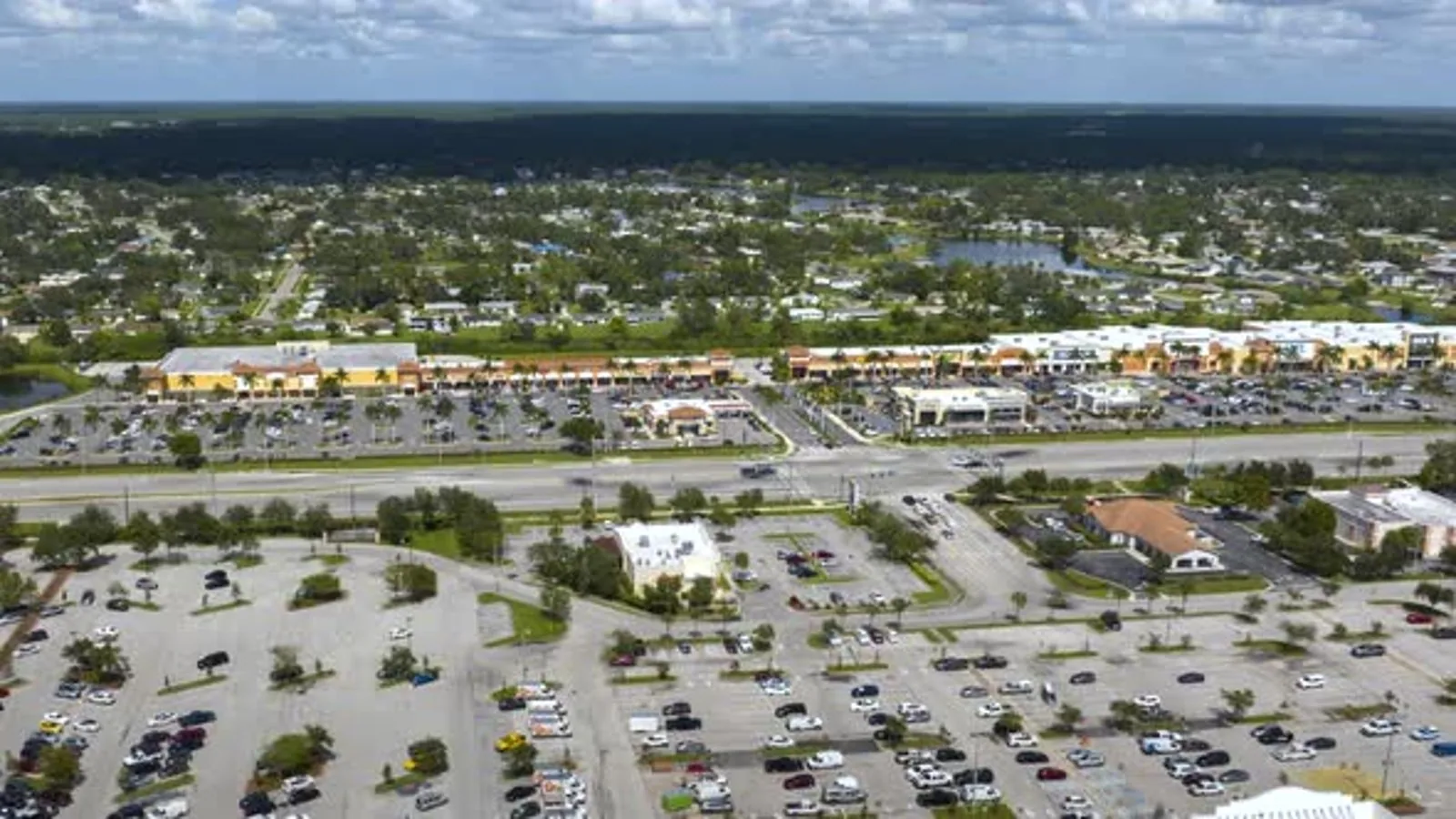
A drip line above a shared corridor can start at a roof seam several bays away. At a shopping center in Renton, WA, we trace the report toward drains, rooftop units, wall transitions and the joints that cross between tenant spaces. Sea-Tac normals show November and December bring much more precipitation than July. That regional pattern makes a pre-wet-season roof walk useful, while the center's own membrane and drainage determine the actual repair.

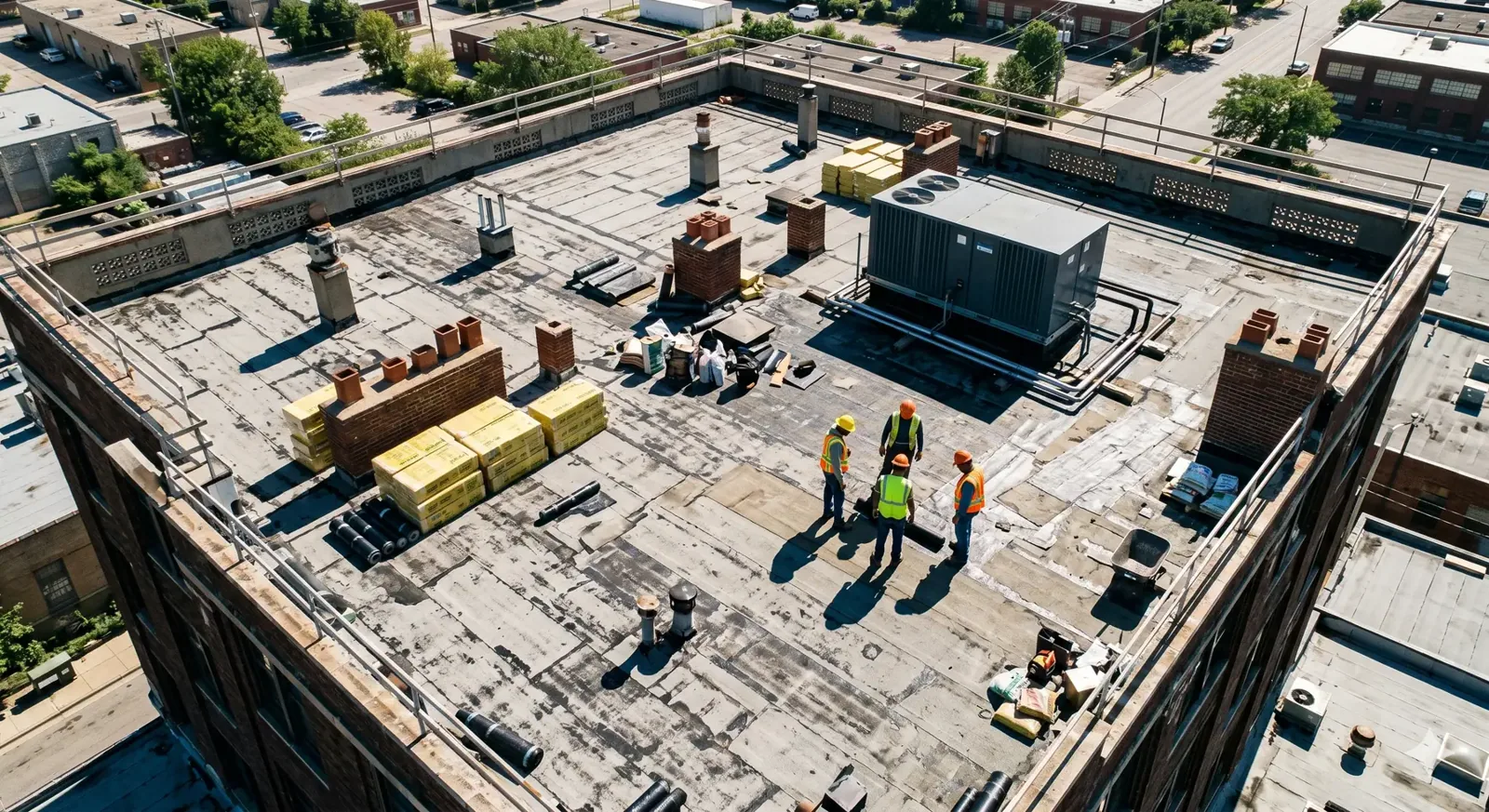
Retail roofs often carry signs of several tenant fit-outs, equipment changes and prior patches. The property contact may need to coordinate with stores, restaurants, a loading area and a shared parking route. We map the roof sections, note what can be reached and plan the work path with the manager. A clear record helps the next decision stay tied to the right bay or building.
Tenant access: set the work path first
Before the roof walk, confirm where a ladder or lift can be staged, which doors remain open and when deliveries use the service lane. A repair above one tenant can affect another suite if water travels along the deck or insulation. We document the reported room, then follow the roof route to the relevant curb, seam or drain. A commercial roof inspection can separate the observed defect from areas that were not accessible.
The Renton Valley Subarea is an industrial and warehousing district with logistics and light manufacturing, a reminder that a property's daily use shapes roof access. At a center, we coordinate material staging around deliveries and agree on any tenant notice before work begins. A big-box retail roof has a single occupant, while shared centers add multiple contacts and transitions to the route.
We keep each work zone small enough for the manager to identify what is closed, what remains open and who should receive an update. If a larger section is involved, the schedule should show when the next bay or tenant area becomes active again.
Drainage route: separate a blockage from a low spot
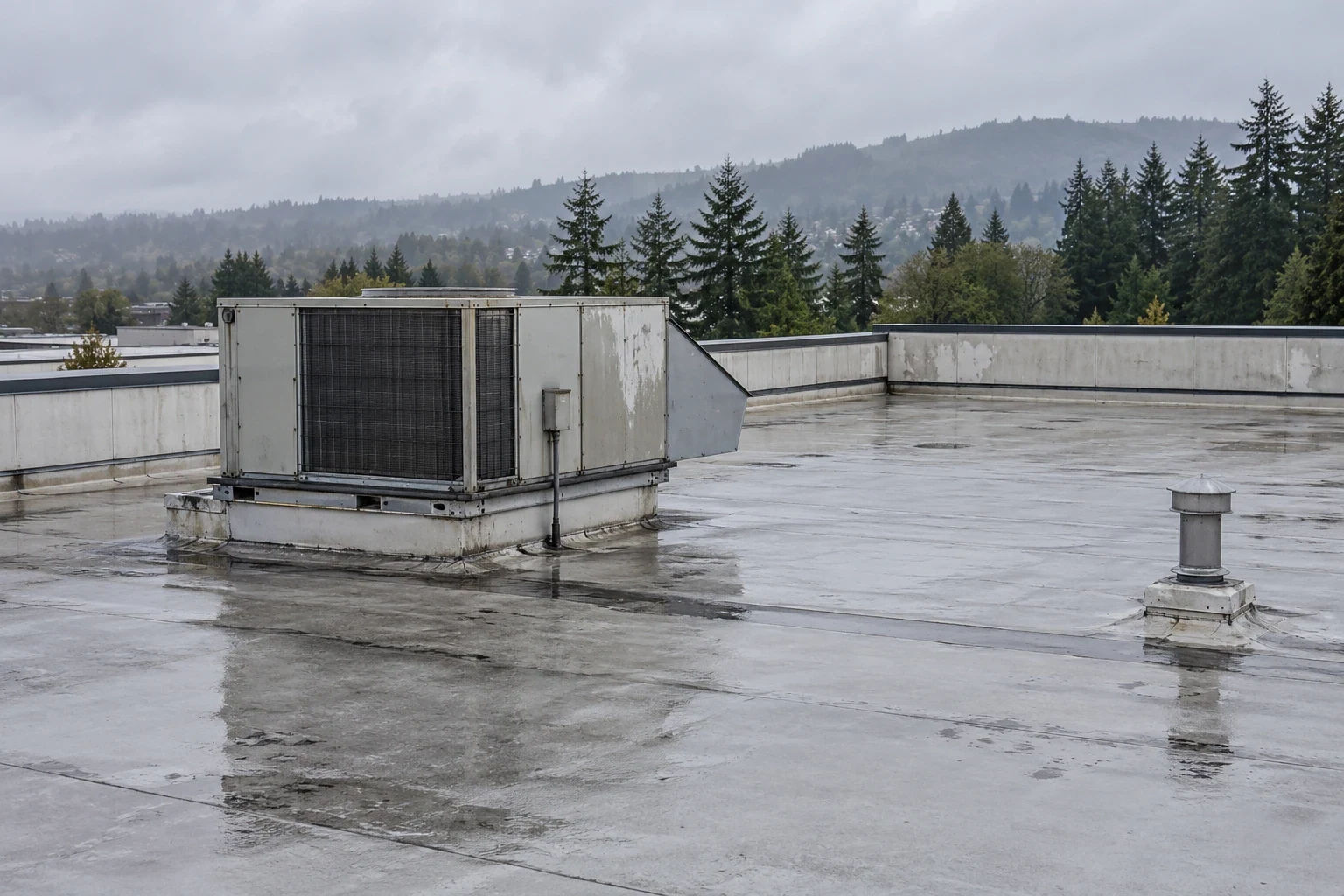
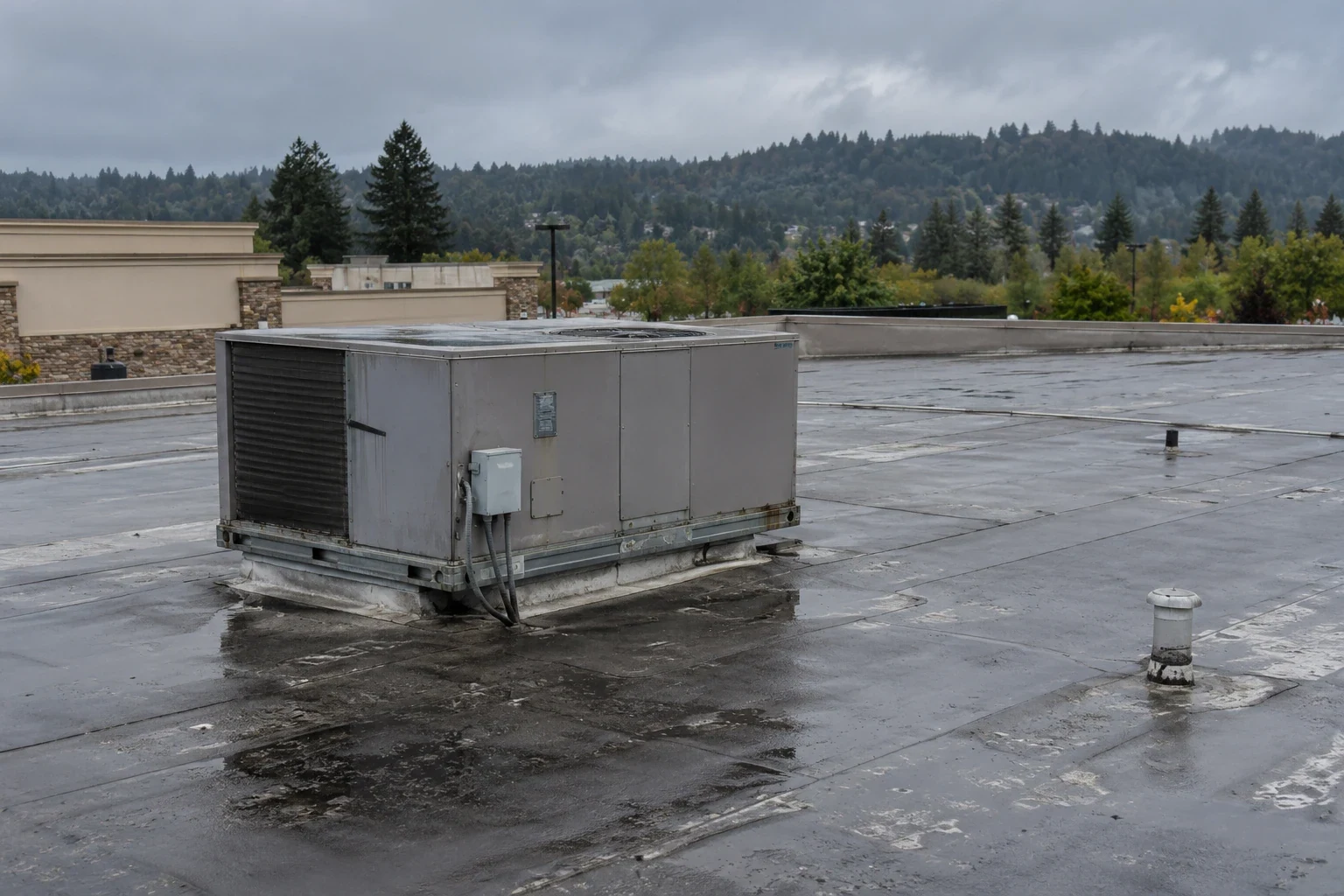
Shopping center roofs can have long drainage runs that cross several tenant bays. We inspect strainers, bowls, scuppers, overflow paths and the membrane around each connection, then trace water toward the outlet. Debris can slow flow, but a clear drain will not correct a low area or a damaged seam. A drain and scupper review records which condition needs cleaning, repair or closer measurement.
A drainage route over retail can cross a delivery area or an equipment zone with different restrictions, so we note the building-specific route rather than infer roof details from the district.
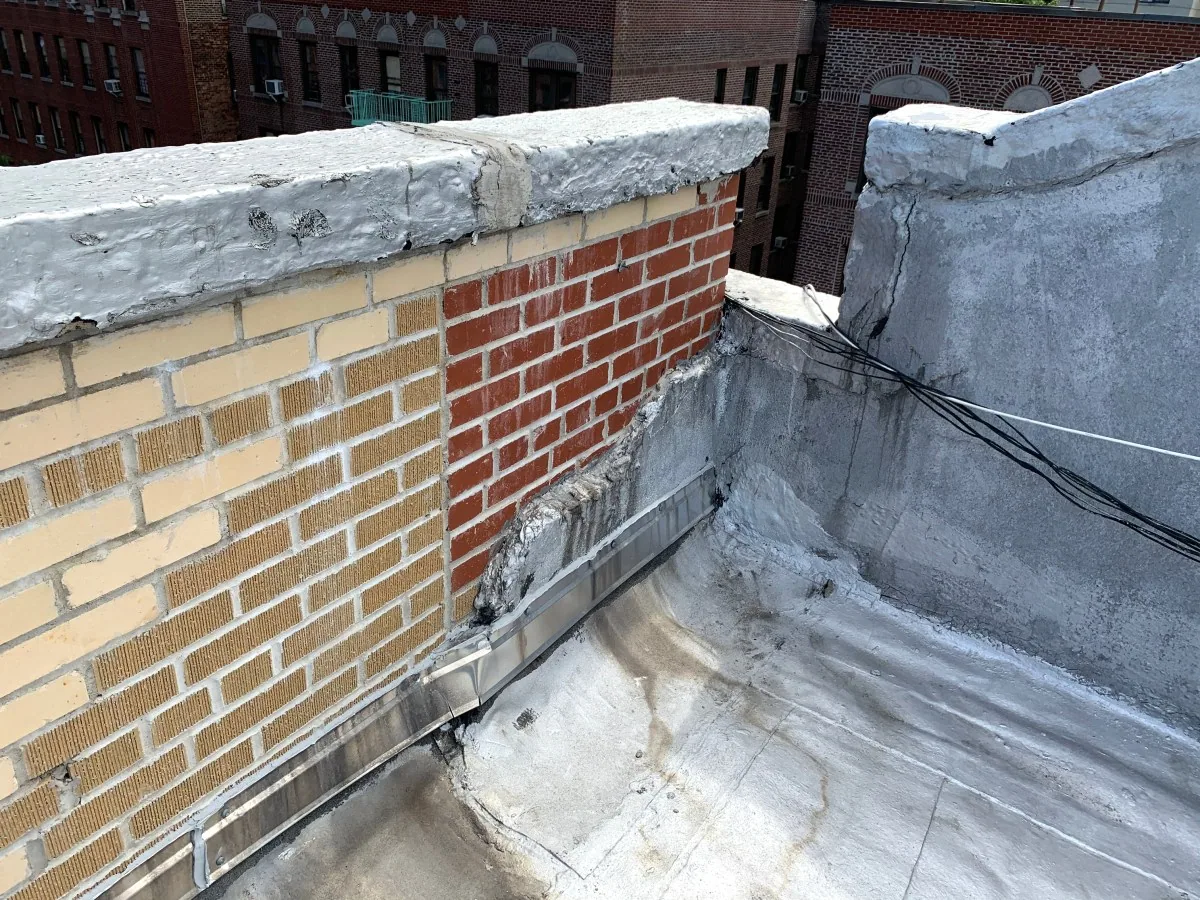
Sign bases, canopy tie-ins and parapet returns on the storefront side give water more places to turn than the back-of-house edge does, so we walk the storefront side separately from the service side and note each run of flashing by bay.
If water appears inside after a storm, the stain location can guide the investigation but may not sit below the opening. We compare the report with curbs, sign supports, seams and drain connections, then state which area the visit confirmed. When the evidence points to a transition, a flashing repair review can focus on that joint instead of extending a patch across sound material.
Tenant changes: inspect the cuts and supports
New exhaust fans, signs, conduits or rooftop units can leave openings that were not part of the original roof plan. We look for curb flashing, abandoned supports, fasteners and sealant applied over a moving seam. A patch needs a sound repair line around the cut; coating the top may hide the edge without reconnecting it to the field membrane. The manager's fit-out records can help date the change, but the roof walk has to show its present condition.
A grocery tenant may have equipment and exhaust needs that differ from smaller retail bays. The grocery store roof review considers those operational details, while a center-wide scope must still track each tenant's access and roof area separately. We do not assume every suite shares one membrane assembly, especially where additions or separate structures meet.
If an image or moisture test could change the repair decision, we identify the question it would answer and request approval first. A thermal pattern is not a confirmation of wet insulation. Any opening remains a separate, authorized step with a location and repair plan recorded for the property team.
Repair options: match the scope to the roof
A localized leak may need a seam, curb or drain repair. Repeated failures across several bays can call for a wider assembly review, especially if moisture, attachment or edge height changes the options. We inspect the membrane and transitions, check available records, and separate immediate water control from work that can be phased. A TPO seam assessment looks at a sheet membrane and its welds; a coating restoration review considers a different scope and substrate conditions.
At a center in Downtown Renton, the building's records and exposed details identify the roofing system. We compare a repair, recover or replacement only after checking the assembly, drainage, edges and penetrations that could affect the decision. If work spans a shared wall or multiple roof elevations, the scope should label each transition.
Sea-Tac's winter precipitation pattern gives a reason to review drains and previous repairs before the wetter months. The manager receives observations and limits tied to the actual roof walk, with any inaccessible bay kept separate from completed work.
Closeout record: keep each bay traceable
A useful closeout note identifies the roof section, nearby tenant bay, detail repaired and material used. Photos should show both the defect and enough surrounding roof to locate it again. If rain, active equipment or a restricted route limited the inspection, that belongs in the record. This is especially important where a center has separate pads or additions that do not share the same drainage path.
Tenants change, and so do their rooftop units and signs, so the property contact's records and the roof plan together keep future work traceable.
Send the Renton address, roof plan, leak locations, fit-out notes and delivery or access limits. We will walk the approved areas, explain what the seams and drainage show, and identify a repair or test that fits the evidence. If an active leak needs prompt attention, our around-the-clock response can be coordinated with the property manager while the permanent scope is documented.
Commercial Roofing Questions
How do you keep roof repairs from blocking store deliveries?
We confirm the loading route and staging area with the manager before setting the work window. The scope identifies the active zone and any route that must remain clear for tenants or vendors.
Can a leak above one tenant be coming from another bay?
It can. Water may travel along a seam, curb or insulation before reaching the ceiling. We record the room report and compare it with the roof route instead of treating the nearest roof detail as the confirmed source.
What should be checked after a tenant remodel?
We review new curbs, exhausts, sign supports, conduits and patches tied to the work. The roof plan and fit-out record help identify changes; the inspection confirms which transitions need repair or follow-up.
How are roof sections tracked across a multi-building center?
We label each building, drainage route and tenant bay in the findings. That keeps a repair record with the correct roof and helps the manager coordinate later access.
Does the wet season affect shopping center roof timing?
Sea-Tac normals show a late-year precipitation increase compared with midsummer. That regional pattern supports checking drains and known repairs before wetter months, while the center's actual roof condition sets the work priority.