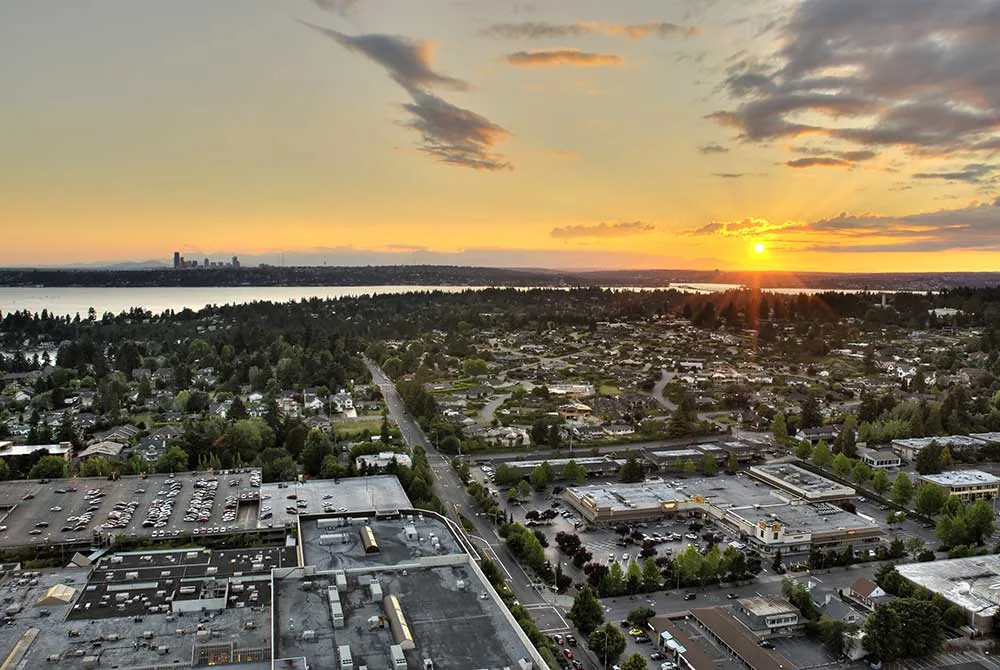
A split where a roof meets a metal curb can let rain reach insulation before a stain appears indoors. In Renton, WA, Sea-Tac's long-term normals are wetter in November and December than July, making that transition worth checking ahead of the wet season. The Renton Auto Mall route covers a broad commercial area, not one tenant or property; each roof still needs its own inspection. We follow the water path from the curb to an outlet, inspect the surrounding membrane and note what access or testing the actual building will allow.
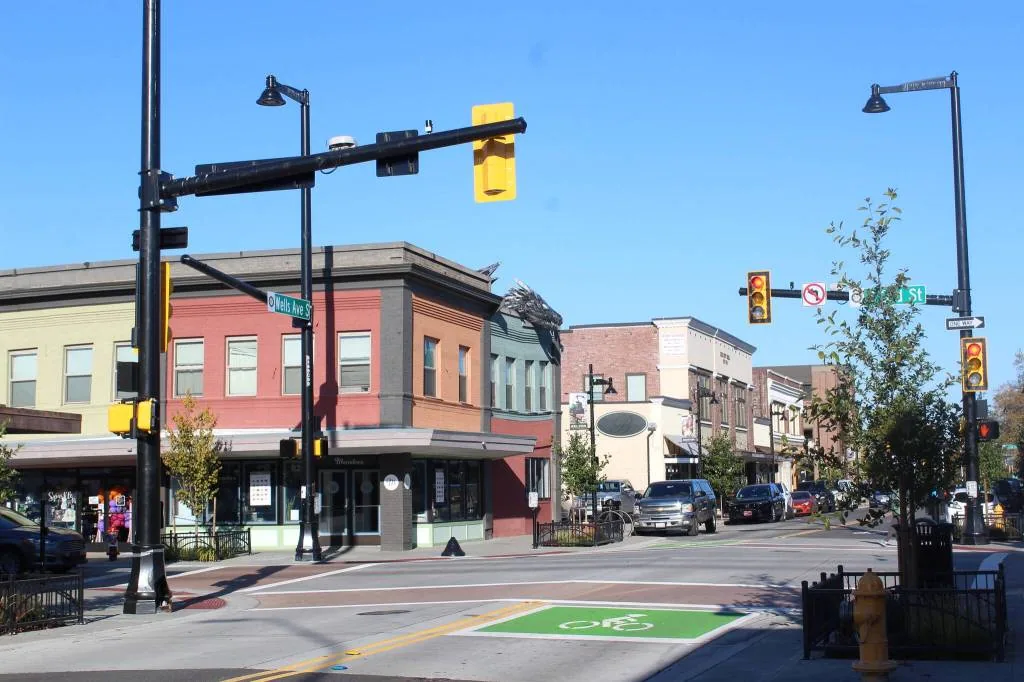
The city zoning map treats Auto Mall A, B and C as three separate overlays, alongside distinct commercial, office, mixed commercial-residential and industrial categories. Those map labels frame the district but do not establish a roof assembly or the use of a specific property. We confirm the roof type, equipment clearances and access rules with the owner before setting the work. A commercial roof inspection can identify the failure and document where the repair should stop.
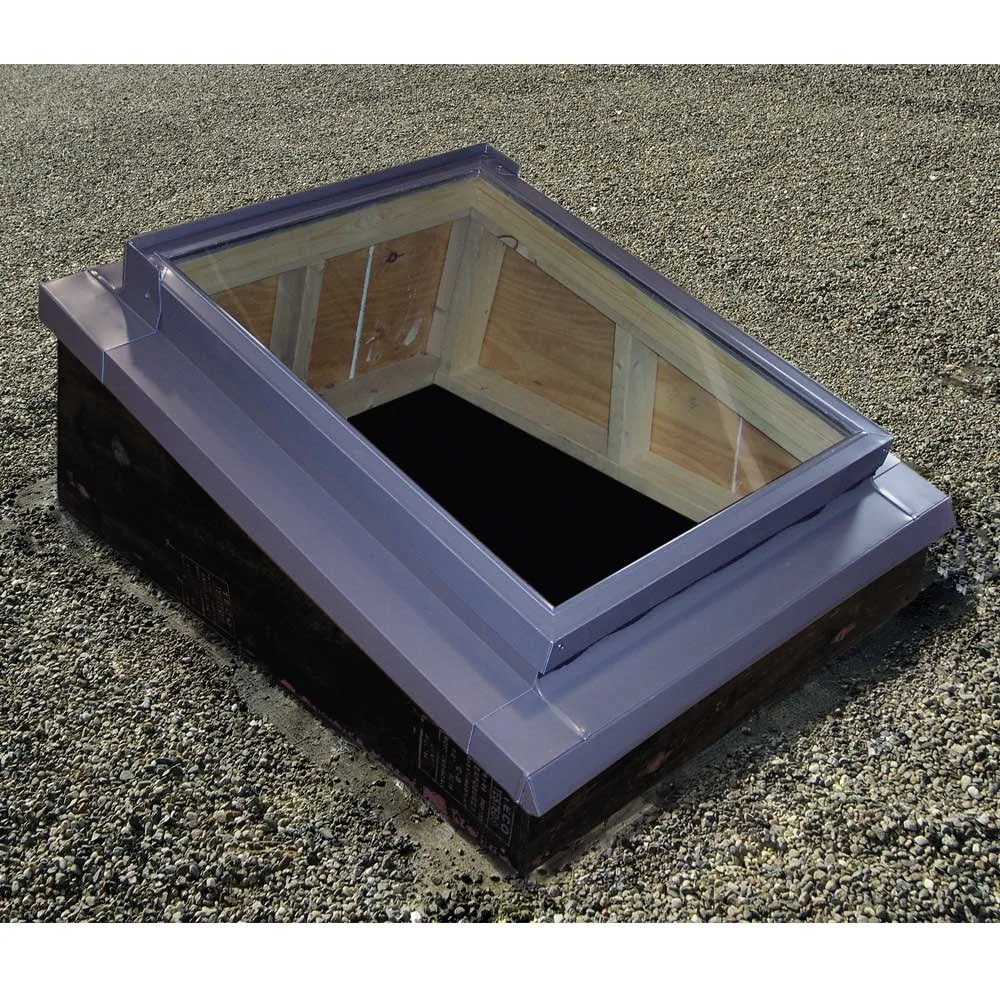
Curb flashing: close the vertical turn
A curb interrupts the roof field and creates corners where membrane, flashing and metal have to stay connected. We check the base flashing, inside corners, cover strips and termination, looking for open laps or a patch that has lifted at its edge. On a metal assembly, panel movement and curb attachment may affect the detail. On a low-slope membrane, the base and corner reinforcement matter. We identify the existing system before choosing material or expanding the repair.
A visible gap can be sealed only when the surface is prepared and the detail itself remains stable. Loose metal, wet insulation or failed attachment may call for a different correction. Penetration-flashing work can include a curb or roof opening when that is the leak entry point. If the surrounding field also needs attention, TPO roofing and other systems have different seam and flashing requirements that should match the assembly on the building.
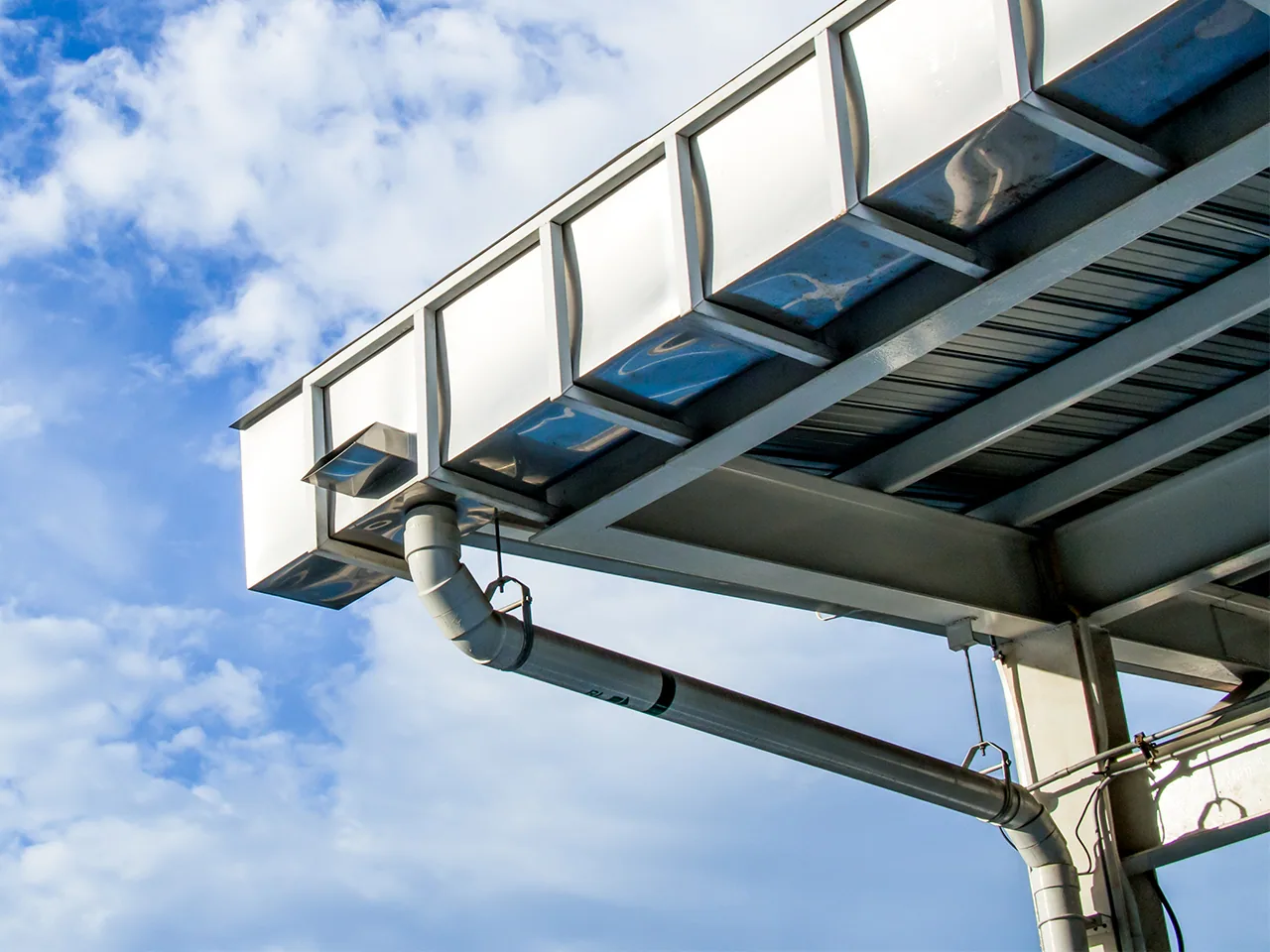
Outlet path: make sure the detail can drain
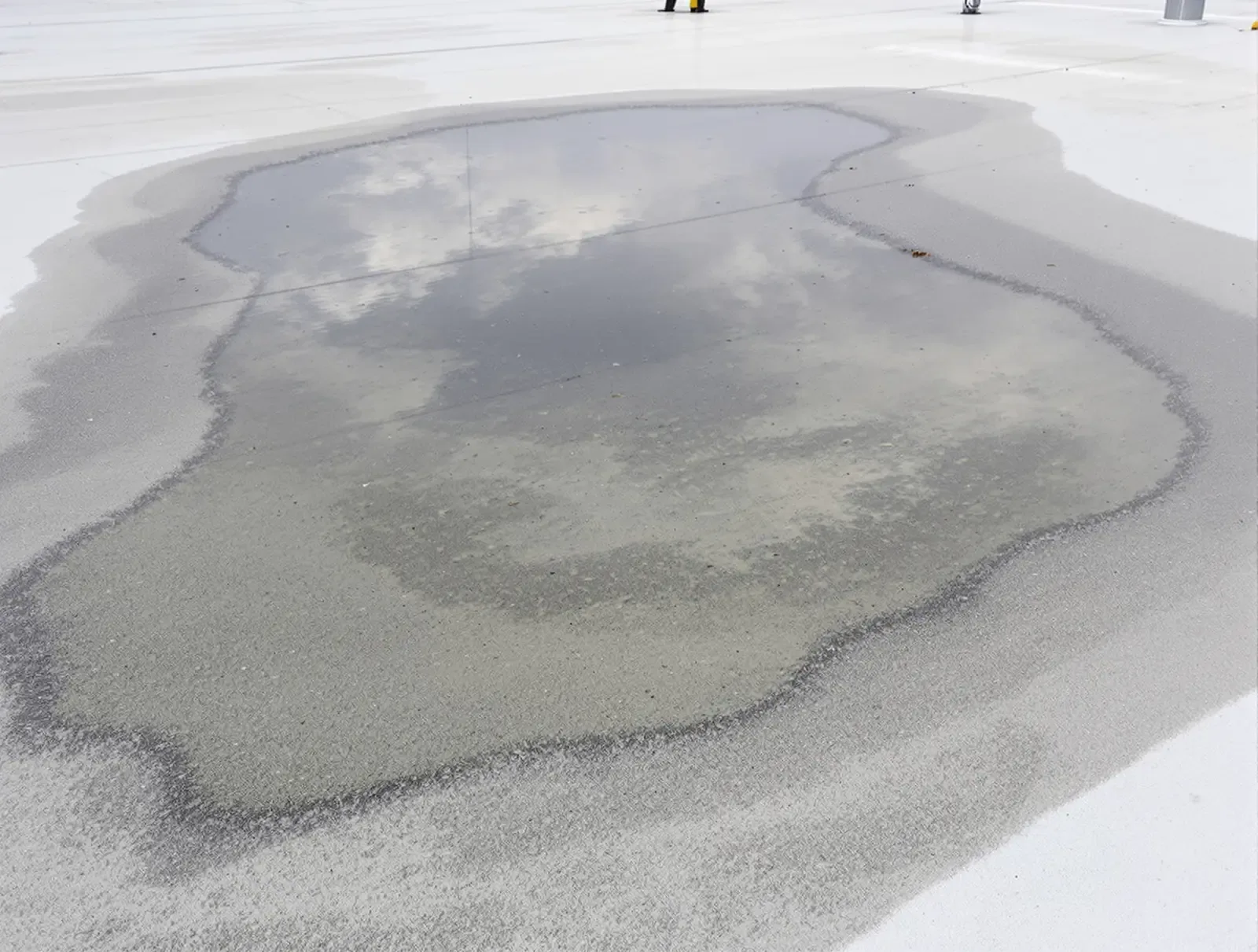
Runoff that stops at a curb or drain can keep a repair wet and test the same lap again. We check the slope into drains and scuppers, clear visible debris where the scope allows, and look for overflow marks at edges. If a drain connection is separated or a low spot remains after the outlet is clear, the roof may need a closer look at slope, deck and insulation. A surface patch alone will not correct an obstructed route.
Where a building faces a large paved lot, roof runoff has to reach a storm inlet across that pavement, so the discharge point at grade is checked along with the roof outlet.
At Sea-Tac, the long-term pattern places the final months of the year on the wetter side and July at the dry end. Before repeated rain, we check the outlet and overflow route at the actual property. Drain and scupper work can restore an identified connection; ponding-water repair may be needed if water remains after drainage has been evaluated.
Property use: confirm the access route
Renton describes manufacturing, aerospace supply-chain activity, logistics, healthcare and professional services as significant parts of its economy. We ask the building contact how the property operates. Roof entry, equipment service paths, deliveries and occupied rooms can shape the order of work. We confirm where tools can stage and what needs protection below before a repair begins.
A retail or service use may have a different access window from a production or office use, but the roof visit is arranged around the actual property. We identify noise limits, routes below the edge and equipment clearances with the contact. For another address in Renton, Renton Highlands needs its own access review; the Sunset Boulevard Corridor is likewise a separate service area. Each property gets an inspection based on its roof, not an assumption drawn from the overlay name.
Repair line: compare the roof-wide choices
A split around one curb may be repaired when nearby membrane remains dry and attached. We prepare the surface, rebuild the flashing and inspect the adjoining laps. If the curb is one of several failure points, moisture testing or a broader survey can show whether a localized patch will hold. The scope identifies confirmed conditions and any test that needs approval before opening the assembly.
Restoration, recover and replacement each depend on the layer beneath the visible surface. A coating needs sound preparation and compatible transitions; a recover needs suitable existing layers, moisture condition and attachment; replacement can address deck or insulation findings after tear-off. A recover assessment should state its limits. If removal is needed, replacement work should list insulation, metal, drainage and temporary protection separately so the owner can compare the full scope.
Roof record: tie photos to the repair
A photo of a curb is useful when it shows which side, corner and nearby outlet were included in the work. We note the material, preparation, repair boundary and any adjacent condition that remains outside the scope. If testing was approved, we record the test area and the result relevant to the decision. The contact can keep that information with roof plans and prior maintenance notes for the next visit.
Renton owners with properties across the city may use a condition report to compare the status of separate roofs without treating them as one system. We keep the Renton Auto Mall inspection tied to the parcel and access route actually reviewed. Send the address, water location, prior repair history and a workable access window. We will check the curb, outlet and membrane, then explain what can be repaired and what needs a separate test.
Commercial Roofing Questions
Can you repair a leak around one rooftop curb?
A curb can be repaired if the surrounding membrane, flashing base and substrate remain suitable. We inspect the corners, termination and nearby laps, then trace water to the nearest outlet. If moisture extends beneath the field or several details have failed, testing may change the repair boundary. We state what is confirmed and what remains concealed before setting a larger scope.
What do the Auto Mall overlay labels tell you about my roof?
They identify broad mapped areas, but they do not establish the assembly, condition or use of a particular property. We inspect the roof itself and confirm access with the owner. Membrane, metal panels, drainage and equipment transitions each need the repair detail that matches what is installed.
Why does water stay near a curb after the drain is cleaned?
The outlet may be clear while the roof still has a low area, a separated connection or a drainage slope that does not reach the bowl. We trace the route from the curb, check the outlet and look for overflow marks. If water remains, deck, slope or insulation conditions may need review before a repair is selected.
Can the crew work while the property stays open?
We confirm access, staging, equipment clearances and areas below the roof with the property contact. A limited repair may fit a short window; broader work may need phased sections and a secure tie-in at each stop. The sequence depends on the roof detail, forecast and operating requirements at that address.
What could change a curb-repair estimate?
The extent of flashing, membrane preparation, concealed moisture, curb attachment, metal replacement and access can change the labor and material. We identify the repair length and separate confirmed work from testing or allowances. If an opening is needed, the owner approves its location and purpose before the assembly is cut.