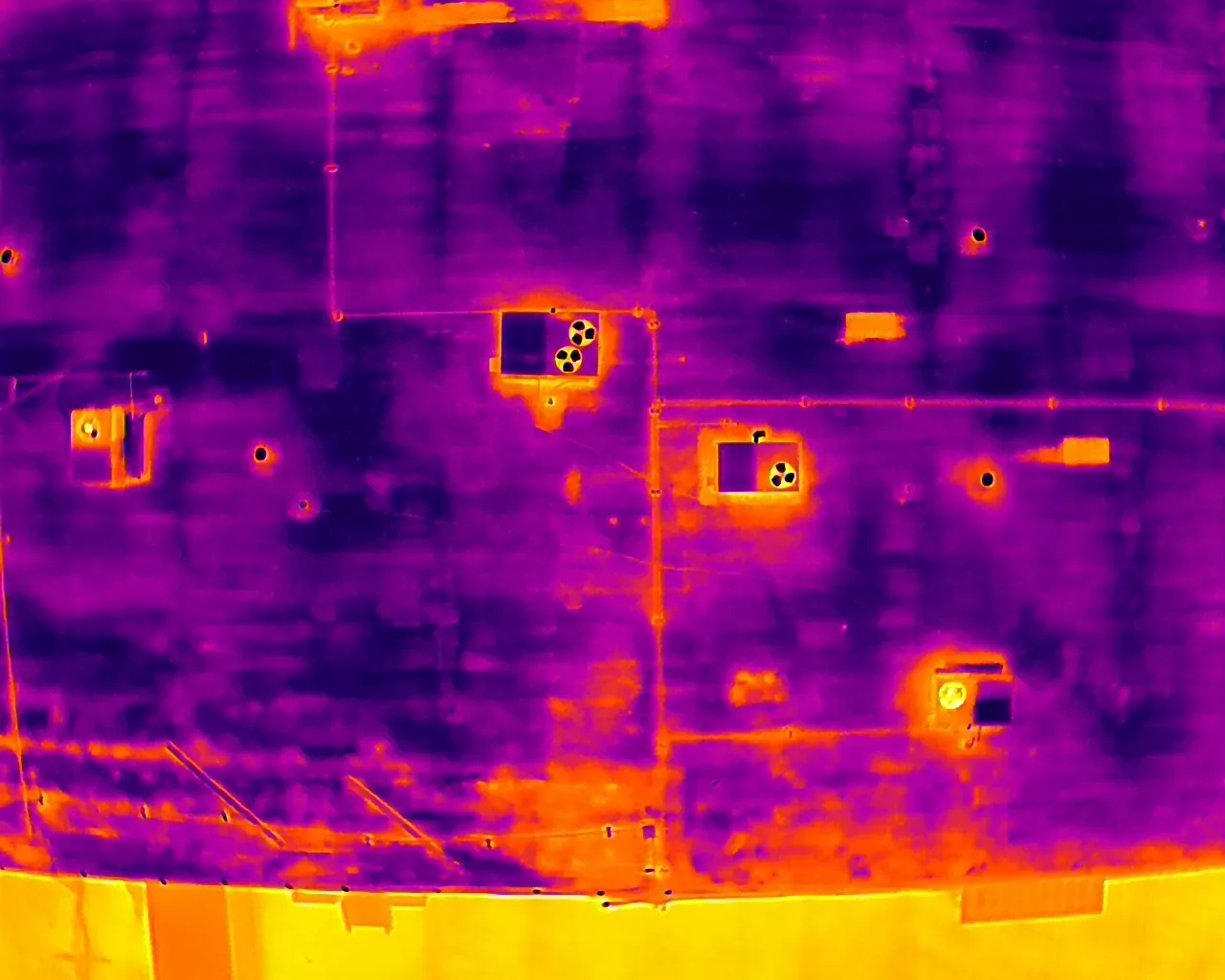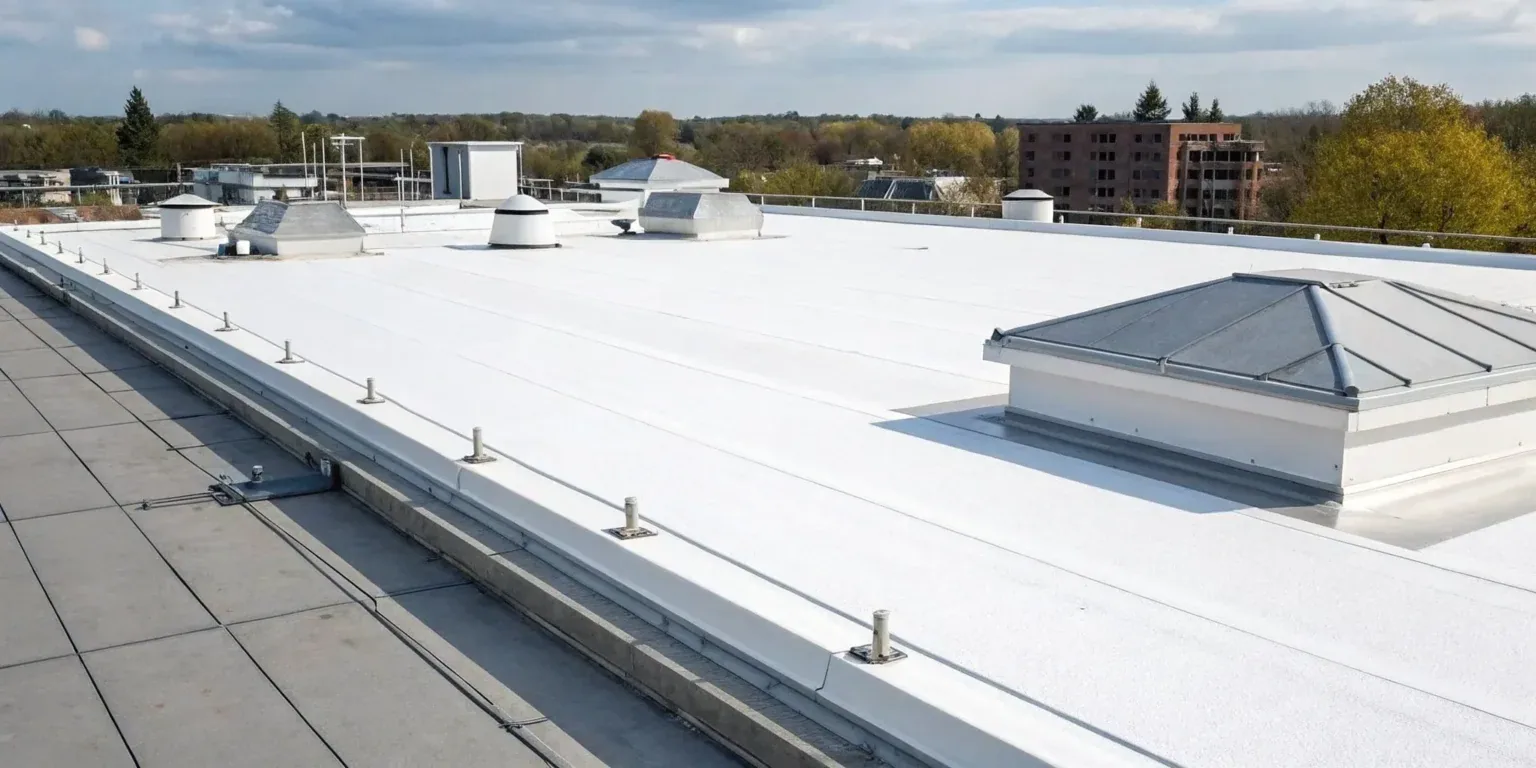
A bulge near a patched lap may come from air, moisture or movement below the membrane, so the next check belongs on the seam beside it. In Renton, WA, Sea-Tac records point to a wetter late-year season than midsummer. That broad climate signal makes an early look at drainage useful, while the West Hill roof itself decides what needs repair. We inspect the blister, compare nearby laps and follow the low route to an outlet before deciding whether a patch can hold or testing should come first.
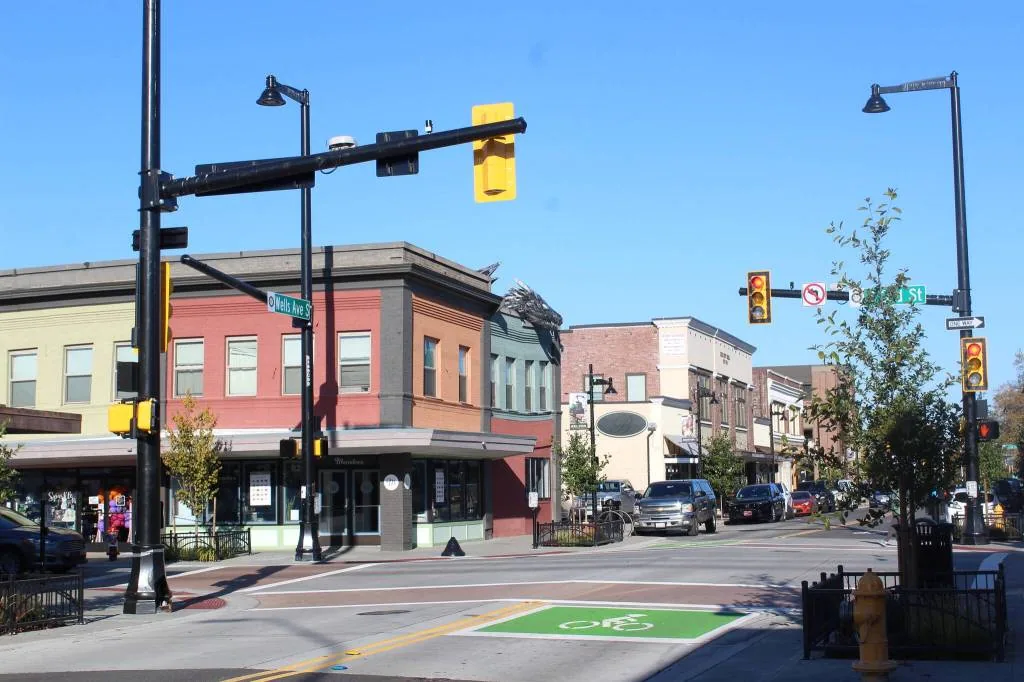
West Hill is a Renton Community Planning Area, and the city's land-use map separates commercial arterial, commercial neighborhood, office, employment and industrial classes. That range does not establish a particular property's use or roof type. We ask what operates inside, confirm roof entry and check the assembly in place. A commercial roof inspection can connect visible conditions with access, prior repairs and the owner's next decision.
Membrane surface: decide what the blister means
A raised area may involve trapped air, moisture, loss of adhesion or movement at the substrate. We check whether the blister is firm or soft, where it sits in relation to seams and drains, and whether nearby membrane shows the same condition. Cutting it open without a repair plan can expose the assembly without answering the owner's question. If a small test would clarify moisture or deck condition, we identify the spot and wait for approval.
A sound field around one blister may allow a localized repair after the cause is understood. Multiple soft areas or seams opening in the same direction can point to a wider issue. A moisture survey can help map suspect insulation, while membrane repair can restore a prepared, contained opening. The repair note should identify the tested area and explain what remains outside the scope.
Drainage check: compare the low point and outlet
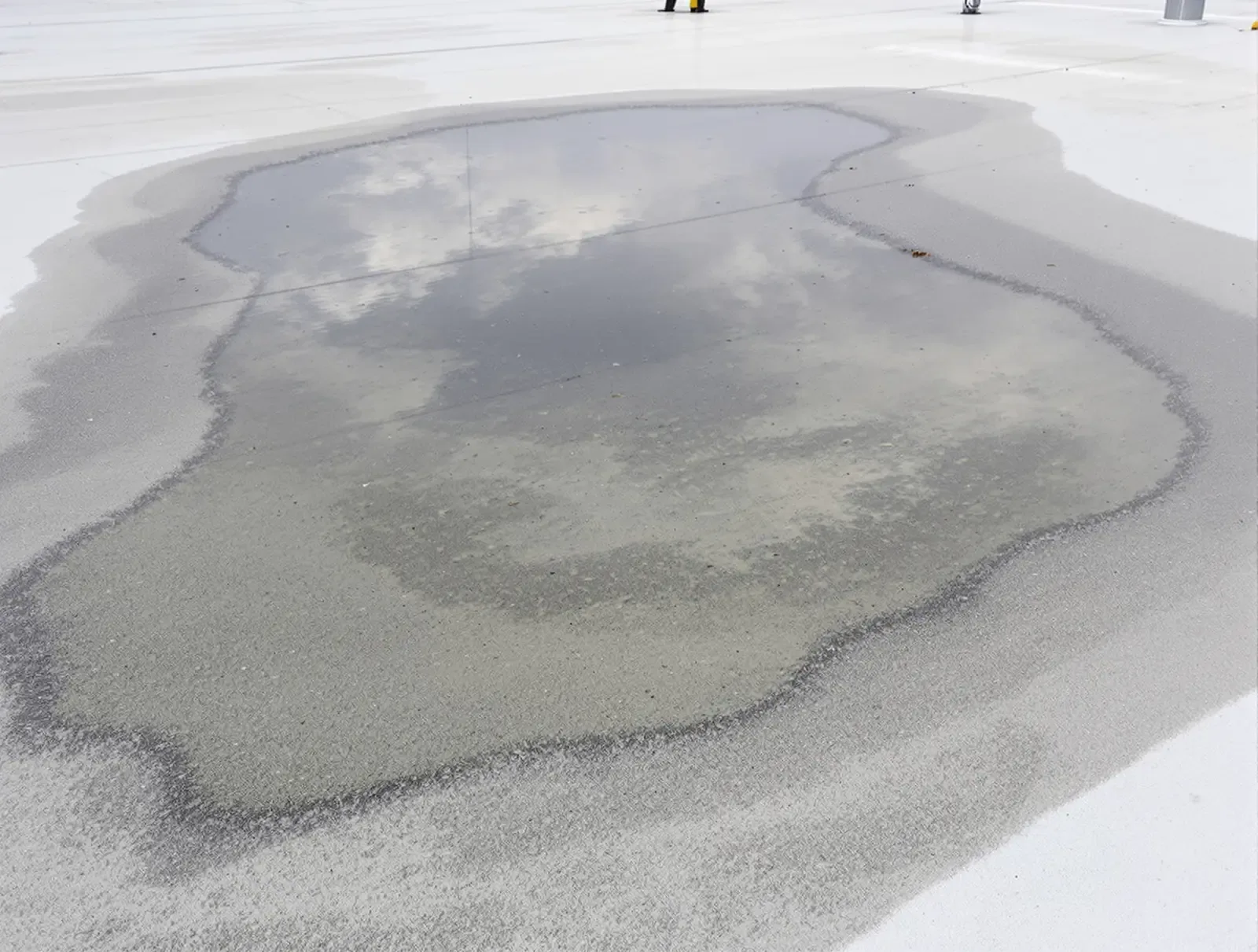
A membrane can retain water when the drain bowl is obstructed, a connection has separated or the roof does not fall to the outlet as expected. We trace the direction from the affected seam, inspect the bowl and scupper, and look for overflow marks at the edge. If the outlet is clear, a low deck or compressed insulation may need a closer look. Separating those causes matters because cleaning a drain will not correct a change in slope.
The Sea-Tac normal record shows rainfall is not evenly spread through the year, with the cool-season months wetter than midsummer. For a West Hill property, that only sets a seasonal reason to check the outlet; its own slope and drainage decide what the roof needs. We can include drain and scupper work where a restricted outlet is confirmed. If a low area persists, ponding-water repair should follow the inspection of the drain route and substrate.
Roof outlets that serve a large area need a harder look than one that serves a small corner, because a single blocked outlet can put many square feet of roof under water.
Local operations: coordinate roof access
Manufacturing and logistics are significant Renton sectors and professional services is the largest, so schedules vary widely, and the property's own schedule determines how work proceeds. We confirm where a roof hatch opens, which equipment needs clearance, whether tenants need notice and how materials can reach the work area. A service visit may need only a short access window; replacement may require several staged sections and a defined daily tie-in.
Where production or office activity continues below, we plan noisy work, debris protection and temporary closures with the building contact. We record access restrictions before arriving at the roof so an inaccessible section does not get treated as inspected. For other Renton properties, a Kennydale roof review and a Renton Highlands inspection each need their own route, assembly and contact.
Repair options: contain the defect or change assembly
We compare the extent of soft membrane, open seams, damaged flashing and moisture signs before proposing a repair. A small area can be cut back and rebuilt when the surrounding material is stable. If the roof has repeated patches or moisture across a larger field, a coating or recover should be considered only after preparation, attachment and substrate condition are addressed. The owner gets the reason for each option and the conditions that would rule it out.
Replacement may involve removing layers, reviewing the deck, adding insulation or cover board and renewing edges and penetrations. Cost and duration change with removal depth, material handling, equipment coordination and temporary protection. A recover review can determine whether existing layers are eligible; replacement work can define the new assembly when they are not. Neither option should be selected from a surface blister alone.
Closeout record: leave the next check specific
At closeout, the photographs should show the repair area before and after work, including the seam, flashing and nearest outlet when they affect the water path. We note the material installed, the boundary of the repair and any nearby area that remains untested. If the scope required an approved opening, the record includes how it was closed and which condition it answered. That detail gives the next roof walk a place to begin.
For a West Hill property, send the Renton address, leak location, roof history and access notes. We will check the membrane and drainage, explain whether a test changes the decision and leave a clear repair boundary. A roof condition report can retain those findings for maintenance or budget review.
Commercial Roofing Questions
Does a blister mean moisture is trapped under the membrane?
Not by itself. A blister can involve air, moisture, adhesion or substrate movement, so we inspect its firmness, seams, nearby drains and surrounding surface before opening it. If a moisture survey or test opening will change the repair choice, we explain the location and obtain approval. The finding should be recorded separately from conditions that were not tested.
Can a blister be repaired without replacing the roof?
A contained blister may be cut back and rebuilt when the surrounding membrane and substrate are suitable. We check adjacent seams, insulation signs and attachment before setting the boundary. If similar soft areas extend across the roof or repeated patches have failed, a broader assessment may be needed. The work scope should show the condition that supports a localized fix.
Why inspect a drain when the leak appears near a seam?
Water can collect at an outlet or move along a lap before entering the building. We follow the low route from the seam to the drain, check the bowl and connection, then compare the result with interior signs. A restricted drain and a failed membrane need different repairs, and both may be present in the same area.
Can a roof coating cover a blistered area?
Only after the cause is understood and the existing surface is suitable for restoration. Loose or wet material, failed attachment and unresolved drainage should be addressed before coating. We inspect preparation needs, seams and transitions, then state what repair is required under the coating. If the substrate is not sound, a different repair or replacement may be the better choice.
What information helps coordinate work at an active property?
Tell us where roof access is, what equipment must stay clear, which interior areas need protection and when materials can be staged. Prior leak notes and a roof plan can help us choose the first route. We confirm restrictions with the property contact and identify any section that cannot be reached within the available access window.